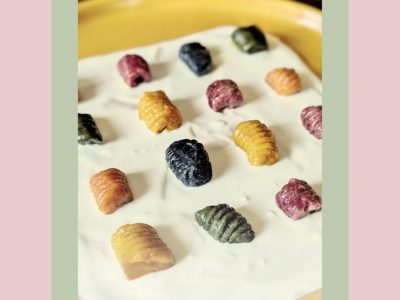
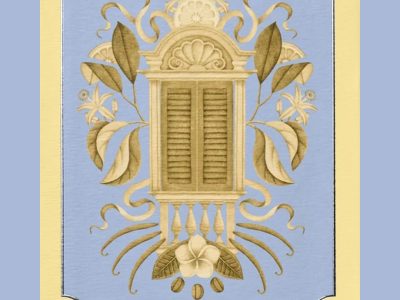
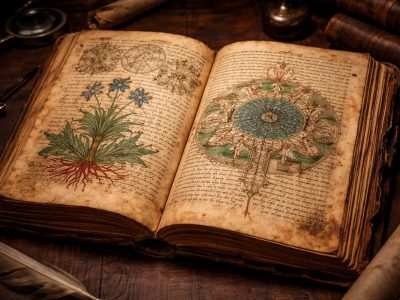
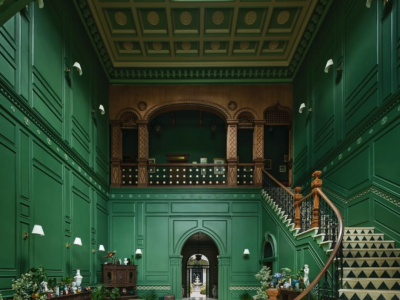
In the Italian “Little Athens” of Pietrasanta, renowned for its extraordinary concentration of art galleries and for the marble that once drew Michelangelo to the area, Almanac was born: a Wunderkammer, a bazaar where every object has a story to tell, one that seeks to move, surprise and spark a conversation.
Almanac is the joint project of David Nicholls and Claudio Corsi, Canadian-born and Florentine respectively. London was their home for many years, until, during a summer holiday, they discovered the refined and captivating town of Pietrasanta and began to imagine that it might be the place where a new chapter of their lives could unfold. For many years, David Nicholls was Deputy Editor of House & Garden; he is now Director of Editorial Development at Homes & Gardens. With a career spanning more than twenty-five years in the worlds of design and interiors, he has spent his professional life telling the stories of some of the most fascinating homes and personalities on the international scene. Claudio Corsi, meanwhile, has built a distinguished career in the worlds of antiques and collecting, eventually heading the Antiquities department at Christie’s and, over the years, developing a particularly discerning eye for the research, history and provenance of objects.
Almanac was born from the meeting of these two distinct yet complementary sensibilities: on one side, antiques and the stories held within objects; on the other, design, publishing and the art of creating narratives through interiors. It is a project born from the desire to bring something new to Pietrasanta: international artisans and artists in dialogue with antique pieces, works of art and objects imbued with history. But let us hear from the two founders themselves about how this encounter came to be.
Christopher Horwood
Antonella Dellepiane Pescetto: What did you study, and how did you each find your way to Christie’s, Claudio, and Homes & Gardens, David?
Claudio Corsi: After a degree in Archeology at the University of Siena, I studied Classical Archaeology and Museum Studies at Cambridge, which naturally led me towards objects, their histories and provenance. I then spent almost twenty years in the auction world, eventually heading the Antiquities department at Christie’s.
David Nicholls: I came to interiors through journalism. After many years as Design Editor of The Daily Telegraph, I spent eleven years as Deputy Editor of House & Garden and now work at Homes & Gardens. Over time, writing about houses became an education in how people live with objects, colour and design.
Christopher Horwood
ADP: Could you each choose three objects that represent formative memories or moments in your lives? They could be objects from your childhood, or from any other time that has been particularly meaningful to you
CC: A modern ceramic from Egypt in the shape of a jackal – the old Egyptian god Anubis. It’s one of the few things that my mother’s family brought with them when they left Egypt for Italy. And as a child it always fascinated me – and scared me at the same time. My grandmother had a sewing case which I adored as a child. I would spend hours pretending to be a shopowner selling things out of that box to imaginary customers. The first thing I bought at auction was a Romano-Egyptian terracotta figure of the god-child Harpocrates holding a jar of honey. The thrill of buying it at auction was particularly special. I don’t think I’d ever sell it.
DN: Growing up we had ‘good silver cutlery’ which was bought for my brother’s baptism and only ever used at Christmas and special days. It spent most of the time in its wooden box. A few years ago I took it from my mother’s house and brought it home to be used every day. They are not particularly fine pieces, but they’re my way of using “special” things every day. Every day should feel a little special. A family friend who was a hobby-artist did a pencil drawing of the house I grew up in in Western Canada. My father built most of the house and my earliest memories are in the rooms my parents decorated and the garden they tended. The house was torn down for a modern monstrosity 10 years ago but I have the drawing hanging on the wall at home. A few years ago Claudio bought me a lithograph print by a Candian Inuit artist called Lucy Quinnuayuak. I love the simplicity of it and the funny faces of The Birds that it depicts.
Christopher Horwood
Christopher Horwood
Christopher Horwood
Christopher Horwood
ADP: When did the desire to create a project together first emerge, and how did it evolve over time until it became Almanac?
CC/DN: It evolved from things we had always enjoyed together: travelling, markets, antiques, craft and interiors. Discovering Pietrasanta made the idea feel possible, and Almanac became a way of bringing our two professional worlds together.
ADP: How do you divide your roles in running Almanac? And in which areas do you find yourselves challenging each other until you reach a point of agreement?
CC/DN: Claudio tends to focus more on the object itself – quality, history, provenance and craftsmanship. David thinks more about the overall mix, display and how things might live together in a room. The best decisions tend to come when those two perspectives challenge each other.
ADP: Who came up with the name Almanac, and what did you want to encapsulate in it?
CC/DN: It was Claudio’s idea – on the beach in Forte dei Marmi. We initially simply liked the sound of it and the fact that it works easily in Italian and English. But its meaning also felt right: an almanac is a collection of different things brought together in one place, which is very much how we see the shop.
ADP: Why Pietrasanta? What did you find here that made you feel it was the right place for Almanac?
CC/DN: It has an unusual combination of small-town intimacy and international cultural life. Art, sculpture and craftsmanship are deeply embedded here, yet it still feels like a real town rather than somewhere preserved for visitors.
ADP: Would Almanac have been the same project had it been born in London, Paris or New York? How much has the place itself shaped what Almanac has become?
CC/DN: No. The underlying taste might have been similar, but Pietrasanta has made Almanac more personal and more eclectic. The climate, seasonality and strong local craft culture have also influenced what feels appropriate here.
ADP: After almost twenty years in the world of auctions and antiques, what do you look for in an object today that you might not have looked for at the beginning of your career?
CC: Probably personality more than status. My training taught me to recognise rarity, provenance and importance, but over time what has become equally interesting is character, craftsmanship and something unexpected.
ADP: You have spent your career telling the stories of other people’s homes. What have you learned from those homes that you now bring to Almanac?
DN: That the most memorable rooms rarely look as though everything was bought at once. They tend to contain contradictions: old and new, expensive and inexpensive, beautiful and slightly strange.
Christopher Horwood
Christopher Horwood
Christopher Horwood
ADP: What does an object need to have in order for you to feel that, despite coming from a distant place or a completely different era, it somehow belongs at Almanac?
CC/DN: It needs to create a sense of delight. And it needs conviction: whether through craftsmanship, colour, humour, material or simply the strength of the idea. It also needs to sit naturally beside objects from completely different periods and places.
ADP: What do you notice first: beauty, history or provenance?
CC/DN: Claudio probably looks at the object and its quality first; David responds more instinctively and visually. Almanac sits somewhere between those two approaches: attraction first, then curiosity.
ADP: What truly makes a home interesting: the quality of its objects, the way they are brought together, or something more difficult to define?
CC/DN: Evidence of a life. Great objects help, but atmosphere comes from the way things have been put together, the memories attached to them and the personality of the people who live there.
Christopher Horwood
ADP: Is there a contemporary interior design trend that you simply cannot stand?
CC/DN: We’re not great fans or followers of trends. Who can be bothered? Anything overly coordinated or self-conscious isn’t really for us..
ADP: Tell us about your own home. How have you decorated it, and what is your favourite thing about it?
CC/DN: Our home has evolved rather than been formally decorated. It contains antiques, contemporary pieces, lots of books, textiles and things gathered over many years and travels. There’s a real high-low mix. There might be one or two good pieces of art but there’s also some Ikea.
ADP: Objects are elements of our everyday lives, silent observers of the way we live. Imagine a kind of Toy Story starring the objects we have collected and lived alongside throughout our lives: what emotions and values would be the true protagonists of that story?
CC/DN: Memory, curiosity, attachment and humour. Objects become powerful because they travel through different chapters of our lives and gradually acquire meanings we never intended when we first bought them.
Christopher Horwood
ADP: A home also holds more difficult emotions: melancholy, loss and nostalgia. How can a home evolve over time without erasing these traces, allowing them instead to coexist with new experiences?
CC/DN: By allowing old objects to live in new contexts rather than treating them as relics. A home can contain memory and change at the same time.
ADP: What qualities make you feel that an object has a soul?
CC/DN: Usually some trace of human involvement: wear, irregularity, craftsmanship, repair or simply the sense that someone cared about making it. Objects also acquire soul through being lived with.
ADP: What kind of impact would you like Almanac to have on Pietrasanta — artistically, socially and on a human level?
CC/DN: We would like it to become part of the life of the town rather than simply a shop within it. Somewhere people discover unfamiliar makers and objects, but also somewhere they feel comfortable coming in simply to look, talk and be curious.
From the grand Parisian fragrance houses to the rugged coast of Genoa: Filippo Fornasini reveals the deeply personal story behind MarMar, an intimate olfactory journey that redefines the art of Genoese perfume.
Hidden in the Khao Yai jungle, you arrive at Maison Mystique where the rules of contemporary luxury are rewritten to choose mystery instead of excess.
By Giulia Fantini
Are you a sensitive and curious traveler, constantly searching for beauty, art and cultural inspiration? Sign up to receive the latest contemporary news!