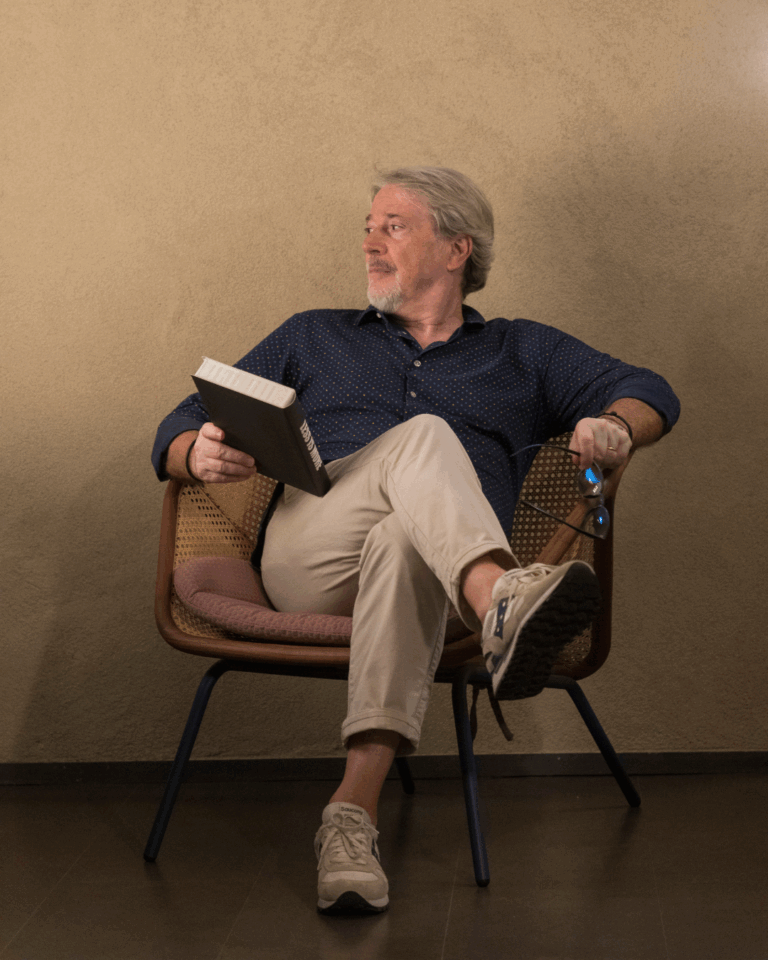
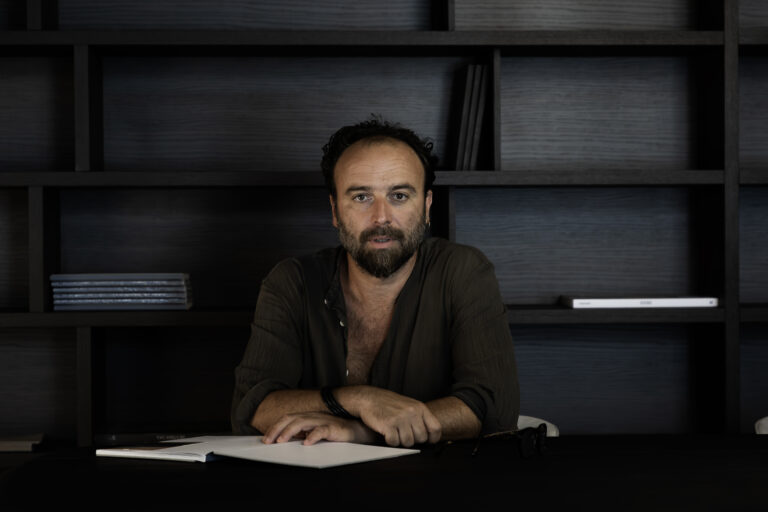
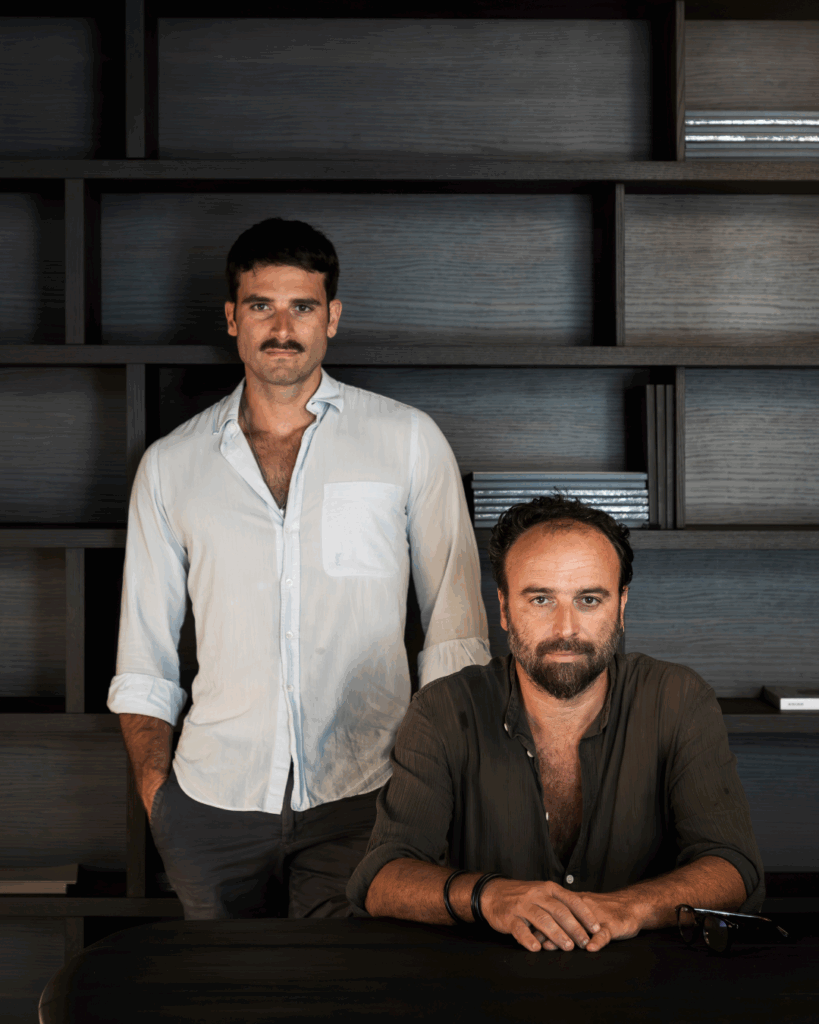
From Gianluigi’s vision of space, to Matteo’s manual dexterity and design skills, to Federico’s digital and communicative perspective. The men of the Rossi family have built and are developing, together, a path and an identity in the world of space design, interior decoration, renovations, custom-made, from private villas to contract. From the Coloniale store to Forma Design, to Spazio Giustiniani.
ORLANDO: Let’s start with the head of the family, Gianluigi. Tell us where you started from and your first work experiences.
GIANLUIGI ROSSI: It’s as if I had lived seven lives…
I was born an electronics expert. Since I was a very exuberant boy, my mother sent me to America when I was 17, where I went to high school and, on my return, perhaps because I spoke English well, Marconi hired me.
They were supposed to send me abroad, to Baghdad, but then war broke out and they sent me to Milan, to the airport, where I spent eleven years as a technician in the radio room.
That life allowed me to have a family when I was young and we had Matteo.
I had pursued the electronics path by choice of my father, because it was a profession where it was easy to find work, but I didn’t feel it was in my DNA; my passion at the time was photography, marketing. The experience in Milan had been wonderful, but I didn’t enjoy the work and I gave it all up by inventing a job that didn’t exist, taking a big risk.
I went to work for a fledgling company that dealt with photography, cinema, communication. It was a very quick adventure but it put me in contact with two realities that have meant a lot to me in life. The first was a printing company in Genoa, the Azienda Litografica Genovese. whose owner took me under his wing and wanted me to work with him and made me, later on, administrator. At the same time as this role, I was developing a communication agency with the other person who was very significant in my life, who was the managing director of the company LA Gear which produced sports shoes that were coming from the United States. So I was following both realities: the print shop and I was the marketing director of this shoe with extraordinary performance. Of LA gear I was in charge of the Italian and French market…we had testimonials like Kareem Abdul Jabbar, Michael Jackson signing the shoes. Even this wonderful adventure for which I became one of the youngest managers at the age of 30, came to an end because the company went into Chapter 11 in America.
I found myself in a situation where I had to change again and I had some opportunities open to me but which I didn’t feel were mine, so I stayed in Liguria and invented a trade fair that was born out of sport and is called Sportshow Italia.
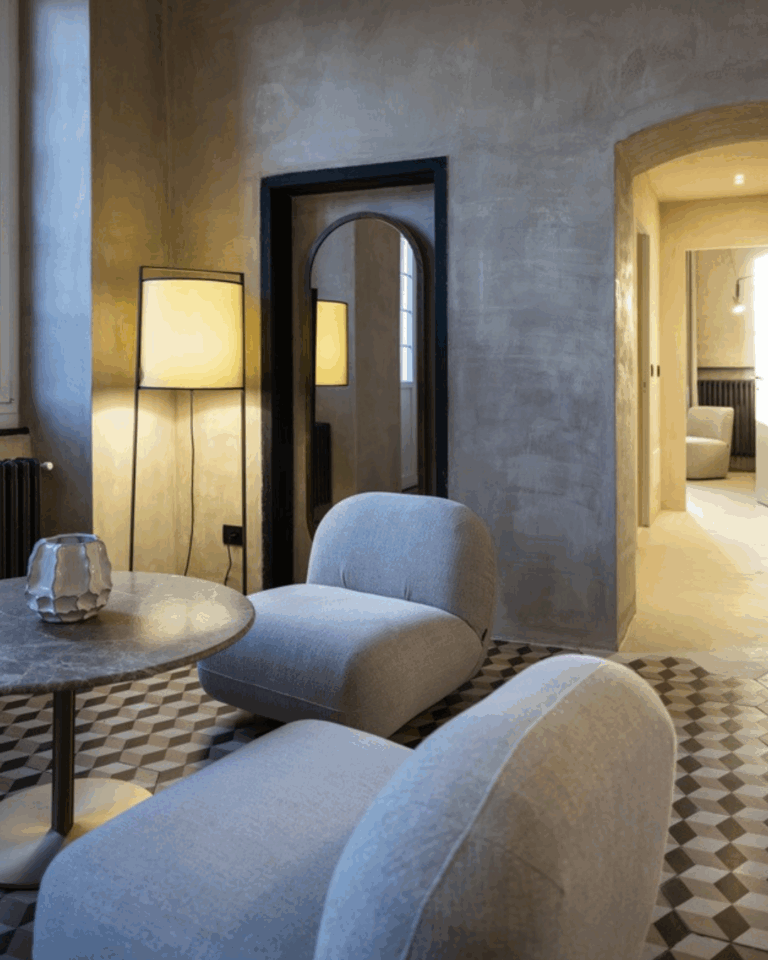
MATTEO ROSSI: We saw the possibility of opening the Coloniale shop thanks to a trade fair, where we
met companies that were making garden furniture and, at the same time, importing objects from the Orient, from Morocco, from Indonesia. We chose an abandoned carpentry shop as the location for the shop and put in a series of furniture that these companies had given us on consignment.
First we made a selection, then the fun game was to reinterpret the pieces in a complete, room-oriented way, not like a classic furniture store, but following the Ikea concept.
We then got to know the companies and manufacturers better and started to design pieces ourselves, which we then had produced in Indonesia, India and Morocco.
ORLANDO: How did you combine your individual skills and channel them into a family adventure?
G.R: By combining my ability to see spaces, from organising the space of a trade fair to that of a private home, with Matteo’s manual and design skills, we were able to move forward together. We have always adopted a kind of market focus, surfing it. In fact, with Coloniale we realised that the world was changing and that kind of style, that model was passing away and was ready to welcome a more contemporary, designer style.
We made a very courageous turn: from Coloniale we became Forma. We went from a company that was 80% imported, to 90 – 100% Italian made, a big change as the market became more and more global.
M.R: The development in that sense was fast, we looked for old carpentry workshops here in Italy and closer realities, but in those years they only produced in two ways: classic rustic or modern. It was difficult to get them to create something that was intermediate to these two ways, but slowly we succeeded.
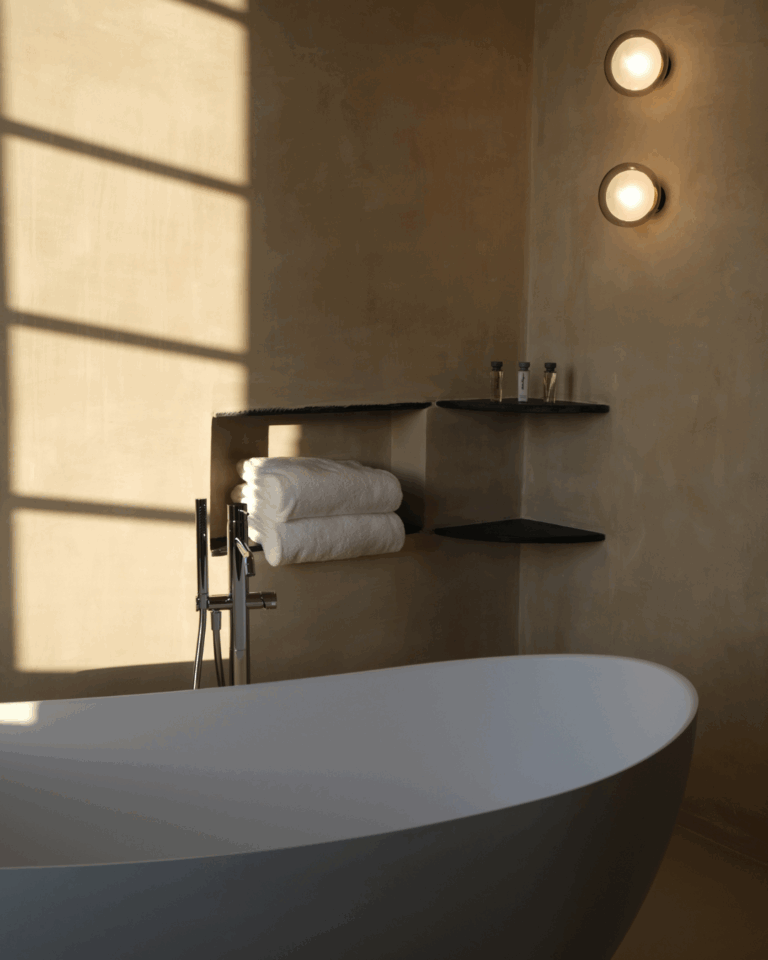
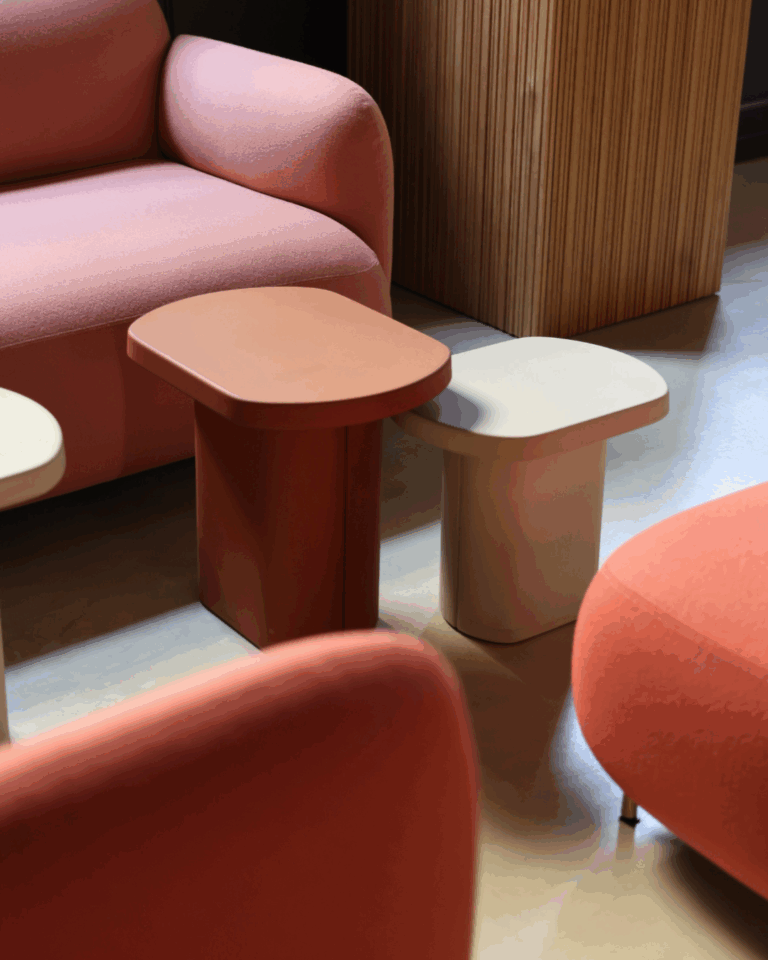
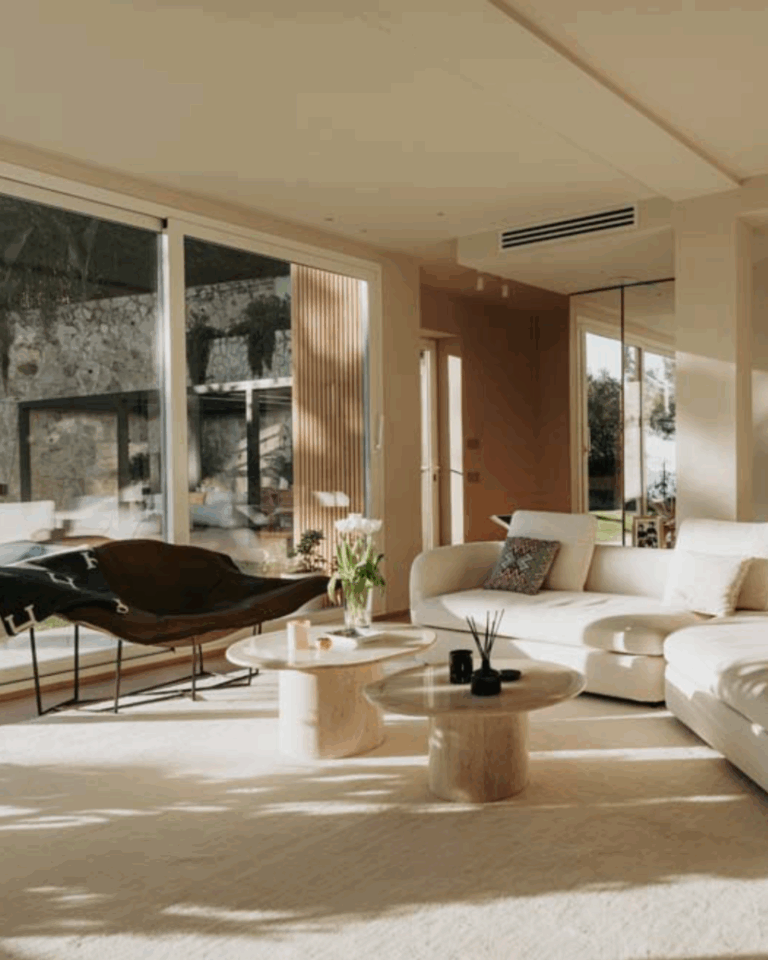
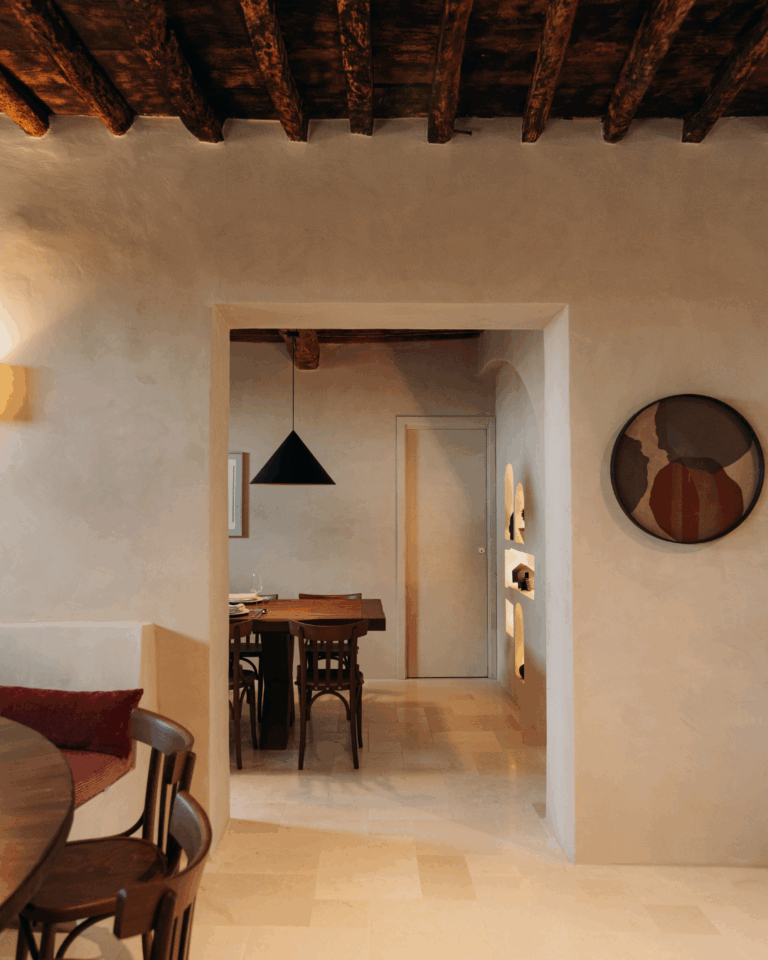
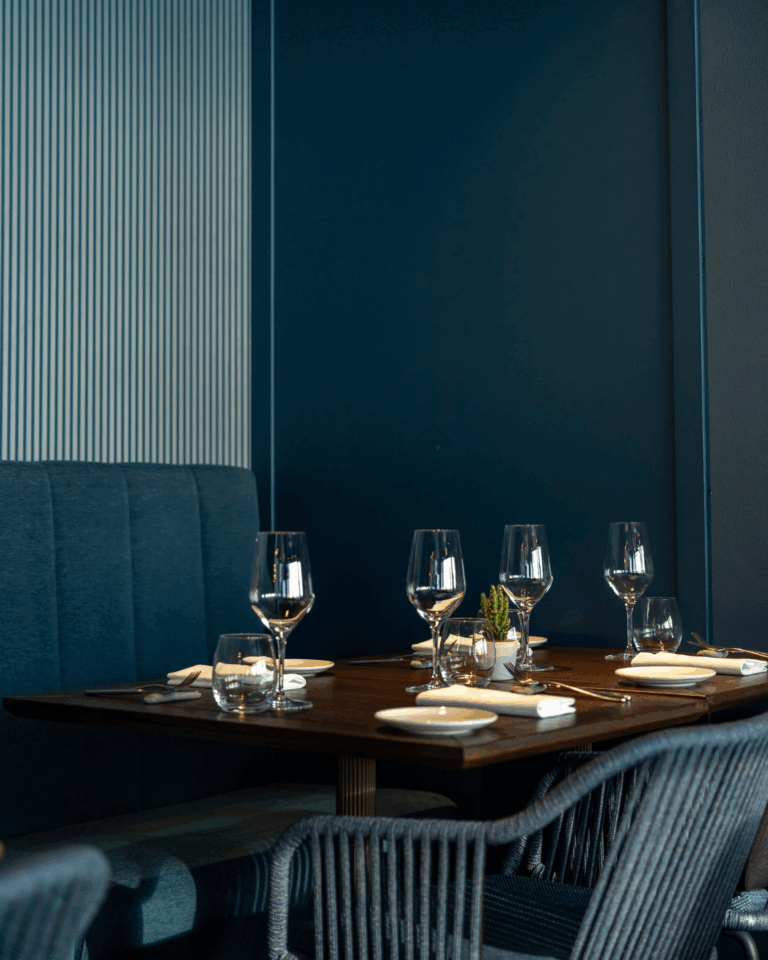
From there, many clients came to us asking for more complete assistance, so we created the Forma Design studio, adding new architects to meet all requests and take care of the project from start to finish. We take care of hotels, bars, restaurants, but also private villas; we follow everything that is interior, the materials part, up to the final decoration. We also take care of corporate image, logos, so we can offer a complete package to the customer.
ORLANDO: After this change in Forma, how did you come to Spazio Giustiniani?
G.R: There was a time when we were often working with the US and we were about to open a company in Miami (15 years ago), convinced that that was the right landing place to open a sort of window for the Italian axis in the US, a bridge between us and them. We liked the idea of being able
to sell our “know-how”, the concept that foreigners think of Italian taste.
For various family vicissitudes, we did not open this company and we wondered about opening in Milan, but it was an incredibly competitive and very difficult market.
So we believed that Genoa and Liguria could represent an extraordinary case history: if it works in Liguria it can work anywhere.
Of course some madness, courage and foresight are needed. If in Miami or Milan performance is done in 2-3 years in Genoa it takes 6-7; we also ran into the covid period, but despite this we are happy
today, the Genoese need more time to understand that you are one of their own.
So we kept the store in Chiavari, Forma, and then we moved, mainly due to Matteo’s desire, towards a new adventure, the opening of a new showroom, this time in Genoa, Spazio Giustiniani.
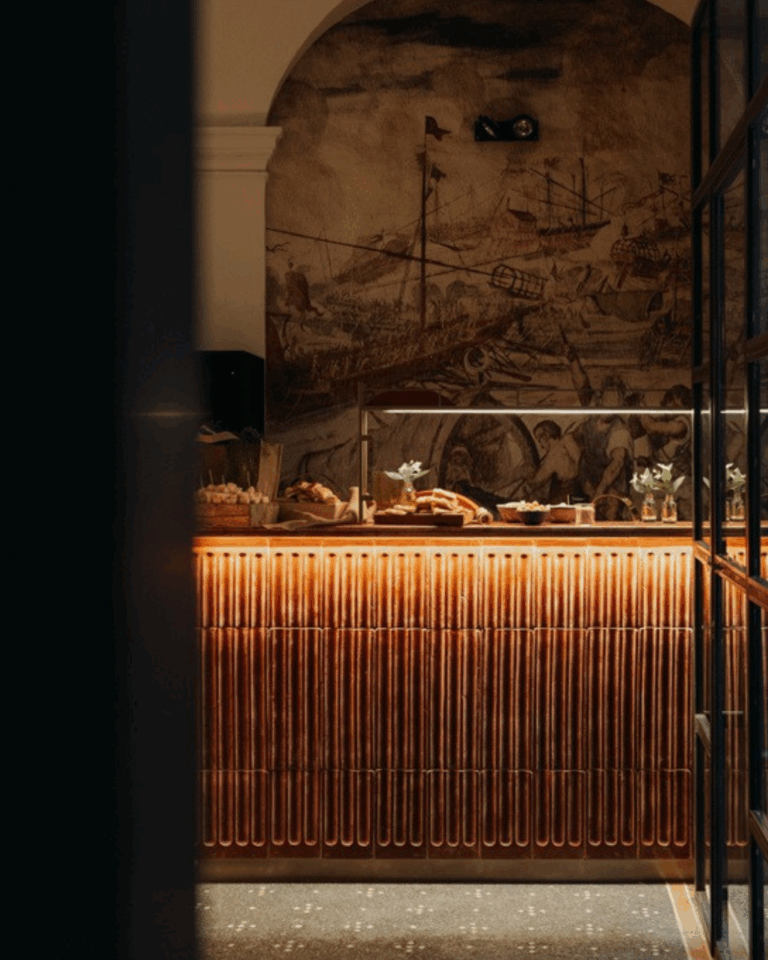
M.R: We decided to open this space, which was not intended to be just a store but also a location where companies, brands, craftsmen, architects, designers could network between each other.
So it was also necessary to open a bistro and organise lots of events.
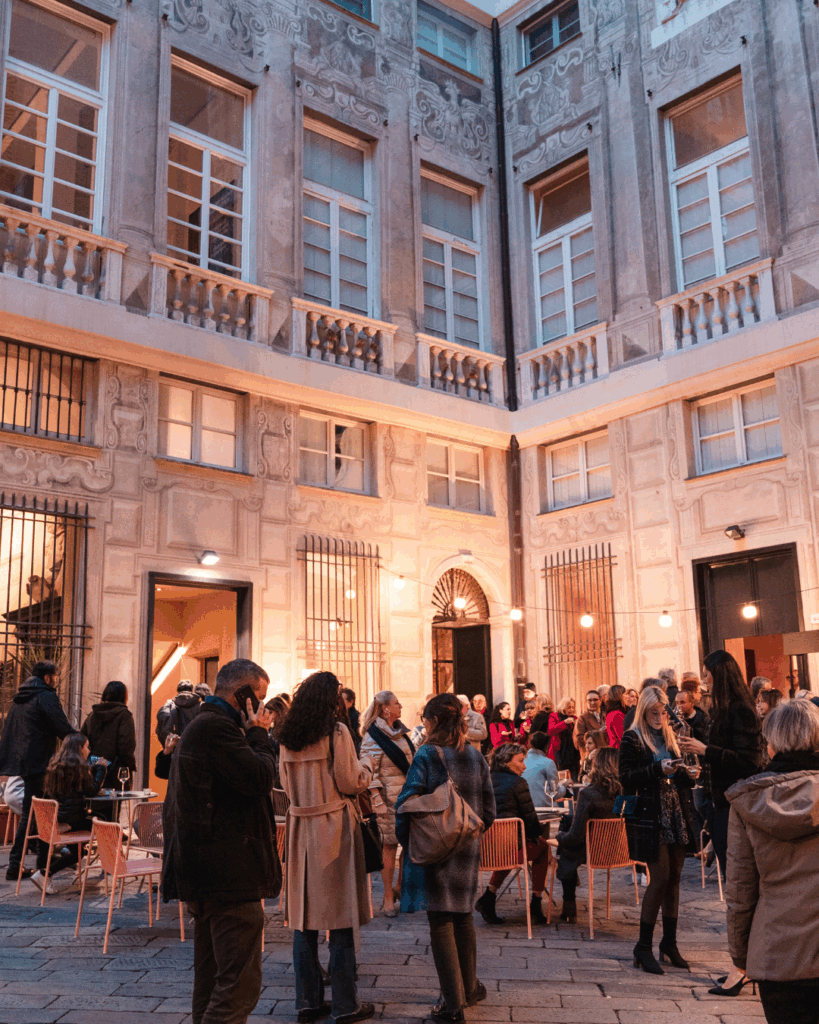
The real madness was to open the space in a location that had been abandoned for years. So there was a need to bring new people, to create opportunities for them to meet, and today we can say that Genoa Design Week has this square and location as its fulcrum.
The square and the vicoli, tipical Genoese alleys, connected to the Spazio were in need of redevelopment and I must say that we chose this location also with this in mind. We wanted to reopen many shutters of shops that had been closed for a long time and, to date, there are many other realities in the world of design, art around us; the area has come back to life and now we have celebrated eight years of Spazio Giustiniani.
We intend, in the future, to organise events also other than the world of architecture and design, such as concerts, cinema and art evenings. This square needs to have a convivial part where we can drink and eat together and discuss things.
ORLANDO: Let’s take a step back. Matteo what studies did you do and your first work experience? M.R: I went to art, architecture and interior design high school here in Chiavari, which was a very good school, as they no longer exist today. There were lessons in professional drawing, exploring the world of wood, metalwork and modelling, where scale models were made. Then I followed a great urge of mine, that of travelling. I did various jobs, of all kinds, even the most practical. I have returned to Italy and then left again.
I’ve always had this practical side and manual dexterity, because I’ve always liked to build, and with the studies and jobs I’ve done, these aspects have been further refined. I built my first kitchen, by myself, in high school, in my parents house.
University is perhaps still my biggest regret, because I missed out on a lot of knowledge to speed up my career path and instead I had to build everything from scratch, including first setting up the shop and then getting to what I love most, which is designing.
ORLANDO: Who is the Forma Design studio composed of? In which directions would you like to develop it?
M.R: The studio is under construction, in the sense that there are fundamental figures, such as my right-hand man with whom we create 80% of the design, Hamza Demir, who comes from Turkey.
Then there are other fundamental people like Mattia Solari, Federico Rossi, Veronica Bracco.
The more construction part of the project, more shipbuilding, is growing. I’m also very interested in developing the decorative part, in the perception of colour, detail, fabrics of materials, which is increasingly fundamental today and we want to grow in that direction too. I would certainly also like to travel again, to gather stimuli for the world, to grow the studio and to be able to work more and
more outside, with interesting clients.
ORLANDO: Where do you draw your inspiration from?
M.R: I live creativity in a very chaotic way in my head, but definitely the client and the place are my primary source of inspiration. I thank the opportunity my work gives me to stop for a moment and think about what is missing in that place and those people to make it better. ORLANDO: Do you more often find customers with a specific taste that you have to follow and try to direct, or are there more cases where you try to give the guideline and the customers follow it?
M.R: For me, inspiration also comes from the client. Every type of customer stimulates me, I like to follow what they are. So the reality lies somewhere in between: it is important to gather stimuli from the client and then rework them in our own way.
ORLANDO: Are there projects that you feel less like? How do you act in those cases?
M.R: When a project comes along that you don’t feel is yours, it becomes difficult to follow it. We move those projects to the shop, which has a more commercial and less intimate attitude than design. It becomes more of a supply.
ORLANDO: What is your favourite part of designing and what is your least favourite part?
M.R: I really like the initial idea phase. I always have a very practical approach, I start by throwing some materials on the table and the game is to put them together. I also love the phase where you see the transformation from theory to design.
The most anxious part, but which is also very beautiful, is the implementation, when you see everything take shape.
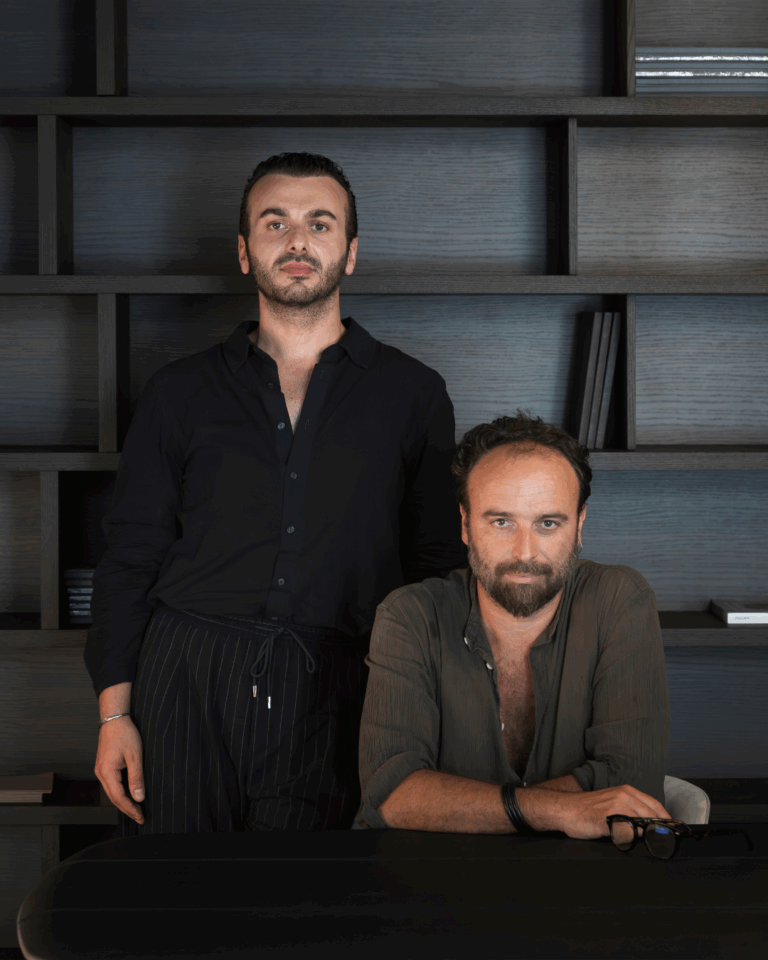
ORLANDO: On that note, we now come to the most recent recruit of the Rossi men, Federico. What kind of path did you take and how did you join the family business?
Federico Rossi: I went to art school, like Matteo, in Chiavari, in the address focused on pictorial decoration, the classic Genoese-style decoration of facades. One of my professors, a visionary, had guided us, over the years, to the discovery of graphics and the world of communication, which was the part that impressed me the most. After my studies, I started travelling, I went to Berlin where I started writing down ideas for art projects; I liked the idea of abstracting myself from the creation of the work of art. Leaning on a number of scientific/technological approaches, I was fascinated to create stimuli in the viewer that could provoke a totally individual reflection: hence the concept of generative art.
After this phase, together with my high school classmates, we founded an association, AMBIENTARTI, Open Dialogue, which still exists today, and with it we organised events, for three years, in parallel with our work.
We invited artists from Germany, from Europe, we organised film screenings, a symposium to finance art projects in Umbria. We had fun.
When I returned to Italy, I attended DAMS (University of Dance, Art, Music and Performing Arts), trying to give a shape to this creative inspiration I felt, but more in an organisational field, of communication, being behind the scenes of artistic production.
I approached the working world through experiences in fashion, in the more commercial side and in advertising. I worked for an American multinational whose clients included North Face, McDonald’s, H&M… I was involved in everything that was not conventional media, all of which complemented the broader communication project.
I experienced with frustration the fact that I had to promote products that were not the result of creativity but of data that were acquired and had to be converted into sales, thanks to the choice of the right testimonial. But value is not born that way, it is born out of a need.
Then came the covid and I left Milan for Chiavari with a small suitcase for the weekend to stay with my brother and I was stuck there. I always enjoyed going back to see my family at the seaside and that 2020 was an incredible spring that made me realise I didn’t want to go back to Milan.
So, for fun and without commitment, we started talking business with my father and Matteo. Their reality had also reached a sufficient degree of maturity to include my skills that are not related to architecture.
I immediately thought that we could create a website and also completely take care of the communication part: social media, website, etc. Consequently, after a few interviews, we formed this digital team of 3 people and from there we took our first steps into this very wide world. We are still getting to know the market, but we have certainly already brought a new type of contacts to the shop and studio world and we are figuring out in which area we want to push more in this direction.
My contribution to Forma Design is ambivalent: on the one hand there is the website, with the e-commerce linking to the commercial aspect of the shop and constituting a business card of the design
sphere. Thanks to this, we have been able to support other architects, in situations abroad, whose interior design of flats or villas we have taken care of directly from here.
The other part I deal with in the studio is communication. We are not a communication office for third parties, but we can offer the brand identity starter kit to a business and then of course we can follow
them for the design and decoration part of the spaces and we can also give advice on merchandising for a hotel.
Interesting in my opinion is to give a crown to this changing identity of the design outcome that Forma Design studio generates.
As a client I have a taste, a specific idea, and I want to interface with those who are able to give shape to my inspiration; this Forma Design offers, together with creative flair and competence that
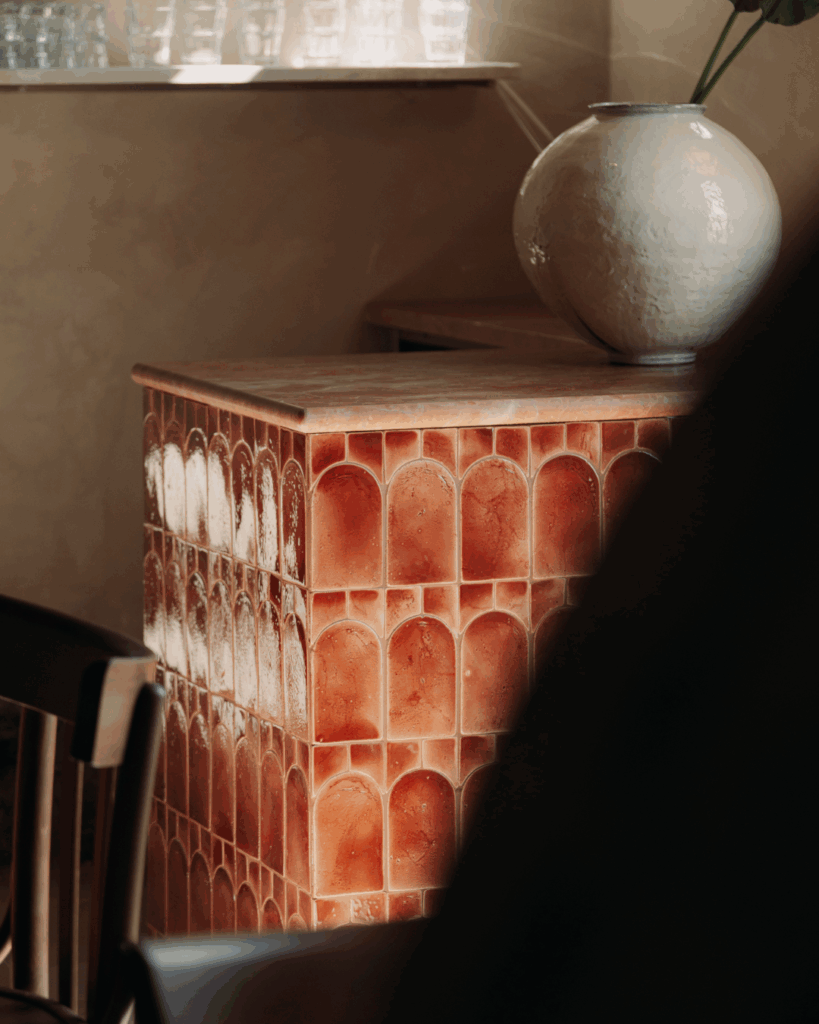
facilitates the client’s path. Every project that follows Forma Design enhances its ability to adapt to the client and to different needs and inspirations. Each project is unique; the search for materials is what creates coherence between them all.
ORLANDO: To all Rossi Men a common question, what does beauty represent for you?
GR: There is something that has always characterised my approach, a kind of balance. For me, beauty is that balance: a set of things that make up well-being. The balance of the whole.
MR: I am constantly searching for beauty…for me beauty is assimilated with being well, always wanting to seek stimulation.
FR: Beauty can be contained in a valuable moment, rather than in a single desirable, enviable product. In that special moment you achieve something you feel close, intimate, beautiful.
ORLANDO: Gian, finally would you summarise for us, in two words, your and your sons’ strengths?
Matteo has an incredible capacity for artful combination, as if he were a cook who makes an incredible lunch with just a few elements.
Federico has the ability to grasp the essence, he goes into a shop and chooses the essential things.
I hate buying, I am interested in the organisation of space, I like to think from the perspective of marketing and sales.
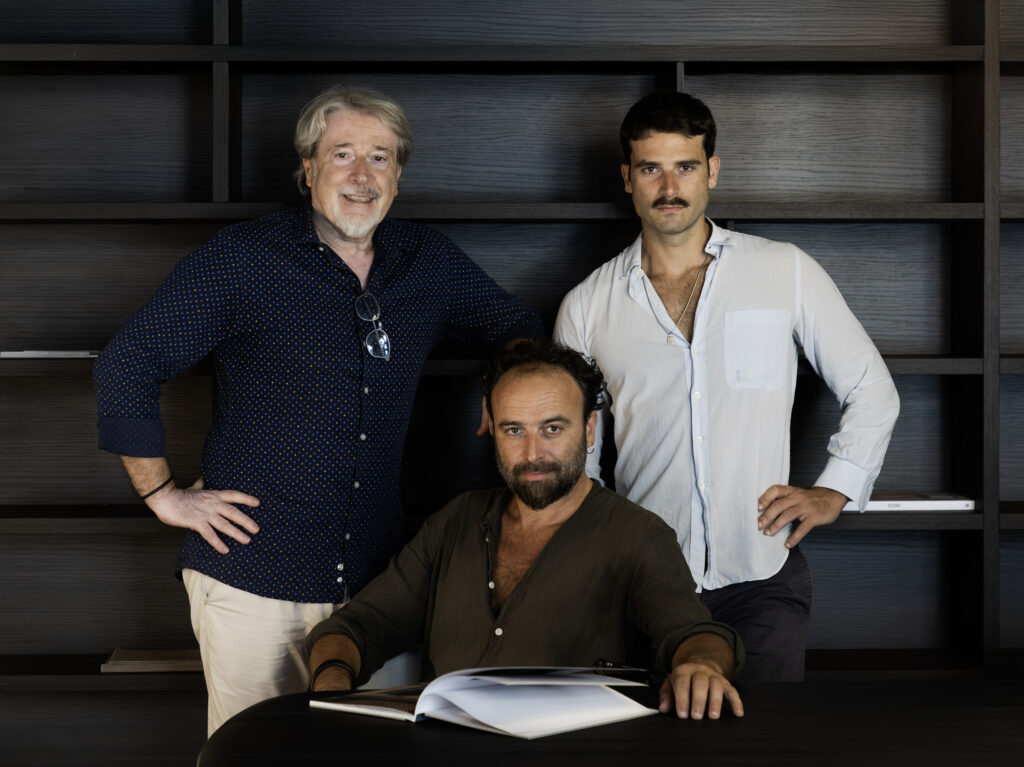
SPECIAL THANKS:
A special double thank you: to Michele Dell’Erna and Francesca Pesciallo who have been the cupids and promoters of the collaboration between Orlando and Spazio Giustiniani, and to Benjamin Coduti, head of the Spazio since January 2025, who with professionalism, passion and delicacy organised the memorable presentation event of Orlando at Spazio Giustiniani and its presence at Genoa Design Week 2025.
Discover the Parisian studio of Alice Malaret, the food designer who turns art into a tasting experience.
Unveiling the dialogue between Florence Welch and Autumn de Wilde, where music and vision converge to shape feverish images, ritual gestures, and a rare sense of visual enchantment.
Step through the threshold of the magical world of White Lands, the antiquarian bookshop in Turin founded by Luca Cena.
An in-depth conversation with multimedia journalist and science reporter Silvia Lazzaris.
Are you a sensitive and curious traveler, constantly searching for beauty, art and cultural inspiration? Sign up to receive the latest contemporary news!