The Florence Welch and Autumn de Wilde Incantation
Words by Annamaria Giano
A meeting between two kindred imaginations, where voice becomes ritual and image becomes visual poetry. From the atmospheres of Big God to the theatrical and folkloric world of Dance Fever, we explore the powerful collaboration between Florence Welch and director Autumn de Wilde. A journey in which the camera learns to listen and music transforms into a modern mythology.
The encounter between Florence Welch and Autumn de Wilde feels like the meeting of two imaginations already moving towards the same hidden altar. One arrives through voice, the other through vision. Together, they create a language in which music becomes apparition, the body carries the weight of omen, and the camera follows the singer as though tracing the outline of a myth still forming in the air.
EMMA director- Anya Taylor-Joy
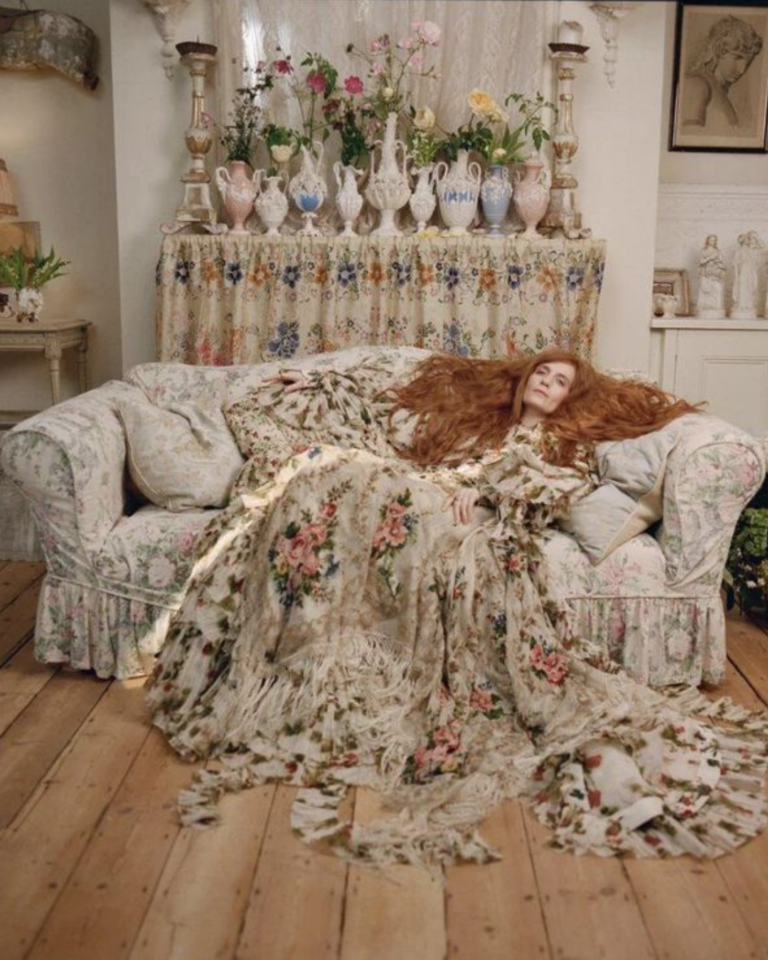
Florence Welch
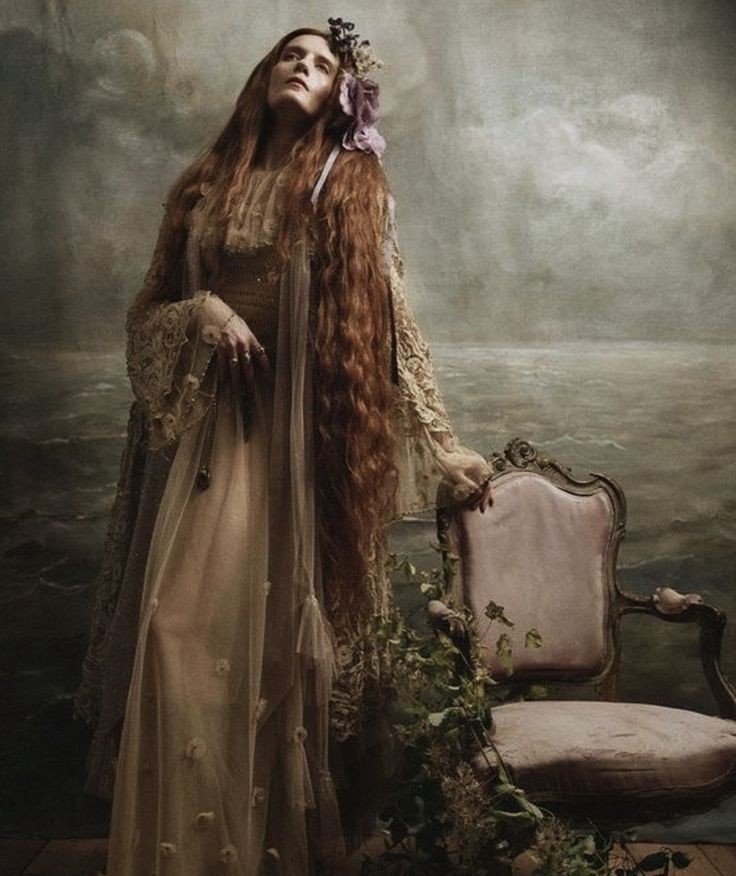
Florence Welch
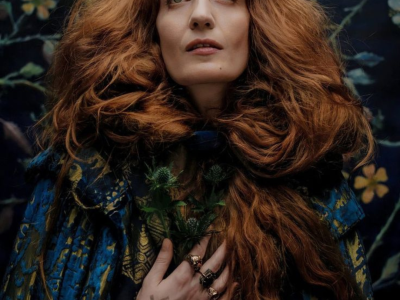
Florence Welch
Florence Welch
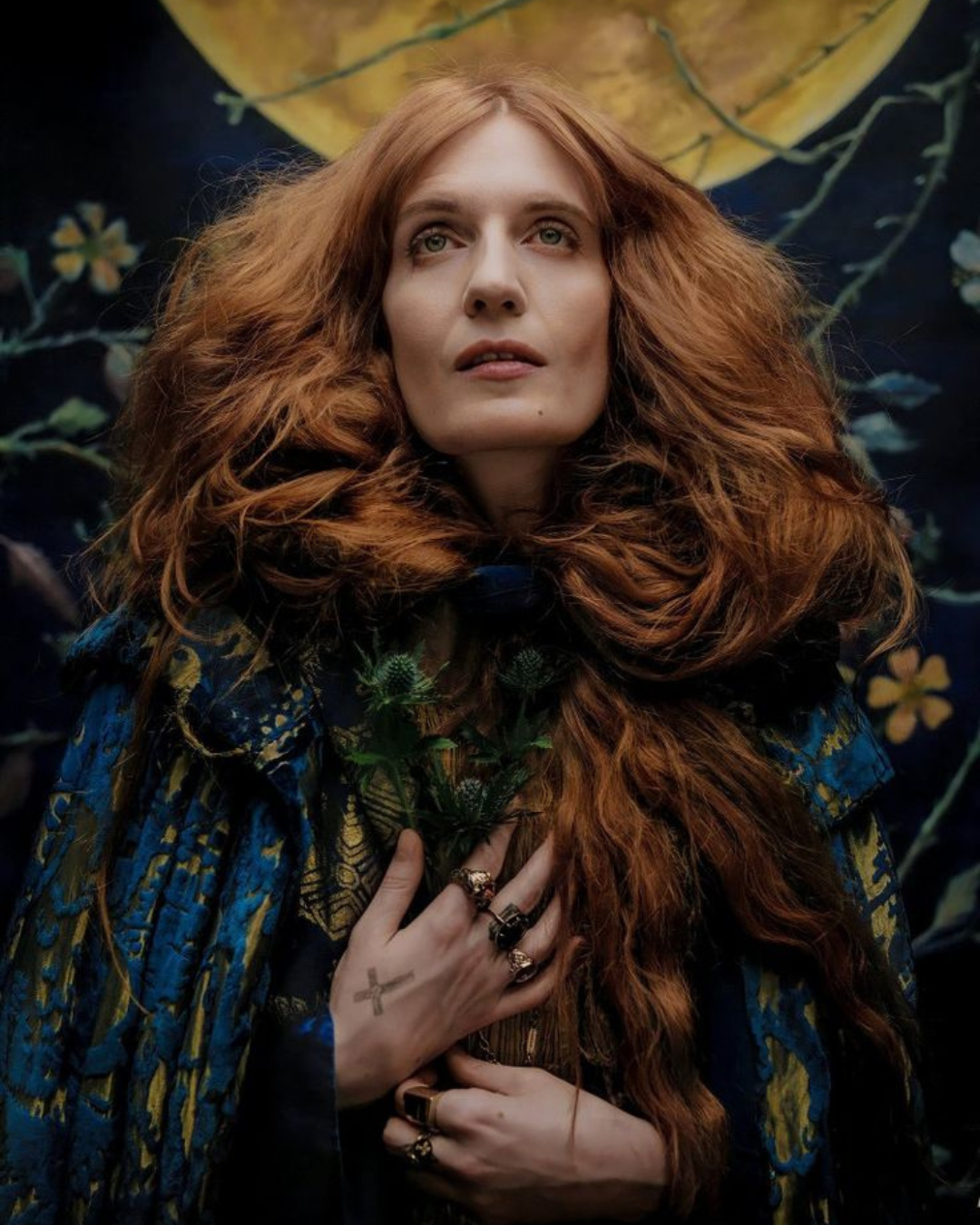
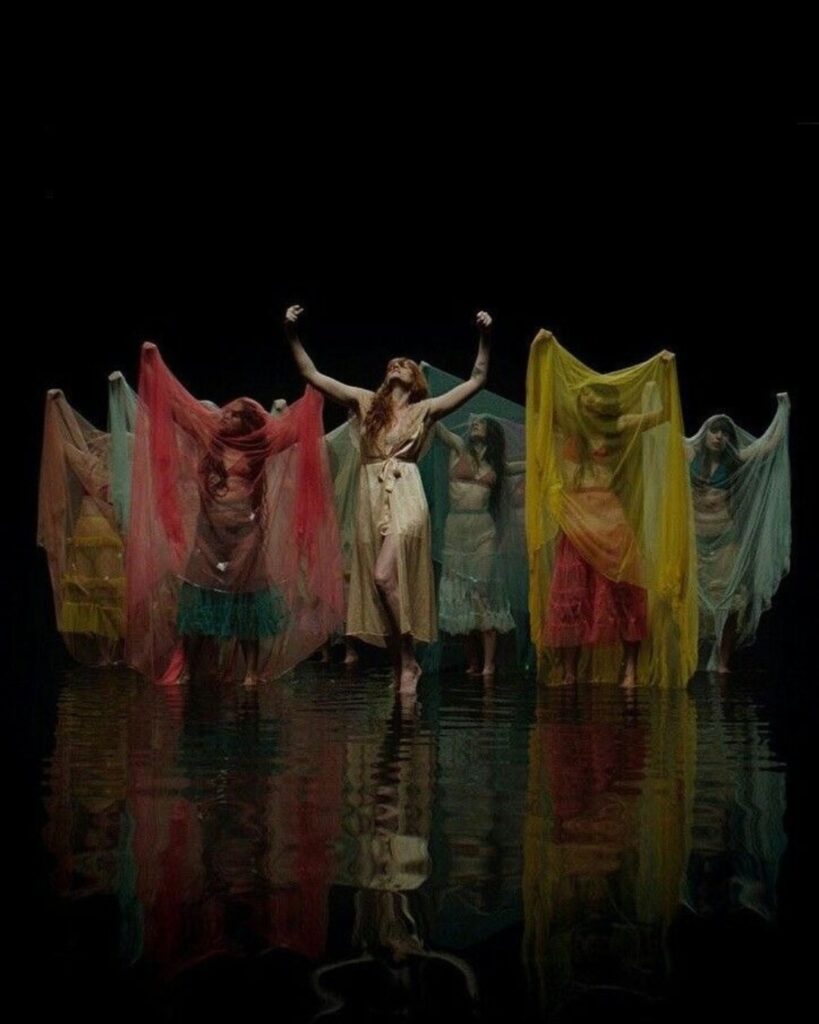
Florence Welch has always moved through performance with the gravity of someone called by an older force. Her voice rises like weather gathering over a chapel roof, then opens into a space where feeling becomes almost visible. In her songs, heartbreak takes on ceremonial form, devotion trembles inside sound, and release arrives through the body before it becomes a word. Autumn de Wilde understood this instinct with rare precision. Her lens does more than frame Florence. It enters the atmosphere of the music and gives its hidden current a pulse. Their first major visual meeting came with Big God in 2018, a video shaped by dark water, choreographic tension and the presence of women moving through shadow. The choreography by Akram Khan gives the work a ritual power, while de Wilde’s direction holds the scene in a charged stillness. Florence appears with the solemn force of a priestess suspended between surrender and command. Her body folds, gathers, rises again. The ache of the song becomes a physical rite.
In Big God, the collaboration finds an austere and potent grammar. The space around the performers feels like an interior landscape, a room inside grief. Colour arrives with the force of a wound opening to light. Florence moves among the dancers as if crossing the chambers of her own unrest, while the camera allows each gesture to unfold with the pressure of an invocation. The result is a ceremony of longing, where sound seems to enter water and return as movement.
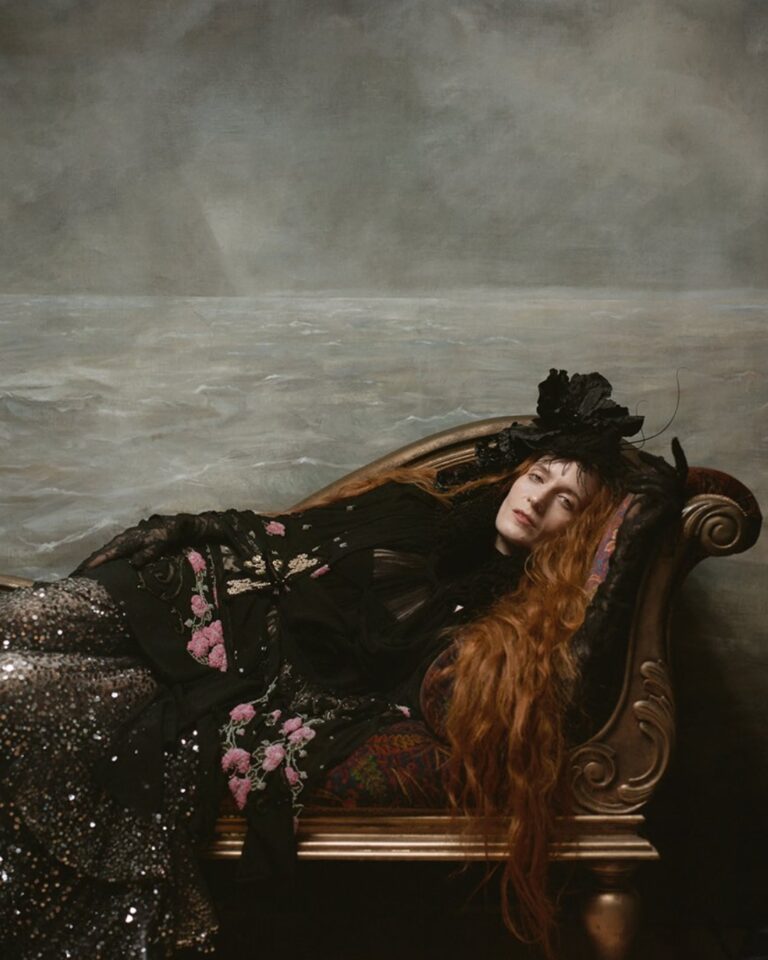
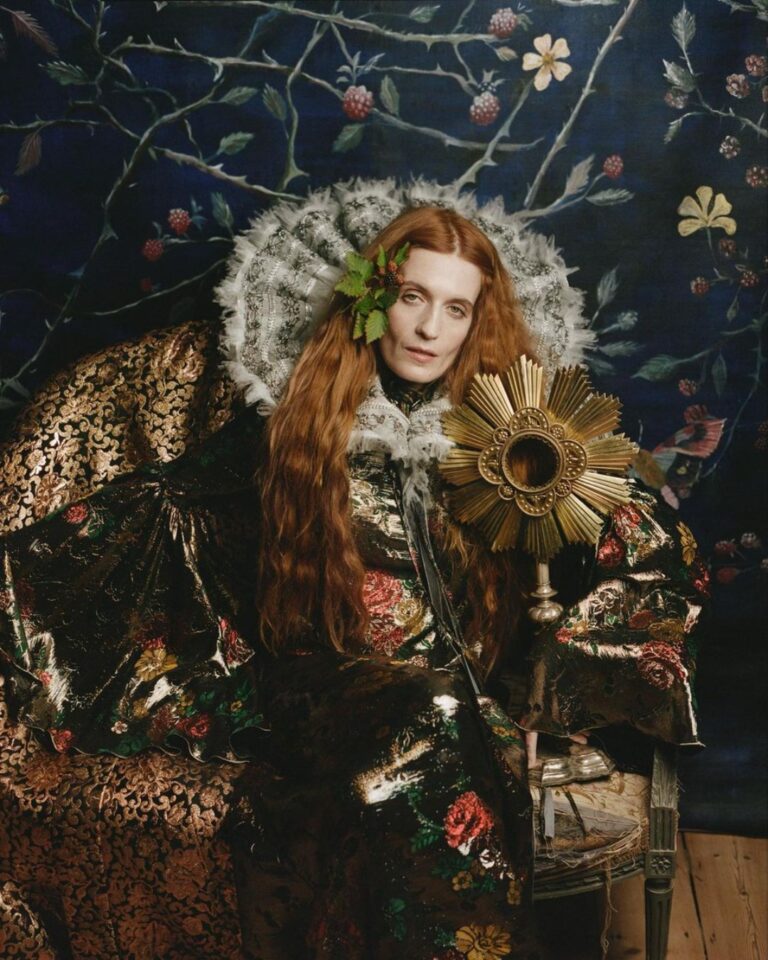
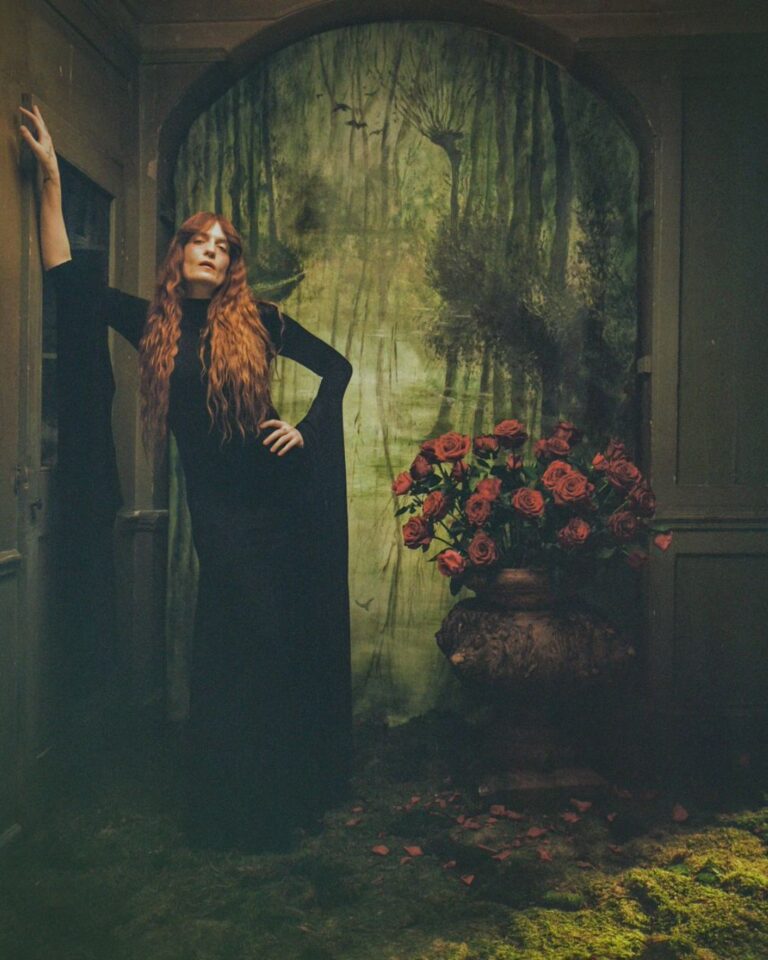
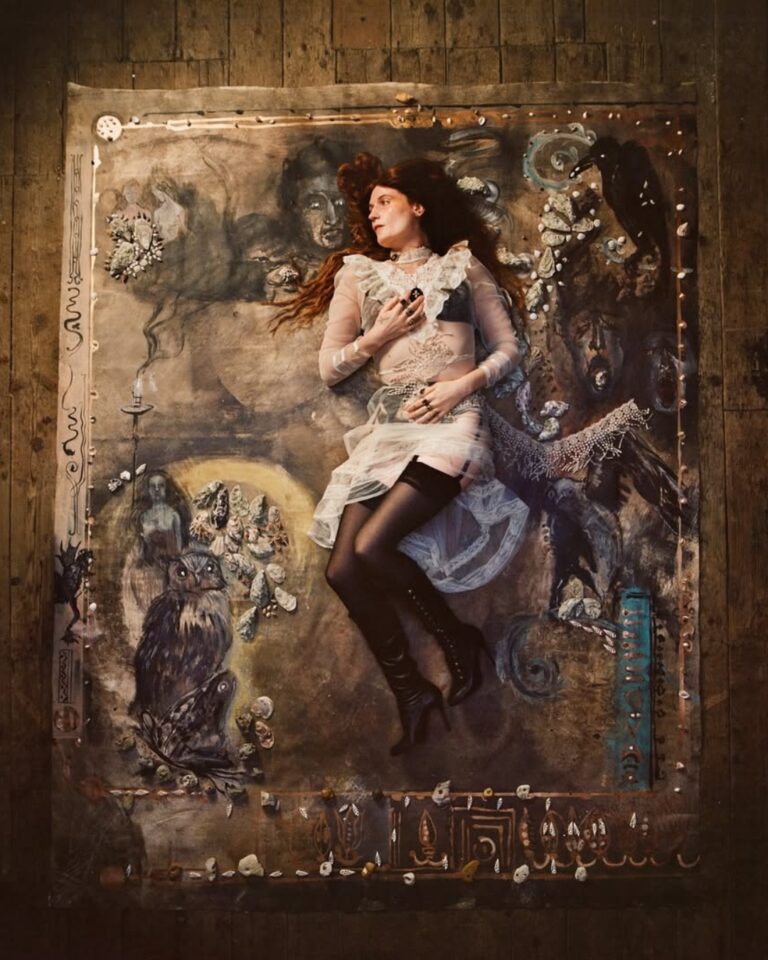
This visual language deepened with Dance Fever, the album that expanded the dialogue between Florence Welch and Autumn de Wilde into a broader artistic world. De Wilde shaped the album artwork and directed its principal videos, creating a universe that feels ancient in spirit and immediate in sensation. The imagery seems drawn from fever, theatre and folklore, yet its emotional force belongs to the present. Cloaks billow like weather. Bodies lift as if seized by invisible music. Rooms become thresholds for transformation.
In King, Florence appears wrapped in purple, regal and spectral, before the video opens into a theatre of power. Filmed in Kyiv shortly before the Russian invasion of Ukraine, the work now carries a deeper historical tremor. Its unfinished architecture and floating bodies create a vision of sovereignty touched by premonition. Florence sings of artistic hunger and the pressure of becoming, while de Wilde turns those tensions into a dream of ascent. The image of the lifted body becomes a declaration in itself. Power enters the air and changes its weight.
The phrase “I am king” becomes the centre of the song’s force. In de Wilde’s visual world, the statement gains shape through motion rather than explanation. Florence bends the scene around her. She rises above the ordinary laws of the room. Identity becomes a current passing through fabric, breath and gesture. The crown is felt before it is seen.
Florence Welch
Florence Welch
Florence Welch
Heaven Is Here sharpens that ritual intensity. Written after a long absence from the studio, the song carries the urgency of a body returning to sound. De Wilde receives that force and gives it a visual form built around closeness, impact and collective motion. Also filmed in Kyiv, the video feels like a spell performed at the edge of confinement. Hands strike the air. Faces flash through darkness. The choreography seems to come from a place where emotion has gathered too long and must break into form. With Free, the collaboration turns towards release. Bill Nighy appears as Florence’s anxiety, elegant and spectral, moving beside her like a shadow companion. The video, filmed in Ukraine with local artists and crew, carries a poignant brightness because of the history that followed. De Wilde allows anxiety to become almost theatrical, while Florence searches for deliverance through dance. Freedom arrives as a bodily event, a brief radiance crossing the nervous system. Across these works, the collaboration between Florence Welch and Autumn de Wilde forms a continuous visual poem. Each video belongs to its own chamber, yet the same pulse moves through all of them. Women gather like figures from a forgotten fresco. Fabric behaves like weather. Dance becomes the passage through which hidden feeling enters the visible world. De Wilde’s eye gives Florence’s music a space where emotion can become architecture.
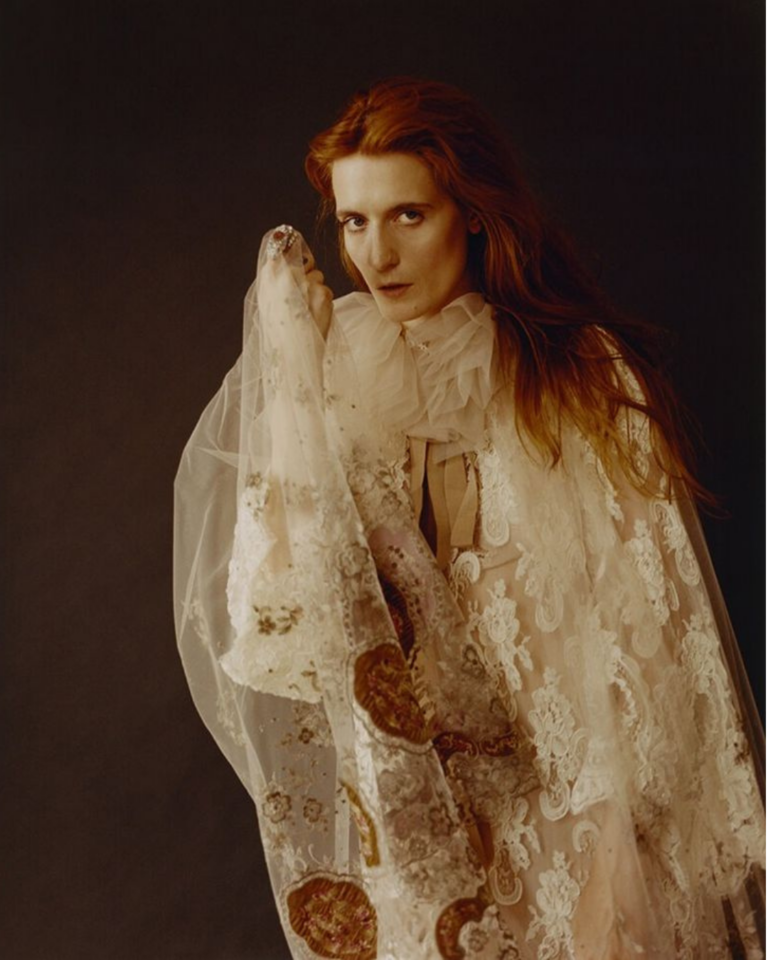
The power of this collaboration lies in its understanding of Florence as an artist of thresholds. She is always crossing from song into possession, from confession into myth. De Wilde’s camera recognises her as a medium through whom feeling takes shape. Florence becomes the force that causes the scene to breathe. The image gathers around her as if answering a summons. In contemporary music culture, their work restores the music video to the realm of cinematic poem. It asks the viewer to stay inside an atmosphere and read gesture as sign. Costume becomes inner weather. A room becomes a psychic landscape. The body becomes script. Their visual world gives pop imagery the density of theatre and the intimacy of a dream.
Florence Welch and Autumn de Wilde share a belief in beauty as an active force. Beauty summons. It disturbs the air. It allows a song to pass beyond sound and enter the eye like fever. Their collaboration reveals the strange life of music once it becomes image, when a voice finds its mirror in movement and a camera learns to listen. Together, they have created a modern mythology of performance and release. Florence brings the voice. Autumn brings the lens. Between them, the image begins to pulse with hidden breath, and the soul appears for a moment in the lifted hand, the turning body, the sudden flare of colour.
Unveiling the dialogue between Florence Welch and Autumn de Wilde, where music and vision converge to shape feverish images, ritual gestures, and a rare sense of visual enchantment.
An in-depth conversation with multimedia journalist and science reporter Silvia Lazzaris.
By Antonella Dellepiane Pescetto
Are you a sensitive and curious traveler, constantly searching for beauty, art and cultural inspiration? Sign up to receive the latest contemporary news!