Audrey Demarre
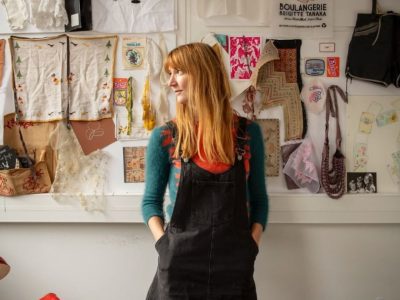
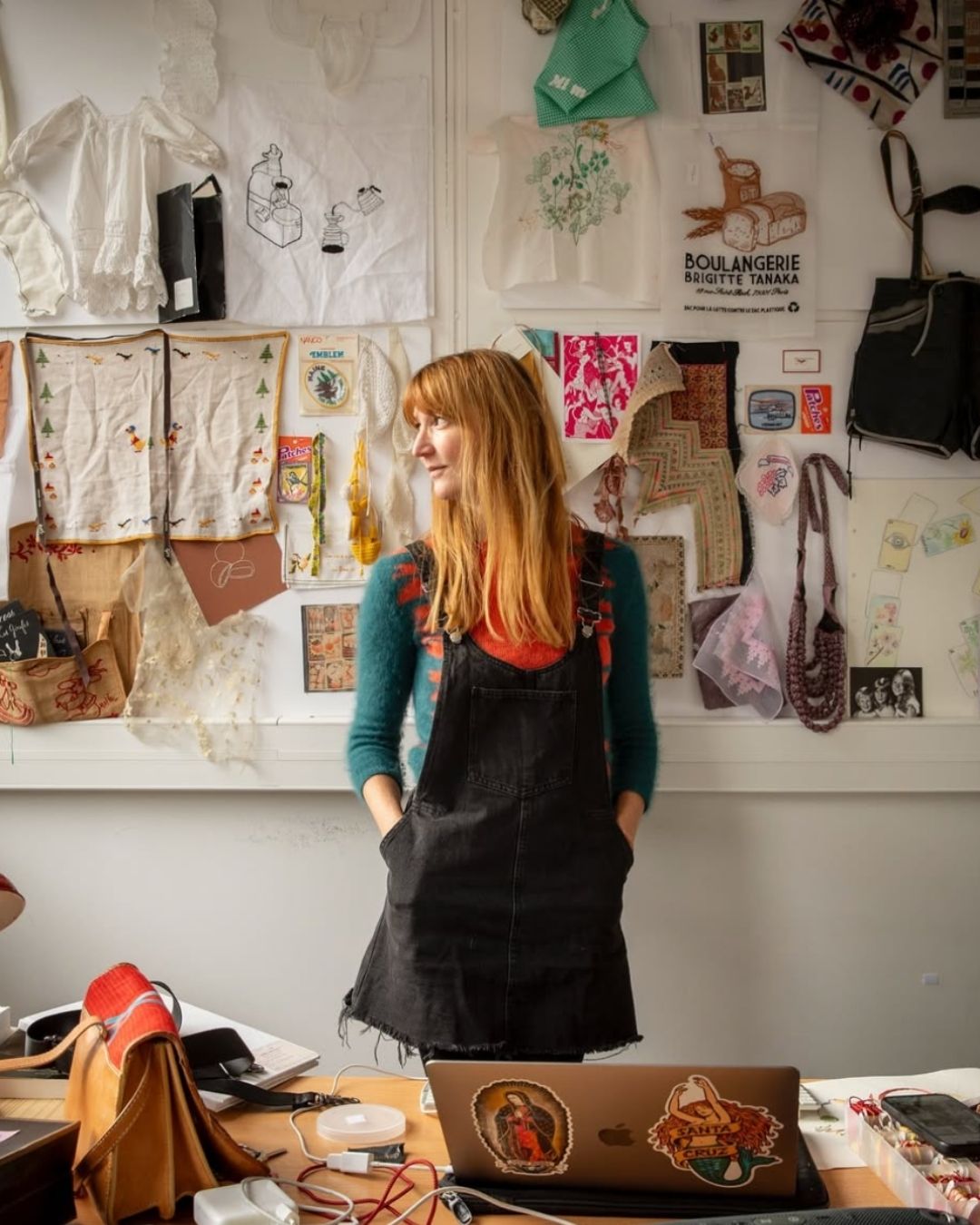
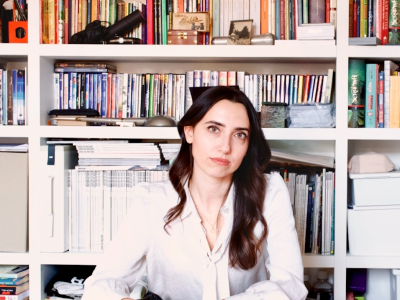
Audrey Demarre is a creator with a diverse background who prefers to define herself simply as an “embroiderer” rather than an “artist”. With a background in literature, twenty years of experience as an editor, and a career as an agent for illustrators, she now runs her own agency representing both illustrators and textile artists. Entirely self-taught, she approached embroidery instinctively after working in illustration, developing a style where the needle traces works that look a lot like sketches. Through the use of antique fabrics, her work pays tribute to the silent history of women, a theme she also explored as the author of Broderies, an anthology dedicated to women embroiderers.
In the following conversation, Annamaria Giano guides us through the threads of her creative universe.
Annamaria Giano: What first drew you to embroidery – not as domestic craft, but as a language of form and reflection?
Audrey Demarre: I came to embroidery by chance, along the way. I’d been doing illustration before and found myself more at ease with embroidery, which I first practiced on paper. Maybe I felt sheltered between illustration and embroidery. I had absolute freedom because I was totally self-taught, and so was very little constrained by techniques.
AG: How did you approach the technical dimension of embroidery? Did you study traditional techniques, or did you allow your own gestures to develop instinctively?
AD: I never really learned embroidery: I approached it instinctively, almost intuitively, and I like it that way. This free relationship with the gesture suits me. However, over the years, the thread has led me to other hands – those of artists I admire – with whom I have taken a few courses. I’ve gleaned techniques that I now combine in my own way, to give shape to what I have in mind.
AG: Did you approach art immediately through the medium of sewing or did you try other media? Would you like to try others in the future?
AD: Ideally, I’d like to try my hand at all yarn- and textile-related techniques. Crochet, weaving, sewing… I’d especially like to learn how to make patchworks. I discovered embroidery through drawing, almost naturally, because my embroideries look a lot like sketches. I’m not very good at sewing, and anything too technical blocks me. This was already the case with music: I always dreamed of playing the piano, but I never managed to learn music theory.
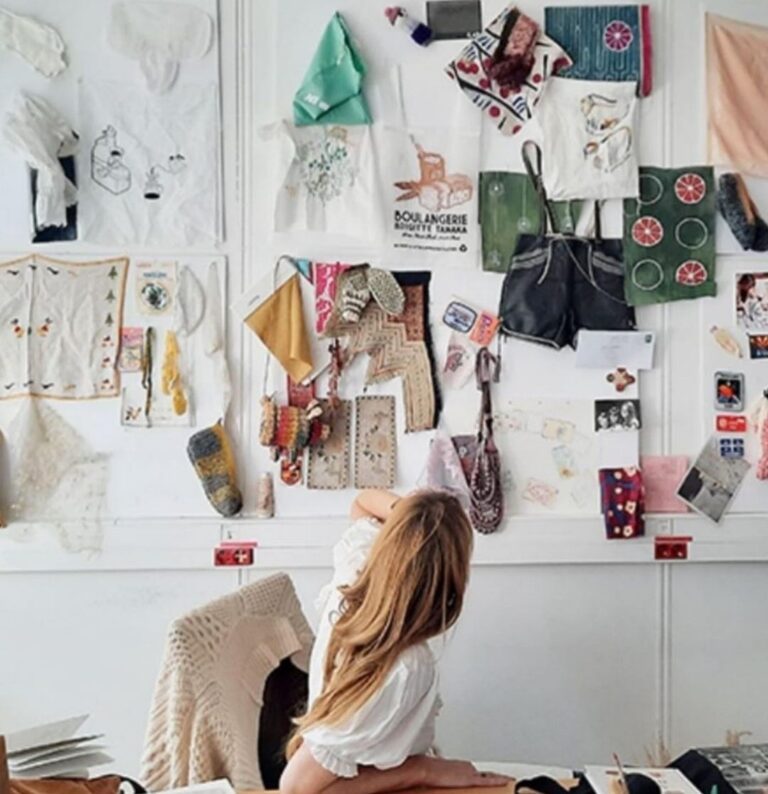
AG: Are there particular historical periods, artistic movements or textile traditions that have influenced your visual lexicon – whether consciously or by osmosis?
AD: I’m interested in all textile traditions. Each culture has its own techniques, and each brings something precious to the table. I love the work of Olga de Amaral or Lenore Tawney, but my inspiration comes from everywhere, not just textiles. I’m also inspired by photographers, fashion designers, illustrators, film directors and writers.
AG: You worked as an agent for illustrators. How did you realise you wanted to pursue a career on the other side, as an artist?
I’ve been an agent for over seven years, and recently decided to set up my own agency. I now represent textile artists as well as illustrators.This approach was born of a simple observation: I understand the challenges and difficulties associated with the status of artist. And this is undoubtedly what makes me better able to accompany, advise and support artists in the right way.
AG: Your works often evoke traces, sediments, or silent cartographies. Do you see them as forms of drawing, writing, or mapping?
AD: I really like the idea of taking common forms – or at least forms from our collective imagination – and making them the starting point for another story. As for their nature, which borrows from drawing, writing and cartography, I like the fact that they remain open, difficult to define and resistant to attempts at categorization.
AG: How do you choose your subjects? Is there a thematic core you return to – botany, anatomy, abstraction, memory?
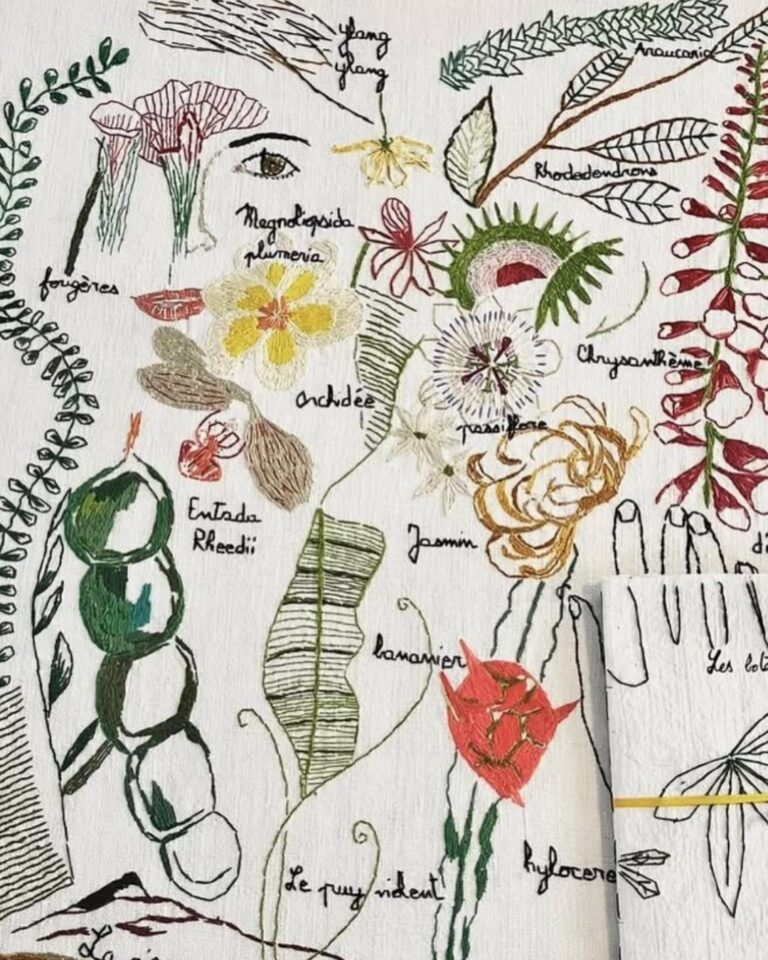
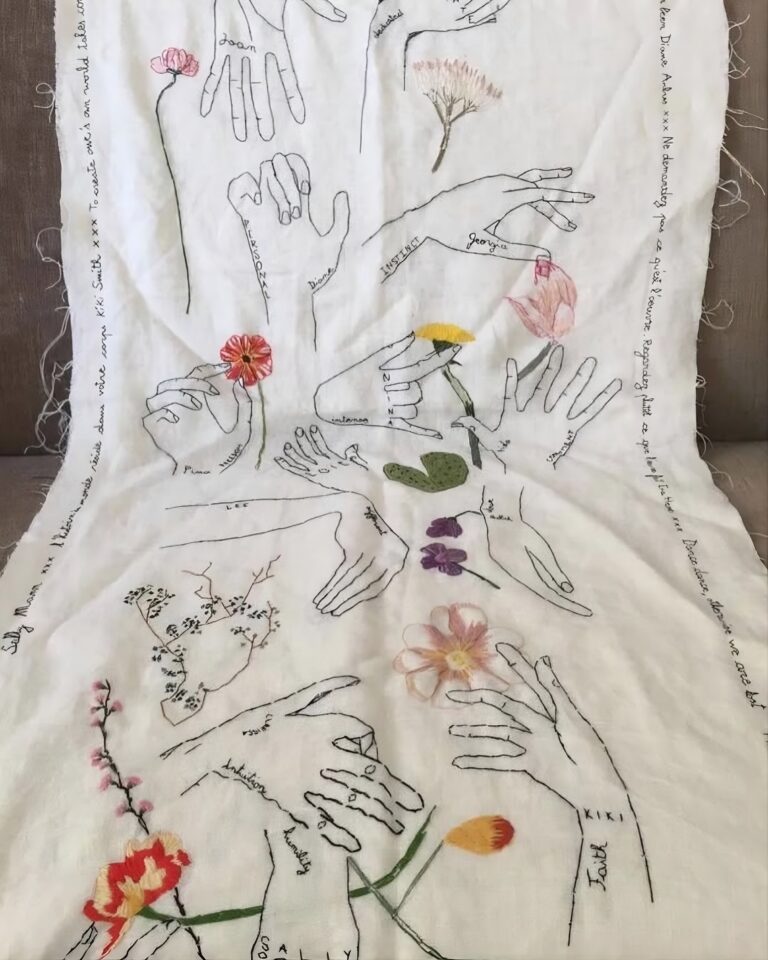
AD: Nature is a constant source of inspiration for me. In one way or another, it almost always creeps into what I create. I also draw on themes from books, films and encounters in my life. To represent them, my style varies freely, from abstraction to a more figurative form. The question of women touches me deeply. The fact that they have embroidered, sewn, woven and crocheted for centuries, often in silence and without recognition, continues to move me. I’m also fascinated by miniaturization, by trompe-l’œil, by these games of perception that often recur in my work.
AG: Many of your pieces seem to exist in a state of quiet erosion or emergence. What kind of material conditions – fabrics, threads, natural dyes – do you gravitate toward, and why?
I love working with antique fabrics. They give me the impression of being part of a history that began long before me, and which I continue in my own way. It’s also a kind of tribute to the women who came before me, whose linen bears the trace of their silent work. I’ve sometimes used old threads, found here and there, but it’s more delicate: over time, some become fragile. In general, I’m fascinated by all textile work – whether it’s the work of recognized artists, virtuoso technicians or simple amateurs. In this respect, I’m particularly moved by textile repairs. Often born of a concern for economy, they tell another story: in these tiny, sometimes barely visible alterations, I read the discreet but tenacious presence of women.
AG: Do you see embroidery as a form of visual slowness, and if so, what kind of resistance or stance does that slowness enact in today’s accelerated visual culture?
AD: They say embroidery is a slow art. It’s true, but I don’t live it that way. When I start an embroidery project, I let myself go. I almost never go backwards, I go forward with a kind of momentum, sometimes even quite quickly. Having said that, embroidery immediately places me on the margins: away from the noise of the world, away from any idea of performance. It’s a space apart, a suspended time. I’m constantly imbued with images, and the work of other artists is an inexhaustible source of wonder and inspiration. Then comes the moment of the needle: a kind of pause, a silent synthesis, where all these impressions are deposited, transformed and given new form.
AG: In your creative process, do you begin with a precise composition, or does the work unfold gradually as the needle moves?
AD: It all depends on the context: whether I’m working to order or more freely. In the case of a commission, sometimes the customer needs to visualize the general idea. In such cases, I make drawings or sketches to establish an intention, an atmosphere. Then I sometimes draw a light outline to place the main elements, but very quickly I let myself be guided by the thread. My way of embroidering remains intuitive. It’s hard to explain: I go step by step, adding a touch of blue here, a shadow there… The composition builds up little by little, as if by itself. And when the embroidery has to stop, you know. It’s a mysterious moment, but very clear.
AG: The history of embroidery is often bound to domesticity and femininity, yet also to subversion, intimacy, and coded language. Do you consciously engage with this legacy?
AD: That’s what fascinates me about yarn. It has a dual nature: we often see it as something harmless, but it has real power. I like the idea that, even if we imagined women to be confined to the home, silent and isolated, they created in secret, they engaged, they invented worlds. Little by little, they moved forward and sometimes succeeded in gaining recognition. This ambivalence is reflected in the needle, which is both a small weapon that can sting and wound, and a tool for repair.
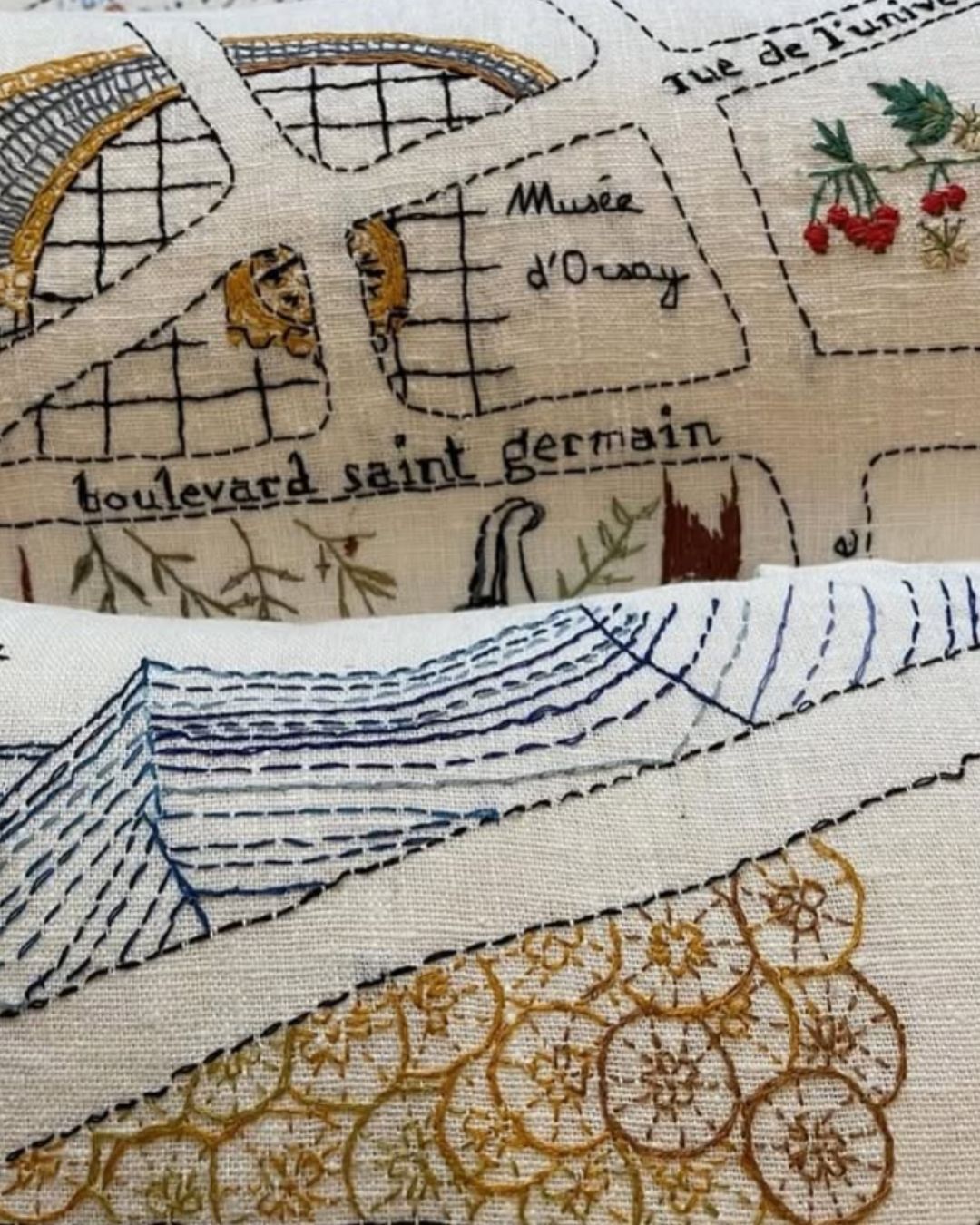
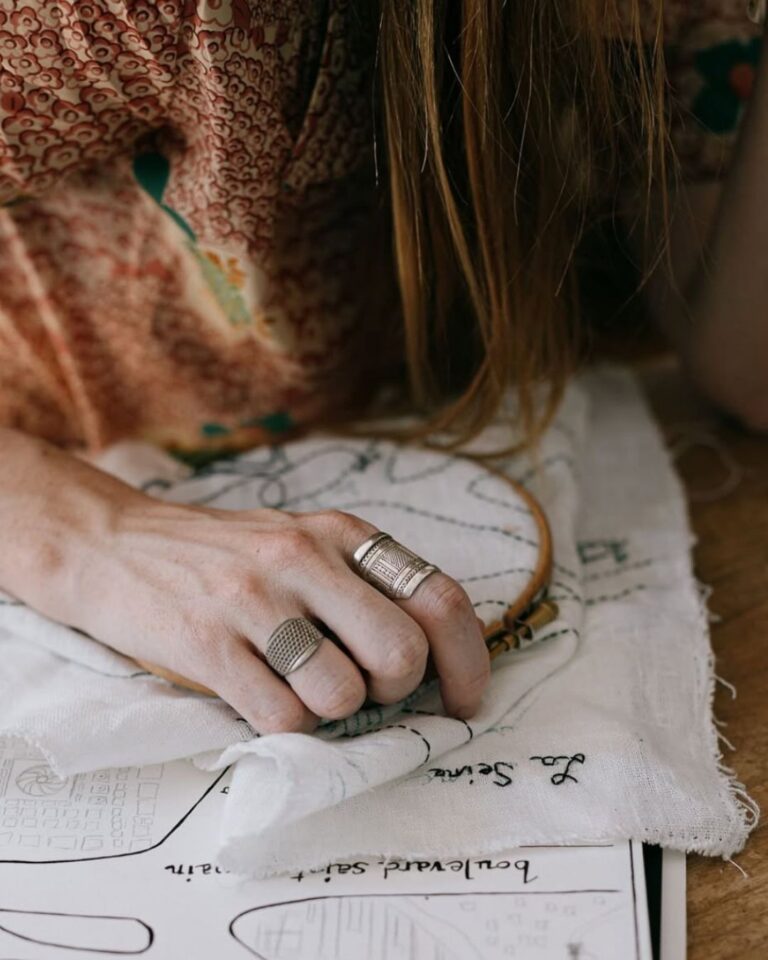
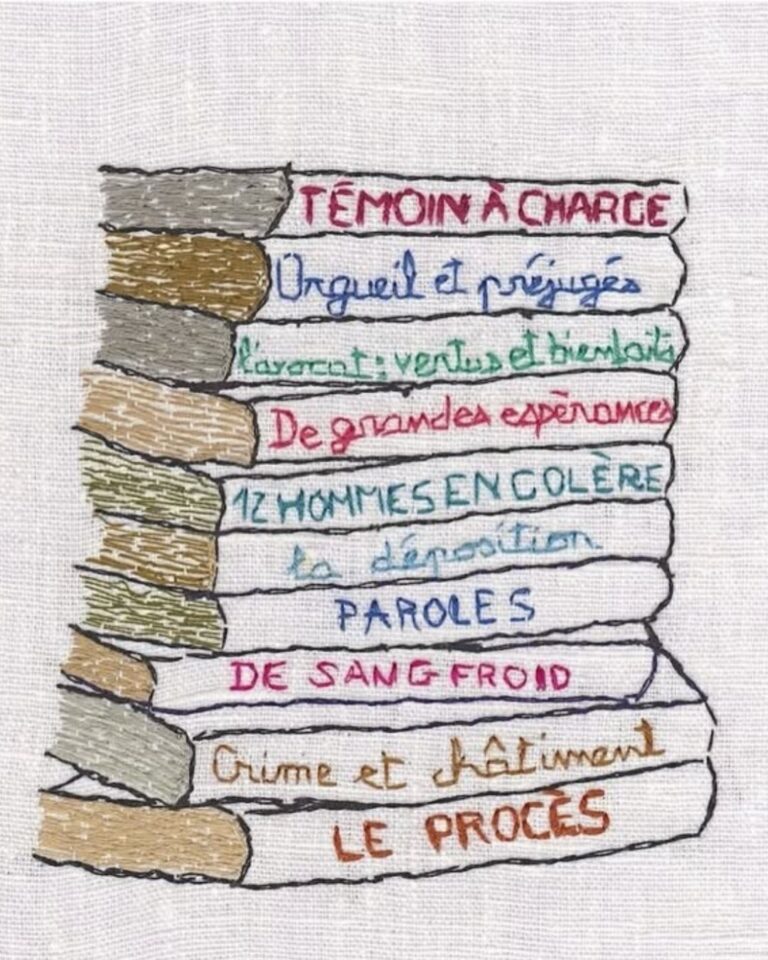
AG: Your grandmother Irma was a renowned seamstress in Paris. Did you interiorised her legacy since you were little or growing up? Are there other figures in your family which are related to art and embroidery?
AD: Irma, my great-grandmother whose first name I bear – as well as those of my two grandmothers – was a seamstress in the belle époque, a trade she practiced with pride. I never saw her in action – I was a baby when she died – but for me there was an invisible transmission. Irma came from the North, a region renowned for its textile mills and spinning mills. I still feel she’s holding my hand, just like the women in my family, starting with my mother, who embroidered, sewed and knitted, whether out of necessity or pleasure.
AG: In a world saturated with digital images, embroidery requires a return to the tactile, to duration, to the body. How does the physicality of the act influence your thinking?
AD: At the very moment when we are astonished, frightened or amazed by the arrival of artificial intelligence in our lives, I notice that people are triggering an interest in slower, more physical, more embodied practices. I believe that creating with one’s hands is an indispensable human need; it’s both the most natural and the most magical thing in existence. Magical in the sense that I rarely know where I’m going when I start, but strangely enough I rarely hesitate and things end up inventing themselves.
AG: Do you view your pieces as autonomous artworks, or do you see them as fragments of a broader personal archive or inquiry?
AD: I’m wary of words like “artist” or “work of art”. I prefer to think of myself as an embroiderer – a term that’s both precise and colorful, yet not overused. I work in series, sometimes very different from one another. And yet, if I took a step back – or if it wasn’t me – I’d wager that there would be a coherence to them, like a great cartography where each episode of life would be treated according to the mood, physical form or state of mind of the moment. I’ve often been told that my embroideries resemble sketches, pencil strokes, sometimes even children’s drawings. I like that very much: I love things that are in motion. I hate institutions, fixed movements and status. The more a work escapes, the more it remains in motion, the more alive it seems to me.
AG: Has fashion ever entered your field of interest – not as an industry, but as a system of signs, of cuts, of silhouettes?
AD: I’m very interested in fashion, and particularly clothing. I’m always amazed at how much attention people pay to what they eat or put on their skin, but rarely question what they wear. Yet textiles are arguably the most intimate and constant companion in our lives. We are born wrapped in fabric, live and sleep in it, and until recently were even buried in shrouds. Perhaps it’s this familiarity that means we no longer question fabric. Few people really know what material they’re wearing, what type of fabric, or know the difference between knit, crochet or woven. All this fascinates me, even if I’m not a fashion historian, far from it.
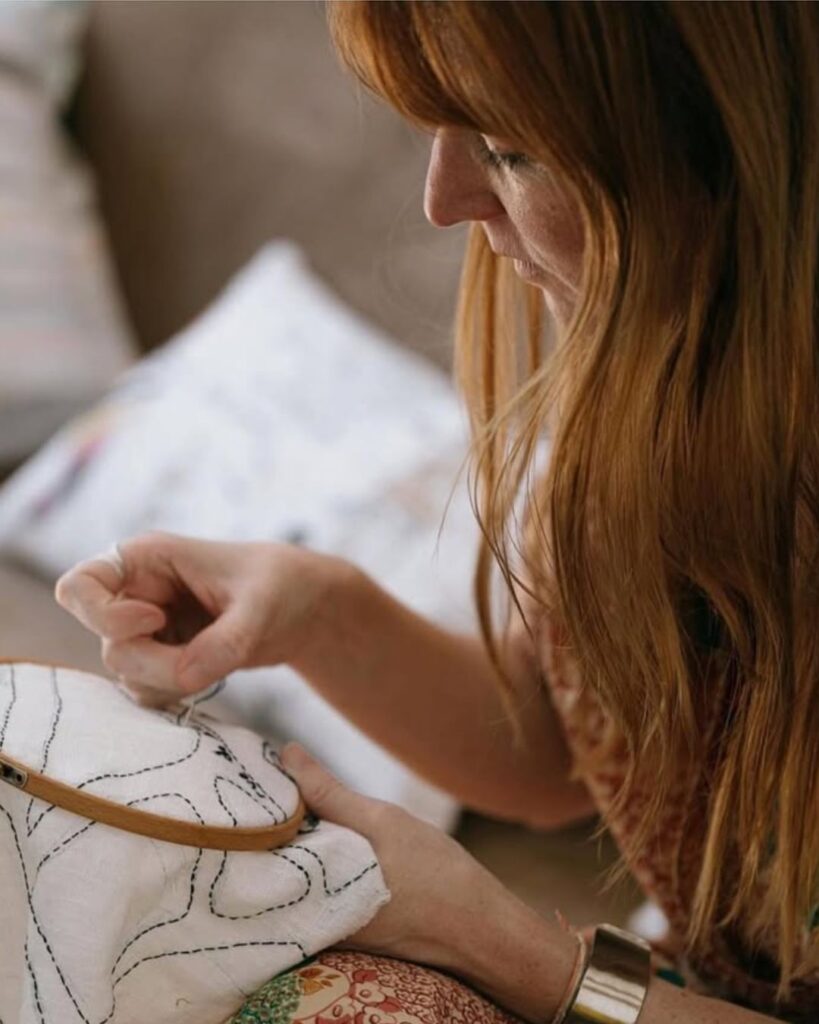
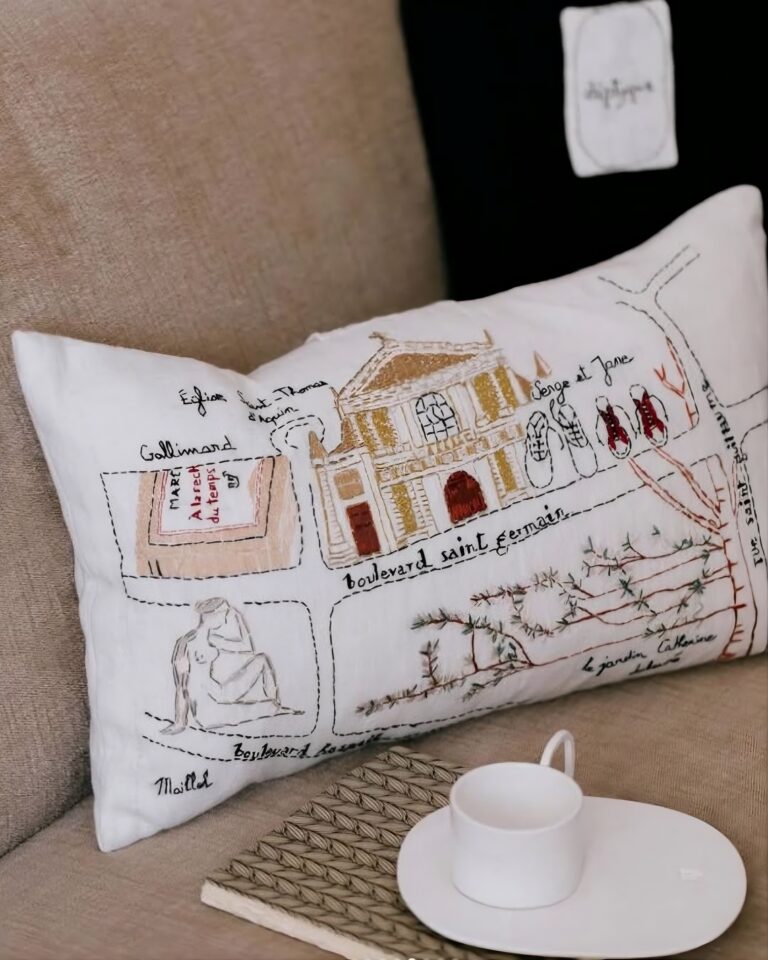
AG: From Dyptique to Le Prestic Ouiston, how do you relate to commissions? When your freedom is harnessed by a theme or a commission, how do you feel? Which projects have you enjoyed developing the most?
AD: I’ve always been lucky enough to have almost total freedom when it comes to commissions – a rare thing, I’m well aware. I always take the time to meet the people involved, to gather information, and to think in relation to the brand I’m working for. I try to understand its codes, its signs, its tone, so that I can then propose a story that brings all this to life. That’s why my relationship with commissions is both serene and joyful: they’re a lot like my personal work, which consists of taking hold of stories and finding ways of telling them.
AG: How do you relate to the idea of error? In a medium where each gesture leaves a mark, is the unexpected part of your grammar or something to be corrected?
AD: My relationship with mistakes is calmer. Having experienced it on several occasions, I’ve come to understand just how much it can be a springboard to something new, opening me up to new ways of approaching a subject or discovering new techniques. Mistakes are also an act of letting go, a way of accepting that not everything is perfect. As a self-taught artist, far removed from technical frameworks, I’d go so far as to say that mistakes have almost become a trademark for me. I give it a real place, you could say I summon it.
Do you collect historical textiles, old garments, or archival references? What role does research play in your studio practice?
AD: Absolutely, and as word is spreading, my collection is growing all the time. I love everything: from the little crocheted slippers I buy at markets in Portugal, to children’s clothes, lace, schoolgirls’ marquettes, old clothes, patched sheets, patchworks… I don’t always take direct inspiration from them, but this collection is a real fund that reassures me, a little mattress I can lean on when I look up. It’s more a tribute to the richness and diversity of textiles and needlework than an immediate source of inspiration.
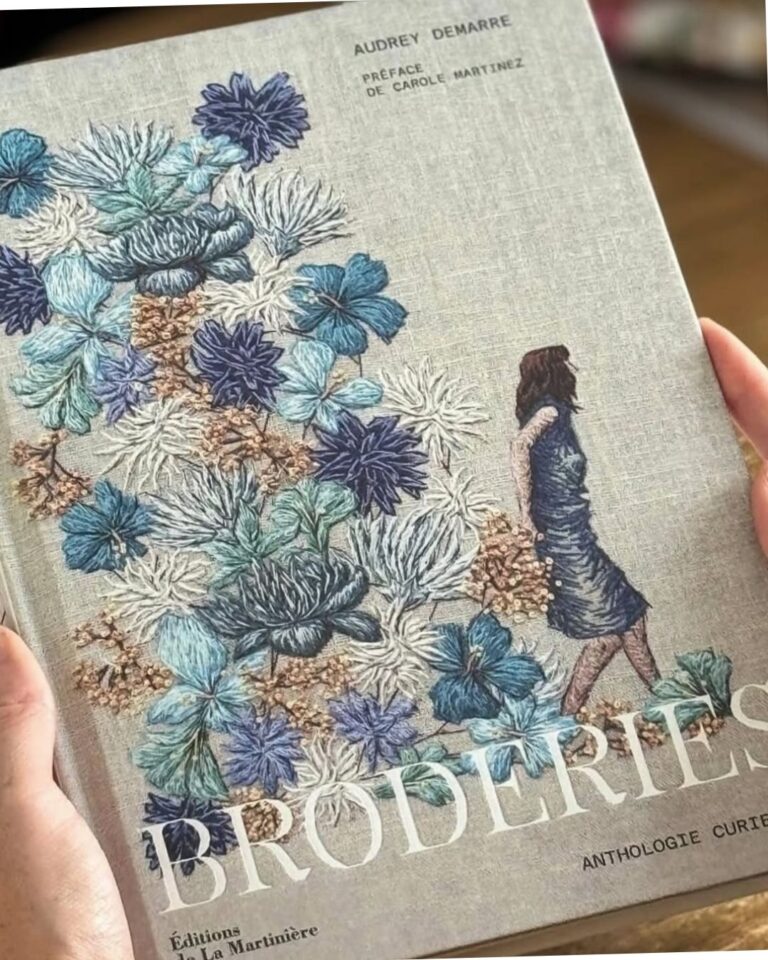
Tell us about your editorial project Broderies, published by La Martiniére. An anthologie curieuse which celebrates women embroiderers. Would you like to work on other editorial adventures?
I’d love to, because I really enjoyed the experience, especially the fact that I was able to write in my own style. I was in a special position: I’m neither a historian nor an embroidery technician, and I didn’t want to pretend to be. So I needed to create a space where I could both convey concrete information about the artists I was presenting, and share the emotion their work aroused in me. Writing is part of my background: I studied literature and worked as an editor for almost twenty years. However, I had never really written anything other than summaries of books. I’ve loved doing that, and I’d love to write children’s books, or fiction based around the needle. In fact, I’ve got a project about that in the back of my mind.
Finally, what do you hope a viewer perceives – not just with the eyes, but perhaps through intuition, proximity, or memory – when encountering one of your embroideries?
Above all, I’d like my work to inspire much more than what I myself wanted to put into it. For me, the most successful works are those that escape us, that travel far from their creator. Those that evoke totally different interpretations from one person to another. I love anything that doesn’t conclude, anything that leaves the field open to others. I love dialogues. Through my embroideries, I ask questions, and I particularly like it when the answers are the opposite of what I imagined.
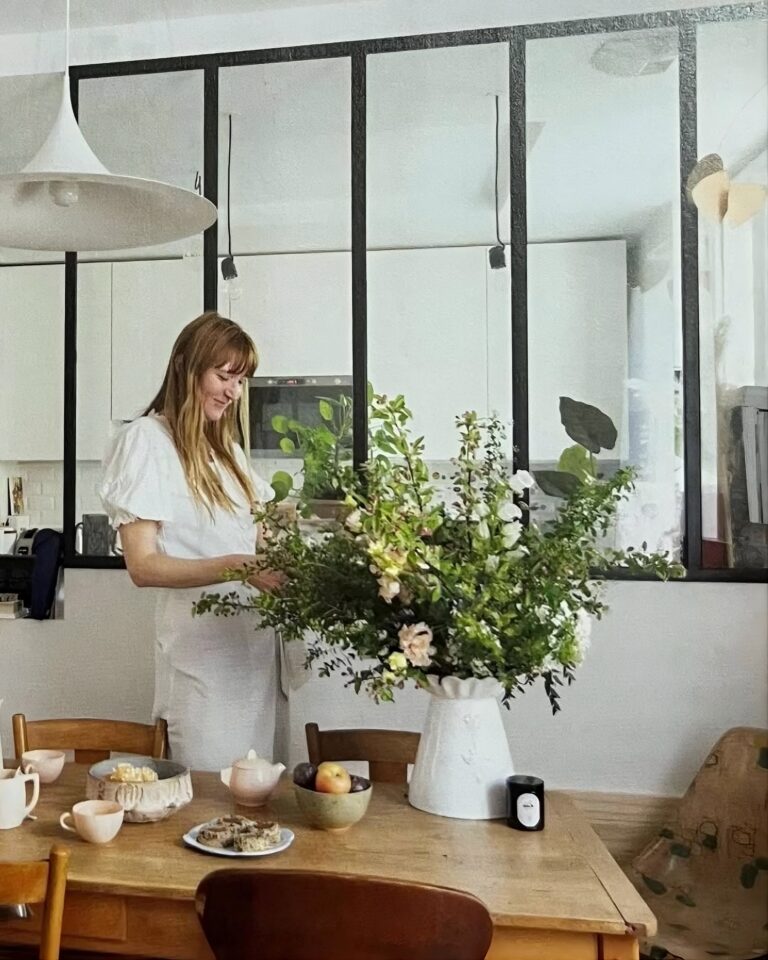
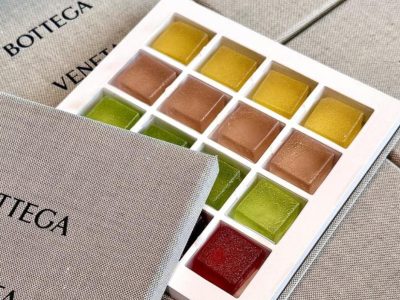
Discover the Parisian studio of Alice Malaret, the food designer who turns art into a tasting experience.
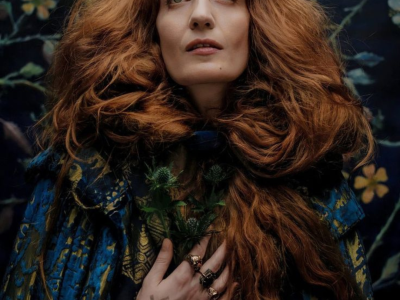
Unveiling the dialogue between Florence Welch and Autumn de Wilde, where music and vision converge to shape feverish images, ritual gestures, and a rare sense of visual enchantment.
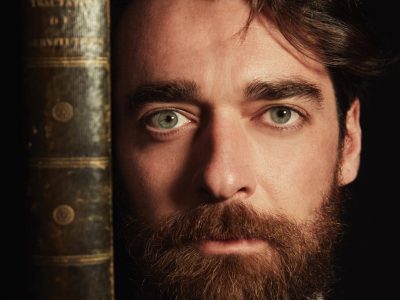
Step through the threshold of the magical world of White Lands, the antiquarian bookshop in Turin founded by Luca Cena.
An in-depth conversation with multimedia journalist and science reporter Silvia Lazzaris.
Are you a sensitive and curious traveler, constantly searching for beauty, art and cultural inspiration? Sign up to receive the latest contemporary news!