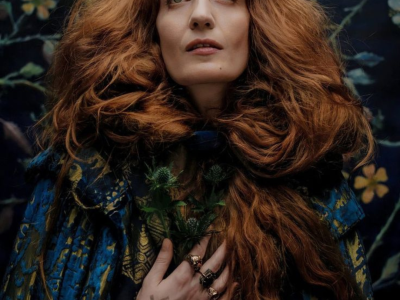
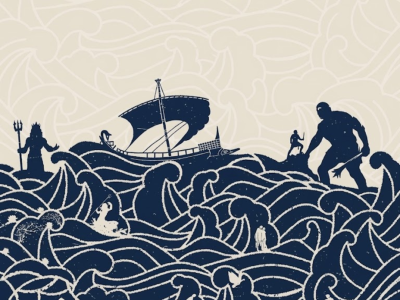
“O Beauty! do you visit from the sky Or the abyss? infernal and divine, Your gaze bestows both kindnesses and crimes, So it is said you act on us like wine” Hymn to Beauty, Charles Baudelaire, Flowers of Evil, 1857
A sagacity that tastes of vitriol, a perception with ashen features. Charles Baudelaire probes the inscrutability of beauty by finally untethering it from any moral connotation, almost obscenely stating that not only what is right can be beautiful. Ethics and aesthetics are an alliteration with a pleasant sound, but with no conceptual affinity. To be such, ethics should renounce golden excesses, while aesthetic, on the contrary, thrives on ancient ornaments covered in precious stones.
"Bathsheba at Her Bath" by Giuseppe Bartolomeo Chiari
A well-hidden duality that develops over the centuries in the form of a backbone with the outwardly frugal surface of brittle bone, with a pulsating venous, sanguine, yearning, and, consequently, vital network within. If the veneer of a propriety dictated by conscience barely fills the pages of books, it is power and a longing for perfection that have driven the course of events.
For this reason, the Elizabethan Golden Age, passed down to posterity with the immaculate surface of white powder and porcelain faces in a virginal breath, actually conceals the scent of white lead, a toxic substance with a high content of lead carbonate, corrosive and lethal, which leads to the death of the queen herself. Similarly, the golden splendor of Louis XIV is accompanied by the stench caused by the poor hygiene of the French court – during the height of fine perfumery, the curtains of Versailles were used by the king as toilet paper while the French boasted of inventing the bidet. In this reinterpretation, luxury seems to be the waxed skin of an apple with a rotting interior – women know this well, who since the time of the Golden Apple of Discord and Eve’s sin, bite apples, unleashing the wrath of the cosmic order, which scarcely tolerates female desire for power.
The progenitor of this dynasty of the beautiful and damned is Cleopatra. Her body care routine is borderline obsessive, between baths in donkey milk and macabre pre-diluvian skincare rituals.
At the base of her brick-coloured lips are the corpses of crushed insects, from red ants to crimson beetles, crushed like sacrificial victims by handmaidens covered in emerald-coloured veils, immolated at the altar of makeup to create a regal allure later delivered with ceremonial bows to the goddess Hathor.
This insecticidal frenzy becomes a pathological ferocity and minute detail in the figure of Hungarian Countess Erzsébet Báthory, who lived in an anti-Renaissance obscurantism at the Slovak courts, ready to kill for a facelift as the initiator of the Forever Young tendence today led by Madonna. She discovered a miraculous anti-aging remedy, finding in virgin blood the right concentration of antioxidants and illuminating agents, certainly cheaper than a La Prairie serum. Hanging from the ceiling next to crucifixes and Byzantine icons, massacred girls drip crimson drops that the countess lets fall on her forehead, as in the evocative scene of the martyrdom of Saint Ursula, receiving them as a Pentecostal blessing, with open hands, in a liminal posture between beatification, ecstasy under the effect of drugs, and the flamboyance of Freddie Mercury.
According to what was found in her diary, the victims would number six hundred, but historians attribute over three thousand to her – noblesse oblige, there is no room for morality when the prize at stake is skin without wrinkles.
Cleopatra
“Beauty, you walk on corpses, mocking them; Horror is charming as your other gems, And Murder is a trinket dancing there Lovingly on your naked belly's skin.”
One might condemn, resurrect the Holy Inquisition, giving it the face of a Fashion Police with a recidivist Joan Rivers playing the part of Torquemada, and burn these witches – for pity’s sake, replacing straw and incendiary liquids with tartan and drops of J’Adore – but it wouldn’t change a thing. Beauty, like and perhaps more than love, is the only thing that moves the hands of man, making them caress the triple head of Cerberus and knock on the gates of Hell.
Maria Antonia by Martin van Meytens c.1767–1768
Who among us would not imitate Dorian Gray, selling their soul to some unknown demon to remain young forever? And also, can a force that preserves beauty and youth be called evil? The chrysanthemum crown uses another bud, powdered and with drops of dew recalling the faux mole of Marilyn Monroe. It is Marie Antoinette’s, who has been transformed by contemporary times into a macaroon-eating, apathetic dispenser of pastries in the crudest contempt.
An image of frivolity as a fashion addict, Marie Antoinette follows a fasting diet, nibbling like a little bird on meringue crumbs and ringing her fingers with fresh raspberries to achieve a sylph-like and slender silhouette. The only cookbook she refers to is the one passed down by her mother, Maria Theresa of Austria, with cosmetic formulas based on the unfortunate cousin of doves: the pigeon. Carcasses of this bird are left to macerate in a brew of vinegar, lemon, and various spices for about twenty days, producing an alchemical liquid with whitening power that the Dauphine regularly applies to her face, without considering the putrescent, macabre, and bacteria-laden nature of her lotion – who knows what might have happened if she had known about the stain-removing effect of Chanteclair? For between roosters and pigeons, it’s kind of the same tune.
“What difference, then, from heaven or from hell, O Beauty, monstrous in simplicity? If eye, smile, step can open me the way To find unknown, sublime infinity?”
After her, Princess Sissi exhausts her body, riding up to five hours a day to lose weight and binding her torso with bandages soaked in toning essential oils, causing constant intercostal pains and pneumonia, feeding on only liquids and having her five kilograms of hair combed for over three hours, yet finding no remedy for the incredible migraines caused by the excessive mass, often hanging from a chandelier to relieve the discomfort during sleep.
Finally, the last Romanovs are tragic purveyors of opulence: Tsarina Alexandra and her daughters, the Grand Duchesses of Russia Olga, Maria, Tatiana, and Anastasia.
In Ekaterinburg, on July 17, 1918, the royal family was massacred in the dead of night by a rain of bullets, fired by the revolutionaries’ revolvers.
Yet, in the extreme drama of the moment, a touch of vanity remains: ready to flee, the Romanov women stuff their undergarments with jewels, lining corsets and panties with some of the most splendid gem artifacts ever made, so thick and resistant that they constitute a diamond shield against the bullets – startled and inclined to believe in divine intervention, the executioners inflict numerous blows to reach critical areas and carry out the bloody massacre.
Austrian Empress Sissi
"Zarin Alexandrowna" by József Árpád Koppay
Heirs of a wellness that has become a simple andeveryday habit, we walk in the footsteps of those who preceded chemistry and surgery, unknowingly following the dictates of women who today can instill in our minds the doubt of how far would one go if there were no micellar water and moisturizing creams infused with mother-of-pearl extracts: would we hear the buzz of the talking cricket echoing from the recesses of the soul once approaching damnation, or would we let it be rubbed between the flames to create kajal from its ashes?
“Angel or siren, spirit, I don't care, As long as velvet eyes and perfumed head And glimmering motions, o my queen, can make The world less dreadful, and the time less dead.”
Unveiling the dialogue between Florence Welch and Autumn de Wilde, where music and vision converge to shape feverish images, ritual gestures, and a rare sense of visual enchantment.
An in-depth conversation with multimedia journalist and science reporter Silvia Lazzaris.
By Antonella Dellepiane Pescetto
Are you a sensitive and curious traveler, constantly searching for beauty, art and cultural inspiration? Sign up to receive the latest contemporary news!