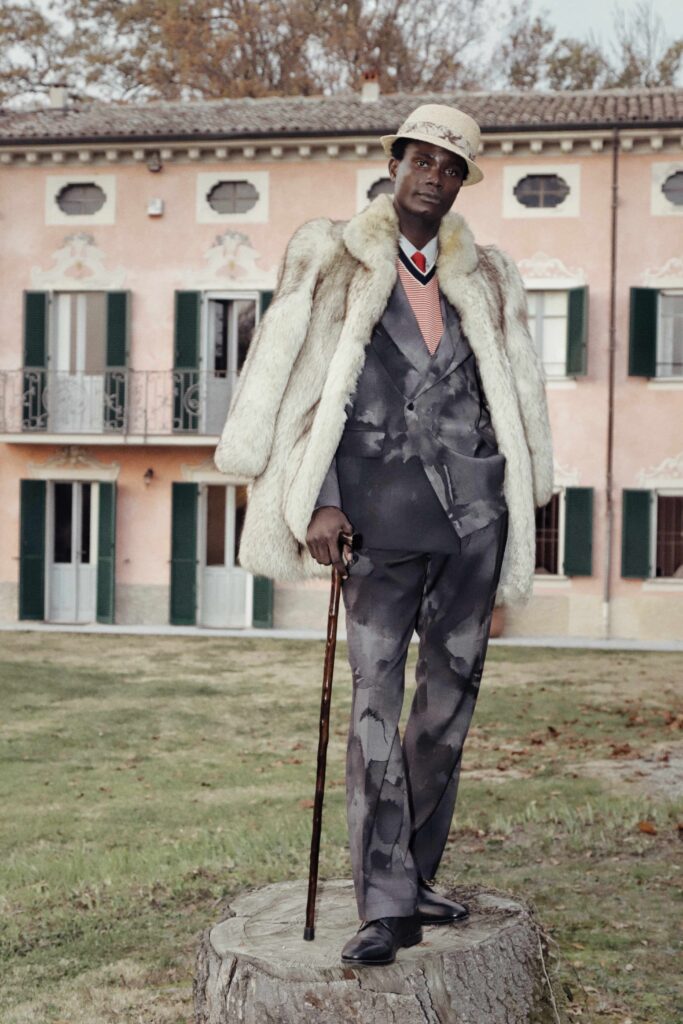
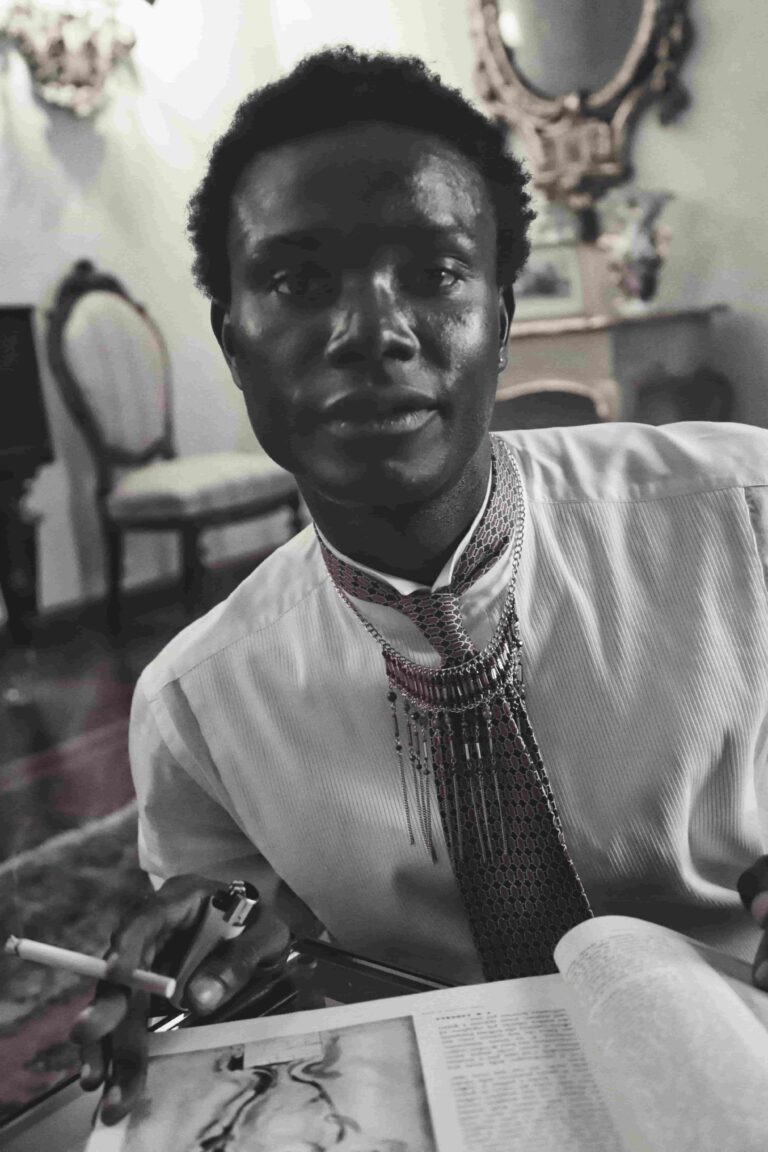
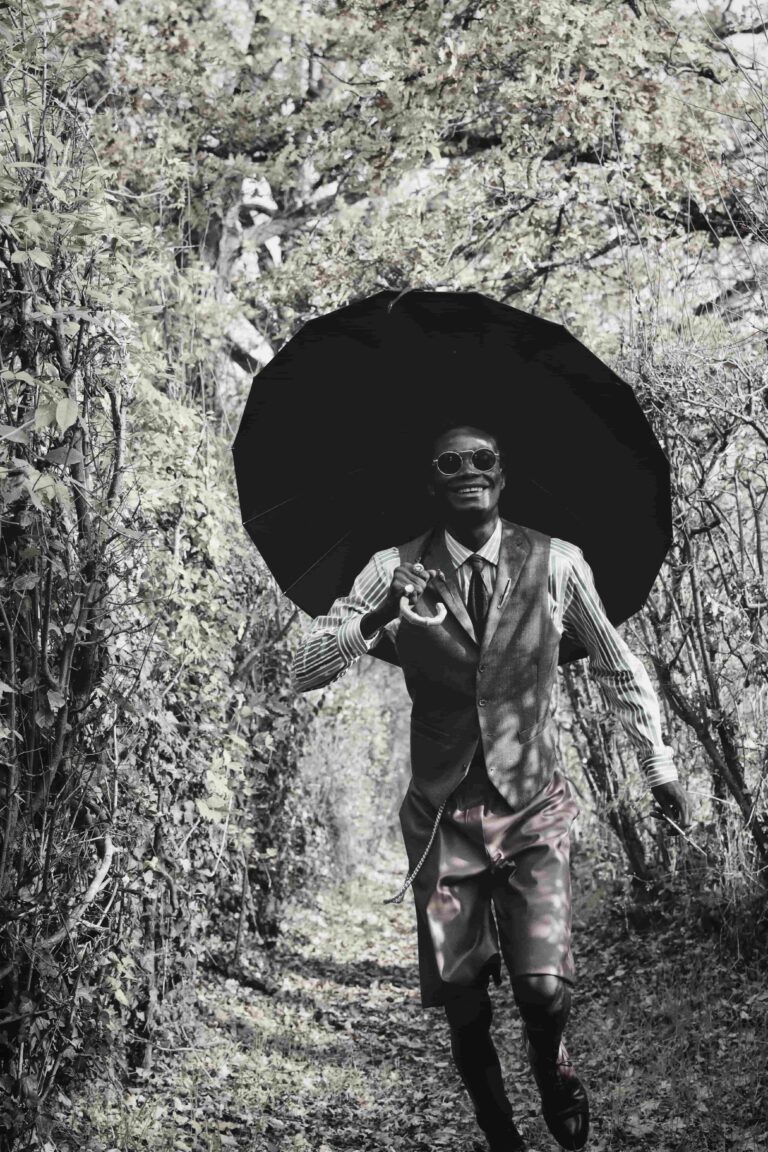
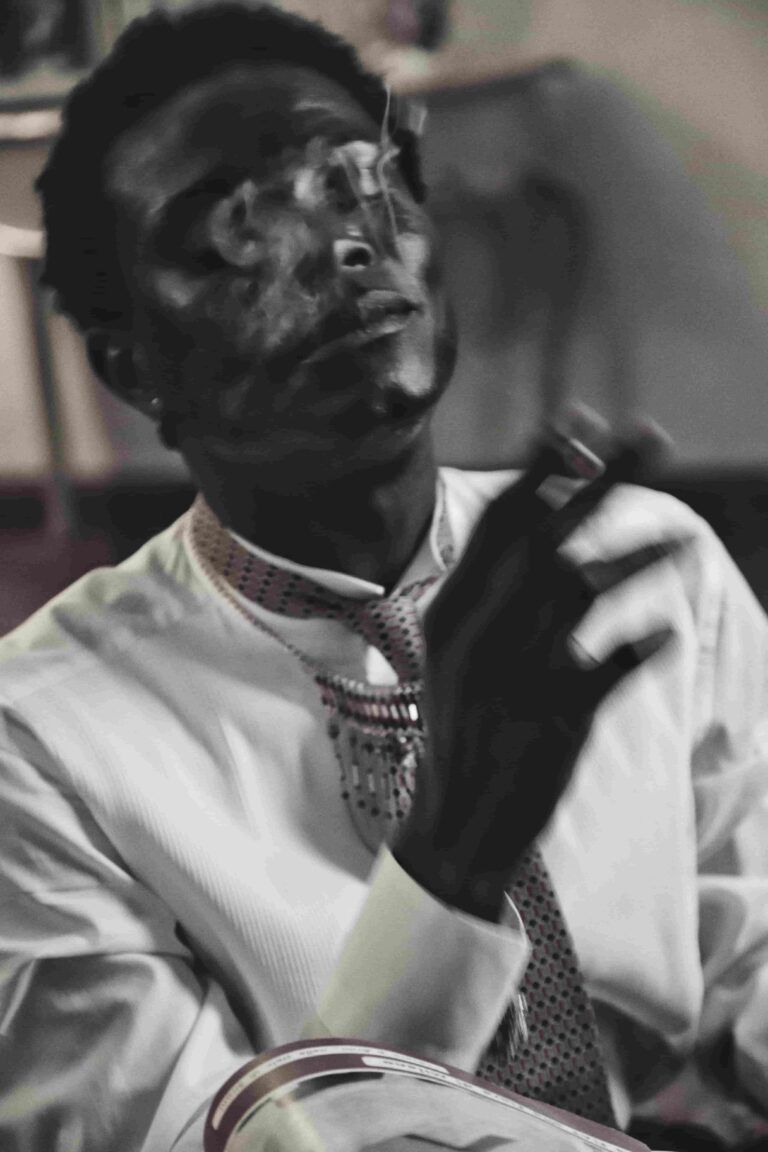
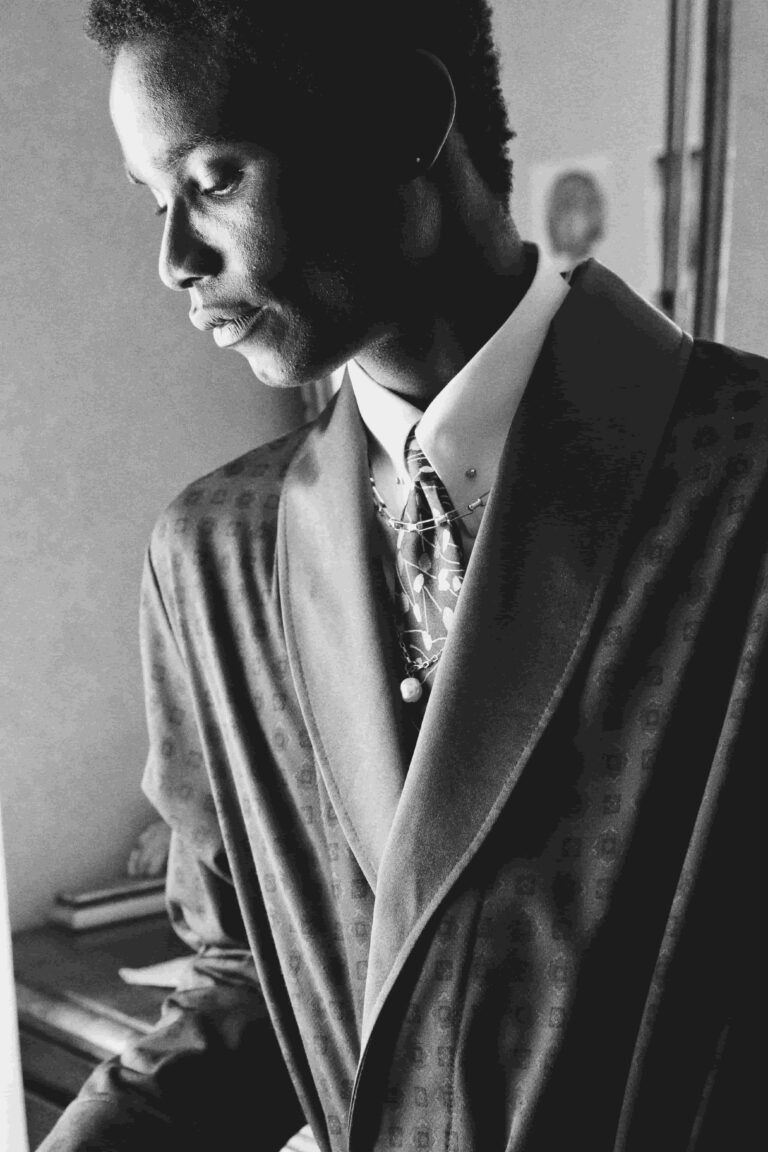
Orlando is delighted to share a project that is deeply aligned with his human, social, and aesthetic sensibility: Black Dandy. The fashion film is produced by iCLIC, an art collective based in Milan, created to foster a dialogue between image, gesture, and storytelling. Working across art, fashion, and beauty with a research-driven approach, iCLIC explores the image as an act of transformation, suggestion, and vision.
Black Dandy celebrates elegance not as mere style, but as identity, resistance, and freedom. Here, Black dandism unfolds as a poetic territory: a way of inhabiting the world while affirming roots, creativity, and a nonconformity that transcends all divisions, including racial ones.
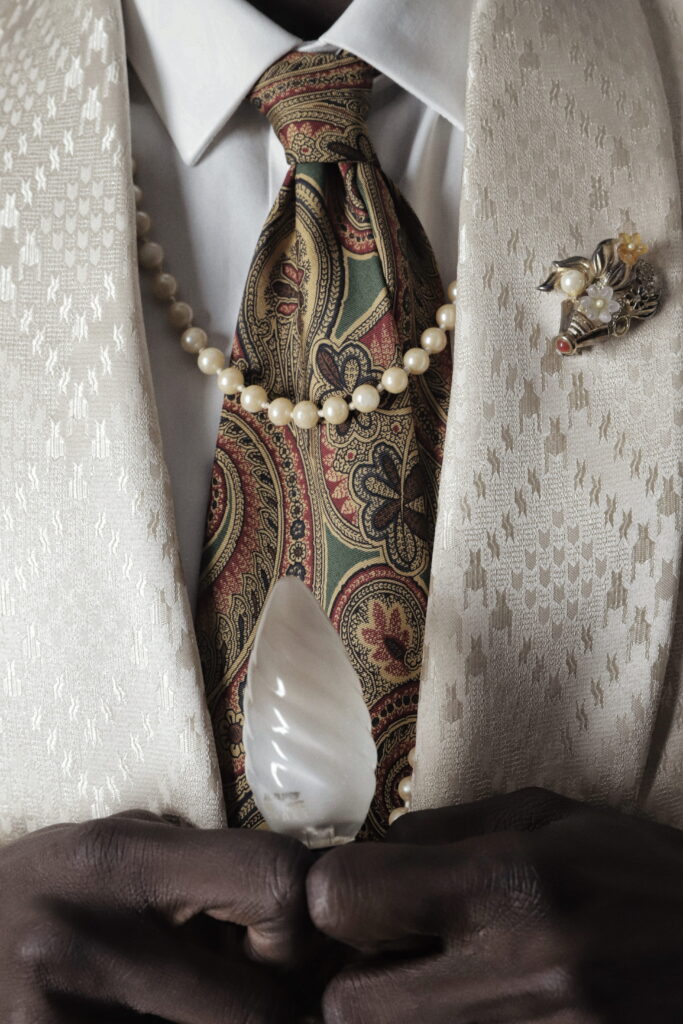
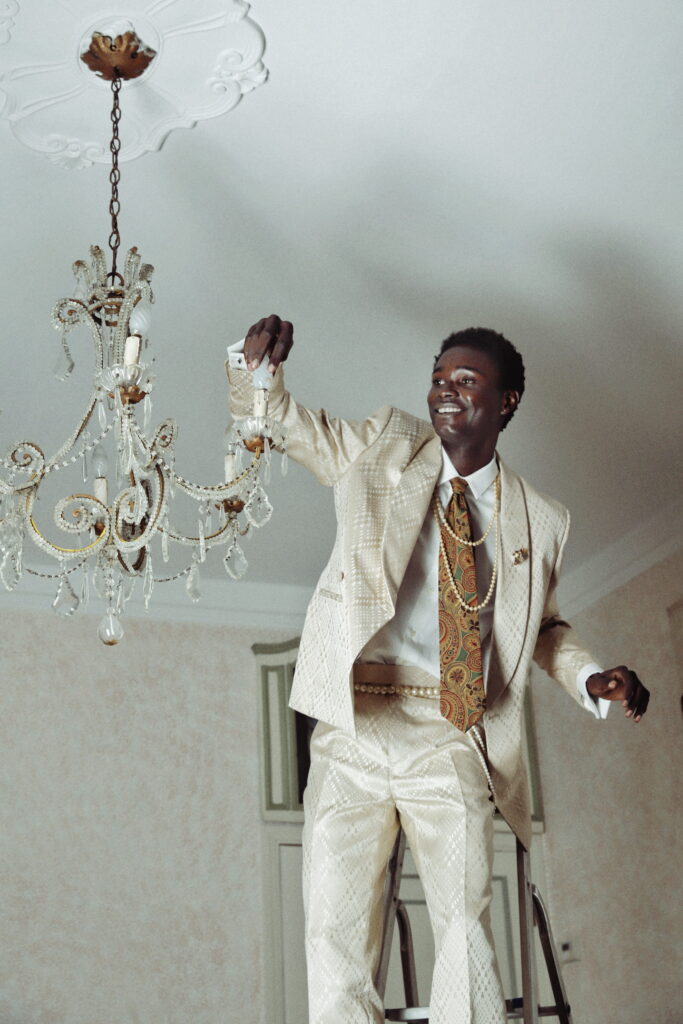
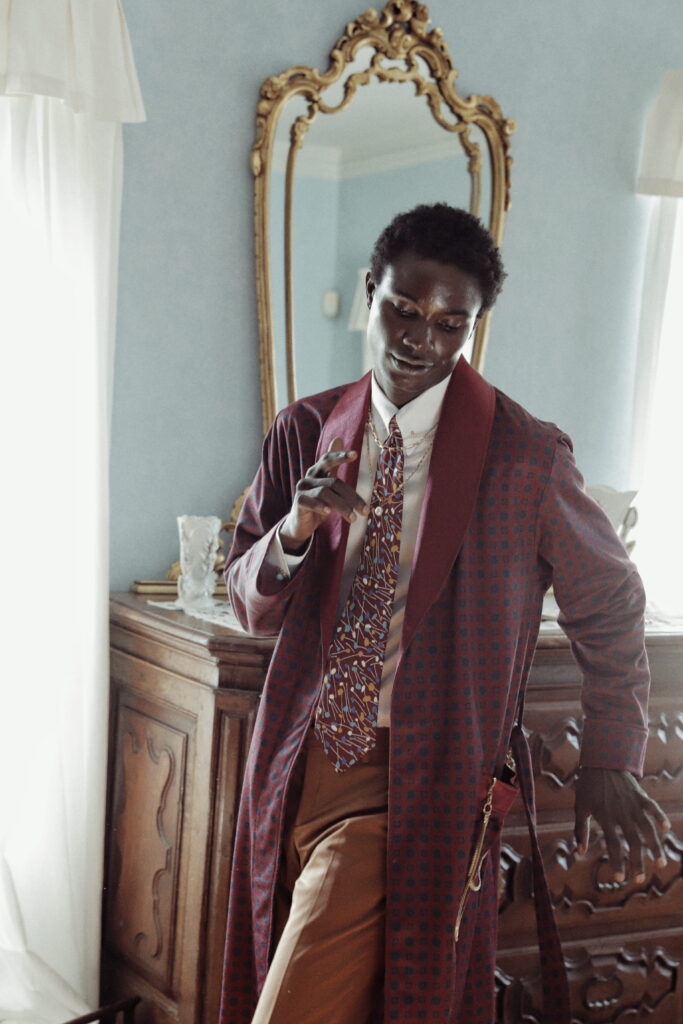
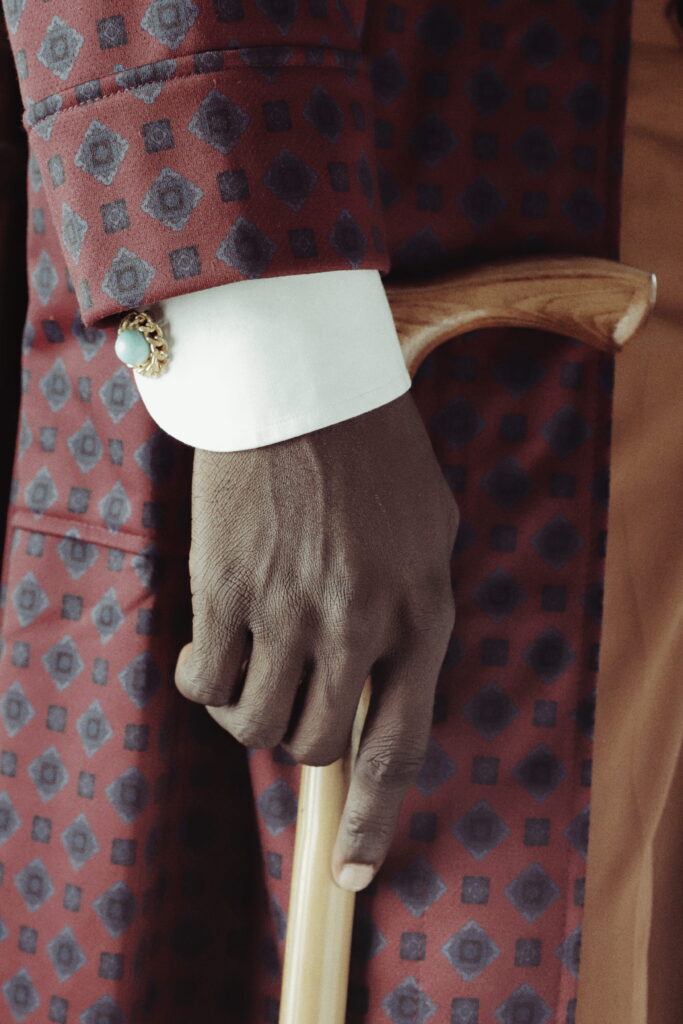
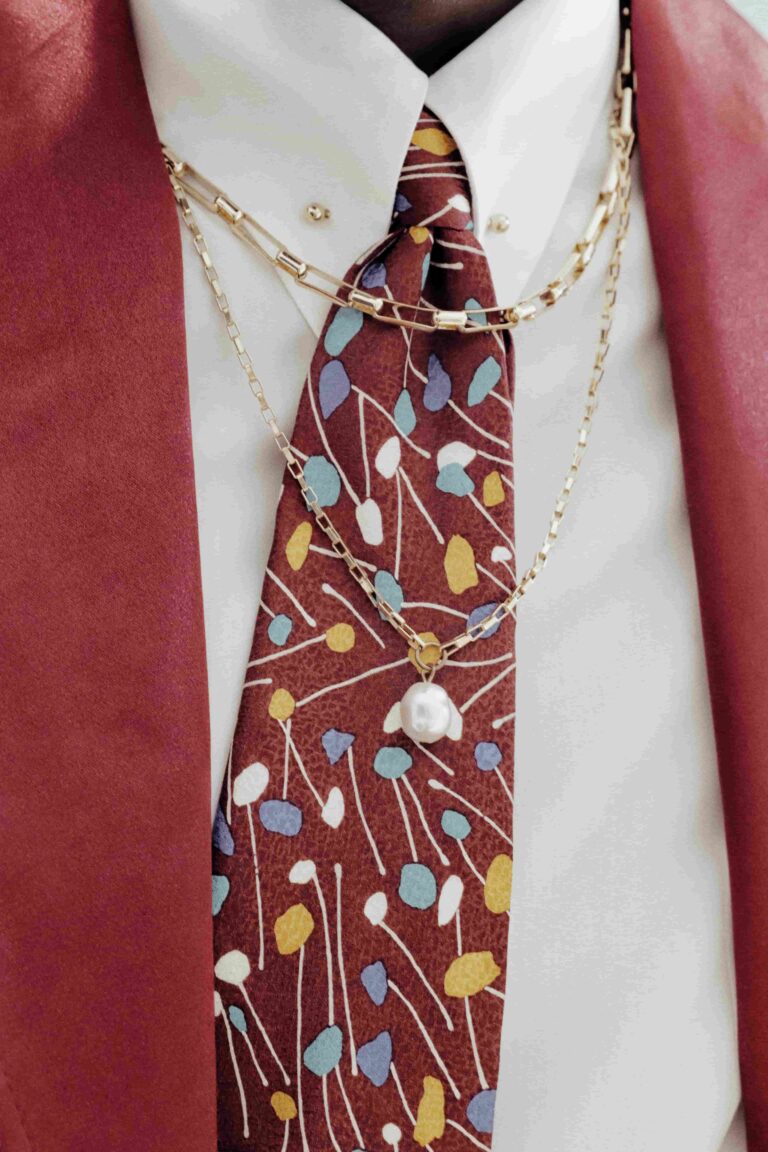
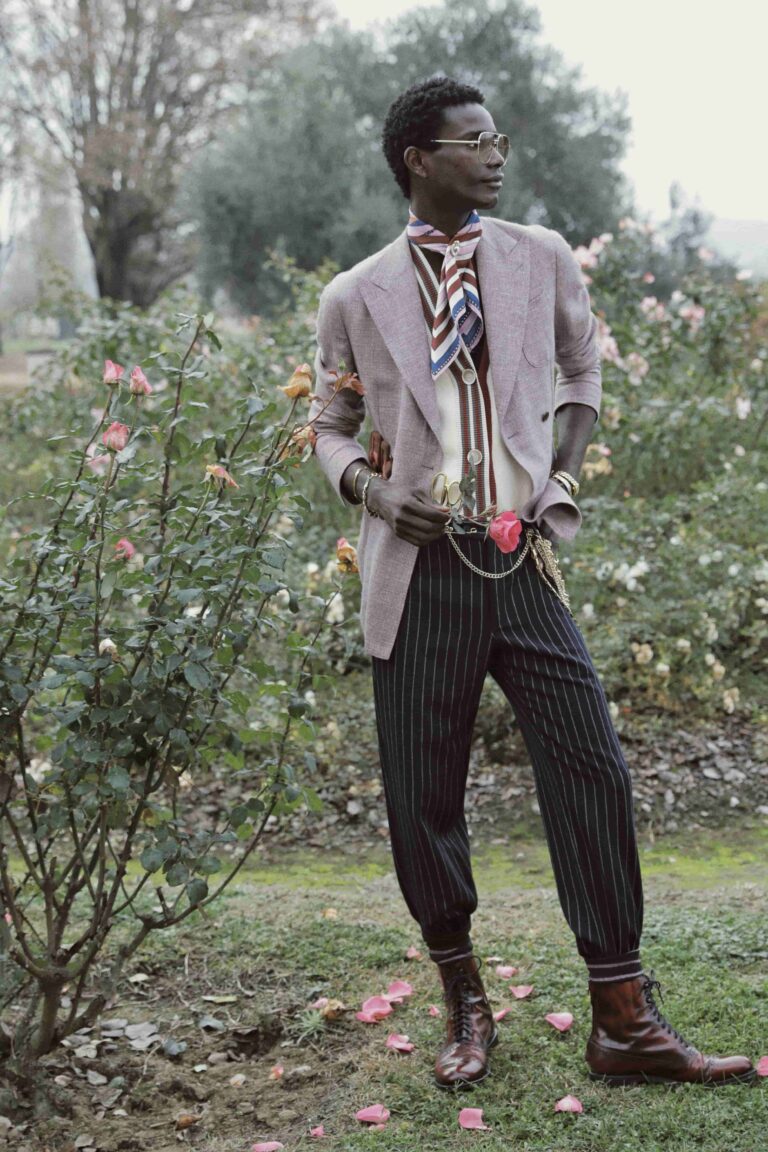
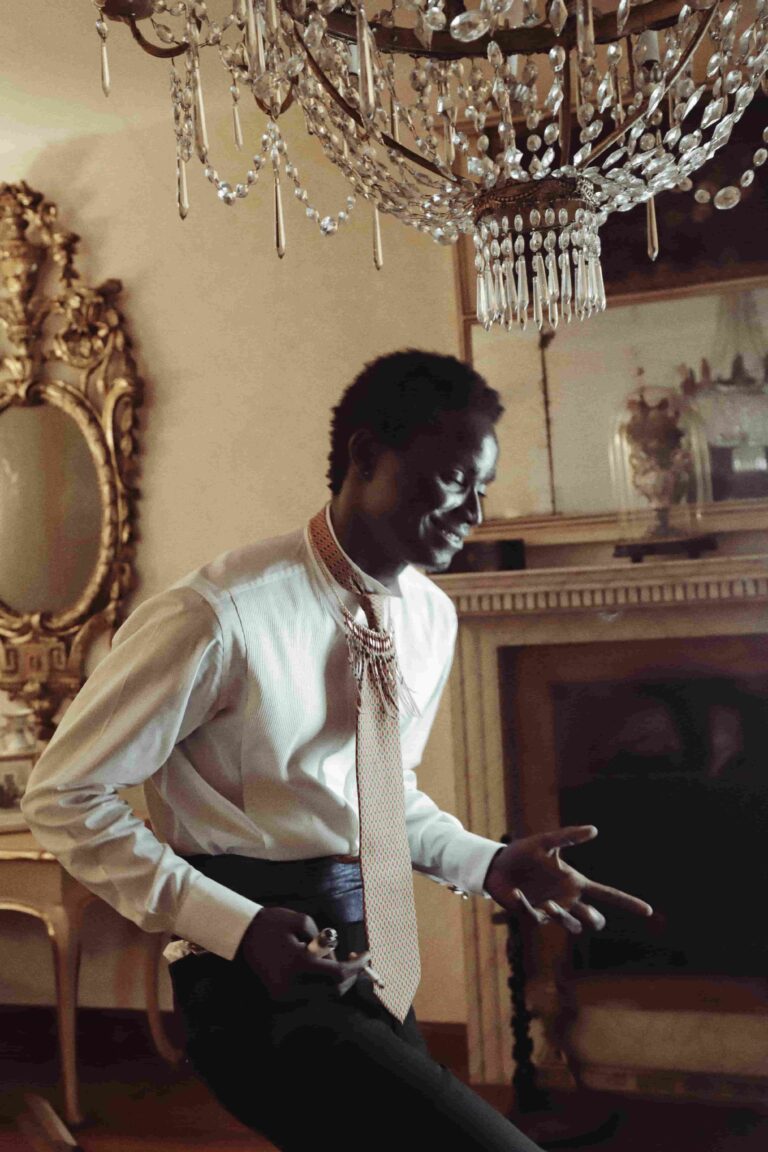
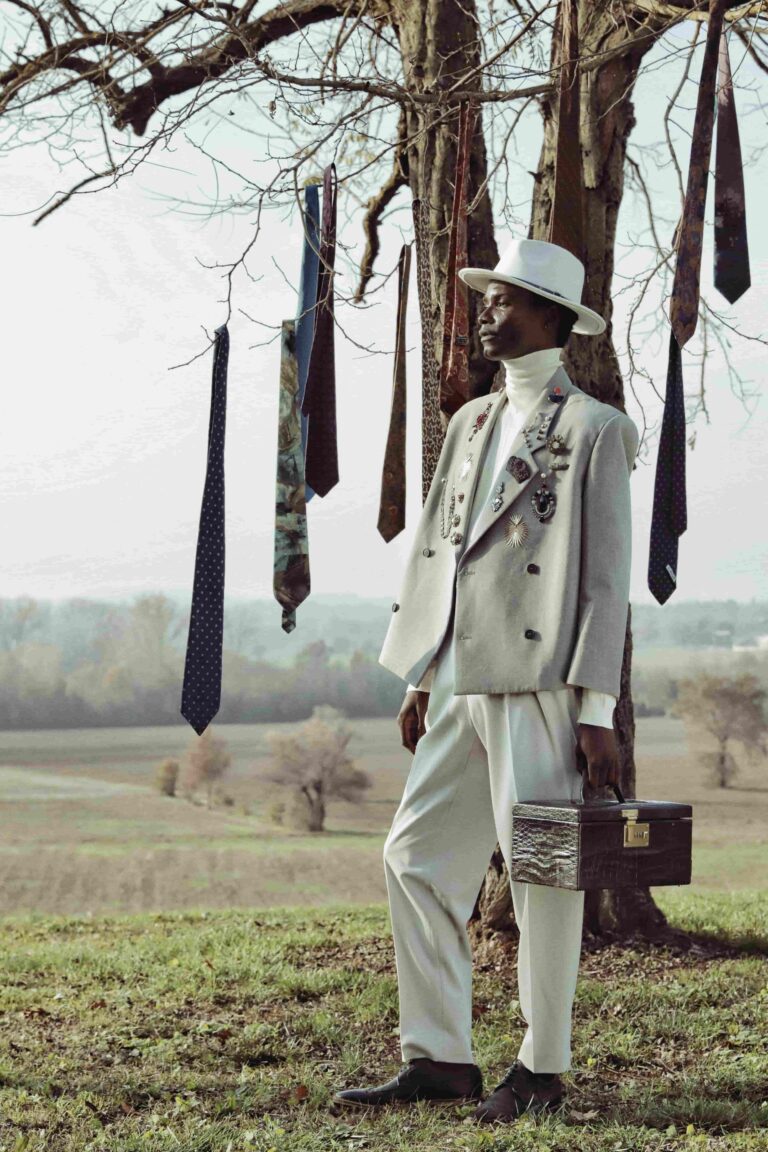
Through the silent rituals of its protagonist, Nat, a young contemporary dandy, the film explores the power of gestures, details, and clothing — not just as adornment, but as language. Nat’s home, immersed in nature and filled with objects that seem to breathe with him, becomes an extension of his being: a living archive where Black Dandism takes shape, room by room.
From the roses he tends at dawn to the photographs of Afro-American dandy icons, from spontaneous dance steps in the bedroom to nights at the piano, a narrative emerges — tender, ironic, rigorous, yet alive and breathing. Every scene is a small rite: a light bulb changed with the same grace as caressing a face, a tie chosen from a tree in the vineyard at sunset, as if the world itself were part of his wardrobe.
Nat’s thoughts drift like entries in a secret diary, and his voice — soft, complicit — reminds us that dressing is never just fashion. It is memory, pride, joy, and a gentle refusal of the banal.
Black Dandy is a tribute: to Black cultures, to dandism as an act of emancipation, and to the transformative power of elegance as a voice.
In the silence of his nature-immersed home, Nat — a young Black dandy —
turns every gesture, every detail, every garment into a voice. What emerges is an
intimate narrative of roots, creativity, and nonconformity.
In Slaves to Fashion: Black Dandyism and the Styling of Black Diasporic Identity (2009), Monica L. Miller states: “Black dandyism illuminates the ways in which self-fashioning has been used as a strategy of survival, critique, and creative expression.”
We can’t close an ode to Dandyism without quoting Oscar Wilde, one of Orlando’s guardian deity. We like to remember his phenomenal statement: “One should either be a work of art, or wear a work of art.”
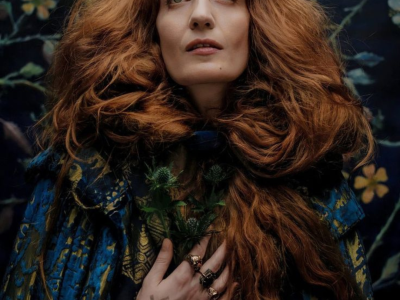
Unveiling the dialogue between Florence Welch and Autumn de Wilde, where music and vision converge to shape feverish images, ritual gestures, and a rare sense of visual enchantment.
An in-depth conversation with multimedia journalist and science reporter Silvia Lazzaris.
By Antonella Dellepiane Pescetto
Are you a sensitive and curious traveler, constantly searching for beauty, art and cultural inspiration? Sign up to receive the latest contemporary news!