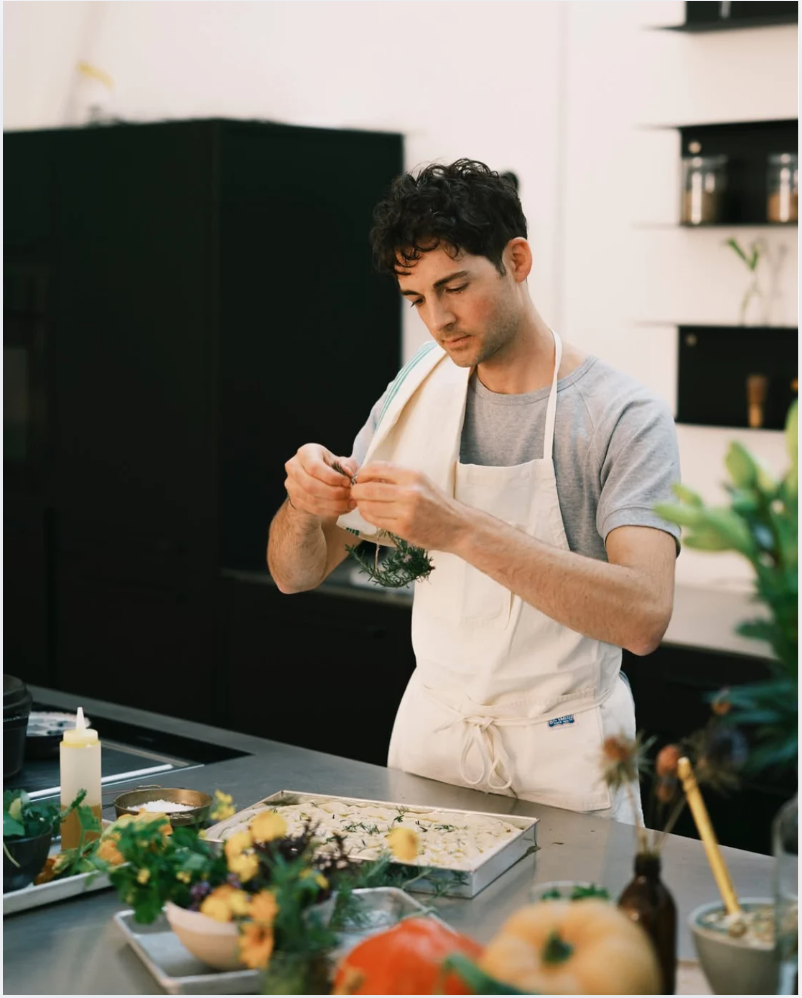
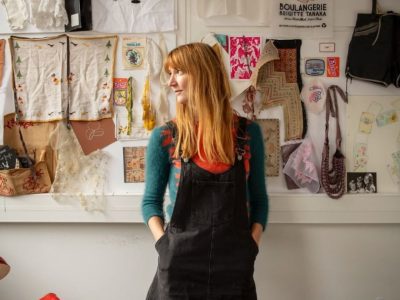
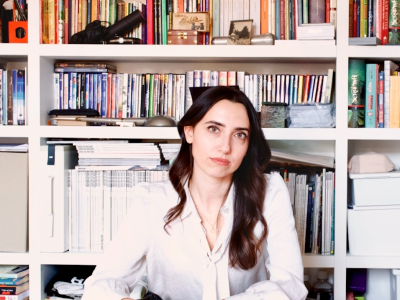
@Ralph Schelling by Joel Hunn

MOULINEX

Ralph Schelling

Words by Antonella Dellepiane Pescetto

Antonella Dellepiane Pescetto: What was the approach to cooking in your family when you were a child? Did you grow up learning from family members, or did you mostly teach yourself?

Ralph Schelling: My father grew up in a family that owned a restaurant in Switzerland, although he himself was not a cook. It was a place that served workers’ meals, and through it he experienced the demanding reality of running a restaurant, which is why he never really had the best things to say about the industry.

Despite that, I found real joy in cooking. I spent a lot of time in the kitchen with my grandmother, and that’s actually how I ended up being nicknamed “Moulinex” (like the kitchen appliance) in the Boy Scouts.

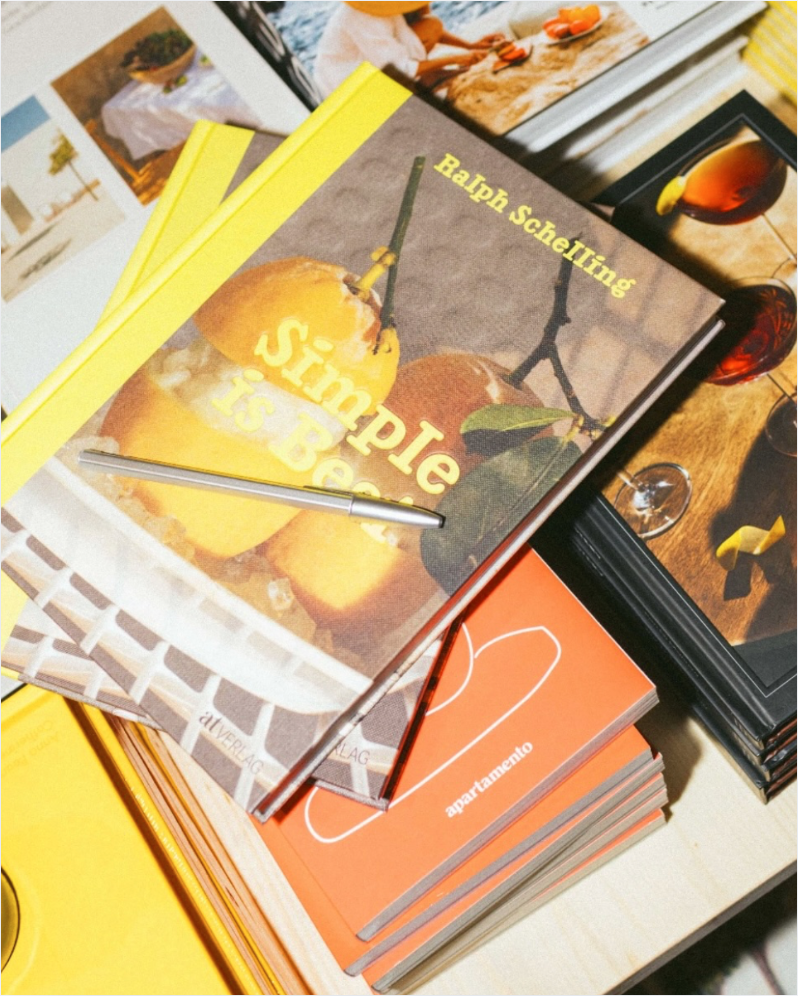
Alongside my grandmother, I also developed a passion for cooking thanks to my mother, who was well known in our neighborhood for making apple swirls. This recipe is also featured in my new book, Simple is Best, published by AT Verlag. These Swiss-style pastries included grated apples, which helped keep them moist for longer, unlike the commercially made versions I recently came across in the US.

From those apple swirls, I learned that ingredients like bananas or carrots, which naturally add moisture, allow you to reduce the amount of sugar, since sweetness can come from the fruit or vegetables themselves. This approach produces baked goods that stay fresh longer and are, in my opinion, really excellent.

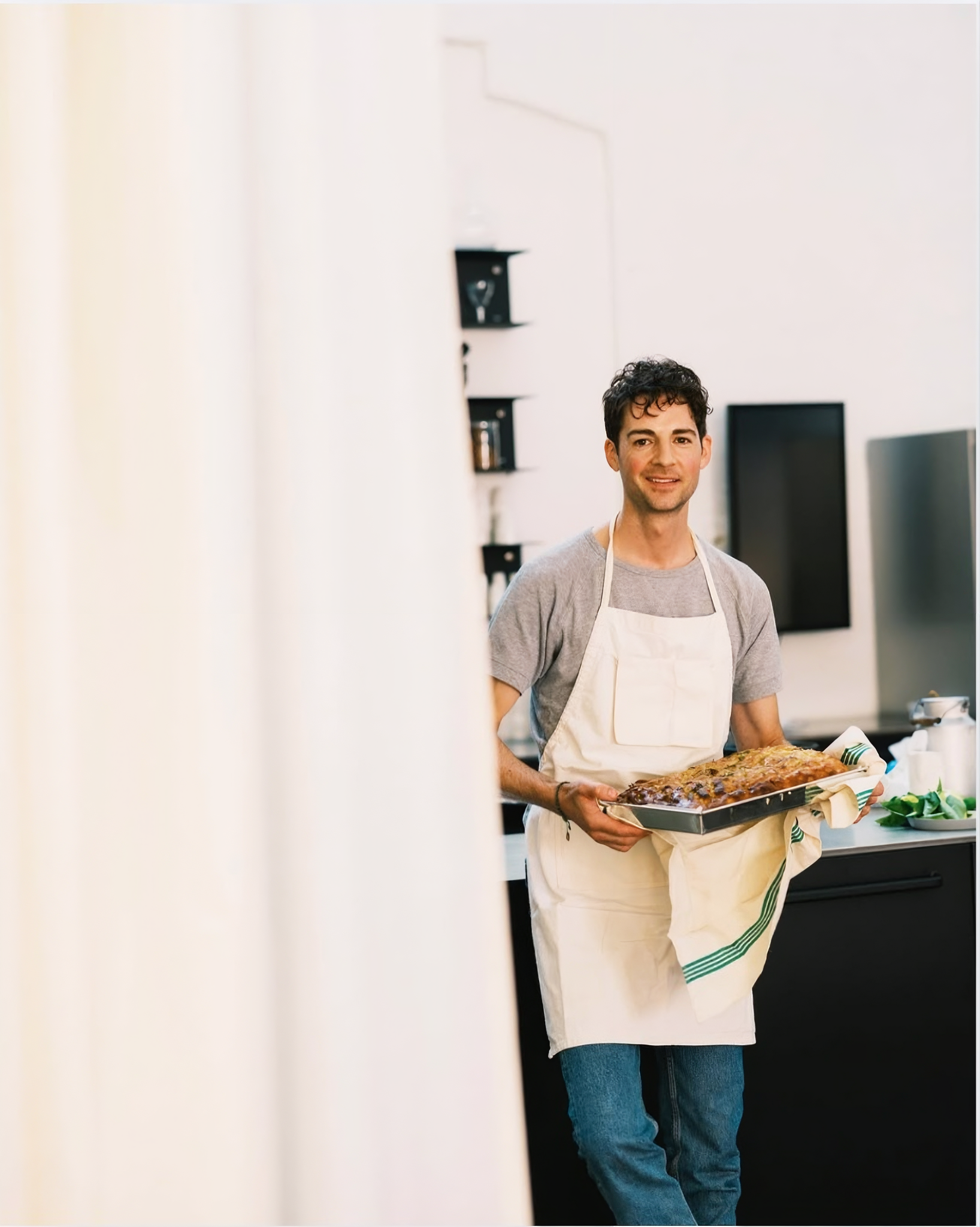
@Ralph Schelling by Joel Hunn

ADP: What is your favorite comfort food – the dish that most strongly brings back your happiest memories, in a way similar to Anton Ego’s moment in Ratatouille?

RS: I remember a pincho bar named Bordaberri, in San Sebastián (where we went always at our day off  and also now sometimes when I’m back in San Seb…)  that served a wonderful pasta, almost resembling a risotto. It was made with local Idiazabal cheese or mushrooms, and it had this deep, comforting character that really stood out to me.

ADP: Tell us about your training. You learned from illustrious mentors such as Ferran Adrià. What did he teach you, and which contemporary chefs or creatives inspire you today?

RS: Ferran Adrià has been one of my biggest mentors. In my book, he once said, “I cook for the soul,” and that idea has stayed with me. I really appreciate his way of approaching food — seeing it almost through the eyes of a child, with curiosity, openness, and a sense of play. What also inspires me is that he is largely self-taught, which I find very motivating.

At the moment, I’m also inspired by other creatives, such as Laila Gohar, who works with food installations and approaches food from a completely different, highly conceptual angle.

ADP: Why did you choose the more flexible path of working as a private chef in exclusive settings, instead of following the traditional route of opening your own restaurant? What are the advantages and challenges of this choice?

RS: I chose the flexible format of working as a private chef because I am, by nature, quite a chaotic person, although I’m now supported by a strong team that helps me stay organized. What I love most is the creative freedom — the ability to bring unique, location-specific elements into every event. I try, for example, to source local decorations rather than relying on generic catering solutions like standard floral arrangements that could belong anywhere.

At the same time, one of the ongoing challenges is working with clients who sometimes request very generalised concepts, such as a “summer wedding on Lake Como,” while still expecting something truly specific and authentic. In those cases, I often see how generic catering approaches can miss the local context entirely, using elements that don’t really belong to the place.

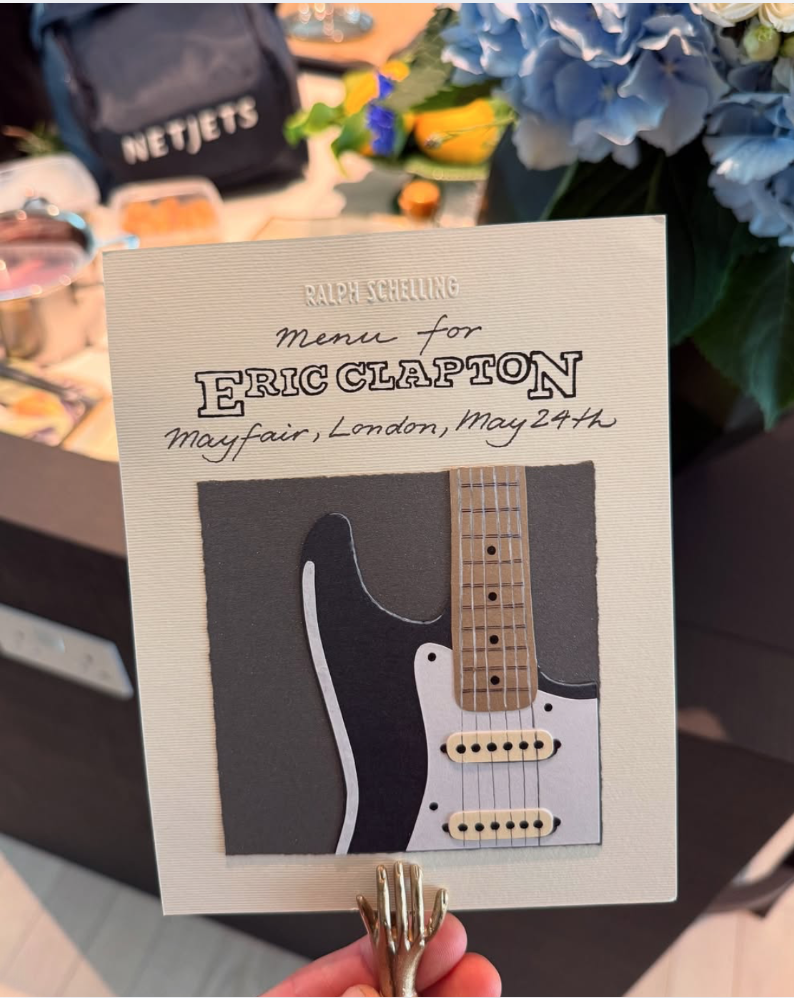
For me, compared to a structured restaurant with a fixed menu, the biggest challenge is the level of organization each event requires. As a private chef, everything is highly personalised — from designing bespoke menus to taking care of small but meaningful details like engraved napkins or tailor-made menu cards. That level of customization demands constant planning, coordination, and attention to detail.

Travelling to new locations without always knowing every detail in advance can also be tiring at times. However, it is also one of the aspects I genuinely enjoy.
I appreciate the flexibility, and I like not being tied to the same clients or the same place for long periods of time.

ADP: You regularly collaborate with the luxury sector, which constantly requires you to astonish clients and diners. What does “wonder” mean to you, and how do you make everyday ingredients feel special?

RS: High-profile clients often prefer comforting dishes with memory-evoking flavors, such as a next-day risotto that has been pan-fried or an arancino, rather than elaborate, perfectly executed fine-dining creations.
My personal cooking style moves away from the “decorative” approach of Michelin-starred restaurants and instead focuses on connecting with the client’s memories and emotions through food.

I learned my craft in those kinds of elite kitchens, but I’ve noticed that the people I now cook for often appreciate something simpler and more satisfying — food that doesn’t necessarily come as part of multi-course menus or overly complex wine pairings. Instead, they often value dishes that feel familiar, honest, and emotionally resonant.

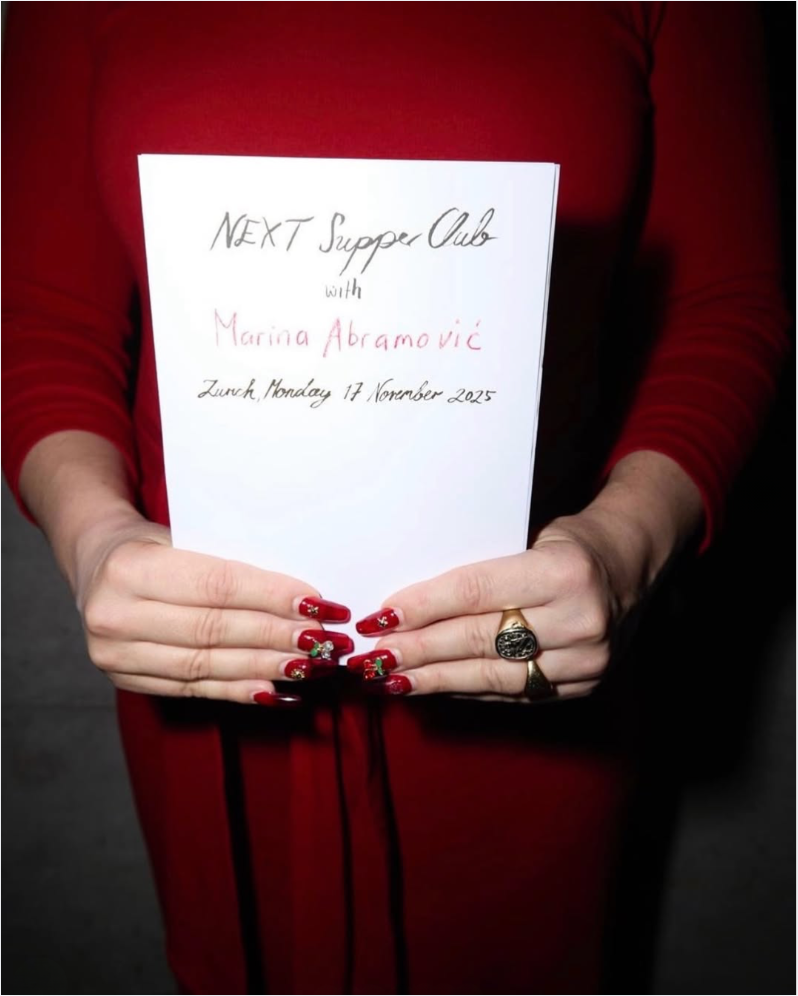
ADP: How do you approach creating personalized menus for different clients in exclusive contexts? Could you also tell us about your collaboration with Marina Abramović?

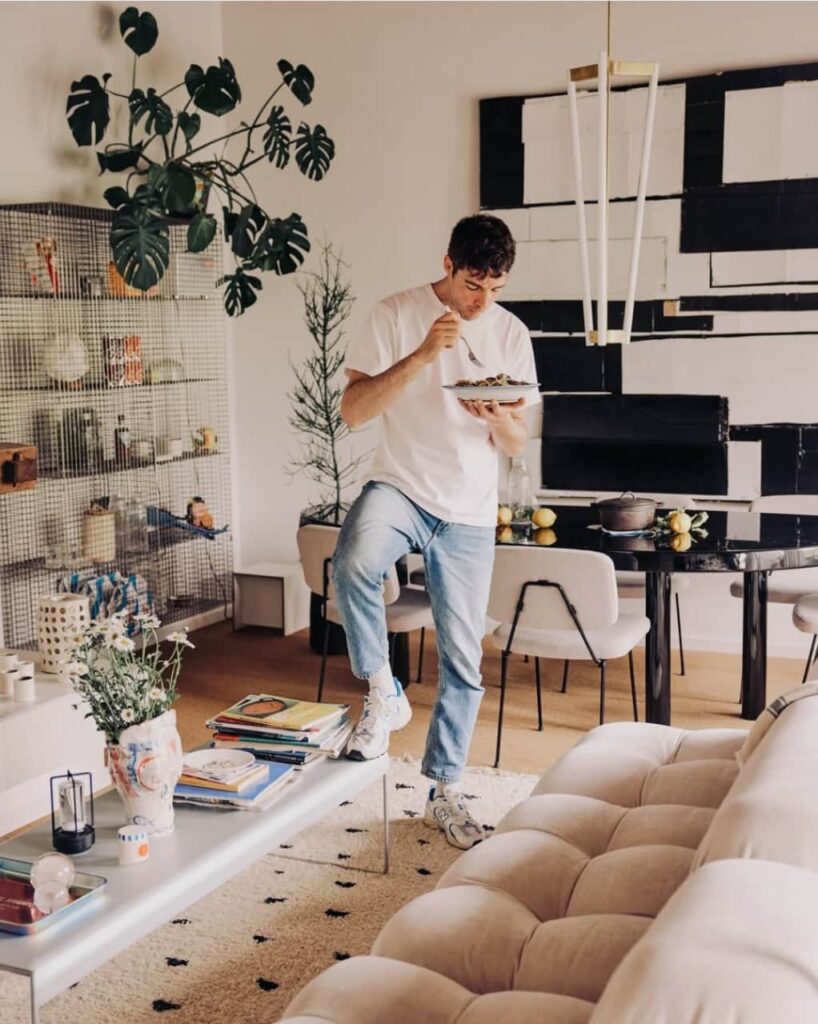
@Ralph Schelling by Joel Hunn

RS: Creating personalized menus, for me, always starts with meeting local people and learning more about the culture and the area I’m working in. I believe that understanding the local traditions and ingredients is essential to creating something authentic and respectful. One example that really stayed with me was an event to honor the Yves Saint Laurent memorial in Marrakech. Together with local collaborators, we reinterpreted a traditional Moroccan pigeon dish into a lighter version using filo pastry, almond cream, and pomegranate. It was important for me to pay tribute to the country and its culinary heritage while still bringing my own perspective to the dish, and the guests responded incredibly well to it.

Working with Marina Abramović was also a very inspiring experience. We planned everything through Zoom calls, and I felt it was a great creative combination for both of us. What I admire about her is the way she finds inspiration in everyday life — even in simple actions like cutting garlic or waiting for a bus. I think we share a similar appreciation for authenticity and for experiencing real life in honest, genuine places rather than in overly curated or famous locations. What disappointed me a little was seeing that some invited guests seemed more interested in her fame or in the monetary value of her artwork than in truly engaging with her art and ideas.

I also had a wonderful experience cooking at Giorgio Armani’s house in La Punt, near St. Moritz. I was deeply impressed by Armani’s private chef, who had been cooking for him for more than twenty-five years. He was such a kind and genuine person that it made me think Mr. Armani himself must also be a very good person. What surprised me most was discovering that Armani actually enjoys being surprised with cucina futuro and appreciates variety, rather than following an extremely traditional or strictly regulated diet.

ADP: If you were to prepare a menu for a dinner for artists at the Orlando Imaginary Hotel (hopefully soon in reality), what kind of dishes would you serve? Would you focus on a main course or a dessert, and what kind would it be?

RS: For a dessert menu at the Orlando Imaginary Hotel, I would probably suggest working with wild strawberries, fragolina, or even uva americana, which has this very unique natural flavor that almost reminds you of chemical cherry candy. I’m always interested in ingredients that create surprising sensory associations while still remaining natural and elegant.

One combination I especially love is using just a tiny drop of natural jasmine essence on regular strawberries to recreate the aroma and delicacy of wild strawberries. I would serve that together with an almond granita, because I think the freshness and nuttiness balance the floral notes beautifully.

I also enjoy introducing unexpected flavor pairings into desserts. For example, I think the best-quality extra virgin olive oil and a small touch of sea salt flakes can completely transform a chocolate mousse, adding depth and complexity. I remember having an incredible chocolate pudding at Bar Asturianos in Madrid that played with those kinds of contrasts, and it really stayed with me.

ADP: If you could choose a character from a novel, an author, an artist, or a designer – past or contemporary – to cook with, who would it be, and what would you want to prepare together?

RS: If I could choose one person to cook with, I think I would choose Wim Wenders. I’ve always been deeply inspired by the way his films focus on simple things and quiet moments, as well as by his strong connection to Japan and Japanese culture. There’s a certain sensitivity and attention to detail in his work that I find very close to my own way of thinking about food.

I would love to prepare Japanese dishes together with him. I have enormous respect for the precision and perfectionism of Japanese chefs and for the philosophy behind their cuisine. At the same time, though, I would naturally interpret those dishes in my own way, bringing my personal style and perspective into the experience.

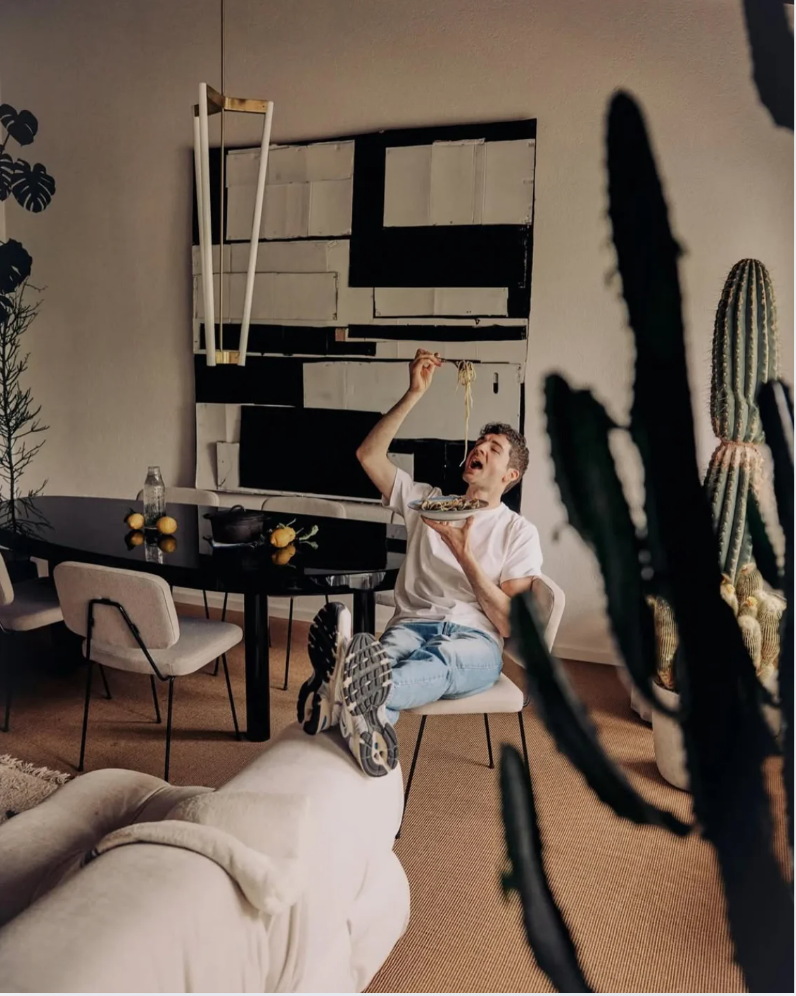
@Ralph Schelling by Alessandra Heller
@Ralph Schelling

ADP: What would you say has been the greatest challenge you have faced in the kitchen so far?

RS: One of the biggest challenges I currently face as a chef is definitely the growing number of food allergies and dietary restrictions. It naturally limits creativity to some extent because you constantly have to think about alternatives and prepare options that are free from ingredients like gluten or lactose. Of course, it’s important to respect guests’ needs and make everyone feel comfortable, but it also changes the way you approach the creative process in the kitchen. I remember recently working at an event in Ireland where, surprisingly, there were almost no allergies or restrictions at all — for a chef, that honestly felt like paradise.

I also think that many professional chefs struggle when it comes to writing cookbooks for home cooks. Our training makes us very structured and precise, so we often tend to create recipes that are too complicated, with too many ingredients and professional steps. But for me, the greatest compliment is when people feel confident enough to recreate a dish themselves. I genuinely love it when someone sends me a picture of something they cooked from my book, because that means the recipe became part of their own life and experience.

Creativity, for me, is also about embracing a kind of “unperfect perfection.” I think food should still feel human, spontaneous, and alive. If everything becomes too exact and controlled, then eventually it could just as easily be done by robots or artificial intelligence.

ADP: Food education is a topic close to your heart. How do you balance taste, health, and quality in every dish?

RS: I think that chefs and restaurants often focus almost exclusively on making food taste “good,” while the idea of true healthiness is sometimes overlooked. Even many fast-food concepts that present themselves as healthy can still feel disconnected from a genuinely good eating experience — whether because of excessive plastic packaging or simply because people consume the food too quickly and without attention.

For me, eating should be more of a ritual. Taking time, creating a beautiful presentation, and paying attention to the atmosphere all make a huge difference. I really appreciate the Japanese approach to dining, with small bowls, carefully arranged dishes, and a softer, more intimate environment with dim lighting. Those details change the entire experience and encourage people to slow down and become more aware of what they are eating.

Ultimately, I prefer food that leaves you feeling energized, balanced, and good after the meal, rather than heavy or exhausted. For me, that feeling after eating is just as important as the taste itself.

My philosophy is very much centered around taking time and truly being present in the moment. I often think about the difference between drinking a coffee while rushing through the streets of New York and the Italian ritual of sitting down to enjoy an espresso. That small pause, that sense of attention and presence, completely changes the experience.

I sometimes worry that modern eating habits are moving further and further away from that idea. So much food today is consumed quickly — whether it’s smoothies on the go or meals reduced purely to nutritional functions and dietary concerns. Of course, allergies and individual needs are important, but I feel that food should still remain a real dish, something enjoyable and meaningful that brings people together. For me, eating is not only about fuel; it’s also about sharing time, conversation, atmosphere, and emotion.

ADP: The world of food has become a global phenomenon, starting in the 1960s with Julia Child and her TV show The French Chef, continuing in the 1990s when the Food Network turned cooking into a full-fledged television genre. In the 2000s, competition shows became widespread, followed by food blogs, and finally social media, which further expanded the global reach of the food world. In your opinion, what are the key ingredients behind this enduring success? And what do you think will be the most innovative directions for food communication in the future?

RS: I think the growing popularity of being a private chef is sometimes influenced by unrealistic images on platforms like TikTok. Younger people often only see the glamorous side of the job — the beautiful locations, the travel, the stylish events — but they don’t see the amount of hard work, pressure, organization, and exhaustion that happens behind the scenes. The reality of the profession is much more demanding than what is usually presented online.

At the same time, I believe that the future of food communication will increasingly move back toward something more real and human. People are starting to crave authentic experiences again — places that are family-owned, independent, and driven by passion rather than by franchises or purely financial goals.

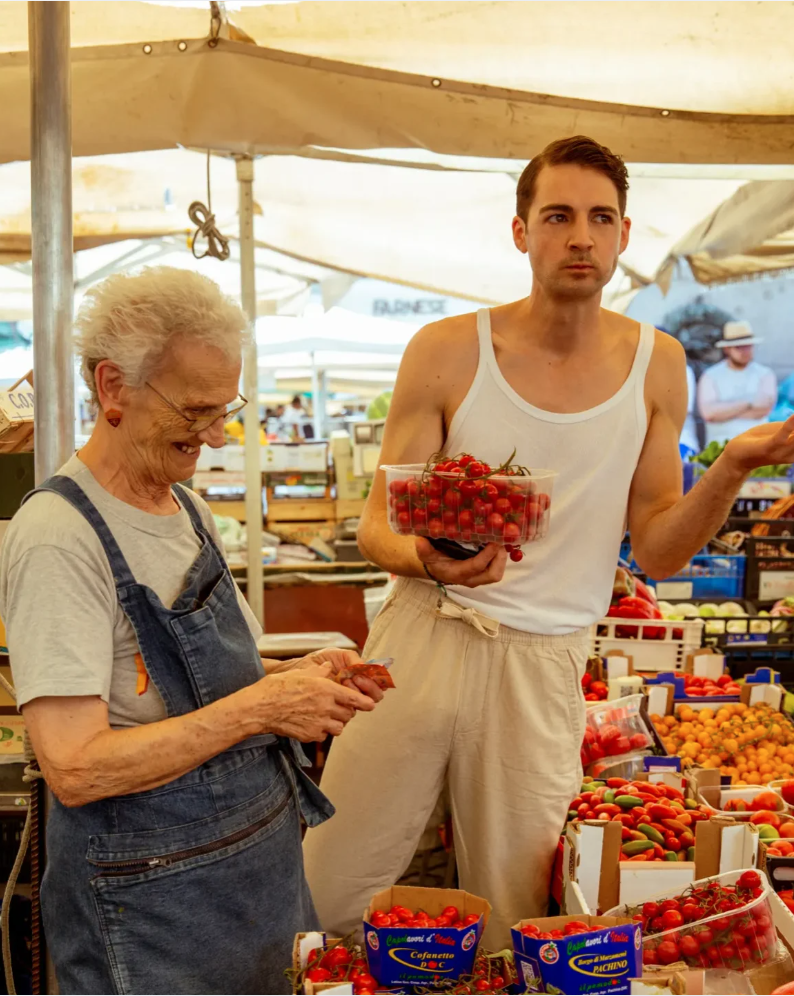
@ Ralph Schelling by Joel Hunn

For me, passion is still the most important ingredient in cooking, and people can genuinely feel the difference when food is made with care and personality.

What I find a little sad today is the gradual loss of personal connection in dining experiences. Simple gestures, like making eye contact with someone or having a genuine interaction, are disappearing. Even things like adding a tip through a digital display can make the experience feel impersonal. I think hospitality should always remain something warm, human, and connected.

Further Reading

Are you a sensitive and curious traveler, constantly searching for beauty, art and cultural inspiration? Sign up to receive the latest contemporary news!