ⓒ Erik Madigan Heck

THE COLOUR PHILOSOPHER 

Erik Madigan Heck

Words by Antonella Dellepiane Pescetto

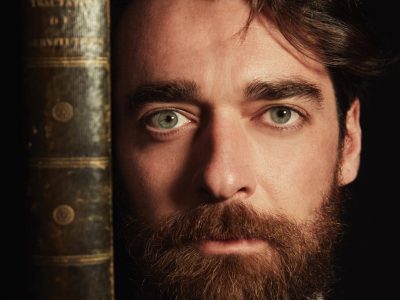
Erik Madigan Heck is a profound and complex artist.

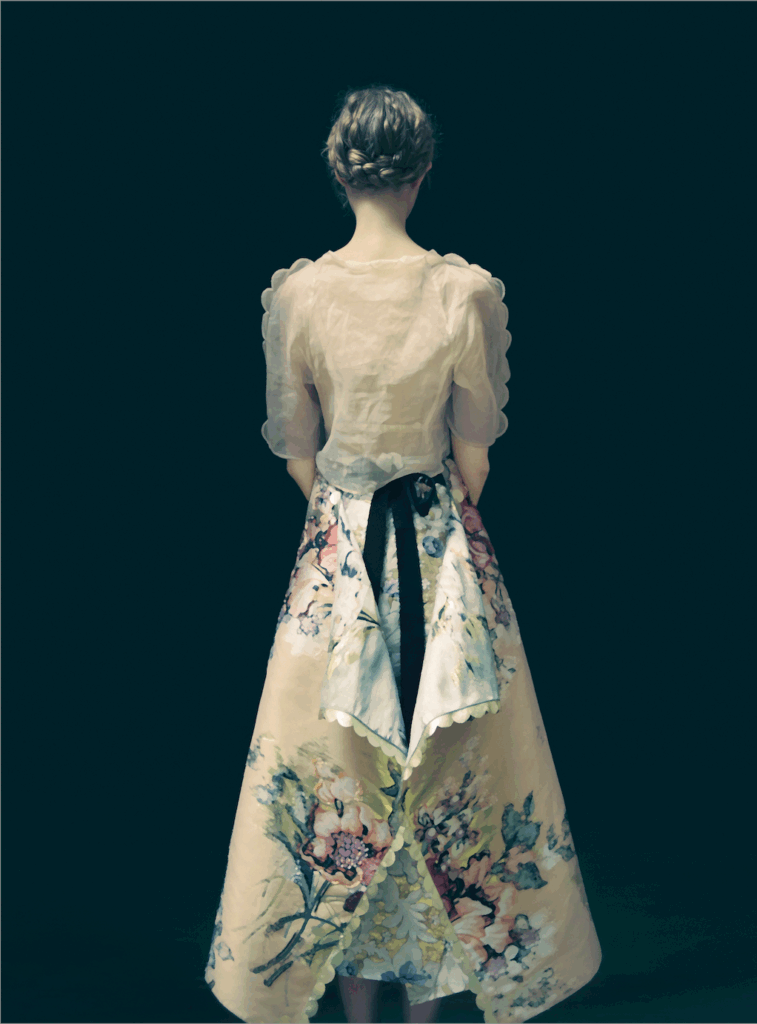
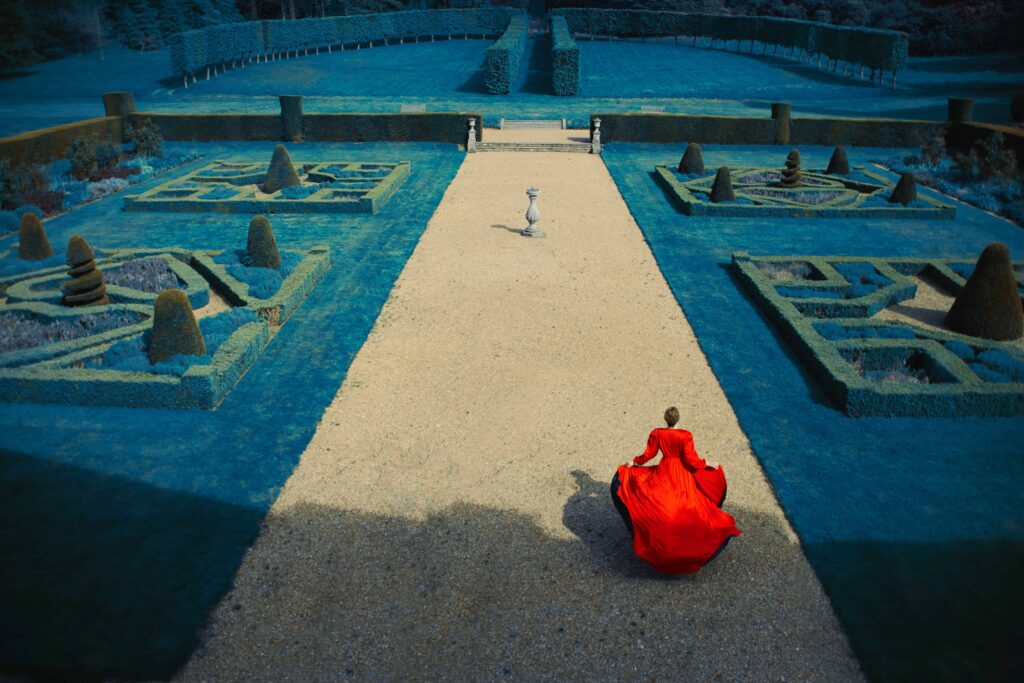
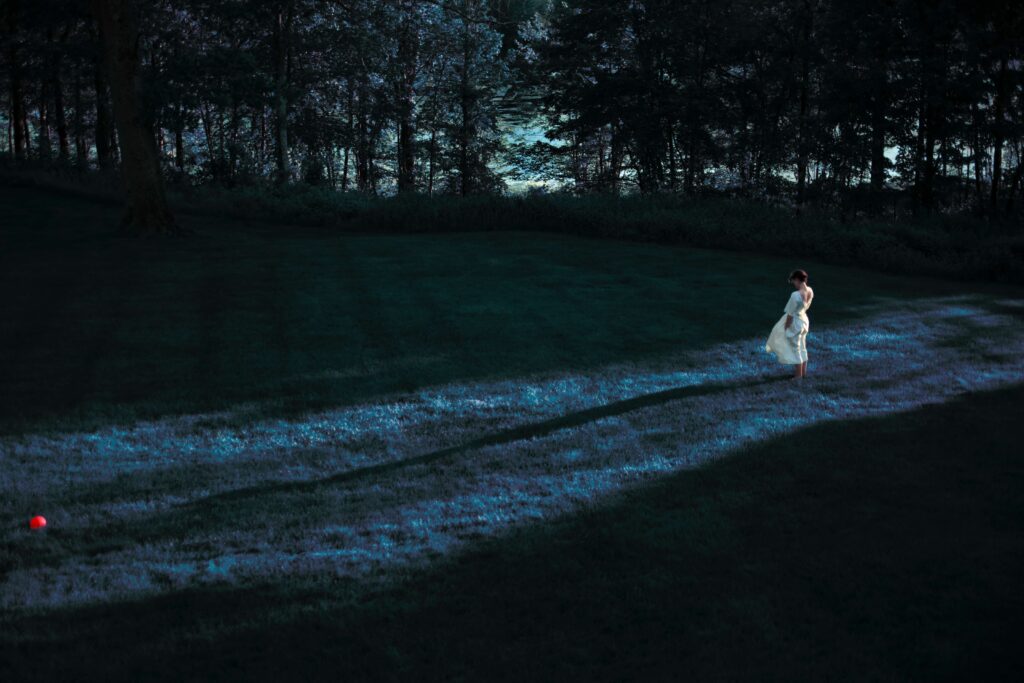
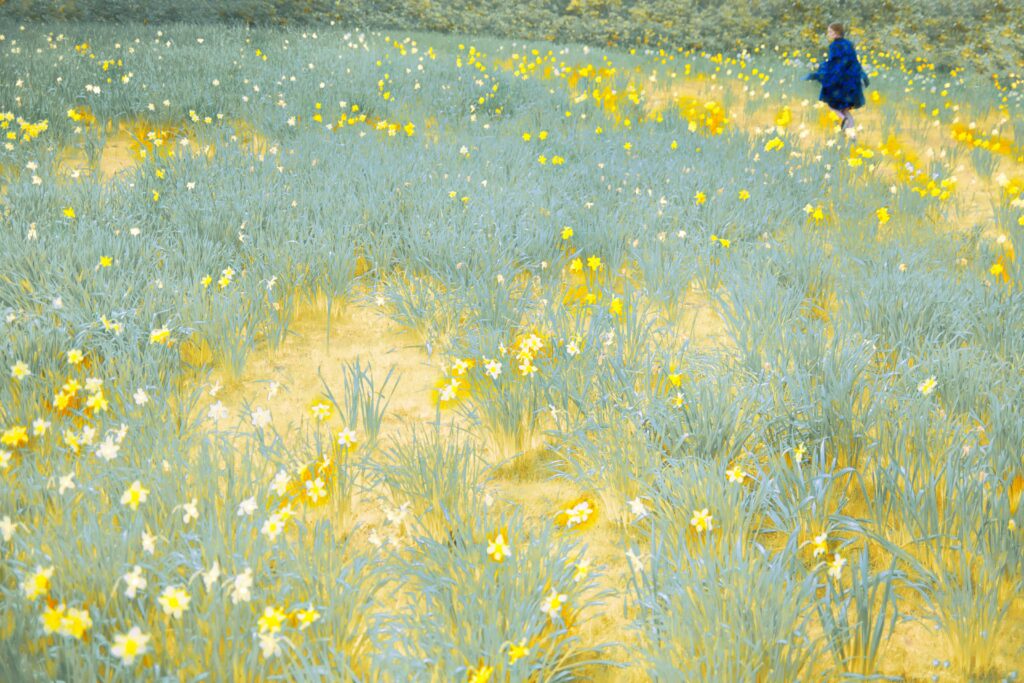
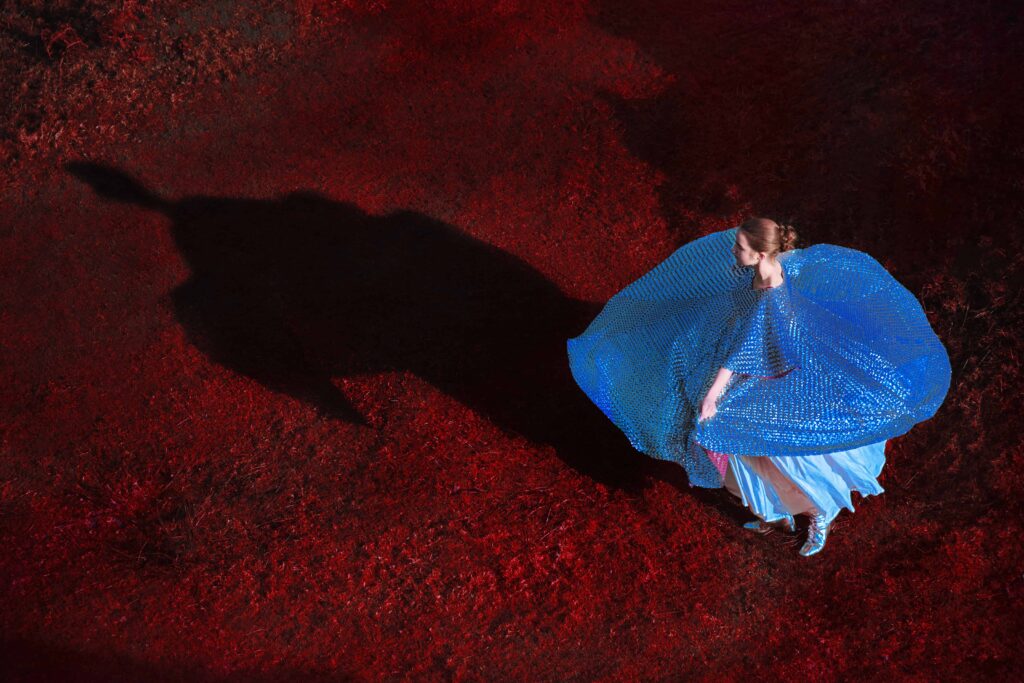
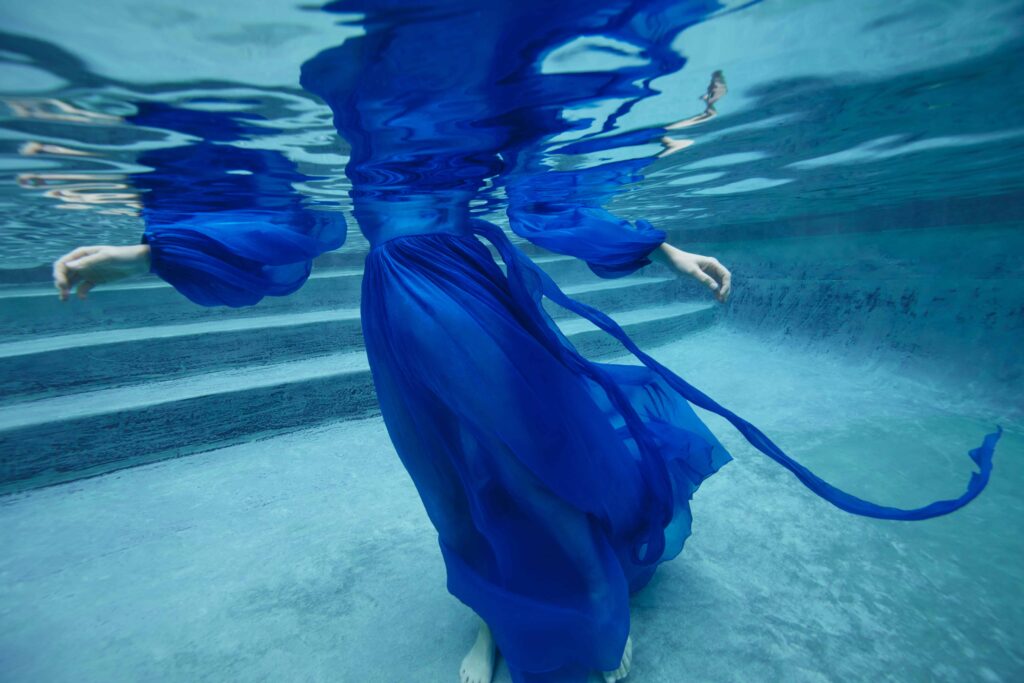
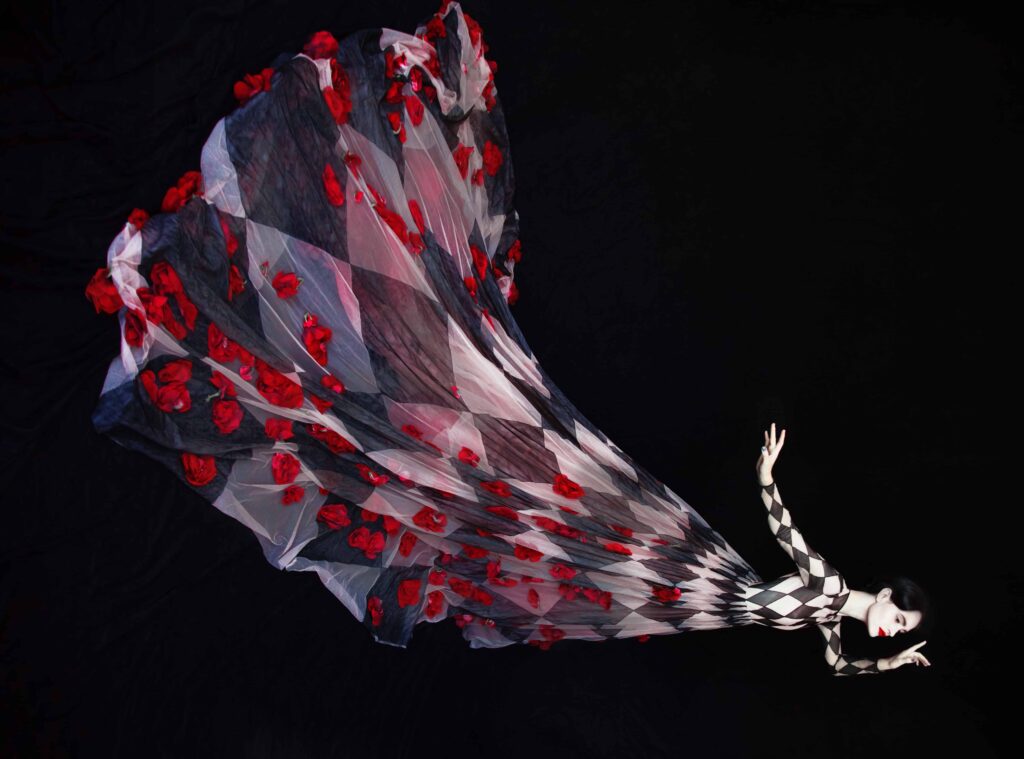
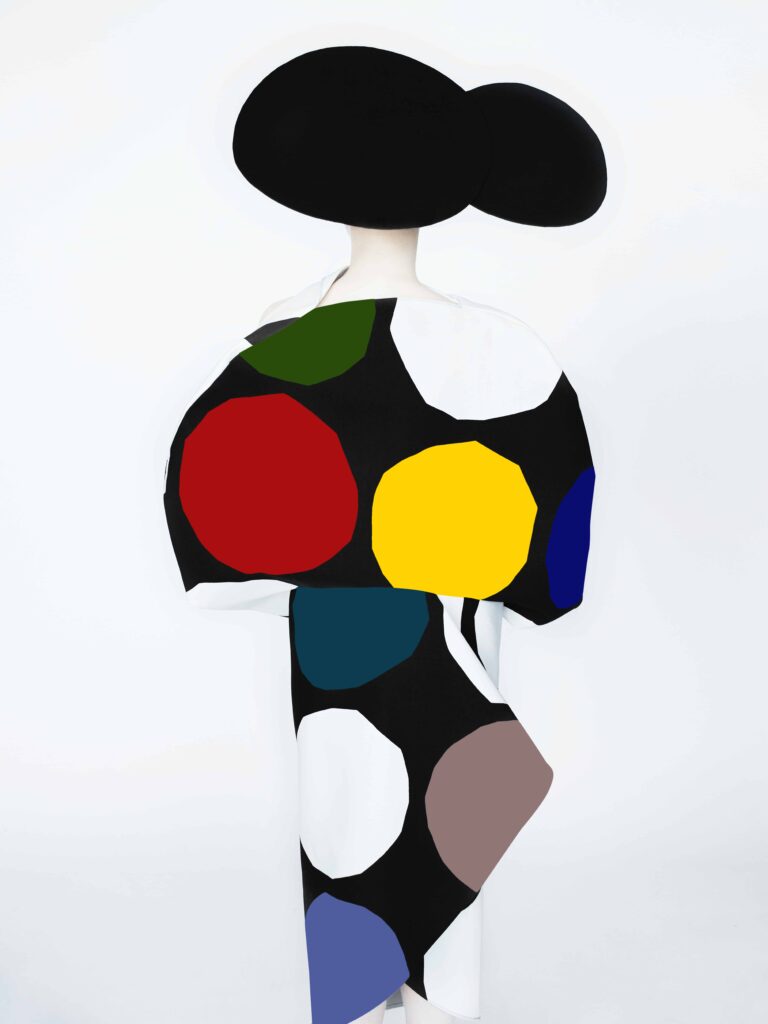
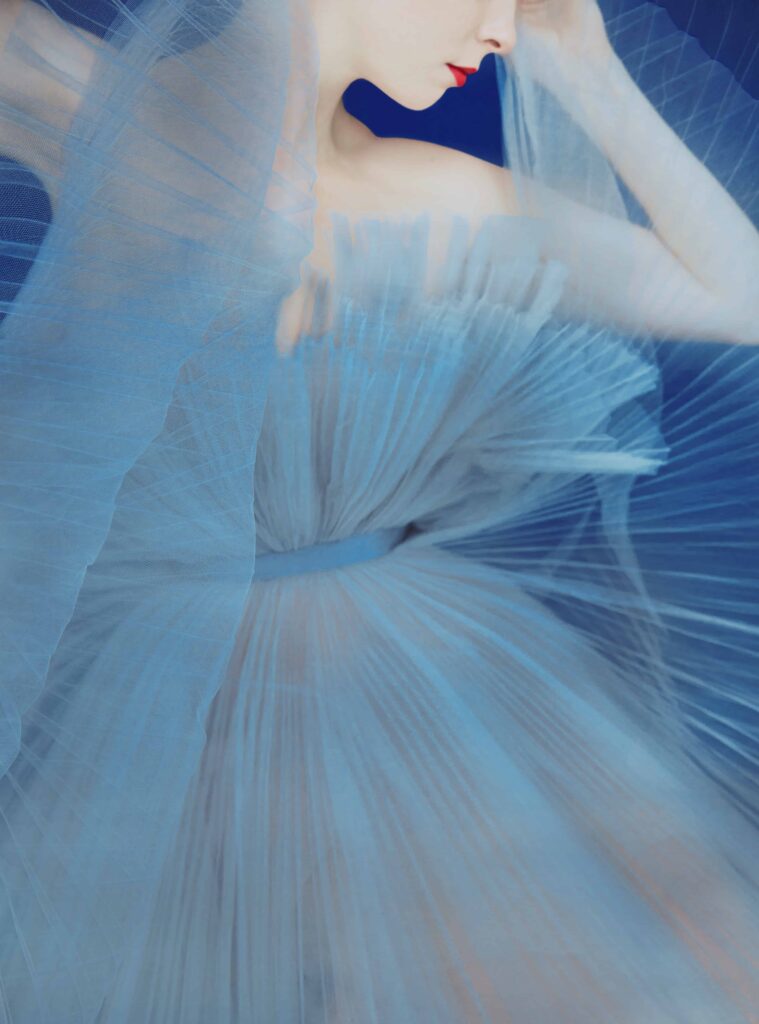
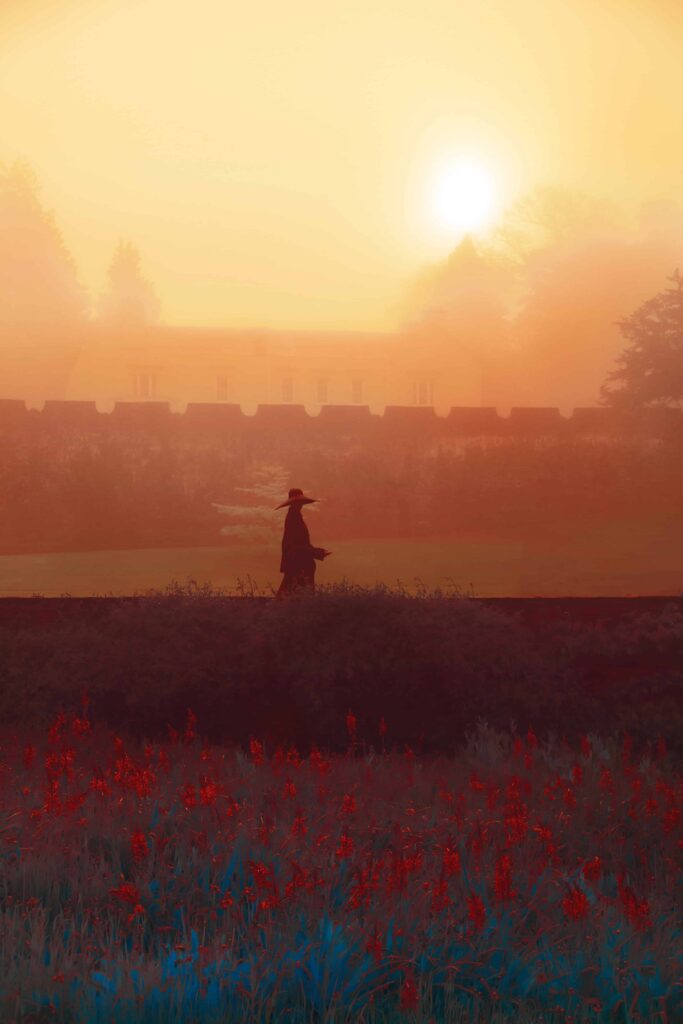
His main means of expression are photography and film, but his main tool is colour. EMH’s photographs are painterly, material, dreamy and transport you to another, parallel and unreachable world.

His technique involves analogue photography and then the digital intervention of colour, applied in a way that is both manual and ancient. His art is a layering of techniques, meanings, memories, philosophical values and the pursuit of the purest beauty or perhaps, as you will read later, love.

At the age of 14, his mother gave him a camera to get him out of his room where the already introverted boy wandered in the realm of Music. In order to spur him to go out and confront the world, she started this ritual of Sunday Photo Sessions, which made his incredible potential sprout and blossom in the artist.

Heck describes himself as ‘a painter who uses photography’. His references range from paintings of the past to contemporary photography, including Edouard Vuillard, Harry Callahan, the Les Nabis collective, Sarah Moon, Degas, Tourbeville and Roversi.

ⓒ Erik Madigan Heck

“I don’t really consider myself a photographer in the pure sense, meaning I don’t walk around with the camera. I’m not making observations. Ideas first come, which I then set out to execute with a camera, as opposed to being a photographer who is constantly shooting just to shoot. I use the camera to figure it out my thoughts, create images, then build on them with technology, applied pigments, even the written word.”

EMH studied Political Science and later photography in NY. Here he created his print and digital publication Nomenus Quarterly in 2007, which combines the worlds of fashion and art, featuring renowned artists such as Kiefer, Rodarte, Demeulemeester and many more.

The artist collaborates regularly with The NY Times magazine, Harper’s Bazaar and all other major international publications, giving life to characterful and always recognisable editorials.

Heck has published numerous books, including the most recent Tapestry: a jewel to be savoured, page after page, not least for the clever and delightful alternation of papers. The photographs in the book play with the boundaries of photographic art; laden with the pictorial tradition of the past, myth, literature and philosophy, Heck’s pictures are cultured fragments of dreams. His strong, unnatural contrasts tell of a world in which feelings are experienced truly, deeply, totally. The contrast would suggest dissonance, but instead it merges completely with nature and passes through it, like a melody that envelops an instant, crystallising it.

EMH’s films are moments of poetry outlined by colour, always the protagonist, even in its absence. Past and present, myth and legend, movement and stasis, irony, art and fashion continually trespass in a magnetic and perturbing game. The private, intimate sphere swings towards the absolute and the general; joy and hope alternate with the fear of death and the transience of life.

The artist dialogues with sensuality and music, his first love, never forgotten, often electronic or classical.

In EMH website you will be able to find a Square Palette. If you click on each individual colour you will go back through the artist’s archive broken down by colour. Extraordinary, isnt’t it?

We were fortunate enough to have a heart-to-heart confession from EMH, at a delicate time in his life, which you will read more about in his own words. Erik makes us reflect on normality, on the hic et nunc, on the perception of ourselves, on a before and an after, on beauty and love. I am grateful to him for these important and profound reflections and I invite you all to delve into his art.

ⓒ Erik Madigan Heck

“Two Mondays ago I had a large cyst removed from between my mastoid and brain. It was supposed to be a one hour surgery that ended up being almost nine. The enzymes from the cyst had eradicated the inner workings of my right side to the point of pure decay, in its absolutist finality, beyond what modern science could see with machinery prior to cutting me apart. I now have a prosthetic ear drum, no hearing in my right ear, and left with Bell’s palsy— meaning: the right side of my face droops a bit, I have no nerve or muscular activity, including my mouth— speech, eating, etc; nor my right eye which stays awake, unflinching all hours of the day, every hour cut in half by a stream of unemotional and non-controllable tears that make it difficult to cut vegetables and drive my car. 

If I were to separate myself from myself, and repeat this story out loud, I would find it traumatic, which I suppose it is. And yet, I wake up everyday happier than I was before. The only time I realize I am any different than those around me is when my children can’t understand me at times when I speak, or, I catch them giving me a look of unrecognizing their father from before. And yet, when I speak with people who are friends or acquaintances from before, they constantly feel the need to remind me of my new face by paying some sort of sympathy, verbally, in fragmented words, alluding to their sorriness for my new condition which only reminds me that they feel a separation. But, I actually feel not only the same as before, but as if I have a new skin that is more youthful or glistening. How bizarre to have others assume otherwise. 

ⓒ Erik Madigan Heck

This past Saturday I finally swam through a splayed out pile of old letters, photographs, and correspondences between my late mother and I; recent ones between my children and myself; and random letters from my Mom’s family to her, for which I had thrown against the floor of my unfinished living room months ago, walked over, and on top of for months out of defiance of actually addressing them. And then, as if it was thrown at me from the ground I found an unopened letter addressed to my mom from my Grandma Lois, written the day of my mom’s birthday— February 20th— 8 days before she died in my arms. It was sealed— she never received it, nor even knew it was sent. It looked simply like any other letter would, buried underneath a photograph of the two of us from my teenage years. I barely noticed it at first. Even after I thought I had gone through all of her premnants from the past five years I somehow never had my fingers touch this envelope. 

ⓒ Erik Madigan Heck

Opening it felt sacrilegious and also sad in how trivial the message was upon reading it— a simple birthday wish, which was a nice one I suppose, but not posthumously. There was also a $5 dollar bill inside— which brought back memories of the same birthday cards I received from my Grandma throughout various stages of my life with the same $5 bill, and same handwriting. It made me wonder how my own children will remember their grandparents when they’re older. Will a monetary note project a cinematic experience of being inside a trailer in Bemidji, Minnesota, where Bridge is played for most of the day by in-laws, and random objects collected in Southwest Texas are for sale on the side of a state highway. What will there memories of me be? 

When I say these things out loud they sound unfortunate to many who might think of me in some other way, in the way that perhaps old friends think of my face from before. But actually, they are some of the most beautiful memories because they are from a different world, a world that I believe was better.

ⓒ Erik Madigan Heck

Ironically I remember always wanting to escape that old world for something better, which presumably would be now; and now I wish I could escape to a world from before that only provided boredom, desire, and dreaming for something futuristic that isn’t this. I see all of my life in my Grandmother’s handwriting. I can see every birthday card I received from her on each of my birthday’s— September 9th, and 9th, and 9th, and 9th, with the same $5 bill inside. I can hear my mom laugh in her genuine chuckle as she knew a pittance was coming, because she also received the same as a kid, and then as an adult; as I received my mom as a kid, and as an adult. This pain and beauty will continue and continue in my mind ad infnitium for as long as this world will continue with me in it. 

Look, I found her— that lyric just played from one of James Blake’s earliest samples on my headphones I as I write this, from CMYK. I feel that was worth mentioning. After my mother died I was profoundly angry that she never left me a note as a final piece of loving declaration, which I know is pure vanity and selfishness on my behalf, she owes me nothing. Nevertheless, I’ve been searching for one to this day, and this isn’t it, but it is a crumb amidst a children’s quest for a wardrobe to enter and find her again. 

ⓒ Erik Madigan Heck

Almost twenty years ago I spent the entirety of my three-year graduate programme with a focus on beauty, with the absolute assertion that beauty is, and can only be the ultimate ideal which leads us through life— dictating all of our determinations, movements and actions. I achieved my Master’s Degree under this assumption, despite the entire board of The New School disputing my theory, yet having one of the only people who wasn’t my actual professor during my tenure— the legendary George Pitts— as a guest on my thesis panel defending my ideals (who has since passed away, rest in peace you are missed everyday). George was the closest friend I had in understanding and discovering myself through my work, and propelling me into a world of having others ultimately exposed to what I have unraveled whilst being here. 

But now I realize, and am humbled by how wrong I was. I’d like to retract and realignment my summation— beauty is an unattainable ideal. But Love is what I believe I actually meant in place of beauty. In following a path set forth of reasoning from hundreds of years of philosophical texts I attempted to decode, understand, and cite as sources for my theory, I now realize even when making distinctions in verbiage— beauty can only be left for the angels of St. Thomas Aquinas’ visions— not for us mere humans. 

ⓒ Erik Madigan Heck

I am no longer interested in any ideals, but the cracks in my heels— the callouses in my fingers, the imperfections in the radishes that were left too long in my fridge as I cut off their extremities. Everyday I wake up I am glad that I’m not trying to swim with the angels. The angels hopefully are silently looking down and swimming around all of us. I’m ok with their evidence left in the brushstrokes of my favourite paintings, rather than searching for their touch. It’s enough to believe they must exist, and one day I may face them in harmony. Until then I need a good podiatrist. Therapists are in the lettering and arrangements of words within the texts I’ve read before, and continue to discover. Music is the language of angels. Photography is the language of humans. Language is what unites all of our entities together. And religion has nothing to do with anything aforementioned—  other than historically being used as a language to describe the triangulation of us, them, that, and how they all relate; which is ironic in how now those vague terms have been coopted by people who have little patience for decoding any of those words which vaguely unite us. 

ⓒ Erik Madigan Heck
Just now I noticed the repetition of language I regurgitate as I type my public confessionals in between the evenings and sunrise. Their beginnings seem to always begin by beginning with an entrance that is ambiguously time stamped: Two Mondays ago— Almost twenty years ago— Just now. . . Repetition fascinates me. How unaware we are of the circles that enclose us while we think and then communicate those ideas to further project and consume them out loud. If we pause the repetition for a moment we notice we’ve taken the same photograph, listened to the same sounds, and tell the same stories over and over as if it were the first time, each time. And again. Again is a word. A word is an object when written, but also a thought. So again would better be described as a thought-object. The repetition of a thought into an object as a thought-object becomes interesting as it translates metaphysically into what could only be described as a photograph. I’ve had this thought before— I remember having it once and perhaps never wrote it down. I should be sleeping by all accounts— objectively, or by the social norms of what is normative for sleep behavior; but I don’t want to do things anymore that don’t adhere to what I need to do to make my thought-objects come to life.

I fell out of love with photography for a long time, and am falling back in love with photography again. Not in making photographs as they used to be, but again, as thought-objects that translate my thoughts into objects, like these words as I type them. 

Aphorisms, truisms, and the like are lovely characters in a novel that we all know titled— Again, and again. . . But, they aren’t untrue. Sleep in itself is composed of thought-objects that never manifest into physical objects unless one transcribes their dreams onto paper upon waking; which I find less believable than God. I would wager my life on the fact that my inner dream world is more vibrant than anyone else’s that I’ve met. And yet upon waking the transfer of power from my brain to itself in exchange of one world to the next is without my own control or memory diction— I could never have the vocabulary to describe my thoughts nor objects inside the world I just left. It’s always been this way, and I’ve made peace that each day is a balance of living between these two worlds, the thought and the object. I suppose I then become the object. What a wonderful thing to objectify oneself in a world where that term has become caustic, and thus as an object encaustic— wrapping ourselves in our thoughts.”

May 2025

Erik Madigan Heck

ⓒ Erik Madigan Heck

Le Grand Cirque

Le Grand Cirque – Aganovich 2020 – Short Film by Erik Madigan Heck, animated by Matt Occhuizzo, Original score by Frits Wentink.

Further Reading

Are you a sensitive and curious traveler, constantly searching for beauty, art and cultural inspiration? Sign up to receive the latest contemporary news!