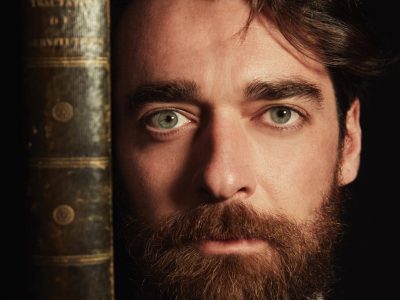
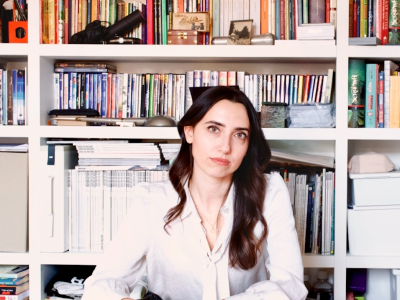
Between public relations and private revelations, Vanessa Bozzacchi inhabits that fragile threshold where identity meets devotion. In founding Mente, a foundation dedicated to neurodevelopmental disorders, she transforms personal pain into collective architecture — a lexicon of love, structure, and silent revolution.
There are women whose presence feels like punctuation: a pause, a breath, a necessary accent in the long, often indecipherable sentence of the world. Vanessa Bozzacchi is one of them. A figure of luminous discretion in the realm of fashion and communication, she moves through the industry not as a mere strategist but as an attentive choreographer of human resonance — orchestrating not only visibility but intimacy, gesture, and grace.
Yet it is in the quiet grammar of care that Bozzacchi reveals her deeper syntax. The birth of her son Leone, and the realisation of his being on the autism spectrum, did not simply alter the tempo of her life — it rewrote the score entirely. In response, she co-founded Fondazione Mente, not as a philanthropic gesture but as a metaphysical necessity: an attempt to rebuild, from the inside out, the spaces that institutions had long ignored.
Mente is not just a centre — it is an architecture of attention. A citadel where children with neurodevelopmental disorders are not only supported, but seen. It is a place where the invisible becomes visible, and where the language of neurodivergence is neither corrected nor romanticised, but translated — with patience, with dignity, with love.
In this conversation, Bozzacchi reflects on motherhood as ontology, on public relations as a form of ethical seduction, and on the invisible bridges that bind bodies, voices, and minds. What emerges is not a manifesto but a meditation — poised somewhere between silence and statement, between the logic of the world and the illogic of affection.
She shares her thoughts, stories, and inner maps in this exclusive interview with Orlando.
Motherhood is both a creative act and a profoundly transformative one. How has it reshaped your priorities, dreams, and perception of time?
All of my priorities now revolve around him, around our family. Everything else fades into the background; it doesn’t carry any weight. Time, at first, feels slow — then it slips away, more and more each day. Transformation is part of life; it is evolution».
It is often said that a mother sees what others fail to notice. What have you learned by observing the world through your son’s eyes?
«A mother always has a vision of the whole. She can tell, just by how her child walks, whether he’s thinking something joyful or troubling. You learn to see the world not only from your own point of view — which until then was the only one — but from the perspective of someone who perceives everything outside of the usual codes. You learn that what matters is what he sees. I always say that our emotions, our frustrations about them, mean nothing. Their needs come first».
What is your understanding of vulnerability? Is it an obstacle to overcome or a deeper form of knowledge?
«Vulnerability is a deeper form of knowledge».
Autism, in public discourse, is often reduced to simplistic definitions. What is, in your view, the most overlooked yet essential aspect of this condition?
«Autism is a spectrum. We speak far too little about severe autism — non-verbal individuals, those who self-harm, who exhibit aggression, those with cognitive and motor delays. This lack of conversation breeds judgement, and that in turn leads to exclusion».
How has motherhood transformed the way you perceive and inhabit reality?
«Motherhood reorders your entire scale of priorities. Suddenly, almost magically, you let go of things that used to seem essential — you realise how superfluous they are. You learn what really matters».
Mothers are often romanticised or judged. How do you defend yourself — or subvert these narratives?
«Sadly, that judgment seems to be worsening over time. Of course, we can’t generalise. But no one is born a parent, let alone a mother. You grow alongside your children, learning on the job. You stumble and rise again, make mistakes to understand more deeply. I never defend myself. I don’t excuse or justify — but I’ve learned to understand even the most extreme gestures».
Fondazione Mente was born from a personal urgency that became a collective gesture. What guided you through that passage from intimate experience to public commitment?
«What we do is necessary. It was born from the need to fill a void, to centralise a network of services that could improve the lives of families. Those who are more fortunate have a duty to act on behalf of those who were given less — or simply face more difficulty».
If you had to choose a metaphor to describe your foundation, what would it be? A house, a bridge, a garden?
«A place where one can find Love — the only true medicine these individuals need. To paraphrase your question: a big house, warm and full of love, surrounded by green, with a bridge that connects».
In an age of overexposure, how do you value the invisible in your daily practice as a communicator?
«Communication should only be used when there is something worth saying — something to offer, something useful to society, something that respects the reader or listener. We don’t need to become invisible, but today’s world thrives on voyeurism, and it gives far too much space to those who posture and pronounce without substance».
Do you remember the moment you realised that creating connections could become your profession?
«That’s a funny question to me — because I was painfully shy. My work taught me to believe in myself, to communicate, to listen. I understood that I could build connections only over time, after many different jobs that, piece by piece, led me to what I do today».
In your role as entrepreneur and PR professional, how do you balance visibility with the authenticity of relationships?
«Visibility can help in my line of work, but at times, I find myself enduring it more than embracing it. For me, authenticity is non-negotiable. I’m selective; I protect my relationships, my family, and my friends. I’ve never fallen for the trap of “visibility at all costs” — I’m too grounded, too rational».
What are the greatest challenges an entrepreneur must face? And the greatest rewards?
«The challenges never end. When they do, you lose enthusiasm — that urge to create, to stretch yourself. The real challenge is to focus on your own garden, not the neighbour’s, and to give your best every day while remaining whole, true to your ideals».
What do you believe are the key elements in creating authentic connections between strangers?
«You need the sensitivity to truly see people — to listen. There has to be an intention behind bringing people together. I’m extremely sensitive and empathetic. I enjoy reading others — often involuntarily — though it can be exhausting at times».
Was there ever a moment when you realised that being a woman also meant having to resist?
«Let’s just say we possess inexhaustible resilience».
Have you ever felt the need to distance yourself from externally imposed female models?
«I’ve never felt burdened by external models. In that respect, I feel rather free».
Which part of your body feels most authentic, most eloquent, most free?
«I’ve never been a fan of my body, but every part of it is authentic. My hands, certainly — they say a lot».
Is there one word that describes your way of living femininity today?
«Freedom, fragility, and strength».
If you could write just one sentence to describe what being a woman means to you, what would it be?
«An incredible journey. A human being with superpowers, capable of managing her own world — and more — with one hand, while laughing and drying her tears».
What have you learned from your partner about maintaining a bond over time?
«I’ve learned so much from my husband — he is the love of my life. He completed the parts I was missing. I could write pages about it. We’ve been together for seven years, but time has its own dimension with us. Our life is so full, so intense, that it often feels as if we’ve been together forever — as if nothing existed before us».
What daily gesture, for you, best expresses love?
«The simplest ones. Asking if you slept well. If you’ve eaten. Taking care of one another without expecting anything in return».