Learning without paying the price: Literature’s quiet gift.
Words by Giulia Fantini
Imagine being able to taste the poison of ambition without dying from it. To fall deeply in love without truly losing your heart. To pass through war, madness, loss — to face death without drawing your final breath — and then close a book and return.
Literature offers us exactly this: the lives we will not live.
It is not an escape, as it is often described. If anything, it is a disciplined immersion in the complexity of human experience. A form of emotional and moral rehearsal that prepares us — quietly, almost invisibly — for the one life that is actually ours.
Great novels function as simulators for the inner life. They allow us to approach pain without being undone by it, error without bearing its full cost, loss without being irreparably broken.
We move through extreme passions, irreversible choices, gradual inner collapses. And, almost without noticing, we learn.
This is not abstract knowledge, but lived experience at a remove. We are not told what happens to people. We inhabit it.
There is something elusive in how this works. The body responds, the pulse quickens, attention sharpens — as though what we read were happening in real time. In a sense, it is.
But without irreversible consequences.
For this reason, reading is not a withdrawal from the world, but a way of returning to it better prepared. It builds tolerance for intensity. It teaches us to remain where, in life, we might instinctively retreat.
It brings us to the edge — to show where a decision, a desire, an obsession may lead. And then it returns us to our own freedom.
We enter the slow drift away from oneself. The muted life of those who want too much. The unsettling clarity of those who feel nothing. The quiet expansion of solitude until it hardens into fate.
It is not us. And yet, in some sense, it is.
We pass through lives both luminous and devastating. For a time, we become Jean Valjean, Macbeth, Anna Karenina — even Harry Potter. We feel what it is to love too much, to want too much, to believe too much. And we see what remains when everything has played out.
In this way, we learn to recognize an illusion before it overtakes us, a desire that risks consuming us, a misstep we have already witnessed — elsewhere, on another page, in another life.
I felt this with particular clarity a few months ago, rereading The Count of Monte Cristo.
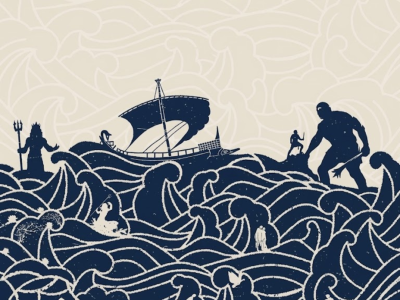
I entered the long suspension of Edmond Dantès’s imprisonment. The silence, the anger, the claustrophobic passage of time within the Château d’If. The sea just beyond reach — and the impossibility of telling anyone: I am alive.
There is relief in his transformation under Abbé Faria, in the acquisition of knowledge, in the emergence of a plan. And yet, after his escape, there is also the recognition that his former life cannot be recovered. What remains is the wound.
At first, his desire for revenge feels justified. Even necessary.
But gradually, something shifts.
Justice cools into calculation. It becomes structure. Then obsession. And we follow it, step by step, drawn in by its coherence.
Until the moment of rupture.
“I am Providence,” Dantès declares.
At that point, the illusion collapses. There is no divine justice to be assumed. No balance that can be imposed. No past that can be restored. Revenge does not repair; it consumes.
“Wait and hope,” he says at the end. But that conclusion comes only after the limit has been crossed — after the discovery that suffering cannot produce justice. After everything has been undone. Something shifts in us as well.
We begin to sense that, in life, there is a point at which one must stop. That not everything can be resolved through action or will. That time — more than intention — restores proportion.
That forgiveness is not weakness, but release.
Reading leaves us with something: a sharpened awareness, an intuition, a lesson learned without direct cost.
So when we return to our own lives — the only ones we truly have — we are not quite the same.
Perhaps a little less naive. A little more capable of facing reality as it is.
In this sense, literature remains one of the most precise forms of knowledge we have of the human condition.
It does not instruct us. It shows us what it means to be human — and then leaves us to decide what to do with that knowledge.
Unveiling the dialogue between Florence Welch and Autumn de Wilde, where music and vision converge to shape feverish images, ritual gestures, and a rare sense of visual enchantment.
An in-depth conversation with multimedia journalist and science reporter Silvia Lazzaris.
By Antonella Dellepiane Pescetto
Are you a sensitive and curious traveler, constantly searching for beauty, art and cultural inspiration? Sign up to receive the latest contemporary news!