Dante Gabriel and Christina Rossetti: The Siblings Who Taught Victorian Art to Dream
Words by Anna Maria Giano
Before Dante Gabriel Rossetti and Christina Rossetti became names in the history of Victorian art, they were children of a house filled with voices from elsewhere, where their father, Gabriele Rossetti, had carried Dante from Naples to London like a sacred flame. Exile had given him another country, yet poetry remained his true homeland, and in the Rossetti rooms Italian memory met English fog, while the Bible stood beside medieval song and the domestic table seemed to gather the gravity of books and the fervour of belief.
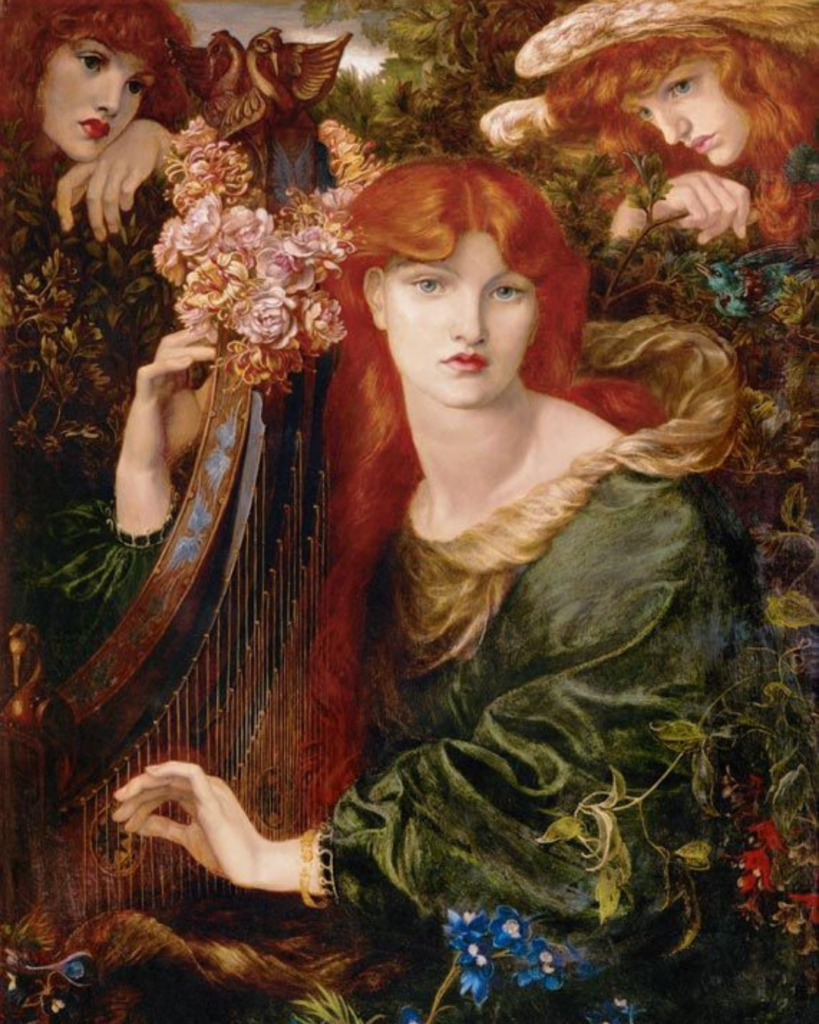
From this charged interior came two artists who would alter the imaginative weather of the nineteenth century. Dante Gabriel Rossetti gave Victorian painting a face heavy with dream, a mouth shaped by silence, a hand resting near a flower as though near an omen. Christina Rossetti gave Victorian poetry a voice that seemed to rise from a chapel at twilight, clear enough to be sung by a child and grave enough to trouble the soul.
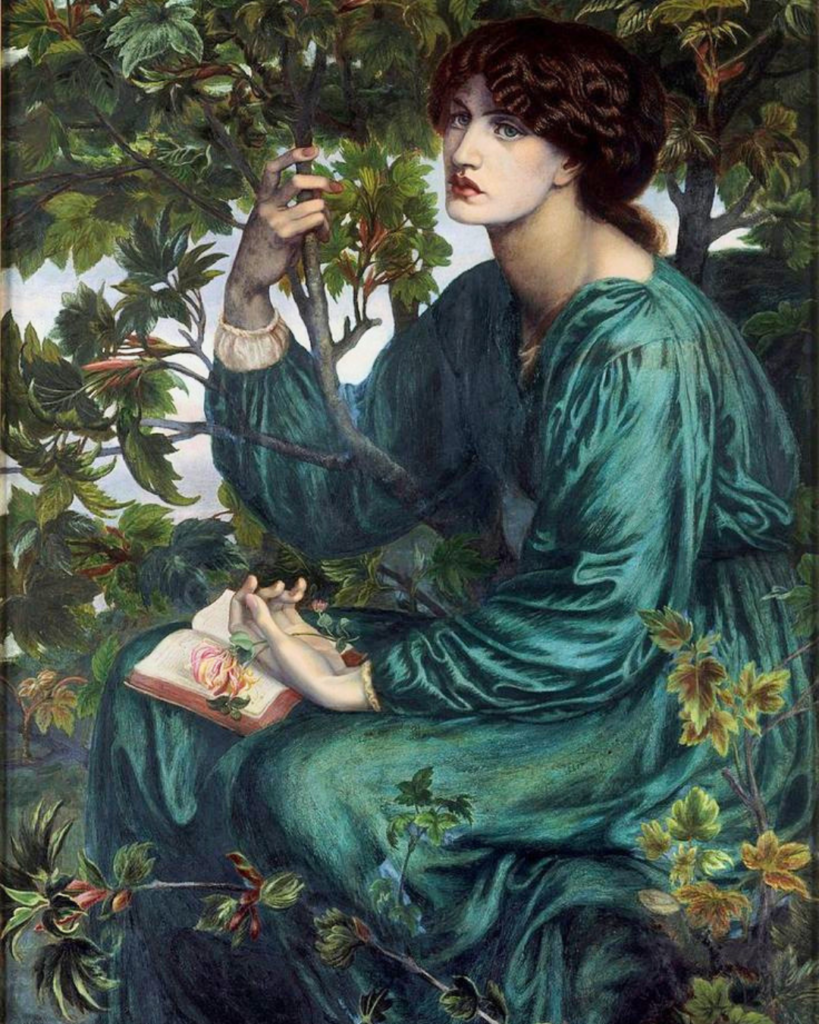
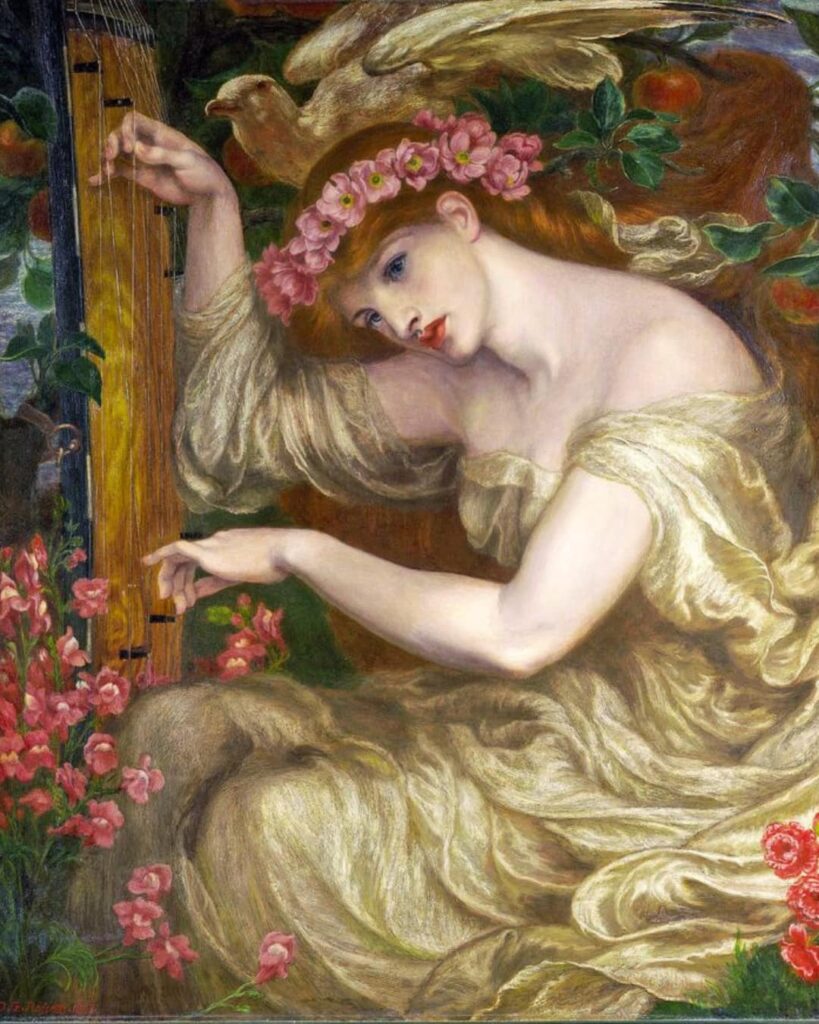
Reverie, Dante Gabriel Rossetti
Their kinship was more than blood, for it formed a secret correspondence between image and hymn. Dante Gabriel moved towards colour as though colour were a form of revelation, while Christina moved towards cadence as though cadence could open the gate of eternity. Their lives touched the same charged symbols, from the beloved face to the forbidden fruit, from the threshold to the enclosed garden. Each received those symbols according to a private law. In Dante Gabriel, they became velvet and painted breath. In Christina, they became prayer and inward music. Dante Gabriel Rossetti was born in 1828 and, twenty years later, founded the Pre-Raphaelite Brotherhood with William Holman Hunt and John Everett Millais, a circle that sought a renewed intensity in art through the example of painting before Raphael. The gesture was radical because it asked Victorian art to recover the purity of vision and the symbolic charge of earlier centuries. For Rossetti, the Middle Ages were a living mirror, able to return to modern England a sense of beauty steeped in mystery.
They gave him saints with human lips and women with the stillness of icons, rooms where a lily or a book might carry the force of destiny. His paintings ask to be read like illuminated poems, and his poems ask to be seen like panels of stained glass.
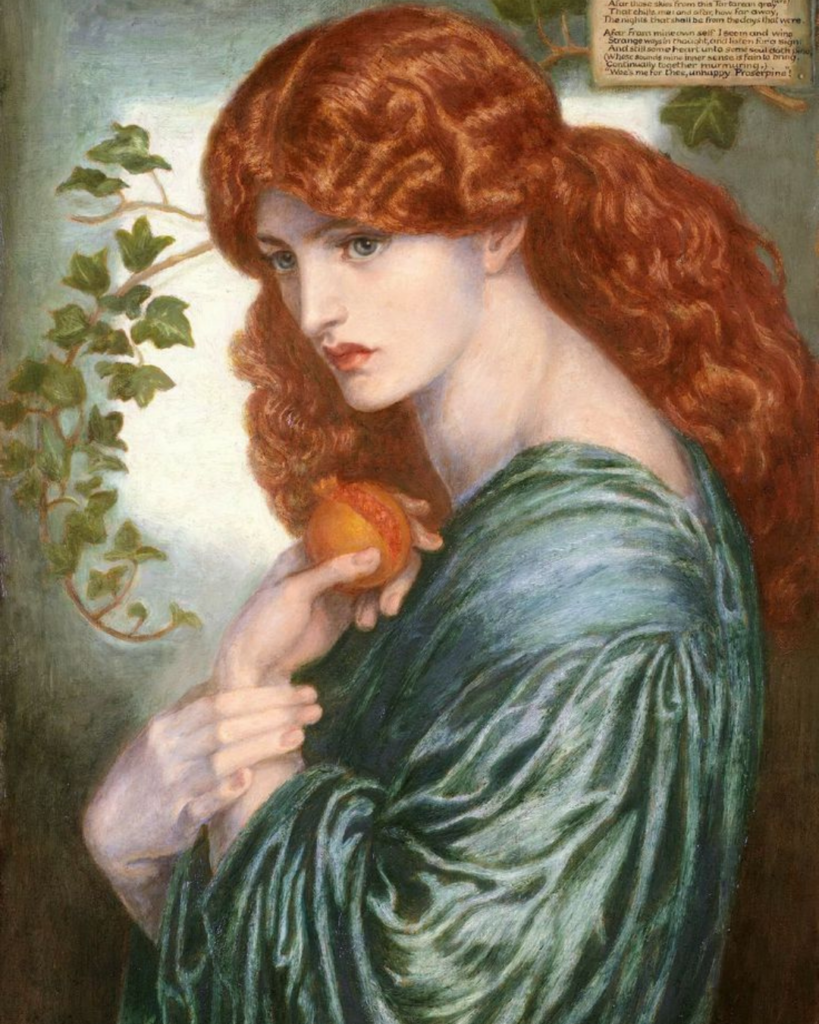
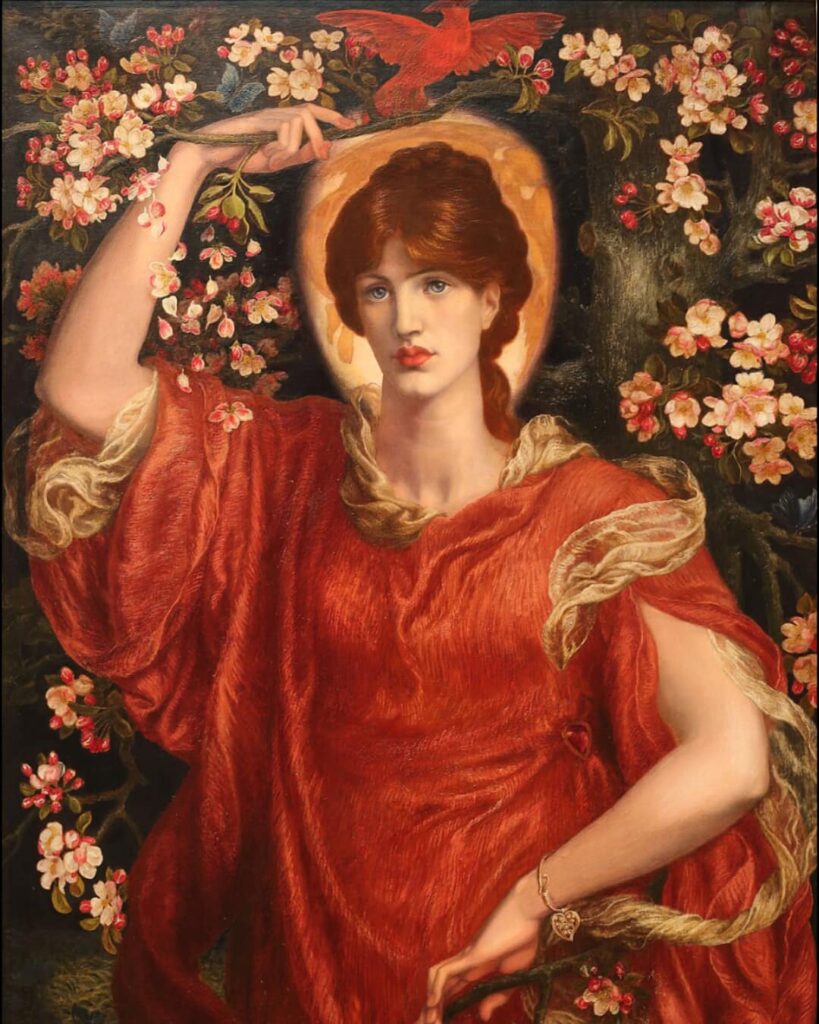
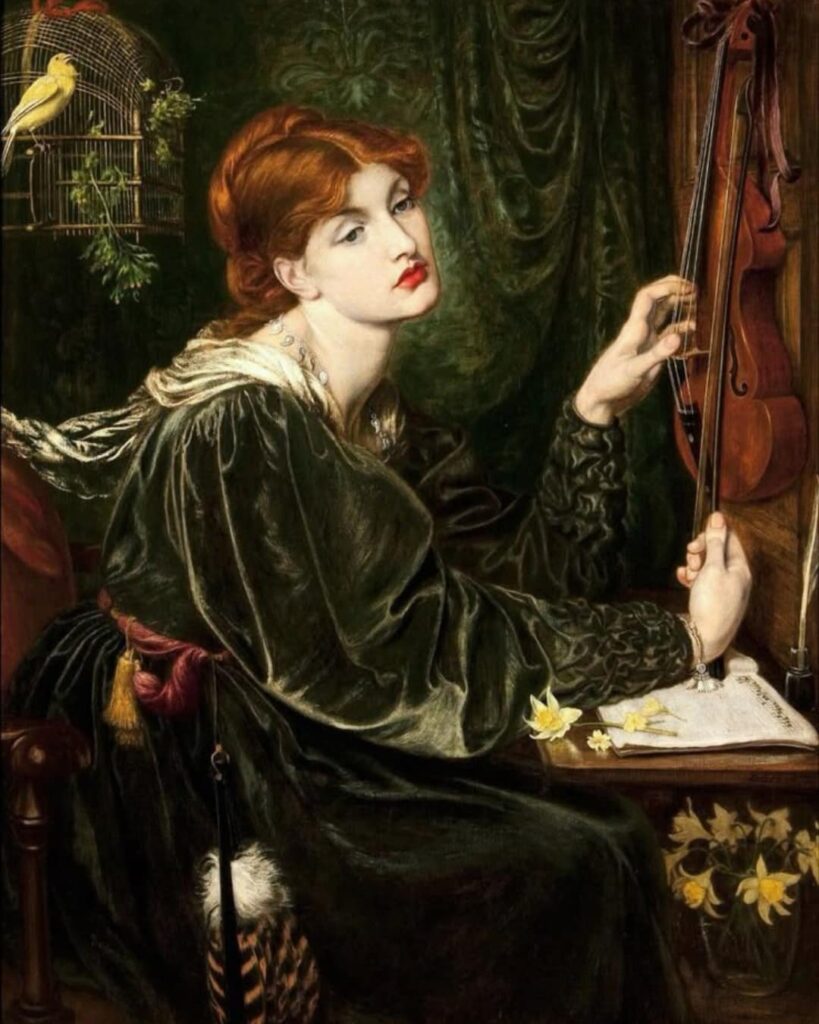
In “The Blessed Damozel”, the beloved leans “out / From the gold bar of Heaven”, and the image seems suspended above the reader, intimate and unreachable, a vision of love held at the edge of paradise. Walter Pater found the exact phrase for this gift when he wrote that Rossetti possessed “the painter’s sensuous clearness of conception”. Pater understood that Rossetti’s imagination touched thought through matter, so that feeling became jewel, memory became hair, and desire entered the world as colour. This is why Rossetti’s women changed the century. Elizabeth Siddal, Jane Morris and Alexa Wilding appear in his work as figures caught in the instant before speech, with a beauty that has weight and ritual, as though they had been summoned rather than portrayed. In Bocca Baciata, Monna Vanna and Astarte Syriaca, the female figure becomes a chamber of symbolic force, and the gaze no longer invites conversation because it consecrates distance. Through Rossetti, Victorian art learned a new kind of inwardness. Beauty became dense and ceremonial, almost dangerous, while the painted woman ceased to be simply an object of admiration and became an atmosphere. Around her, flowers tremble with meaning and mirrors gather omens, while instruments wait for hands that may never touch them.
The Beloved (The wife) Dante Gabriel Rossetti
Later Aestheticism would inherit this spell, and Symbolism would deepen it, carrying forward the fin-de-siècle dream of art as a sacred world born, in part, in Rossetti’s rooms of colour and silence. Christina Rossetti was born two years after her brother, in 1830, and her art came from the same house, though it travelled through another element. If Dante Gabriel painted desire as apparition, Christina wrote desire as trial. Her poems often begin in a voice of remarkable simplicity, and “Remember me when I am gone away” sounds like a farewell spoken softly at a bedside before opening into a meditation on memory and spiritual release. In “When I am dead, my dearest”, grief is asked to lower its voice, and mourning is carried into a place of calm severity.
Christina’s poetry has the strange purity of water seen in a deep well, where the surface seems clear and the depth gathers shadow. Faith shaped her imagination with discipline, yet her devotion gives the poems their tremor. She knew the soul as a region of waiting, temptation as sweetness, and renunciation as a fire that burns without spectacle. Virginia Woolf saw the force hidden beneath Christina’s quietness and, in her essay “I am Christina Rossetti”, wrote that “something dark and hard, like a kernel” had formed at the centre of Rossetti’s being. It is a severe and beautiful image, and it touches the truth of the poems, because Christina’s music has a kernel inside it and her softness is guarded by stone. Her great enchanted poem, Goblin Market, appeared in 1862, opening with the cry “Come buy, come buy”, which enters the ear like street song and spell. The goblin fruit shines with a brightness that feels almost wet to the touch, while Laura hears and yields, and Lizzie stands within danger before carrying back the possibility of rescue.
The poem’s drama unfolds through appetite and sisterhood, with a music that keeps changing its light. Elizabeth K. Helsinger called the language of Goblin Market “remarkably mercantile”, and the phrase opens one of the poem’s richest chambers, because the goblins sell more than fruit. They sell sweetness as captivity and turn desire into exchange, while Christina Rossetti makes the marketplace shimmer like a moral dream, where every taste carries a price and every cry from the darkness asks for an answer.
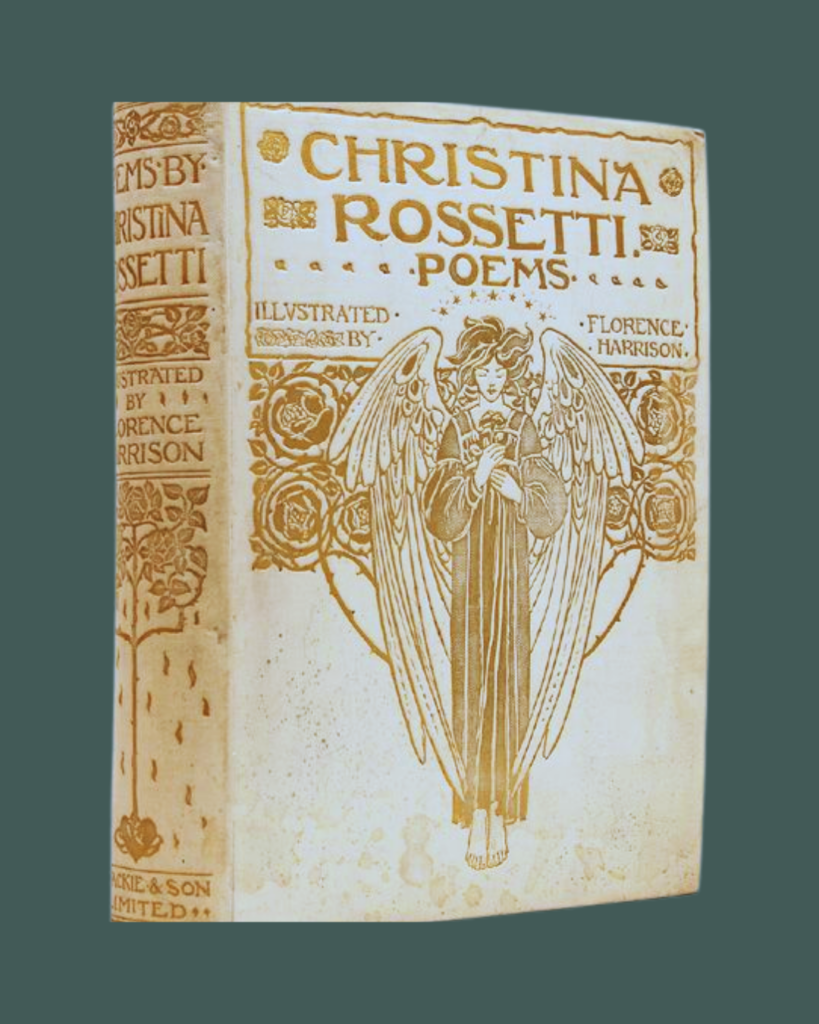
Dante Gabriel illustrated Christina’s first major volume, Goblin Market and Other Poems, and this collaboration has the intimacy of a family ritual as well as the importance of an artistic event. The brother gives line to the sister’s enchantment, while the sister gives song to the world from which Pre-Raphaelite vision drew so much of its power. Their exchange is delicate, almost liturgical, as his hand follows the threshold of her poem and her voice enters the visual kingdom he helped create.
The two Rossettis changed their age because they gave Victorian culture a language for inward vision. Dante Gabriel made painting behave like incantation, while Christina made lyric poetry feel like a sealed chapel in which every word had been placed by candlelight. He brought the eye into a world of symbolic splendour, and she brought the ear into a world of spiritual pressure. Their influence moved through the century like a hidden current. In painting, Dante Gabriel opened a path towards Aestheticism, towards art as atmosphere and image as spell. In poetry, Christina gave devotional lyric a new intensity, making faith sensuous and psychologically alive. Together, they drew Victorian art towards the tremor of symbol, where beauty could carry memory and revelation within the smallest visible form.
La Ghirlandata, Dante Gabriel Rossetti
Perhaps this is their enduring enchantment: they understood that beauty arrives with a summons. A face can ask for reverence, a fruit can glitter with danger, a remembered voice can fill the distance between earth and heaven, and a painting can become a threshold through which the ordinary world begins to glow. Dante Gabriel Rossetti painted the soul as if it had hair, lips and hands folded beside a flower. Christina Rossetti sang the soul as if it were listening from behind a closed door. Between them, art learned to dwell in that charged interval where the visible world begins to shine with invisible meaning.
Unveiling the dialogue between Florence Welch and Autumn de Wilde, where music and vision converge to shape feverish images, ritual gestures, and a rare sense of visual enchantment.
An in-depth conversation with multimedia journalist and science reporter Silvia Lazzaris.
By Antonella Dellepiane Pescetto
Are you a sensitive and curious traveler, constantly searching for beauty, art and cultural inspiration? Sign up to receive the latest contemporary news!