THE SPARK OF CREATION

House of Ita

Words by Antonella Dellepiane Pescetto

West meets East, psychiatry coexists with art on a daily basis, history and textile collecting dialogue with archetypes, dream states and mythology; Surrealism and Magic Realism blend with medieval jewellery, mosaics and ancient Macedonian traditions. All of this is the art of House of Ita.


Artist mother, psychiatrist father. How were these two aspects of your family experienced during your childhood and how did you process them in the construction of your human and artistic personality?

I grew up in an environment where art, architecture and medicine dialogued with each other, creating a fil rouge on both sides of my family. My mother was a professor of architecture and history and also pursued her own artistic path. My dad was a child neuropsychiatrist, a wood sculptor and also a musician. My life has been filled, for as long as I can remember, with museums, archaeological sites, art galleries, classical music concerts. I pursued ballet and watched my grandmother and mother sewing clothes for themselves and their friends. So I too started using the sewing machine to create both unique pieces for myself and for friends, I experimented a lot and so my love for textiles also developed.

How do you think psychiatry communicates with the art world?

I went to medical school to do psychiatry, I had no doubts about the specialisation.  I would have liked the Academy of Fine Arts, but in those days it was not recognised by society as a stable professional outlet. I loved and love psychiatry, because for me psychiatry and the arts are very similar and speak the same language. Psychiatry was born and codified about a hundred years ago as a science and it is a type of narrative that becomes therapeutic.

I also worked in hospitals, in asylums, where I followed people who expressed themselves with words, but also with silences, catatonia, shouting, closure, all ways of communicating and narrating themselves. Mankind, ever since they have existed, have tried to leave their mark through art, in the caves, to express a memory, through writing, painting, dancing around the fire. And then it slowly became more and more refined.

Psychiatry and art are two sides of the same coin for me, in fact my art is very much linked to an inner language, it is science, dream and memory of history. All art inspires me, from music to dance, from cinema to photography, even biographies of people and the contemporary.

You are a citizen of the world. From Macedonia to France, from the US to Italy. Tell us what each of these places has left you and how they have influenced your art.

I took a rather international route. I was born in Skopje, Macedonia, then, when I was still a child, we lived in Paris to follow my father who worked at the Sorbonne. I went to high school in the US, then came back to Macedonia, but every summer I went to the US. I worked at the polyclinic in Macedonia and was an assistant professor. I came to Italy, because I won a scholarship during my specialisation, to work as a trainee at the San Raffaele hospital in Milan and then in Rome, at the Gemelli hospital. Here I learnt the language and fate would have it that I also met my husband, Martino Sclavi, who was an unusual Italian, born in Italy, then grew up and trained in the United States in Cambridge, then in Berlin, London and then worked as a film producer in Anglo-Saxon countries. Together we lived between Rome and London for many years. In London, I attended two very interesting courses at Central Saint Martins: one in printing and painting wallpaper and textiles and one in interior design with Abigail Ahern. We travelled all over the world and I worked as a psychiatrist and cultivated my artistic experiments in parallel. I am self-taught, I was nourished by museums, flea markets, and discussions with collector friends. My husband then fell ill and passed away in 2020 and it was clearly a very hard and at the same time turning point. He always encouraged me and the words that have stayed with me from him are: “when you create your eyes shine in a different way”. As fate would have it, shortly after his death, I found an atelier where I transferred all the work I was doing at home, where I started to create with more intention and knowledge.

How did you go from being a self-taught experimenter and creator to a recognised artist? Tell us also about your main techniques.

It was a life path. I have always had the need to create inside of me, for myself, for my family, for friends, but without ever defining myself as an artist… then slowly the exhibitions and collaborations began. It has not been that many years, less than 10, that I have been pursuing my artistic project in a more recognised way. In 2018, I had my first exhibition at the Cantiere Galli in Rome and then I exhibited at Edit Napoli, whose founders, Domitilla Dardi and Emilia Petruccelli, recognised my uniqueness in my origins, in my embodiment of the history of the Balkans and in my dialogue with my work as a psychotherapist.

From there, in a way, my identity as an artist was born, since someone saw my creations and deemed them worthy of being part of exhibitions.

My first collection Folktales, celebrated the original ethnic textiles of Macedonian women, which I found in villages. I went on a long research journey, to recover these traditional garments found in the ladies’ trunks, their handmade trousseaus, which are unfortunately disappearing. In this first collection, I sewed, assembled layers of different fabrics, from velvets to leather.

The second collection focused instead on medieval jewellery, which is always an aspect that comes from Macedonia and the Balkans. Having had the opportunity, with my parents, to visit archaeological museums and then leaf through my mother’s books, medieval jewellery was among my first inspirations. I painted this collection, partly because I had just finished the course at Saint Martins in printing and painting wallpaper and textiles.

Finally, my tapestries, always inspired by traditional Macedonian clothes, implement a deconstruction and reconstruction of tradition. Mine is a mixed technique in which I alternate embroidery, painting, sewing, creating collections for interiors but also unique pieces such as tapestries. The result is very material, I like to have an open and emotional relationship with the material. Now my path is varied, I am always working on several projects at the same time, for example I am also experimenting with fabrics other than the traditional ones from my origins.

You are a multifaceted artist who dialogues with material. One of your favourite means of expression is fabric. Tell us about your connection with it.

Textiles have always been feminine. Apart from feeding their children and taking care of the home, women have always been connected to the world of textiles and continue to be so. There has always been something that has struck me about textiles as a means of expression. My earliest memories are of my grandmother and my mother sewing clothes for themselves and their friends and then, in the end, it is women’s hands that fascinate me; their having always been able to create with little, even with nothing, experimenting, creating, dyeing, inventing colours. My art reverberates a continuity of love towards women, towards their infinite creativity, both emotional and manual and mental, not underestimating the male nature. Fabric is an art in which I feel comfortable, it represents me because fabrics are polyvalent: they can be soft, tender, at the same time sensual and sensitive, but they conceal a strong, profound language.

My art can be summed up in a Trinity of interaction between Pattern, Colour and Texture. What I am passionate about is playing with a fabric, on its layers. My mission with textiles, with tapestries, is to reinterpret, to subvert one reality, one narrative into another. It is not certain that this new version is the definitive one, there may be someone who, after me, will continue it and give his new version, in an eternal flux. All the means of expression I use have already had a life: antique lace, Murano chandelier crystals, medieval jewellery: all authentic, vintage pieces to which I give new function and life.

Paolo Abate

What do you want to communicate with your art? In your work you talk about cultural heritage, what kind of legacy would you like to leave with the artistic, medical and human medium?

What I want to communicate with my art is an invitation to slow down and observe.  This is what I feel, first of all, when I start creating anything. When the process of inspiration begins, it is as if there is an inner journey of slowing down and observation, of self-observation, even of society.

 Then the analysis widens from within towards the object. In the creative process we change vision and perception, of society, of people, of energies, of the images that surround us. A city that changes with the seasons, a tree, feelings can inspire us; art changes our relationship to everything around us and so I invite to slow down and observe, to create anything. It does not have to be manual art, it can also be writing, music, research… because every time you look at something to create, you perceive it differently, you see yourself and those around you. 

It is essential to be open because creativity is a continuum.

“Lost and Found Studio” di Angelo Cricchi

Your son grew up in an artistically rich environment that stimulated and enriched him. How did you pass on your creative work to him?

My son is 17 years old. We never insisted on inculcating an artistic direction in him, however he grew up in a very creative and international environment. He has always been surrounded by the world of cinema, art, psychology, anthropology, philosophy… 

These are things that a parent sows, hoping that later in life, the children will open these various drawers where all these teachings, inputs, memories are kept, and he hopes that they will come in handy. For now, he has a great appreciation for cinema, he is a native speaker of three languages, he is my assistant when I have to develop graphic concepts, being the son of a generation that is far ahead with technological/electronic language. I see in his eyes that light that Martino saw in mine, that authenticity, that light in creating something. It’s nice to see this light shining inside our children’s souls: it is a guide in their life journey.

Tell us about your recent collaborations.

For the past four years I have been happy to participate in the Milan Design Week and last year I collaborated with the new 10 Corso Como, redesigned by Tiziana Fausti, creating some objects (a runner, placemats and a cushion) that were part of the Collezione Alchemica, curated by Domitilla Dardi in the Project Room, which housed other design objects, tableware, and furnishing accessories, all sharing the attention to detail and the stories that author’s design brings. I have also been collaborating for some time with Artemest, an online destination for Italian furniture, with a unique selection of products handmade by artisans and, very recently, I exhibited some pieces in their gallery in NY, in the West Chelsea.

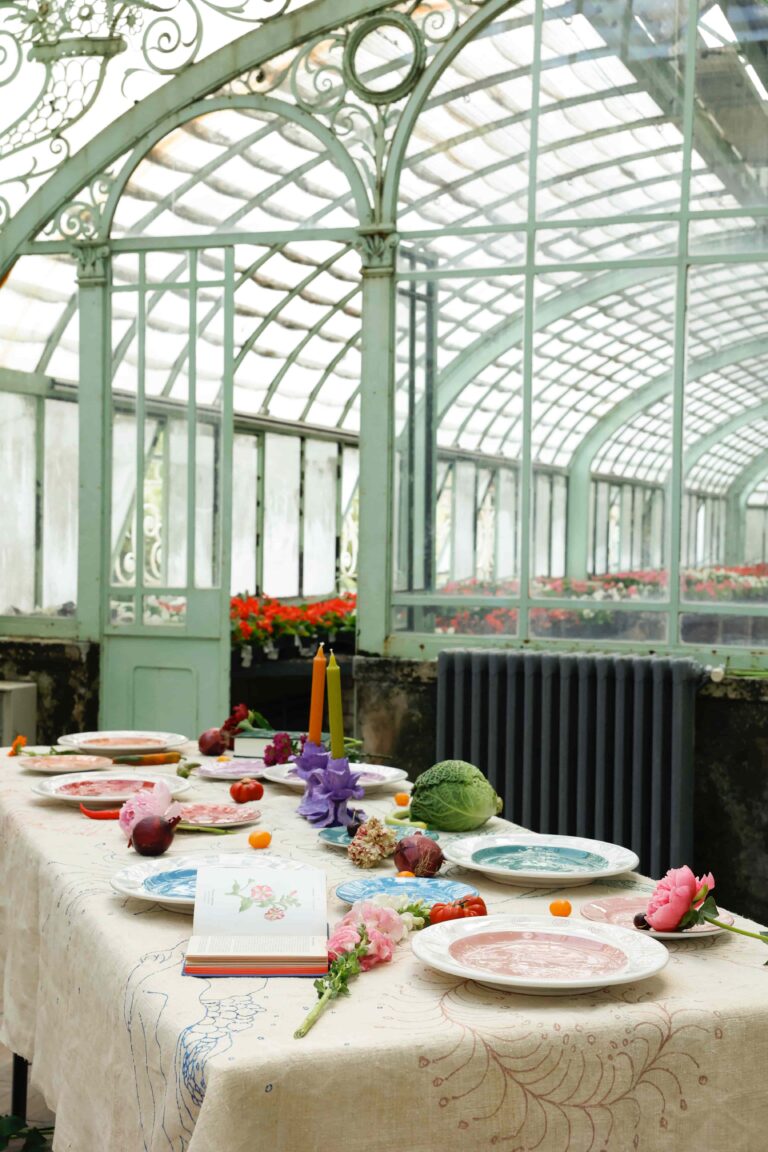
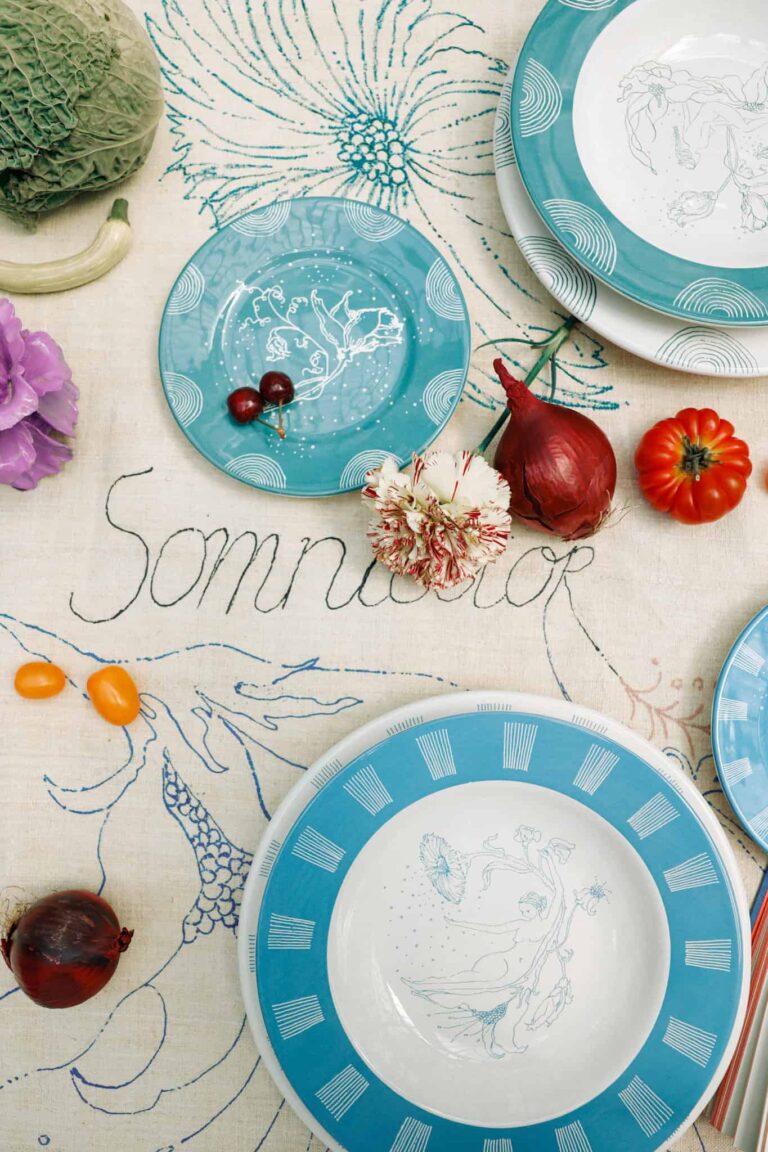
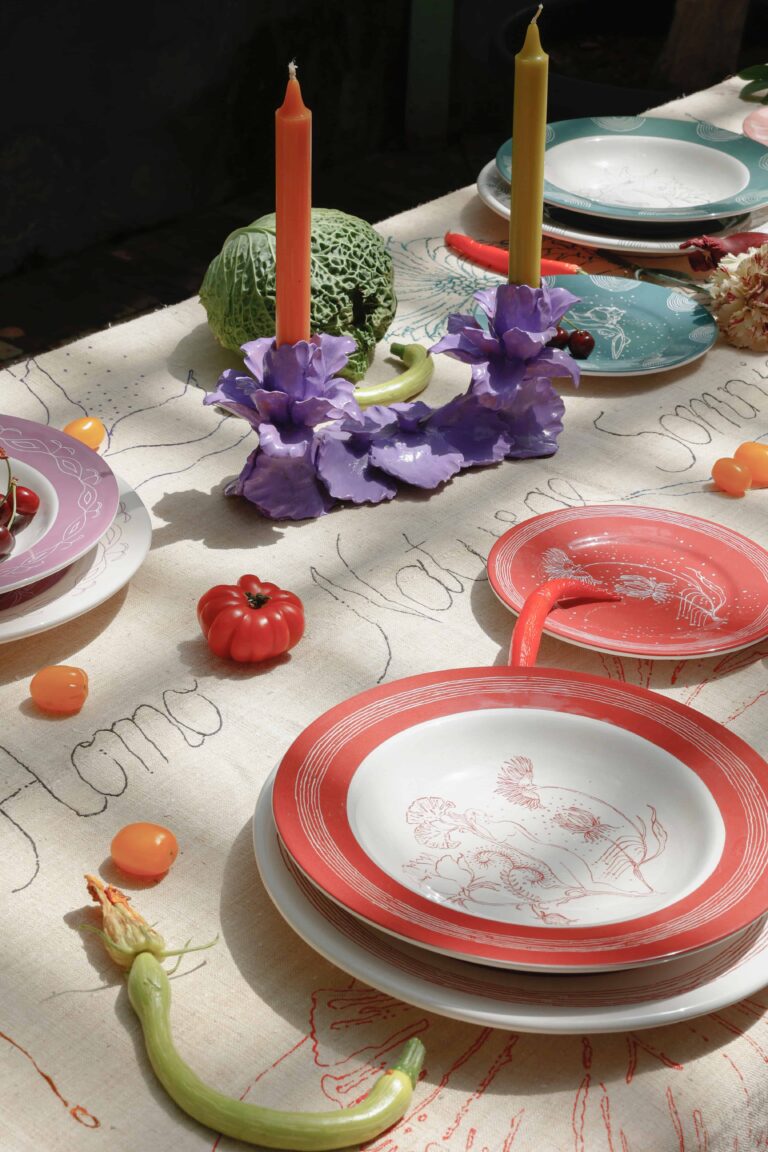
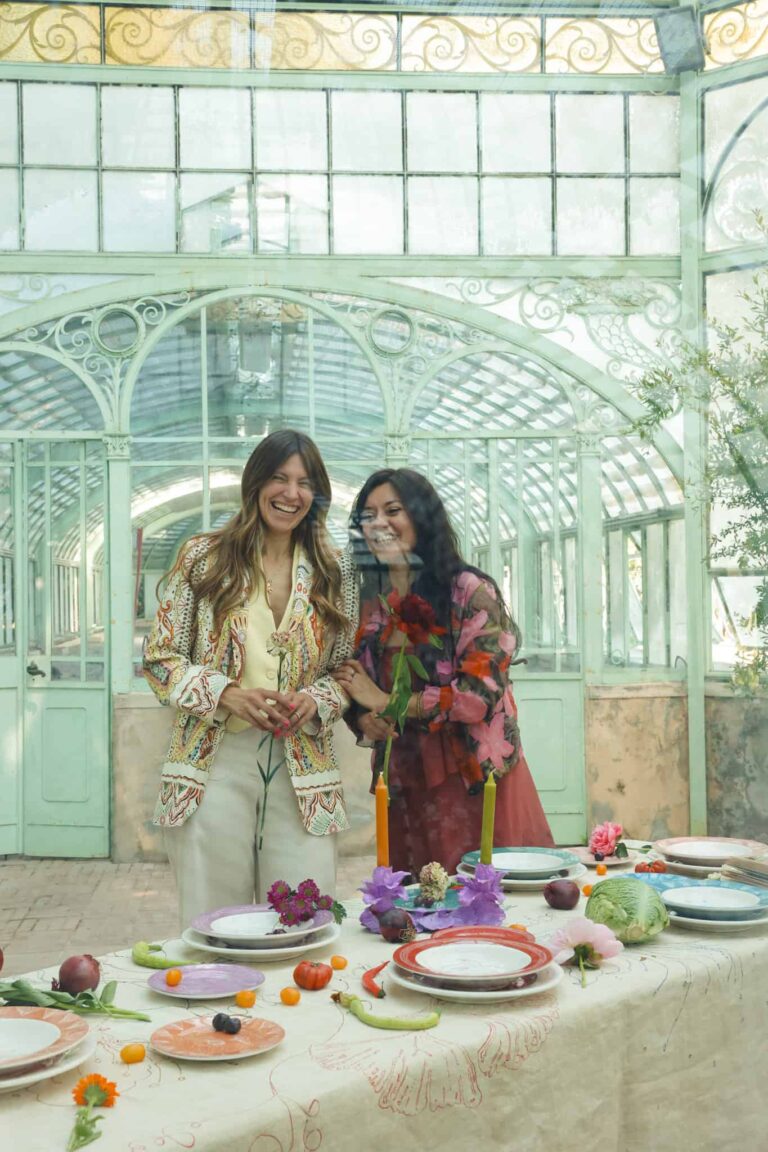
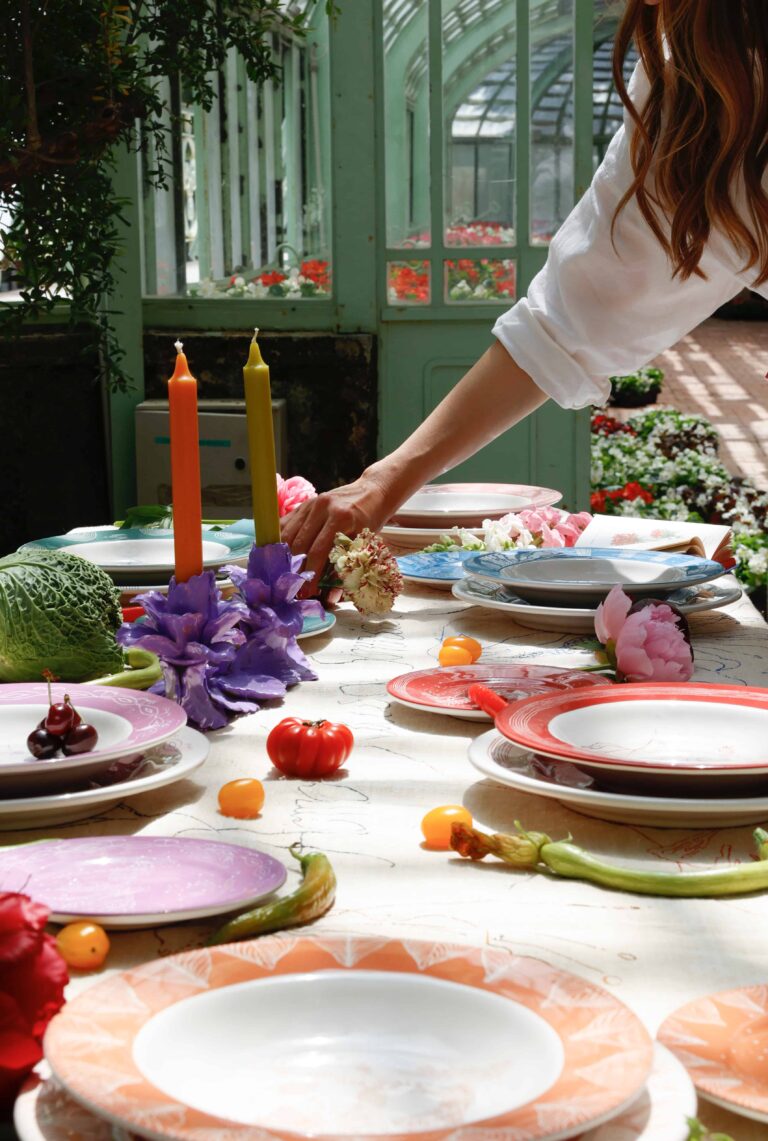
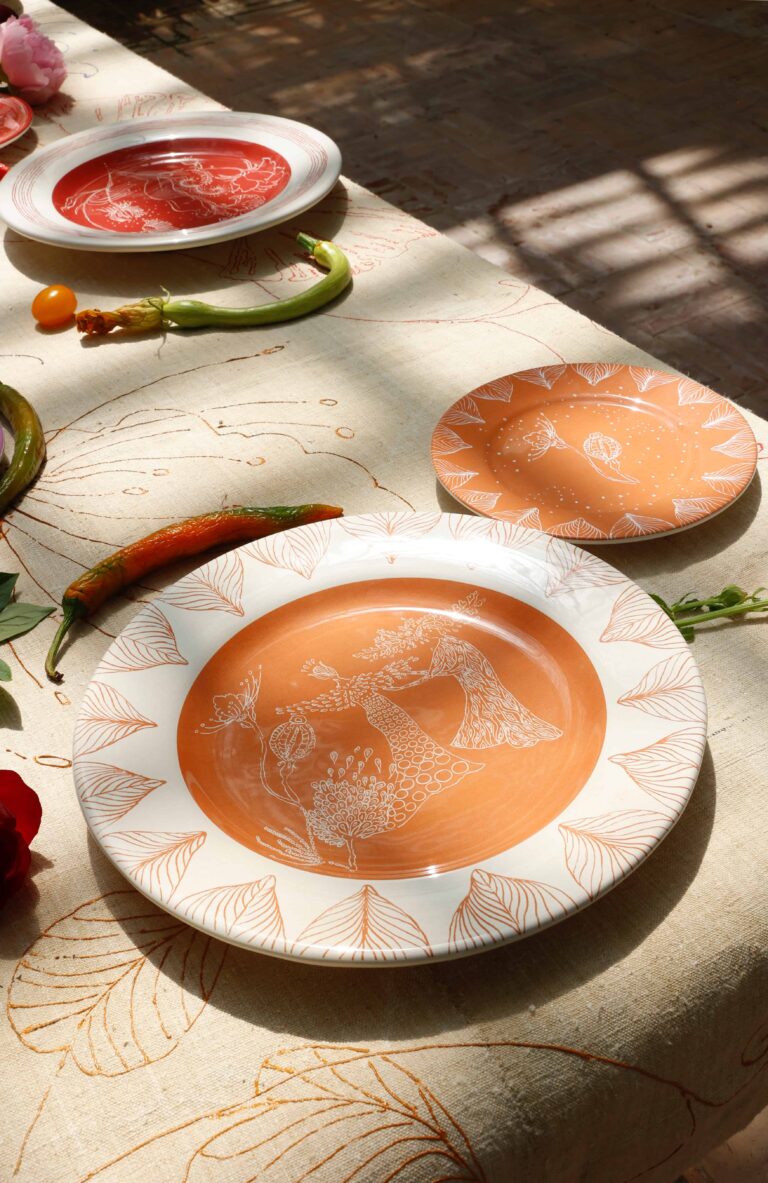
We created the Homo Naturae Somniator collection of dishes together. Would you like to tell us about your vision and how it intertwined with Orlando’s for the concept?  What did you like most about this collaboration?

Encounters like ours happen, by chance but not too much. They are meetings of energies, of attunements. You asked me how we found each other and I think we really found each other, like kindred souls, with aesthetic, literary, artistic, emotional harmony. I met you through your magazine that identifies you. Those layers of pages that open up and uncover various levels of meanings, stories, communicate to me that it is not all apparent at first glance, it is to be discovered. It is not enough to leaf through Orlando once, like my work, each glance reveals other stratifications, other meanings. This is the beauty that unites us. Both Skopje and Genoa are territories that have been traversed by many cultures, imprints, styles, and this is reflected in our work.

What message would you like to end this interview with? What wish to the readers?

That spark in my eyes that my husband saw in me and that I saw extinguished forever in his, made me realise that there is no time in life not to give yourself space. So I wish readers to cultivate their inner spark, not to prove themselves, or for fame, but just to express themselves, to feel complete and deeply themselves.

Francesco Marrano, Eller Studio

Further Reading

Are you a sensitive and curious traveler, constantly searching for beauty, art and cultural inspiration? Sign up to receive the latest contemporary news!