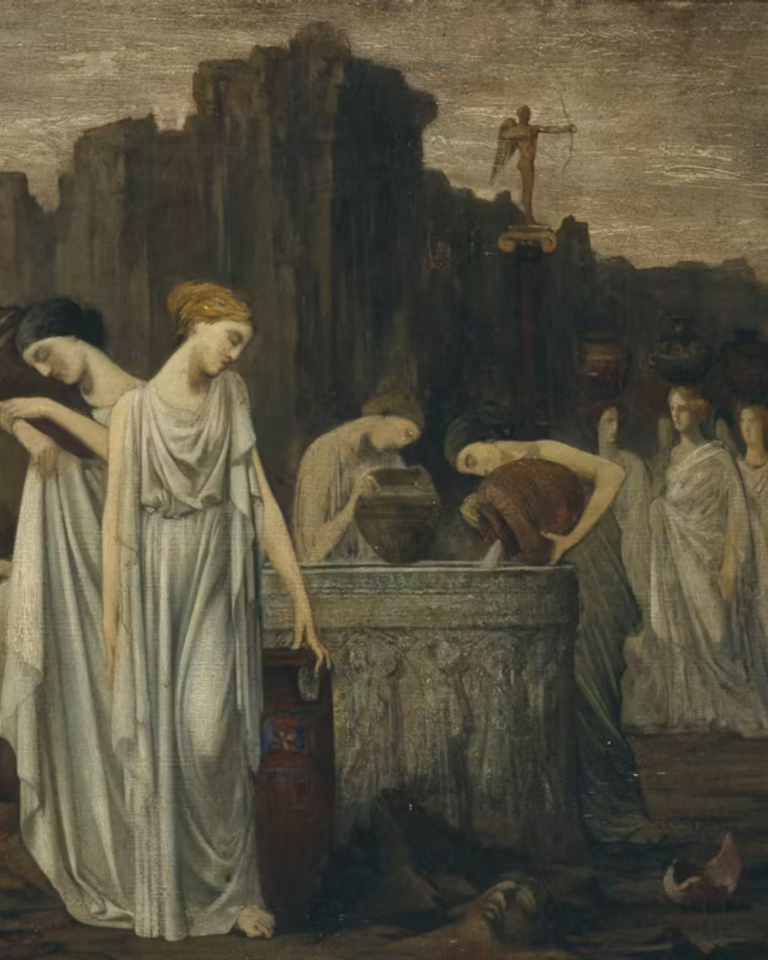
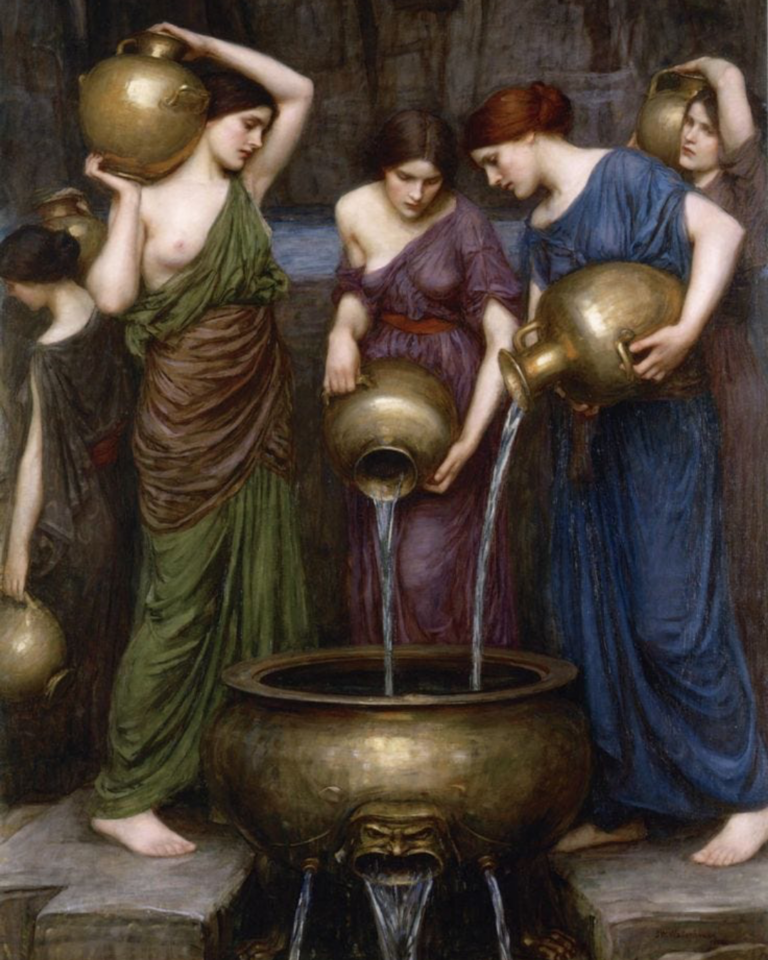
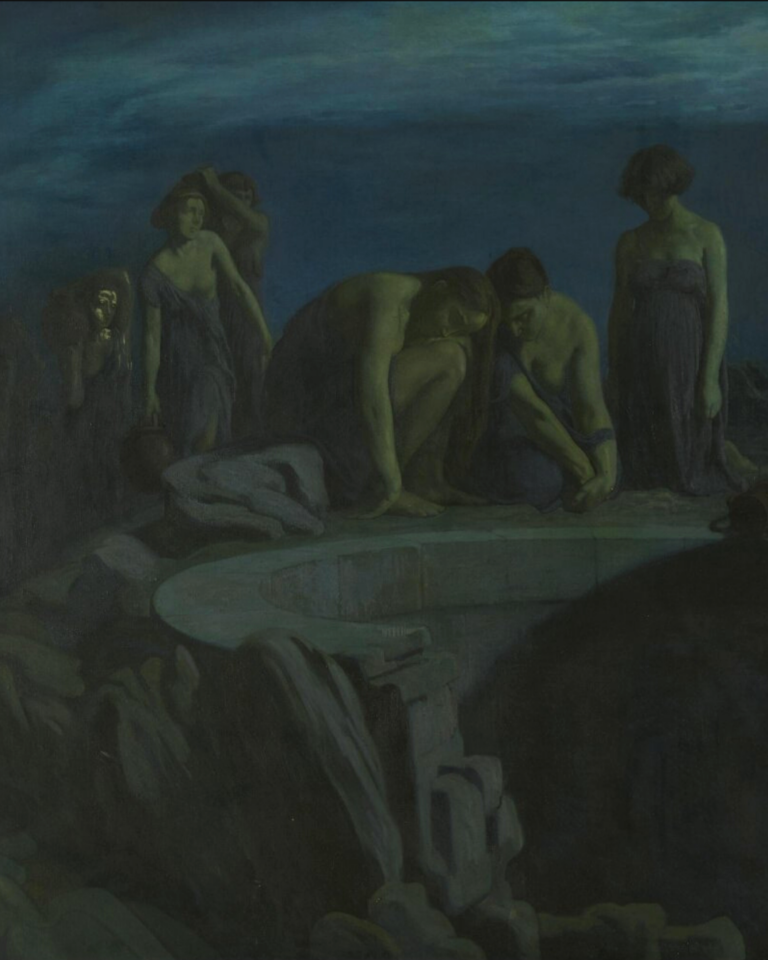
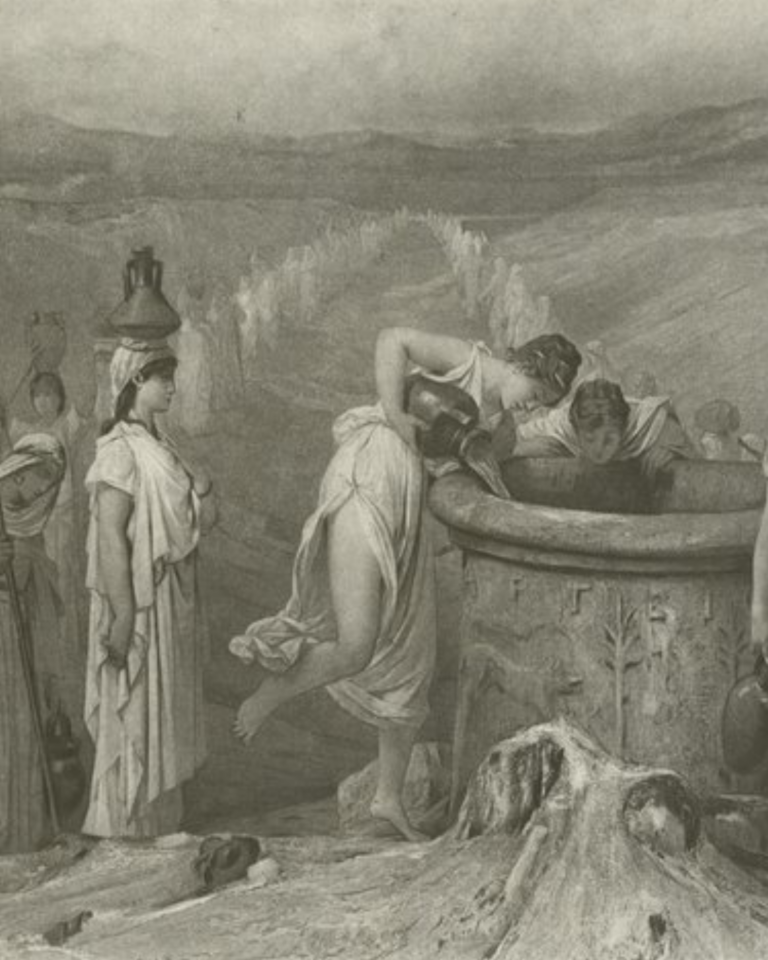
A vessel.
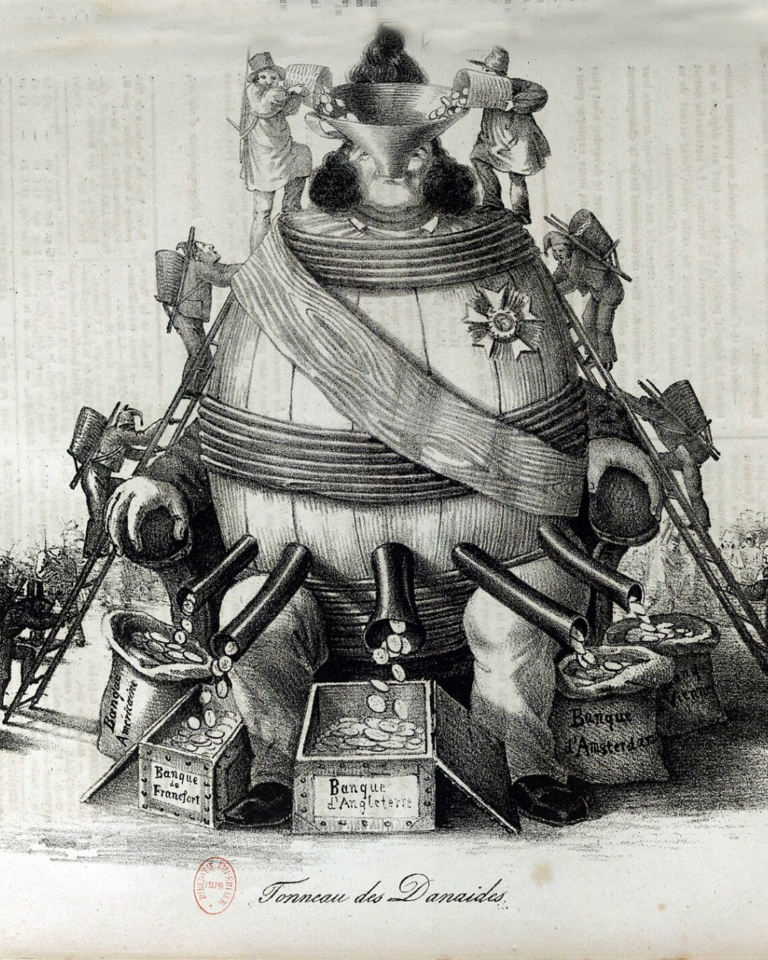
A receptacle entrusted with a charge beyond its measure, called to keep, and rendered, by its own nature, unable to retain. In myth this simple object becomes an emblem, and around its form gathers a story possessed of the lucid severity of symbols: water entrusted to a container that lets slip away what it receives. From here the Danaids emerge, bound forever to the image of pouring, and to that promise of fullness which the vessel, by destiny, cannot sustain.
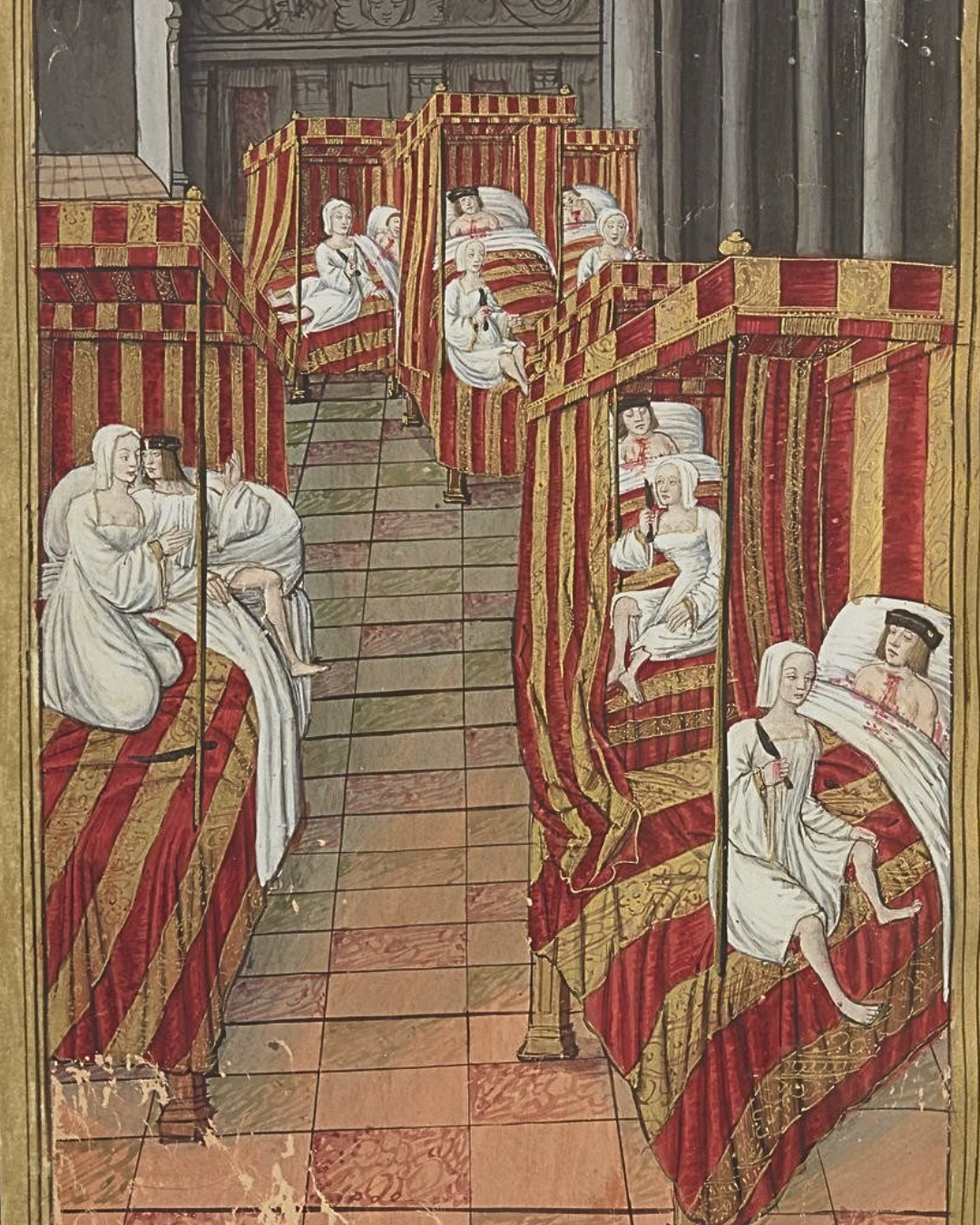
Daughters of Danaus, sovereign of Egypt, descendants of Io, they belong to a lineage marked by a foundational rupture, and the narrative places them at the point where marriage is burdened with an absolute command. The nuptials with the sons of Aegyptus are accomplished in the night through an imposed act, and the daughters’ hands translate the father’s will into gesture; Hypermnestra arrests that motion and saves Lynceus, and from this choice a line of descent takes its beginning, while the other Danaids remain bound to an action that opens no continuity.
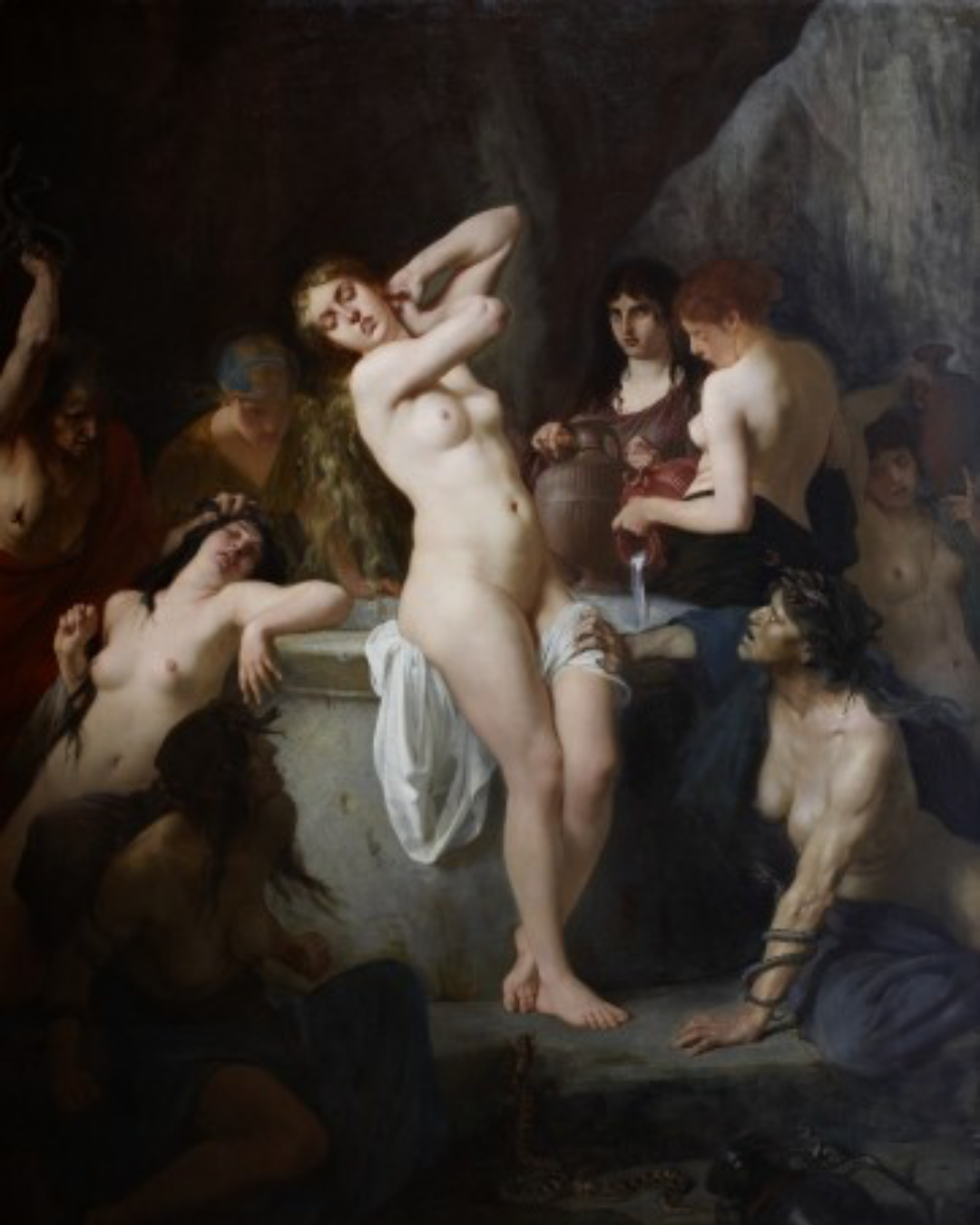
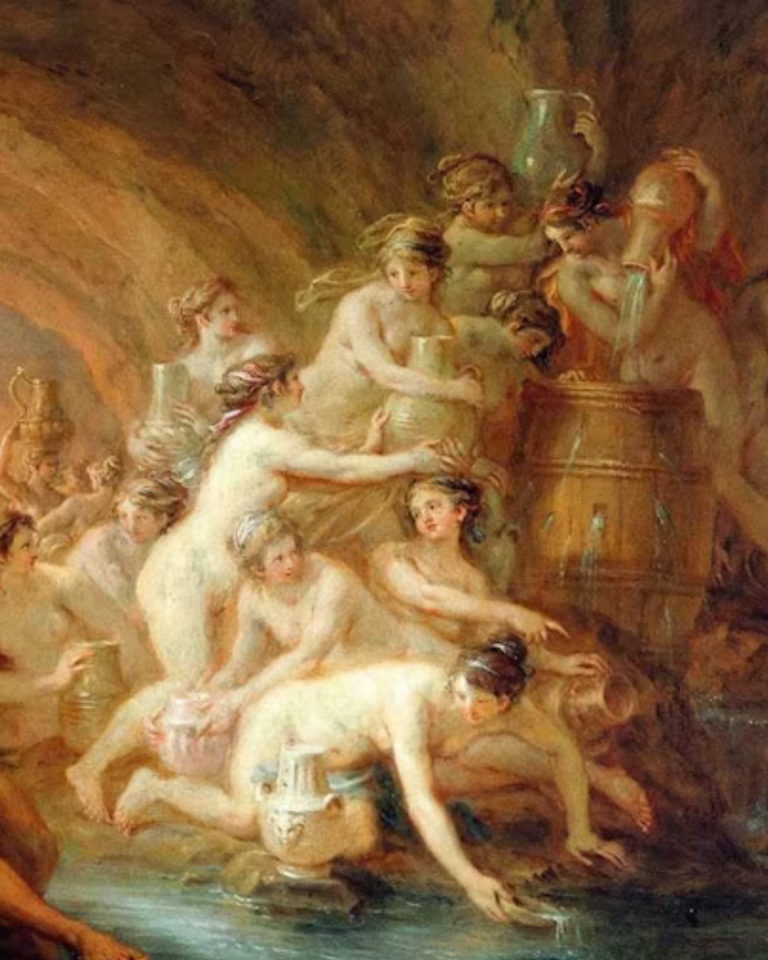
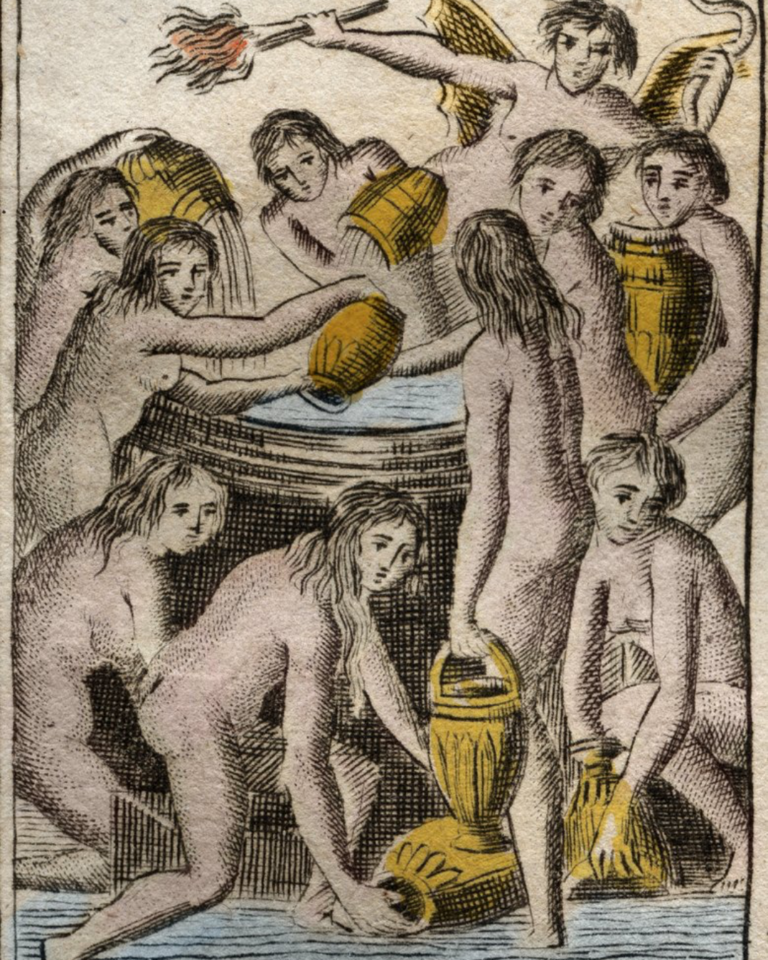
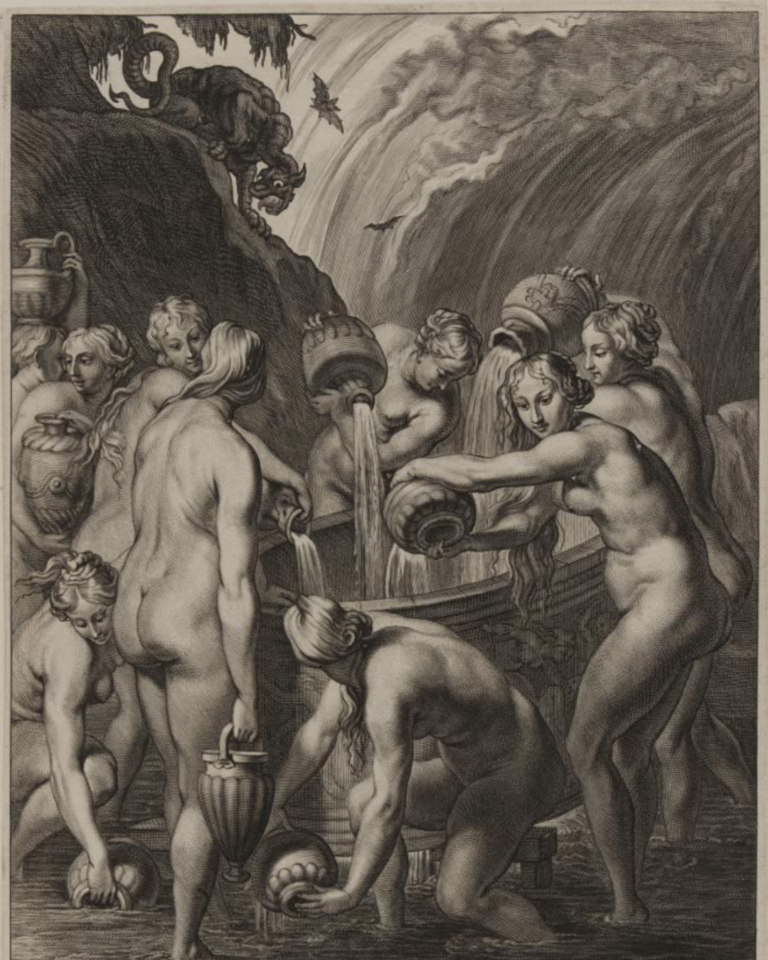
The punishment assigned in the underworld translates this condition into a visual figure of singular precision. The Danaids’ task consists in pouring water into a vessel without a bottom, and the action extends through time: the receptacle empties, the gesture resumes, duration takes body in the act itself, making the fault perceptible through the continuity of movement.
Ancient art recognises at once the potency of this image, and stabilises it in a form that imprints itself with ease. In Roman sarcophagi, such as the one preserved in the Vatican Museums, the Danaids appear arranged in sequence, each accompanied by her vessel; the composition entrusts its eloquence to the repetition of form, and the receptacle dominates the scene, assuming an autonomous narrative value, while the rhythm of the figures renders visible the persistence of the penalty.


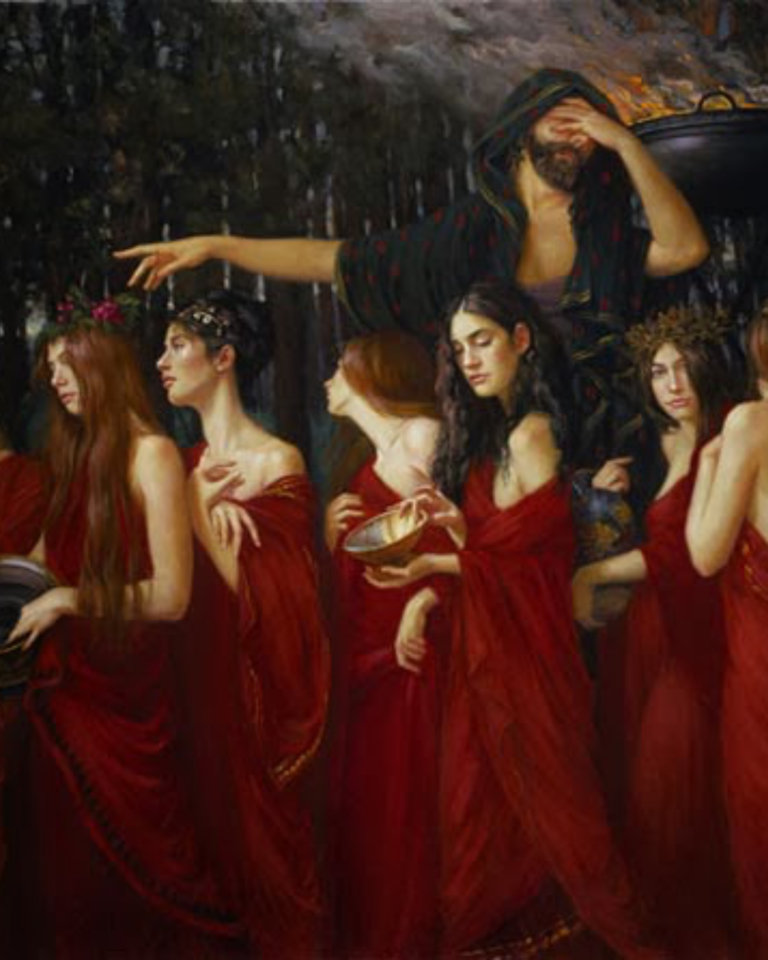
In Greek tragedy, this figure finds a voice, and the voice takes the form of the chorus. In Aeschylus’ Suppliants, the Danaids speak together and ask for asylum, carrying their story into the space of the city and of public speech; the myth articulates itself before law and the collective gaze, and the enigma remains intact, held within the very form of supplication.
In the modern period, the presence of the Danaids continues to re-emerge with a predilection for the scene of punishment, where the myth seems to gather itself. In Antoine Coypel’s painting Les Danaïdes, attention tightens around the vessel, and bodies draw taut as though the entire composition were held within that act; in music, Antonio Salieri’s opera Les Danaïdes entrusts to sonic structure the task of restoring the duration of the gesture, and the return of motifs accompanies the action, making audible the continuity inscribed within the tale.
In the present, the image of the bottomless vessel survives as an essential figure, ready to reappear even when the name of the Danaids recedes. The gesture of pouring remains, the loss that renews itself remains, a memory entrusted to reiteration remains.
The Danaids remain delivered to this image, and myth guards them as one guards an emblem: the vessel that does not hold, the water that slips away, the gesture that continues. Within this duration their presence gathers, and from it their voice proceeds.