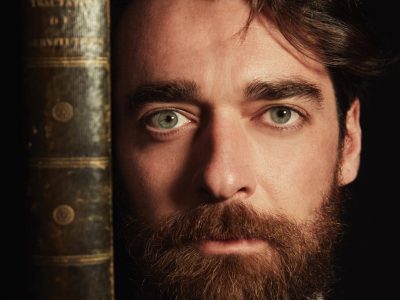
Works of art are like that.
They call us to themselves, they want to steal
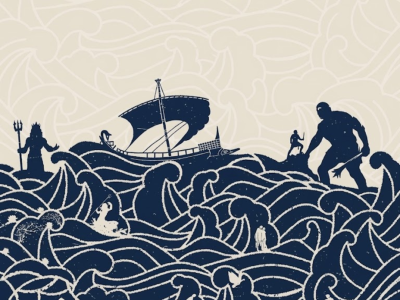
our attention, like sirens singing,
they bewitch and confuse us.
As long as art exists, as enchantment, memory, beauty and a call to infinity, the world does not deserve to end.

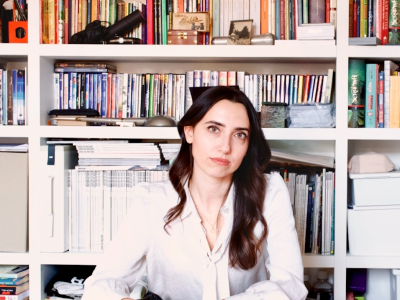
Our dearest Maria Vittoria Baravelli (interviewed in Orlando Issue V) takes us through a personal atlas of beauty that ranges from antiquity to the contemporary, cinema, photography and installations, with unusual juxtapositions and unexpected parallels. Art requires presence, the first real rule, imperturbable to time and change, is that artistic expression must be experienced live, in museums, at exhibitions. Alongside the energy and dissemination possibilities that new technologies make available to us, the author remains firmly convinced of the value of art encountered in person, which enters us and never leaves us again. This book is a journey into the life of masterpieces that never cease to speak to us, to discover what really strikes us when we contemplate a work of art and it seems to bring us closer to its secrets. As Umberto Eco said, reading a book, as well as observing a work, triggers a kind of ‘backward immortality’. For a moment we are allowed to look directly into the eyes of the past, cross the artist’s gaze and lose ourselves in the nostalgia of eras that are not our own.
Maria Vittoria Baravelli, born in Ravenna in 1993, is curator of art and photography exhibitions, including ‘Roma negli occhi. Photographs by Gabriele Basilico’, at Palazzo Velabro, Rome; “Mario De Biasi and Milan”, in collaboration with the Mondadori archives, at the Museo Diocesano in Milan; and “Vincent Peters Timeless Time” at Palazzo Bonaparte in Rome. On her Instagram profile, @mariavittoriabaravelli, she shares art, photography, cinema, exhibitions and installations. She is a member of the board of directors of the MAR, Art Museum of the City of Ravenna. She is a columnist for ‘Marie Claire Maison’ and has written for ‘Corriere della Sera’ and ‘LensCulture’ (USA).
We had the pleasure to ask some questions to Maria Vittoria about this new editorial adventure.
How did you experience the gestation of this book? Tell us about this fascinating publishing adventure.
MVB: This book is the result of work developed over eight months, but it had already been in gestation for some time. I have a series of drawers in which I put the postcards I find in museums, the photos of the artworks I love, the pages of newspapers torn out with the headlines and the photographs I want to remember. So it has been a job of putting in order a rambling archive, treasures from both a real and digital archive, from my cloud, the various screenshots of what, little by little, has struck me, always ascribable to the figurative art world, to art, photographs, sculptures, but also to elements that are outside the artwork, so I am referring for example to literary works, cinema, music. This book tries to trace these various cues, the various attempts to be inspired by something that is always different and always new.

.In the interview we did with you in Orlando Issue V, we had you interviewed by characters from literary or artistic works. Which artworks/artists did you engage with in this personal Atlas of Beauty of yours?
MVB: I have sketched a broad overview of artists who, through their work, have hurt and seduced me.. As Daria Bignardi would say, ‘artists who have ruined your life’. But why have they ruined our lives? Because, through the depth of their thought, they have made us more emotional, more empathetic, seemingly more fragile, and yet so much more real. From Leonardo da Vinci to Raphael… I have a passion for body art, which has made the body fragile and powerful, our body as a battlefield, all those people like Marina Abramovich and Ulay, Gina Pane, Orlan, who have tried to portray the body in a new way. Then also all the artists of magic objects, those and who have sublimated, through the world of objects and still lifes, the passing of time, trying to bring us closer to a sense of eternity: Caravaggio, Ghirri, Morandi, Spoerri. You will also find the great artists who dealt with the theme of infinity, the theme of going beyond, the theme of trying to carve out a new space. Think of Tiepolo’s skies, rather than Rothko with the Rothko Chapel in Houston, or Spalletti…. I consider chapter V of the book to be fundamental, the most literary chapter, the one of the discourses around infinity, in which I emphasise the fact that there is an openness towards something in which we want to be shipwrecked, and I discuss why Leopardi’s infinity is so important for this sense of crossing a limit that allows you to find a new world. This is the most far-reaching chapter because it tells us why we always look for new paths, but also why we love nostalgia, we always need it, like something that comes back to visit us and tell us something about us and the lives we do not live.
.How many drafts have you done of the text? Are you a ‘good first’ or a tireless editor?

MVB: This is a question that artists always ask themselves: when can a work be considered finished or how much editing do you do? I actually believe that both artists and writers have to give themselves a concept of an end at some point. Actually I did not give myself one, the editors at Rizzoli gave it to me, because every time you reread a sentence you try to make it sound better, you try to make it have a different musicality, you try to make the people who read it be influenced by the mystery that envelops language and that, through the poeticism of language, you get closer to what is the secret of the artworks.
So I never considered the text finished and even today, when I reread it, I think that some things I would have written differently. But I must tell you that in the midst of all this constant change, there are some sentences, some thoughts that I am very proud of, because they are little daily epiphanies for me. When I reread some of the sentences I have written, I think I have really succeeded in doing that thing Italo Calvino used to say for poetry, that is, ‘to put the sea inside a glass’, that is, to have had a really sharp insight into how I experience things, so exquisitely personal, my point of view, so I am very satisfied.
It is precisely why the world does not deserve the end of the world, that there are beautiful speeches, as Plato says, that save the soul. Plato, in one of his dialogues, says, the soul is cured by certain incantations and these incantations are the beautiful speeches. Here, I think I was able to bring forth some discourses around beauty and I am happy to have shared them with the audience.
.What was the spark that gave rise to this book, to give it this slant?
MVB: I would say that the spark that gave birth to this book was a sense of lack. Because I, in works of art, have always heard the usual phrase resonate that ‘he who knows more, suffers more’. However, it has always been a comfortable sense of lack. In the introduction I say that art both hurts and seduces me, like everything in our lives that we love. We can have an ambivalent feeling about it, so a great sense of possibility and a great sense of something that is forever or lost. So I think it is from these two irreconcilable rooms that my love for artwork and also for writing was born.
.Emblematic of your philosophy is the ‘immortality backwards’ prophesied by Eco, triggered by the observation of art, which allows us to look directly into the eyes of the past, the artist. For an immortality to the future, on the other hand, which eyes will you never tire of meeting? (be it a private person or a work of art, whoever you want)

MVB: I have to tell you that I have a very nostalgic soul and I always say that I suffer from a comfortable nostalgia for eras never lived. So the future has an old face, the past always starts over, and works of art tell you this, that everything has a new beginning, always. I believe that the future is also to be found in what has been, in what has never been, so in all the lives that are not our own, in everything that no longer returns, but that we make exist as an echo. There are classics that never go out of fashion, to which we give great symbolic value and which we continue to re-actualise. Among works of art, think of the impact and legacy that the Mona Lisa has in everyone’s imagination, which envelops advertisements and is always being re-actualised. Or think of literary works such as Romeo and Juliet, it has been kneaded, re-actualised, revisited in very different ways and codes. Yet what never fails is the interest around this story. But what is it about the story of Romeo and Juliet that fascinates us? It is not that he dies, she dies. And that minimal time lapse whereby they do not meet for two minutes. And that, for us romantics, is unacceptable. And so the value of an encounter with the work of art in person is precisely that, to enter into simultaneity, to be in symbiosis with the story and to be able to experience that moment. We romantics can’t get over the fact that Romeo didn’t meet Juliet… that’s why we re-actualise those stories, because perhaps unconsciously we would like a different outcome.
Because, in fact, art, photography, literature, cinema, poetry, music, are all devices, realities that tell us how our single life is not enough for us, we are always looking for something else, an echo that will translate our existence and make it a little longer, more extended. In fact, it is no coincidence that disciplines such as these we understand as divertissements. The word divertissement derives, in its etymology, from diverging, hence this attempt of ours, of us human beings, to always diverge from ourselves and to embrace otherness, the other, something that we do not know and that somehow reinfuses a mystery about us, a secrecy that we may have lost.