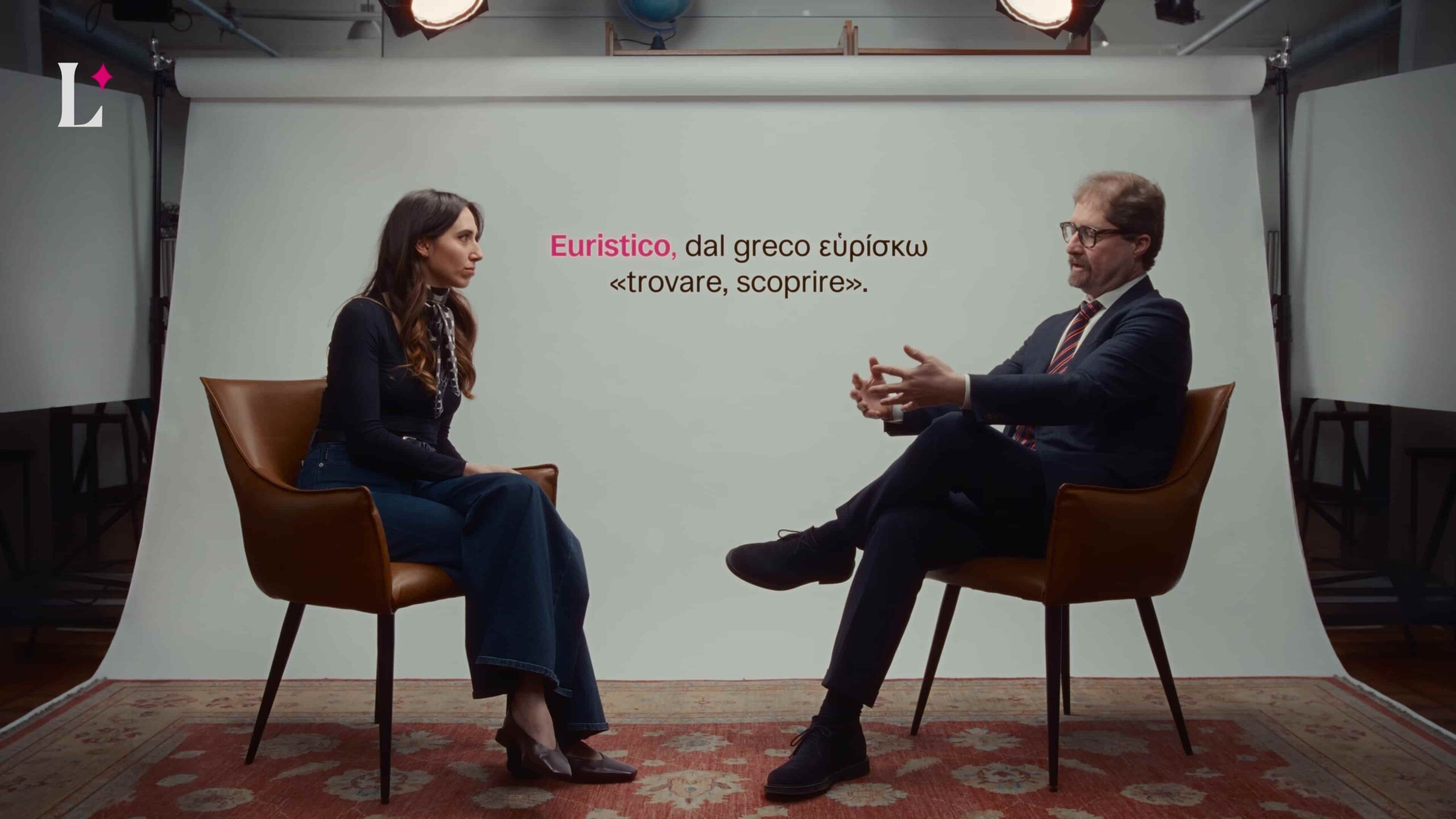
ADP: You recently published a series produced by Lucy sui Mondi on the state of contemporary debate.
Could you tell us about this project and the ways in which it might offer a counterbalance to an increasingly fast and oversimplified public discourse?
SL: Science journalism tends to put you in the middle of some fierce public debates, especially if you report on topics like climate change, new genomic techniques, meat consumption or bioethics. What struck me was that discussions tend to drift toward personal attacks at their worst and data duels at their best. Evidence matters enormously, of course, but data alone can rarely settle disagreements around these topics. That’s because most arguments conceal a deeper clash of worldviews: facts can be marshalled in support of different visions of what matters. Philosophy can help us understand that many disagreements are not really about facts, but about values, and it helps investigating those values. Philosophical reasoning seemed like a skill we need more of today. The team at Lucy sui mondi agreed. So together we created Domande Prime, a debate format that is not agonistic in the traditional sense. What I mean is that the goal of the debate is not for each side to be right, to win, but to think better together, using disagreement to strengthen both sides of the discussion. Each episode starts from an urgent contemporary question that, amusingly, often turns out to be very ancient. We have explored topics ranging from evolution and economic systems to our relationship with technology. So far, it has been a wonderful adventure. Every episode feels a bit like sitting an oral exam at university.
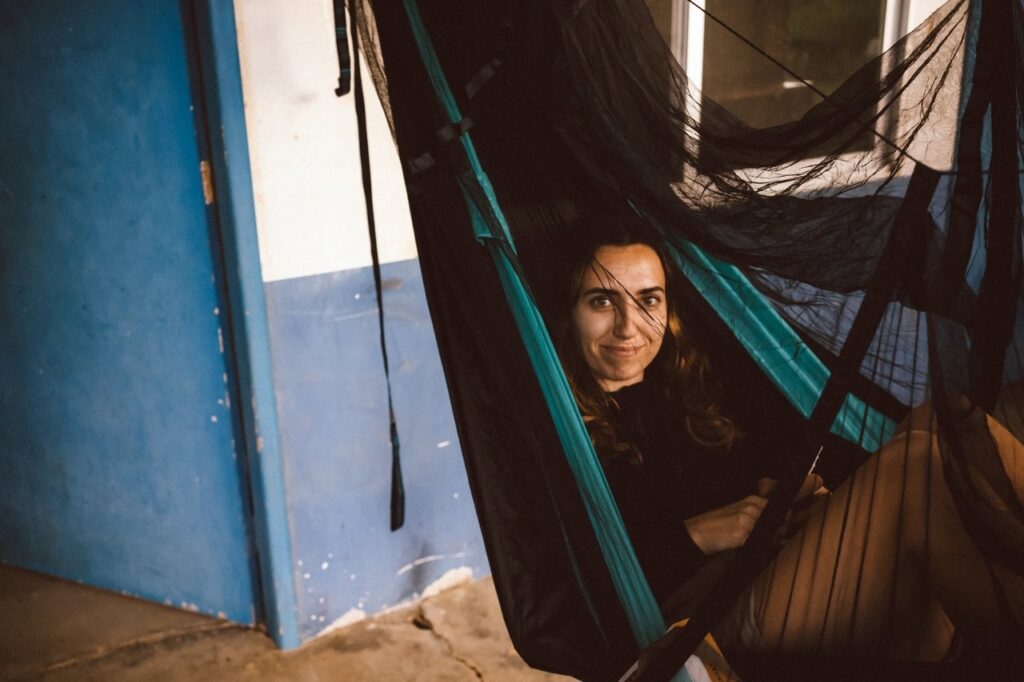
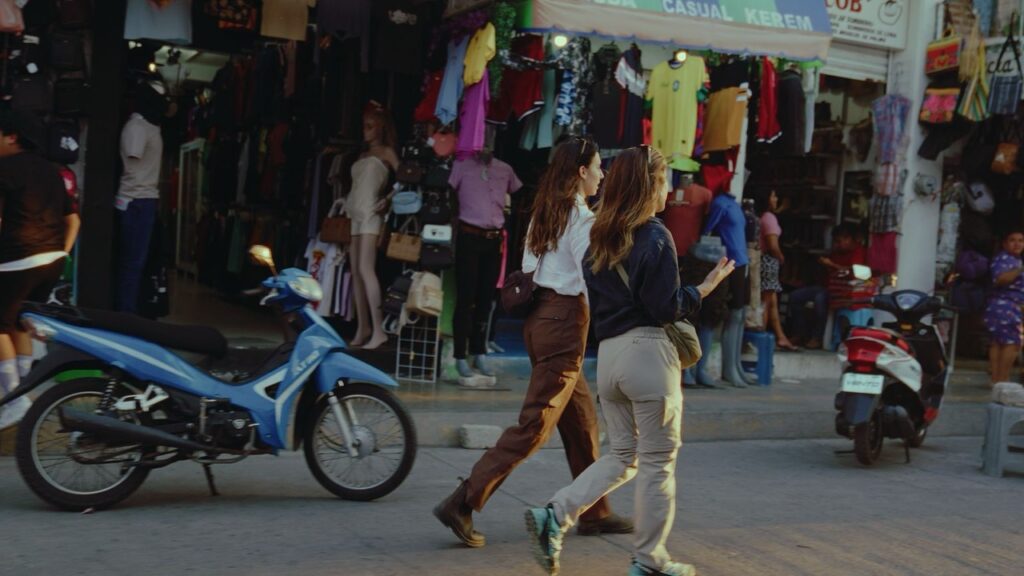
ADP: Together with Silvia Boccardi, you founded Flares, “journalism to be seen”. You just released a new reportage on Muxe, a story on matriarchy and gender freedom in Mexico. What vision of journalism are you working toward, and what is this project built on?
SL: Flares is an attempt at making the journalistic process visible. We tend to trust science because it exposes its methods. Similarly, to trust a piece of reporting people need to understand how journalists came to what they discovered and why they chose to present it that way. What decisions did they make along the way? Reporters are often trained to disappear from the story and present their work as though it emerged from nowhere. The assumption is that good journalism requires separating the story from the reporter. We think the opposite is true. The idea that a journalist can completely remove themselves from their work is an illusion. Every act of reporting involves choices – about what to investigate, whom to interview, what to include, what to leave out – and since those choices are inevitable, we might as well be more transparent about them. With Flares, we publish original reporting and collaborate with newsrooms to disseminate findings in line with this idea.

Stefano Poggi, on the left Silvia Lazzaris, on the right Silvia Boccardi
WORKKING METHOD
ADP: What role do visual elements such as images and videos have in your storytelling, and how would you define your current vision of your work today?
SL: The challenge is to treat them less as ornaments than as tools for comprehension. A well-presented visual can provide context and make complex ideas easier to grasp. Take an infographic: in print it’s difficult to guide a reader through it step by step without devoting pages to the task. If you don’t already know how to read that chart, it will probably go over your head. Video changes that. It allows you to build understanding gradually, to walk people through an idea and show them exactly where to look and why it matters. Visuals, before this era of very convincing AI-generated images, functioned as evidence. I can show you what I’m talking about and I can introduce you to people you might never otherwise meet, and help you see that their motivations are often far closer to your own than you imagined.
ADP: You have spent years working on food-related topics, from labour conditions to supply chains. How does this awareness shape your everyday food choices today?
SL: Not in any dramatic way. I eat much less meat than I used to. I try not to make decisions based solely on finding the lowest price and, whenever I can, I shop at local markets. It’s tempting to look for simple solutions, vote-with-your-wallet style. But the deeper you look the more skeptical you become. I think there is a great deal we can and should do as citizens. But people who do my job should resist the temptation to offer easy consumer-remedies. The problems we see in food systems are often symptoms of broader economic and political challenges. Understanding that complexity may be less satisfying than receiving a clear prescription, but it’s usually a better approximation of the truth.
ADP: From climate change to weight-loss drugs, when you take on a new subject that encompasses a wide range of voices and perspectives, how do you structure your approach to working with such complexity?
SL: You said it perfectly, each topic contains a universe of voices. The challenge is figuring out which voices need to be heard. Reporting is, in large part, a process of immersion. For weeks, sometimes months, occasionally for an entire year, you gradually enter a world and try to understand how it works from the inside. That means talking to people who have different incentives and often conflicting interpretations of the same reality. It also means reading up and learning enough about the subject to know which questions to ask. Over time patterns begin to emerge. Some arguments are supported by evidence and some perspectives help explain the system more clearly than others. The work is identifying the voices that can substantiate what they say with evidence and placing those voices in conversation with one another.
ADP: Which professional encounters have most changed your perception of the world?
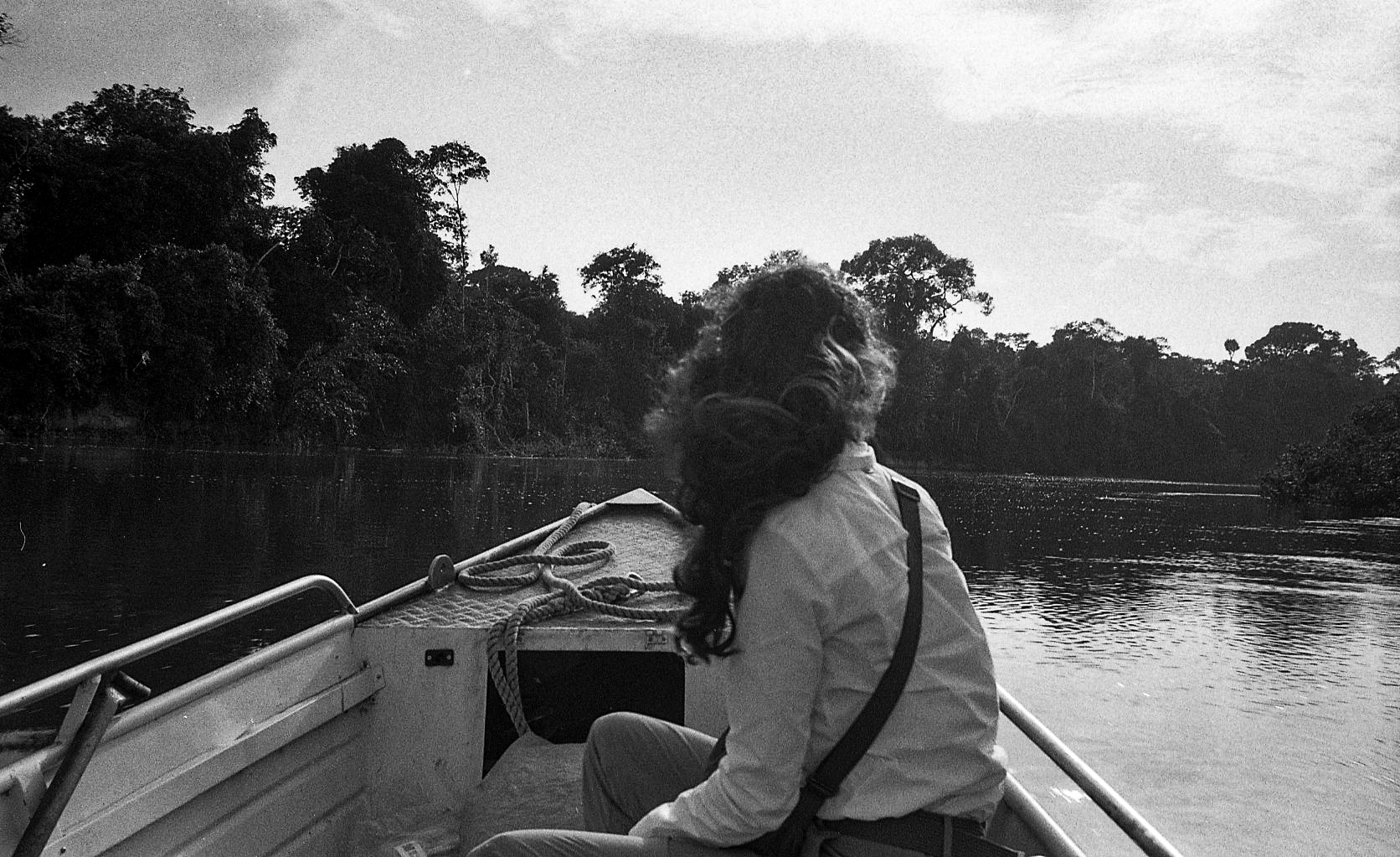
SL: Oh, so many. Every interview gives me a new set of eyes, whether I’m speaking with a nuclear researcher or a migrant farmworker. I’ll give you one example. A Brazilian farmer who lives in the Atlantic rainforest once told me that we Europeans wake up in one box, get into another box that takes us to work, which is a third box, and we have become so used to spending our lives inside boxes that we no longer notice them. I still think about that conversation.
ADP: What was your experience of engaging with Jane Goodall like?
SL: I interviewed her for a documentary in 2022. I found her sunk into a velvet sofa in a grand Milan hotel. Before we began, her assistants warned me that she was tired and hadn’t eaten yet, that I shouldn’t keep her for too long. She was nearly ninety. She said, oh but this is an important subject, she can take as much time as she likes. At the end of the interview, seeing that I didn’t quite dare ask, she looked at me and asked, shall we take a selfie? Then she pulled everyone into the frame: the director, the cameraman, even my boyfriend, who had come along for her. I already knew she was courageous and fierce, there I found her also generous and kind.
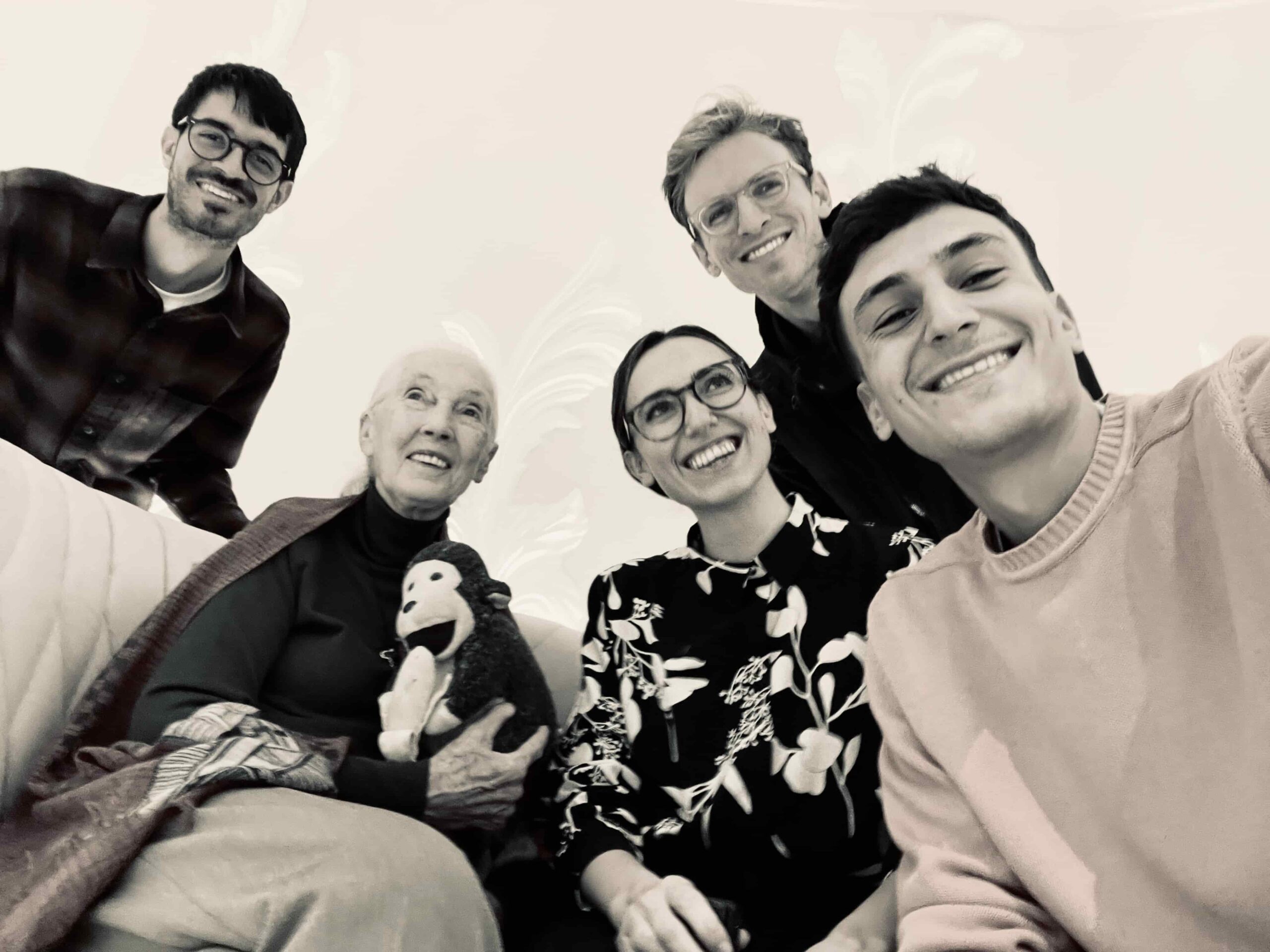
Arturo Vicario – With Jane Goodall in Milan
ADP: What advice would you give to young people who want to pursue a similar career path?
SL: One piece of advice that I found useful came from the British environmental journalist George Monbiot. He said something like, don’t assume that if your goal is to do field reporting or investigative journalism, the only route is to spend ten years climbing a ladder working on completely different stories and waiting for permission. Find a way to do the work itself as early as possible. This advice wasn’t so different from that of my editorial director at Corriere della Sera, Massimo Sideri. He said he could have me write dozens of small pieces every month, or one feature a month, a big one. What both pieces of advice had in common was the idea that, early in your career, sticking by your level of ambition matters. Instead of waiting years to be assigned the kinds of stories I cared about, I tried to make them happen myself – although that meant juggling another job for the first two years after graduation, to make ends meet.
PERSONAL
ADP: What have been the most challenging phases of your professional life?
SL: There have been two particularly difficult periods. The first came in the years immediately after graduating. Journalism seemed like an attractive path but I had no idea whether I would ever manage to make a living from it. The second came years later. After spending so much time reporting on food systems and climate, I began to feel trapped by my own specialisation. The market had made its choice, I had become known for a certain set of subjects, and any idea outside those niches started to feel like a weed to eradicate from the brain, like a distraction to suppress. I turned into an infertile monoculture. At some point I decided to scale back some collaborations and take time to think about what to do next. Stepping away from opportunities that are working on paper and diving into uncharted waters was frightening.
ADP: How do you manage feelings of frustration or helplessness when dealing with such complex subject matter?
SL: Sometimes I don’t manage them at all and they overwhelm me. On return from Belém, Brazil, for COP30, the yearly United Nations conference on climate change, a colleague’s wife came to pick us up from the airport and told us that nobody seemed to have cared about what was being decided there. Italians were talking about the court case of an off-grid family whose children were removed by social services. There are moments when the gap between what matters deeply to you (because the story you’ve reported on becomes temporarily the center of your world) and what matters to most people feels unbearable. It also seems we have developed a strange idea of impact. We tend to judge the value of a piece of work by its immediate consequences. But sometimes the effects of one’s work accumulate quietly. When I feel discouraged I try to remember that endurance matters, and that as long as I’ve done my job with integrity and care, I’ve added one solid brick to something larger than myself.
ADP: Which kinds of injustice are the most difficult for you to come to terms with?
SL: Economic inequality makes me so furious that sometimes while on reporting trips I’d like to pull my hair out. I’ve reported often on mechanisms that squeeze value out of people who have very little and transfer it to people who already have plenty. What’s unsettling is how effortless some of these mechanisms are. You meet people working extraordinarily hard just to stay afloat, while elsewhere wealth accumulates almost automatically. I remember going to New York after reporting in Tanzania and feeling absurdly irritated when a friend spent several minutes deliberating over a restaurant menu. My friend wasn’t doing anything wrong, but my perspective had been scrambled by what I’d just witnessed.
ADP:Is there anything that, the more you study the world, the more inexplicable it becomes to you?
SL: Perhaps the assumption that war is inevitable, and that anyone who thinks otherwise is naive. It makes sense that many people have become more pessimistic. But why is pacifism so often dismissed in a single sentence? If refusing to treat war as a law of nature is naive, then naivety may contain more wisdom than we tend to acknowledge.
ADP: Could you tell us about Insieme universo, your AntiNewsletter?
SL: It’s a space of my own to publish essays and video essays. Most begin with a question that I can’t let go of, and follow it across different disciplines in search of an answer. I called it an anti-newsletter because it refuses the logic of regular publication. It appears only when I have something to say that doesn’t find a home in the work that pays the bills.
ADP: What is it in art that moves you the most?
SL: It depends on the work. But perhaps its truth?
Marco Berton Scapinello – in the Will Media newsroom.
ADP: How does Silvia Lazzaris relax in her free time?
SL: In so many ways. I read, watch films, go on walks, spend time with friends, play games or the piano, or acquire a practical skill I probably won’t excel at. I’m a dabbler in many things and a master of none. A few years ago, a shepherd in Sardinia who was a hundred years old, offered me home-made alcohol claiming it was his elixir of long-life. I asked him if that’s what he did in his leisure time, and he asked back: what is leisure time? I think I understand what he meant. My life doesn’t divide neatly into work and everything else. Reading becomes work, work sends me on walks, walks turn into stories, stories become excuses to call friends. Everything leaks into everything else. Healthy or not, it all seems to belong to the same tangled knot. But I guess my idea of perfect leisure is sitting with a book by the sea on the Ligurian coast, which is home, breathing in the smell of pine trees and of the salt-soaked wood of the beach cabins, with children shouting and mothers and fathers and grandparents calling after them. With the cicadas, the waves, and the Macarena drifting in from somewhere nearby, which is the perfect soundtrack for a glorious afternoon of reading. That’s it. That’s the dream.
ADP: What do you find most rewarding about your work?
SL: That I can keep studying and searching for some form of coherence. That I can meet people whose lives are vastly different from one another and from my own. It feels like a good use of a day. Each one helps to understand something about this strange business of being alive on this planet at this particular moment in history.
ADP: What makes you laugh uncontrollably?
SL: Too many things. I laugh all the time, like a fool.
ADP: What forms of art do you most enjoy, and why?
SL: I feel closest to words, to literature in the broadest sense, so novels, poetry, myth, narrative nonfiction. I’m not sure why. Words hit me like nothing else does. My aunt and uncle, who are graphic designers, also tried to educate me in the visual arts and took me to museums from a very young age. When I got tired, they would send me on little scavenger hunts: photograph all the dogs or all the rugs in the paintings. I think that taught me to look before trying to interpret, and that made me appreciate visual forms of expression.
ADP: Any recent TV series you’ve enjoyed?
SL: Severance. A brilliantly executed thought experiment.
ADP: Tell us three goals—professional and personal—that you would still like to achieve in the future.
SL: Becoming a mother. Writing the books I have in mind. Visiting China.