Letizia Toscano

THE BIBLIONAUT

Luca Cena

Words by Antonella Dellepiane Pescetto

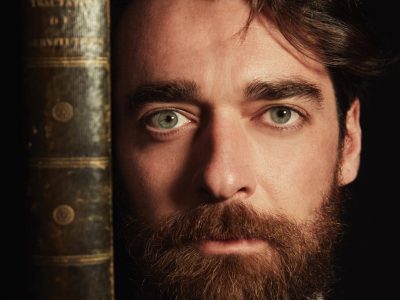
Our Founder had the pleasure to have a chat with the antiquarian book dealer and author Luca Cena who writes books, tells their story on social media and runs the store White Lands in Turin.

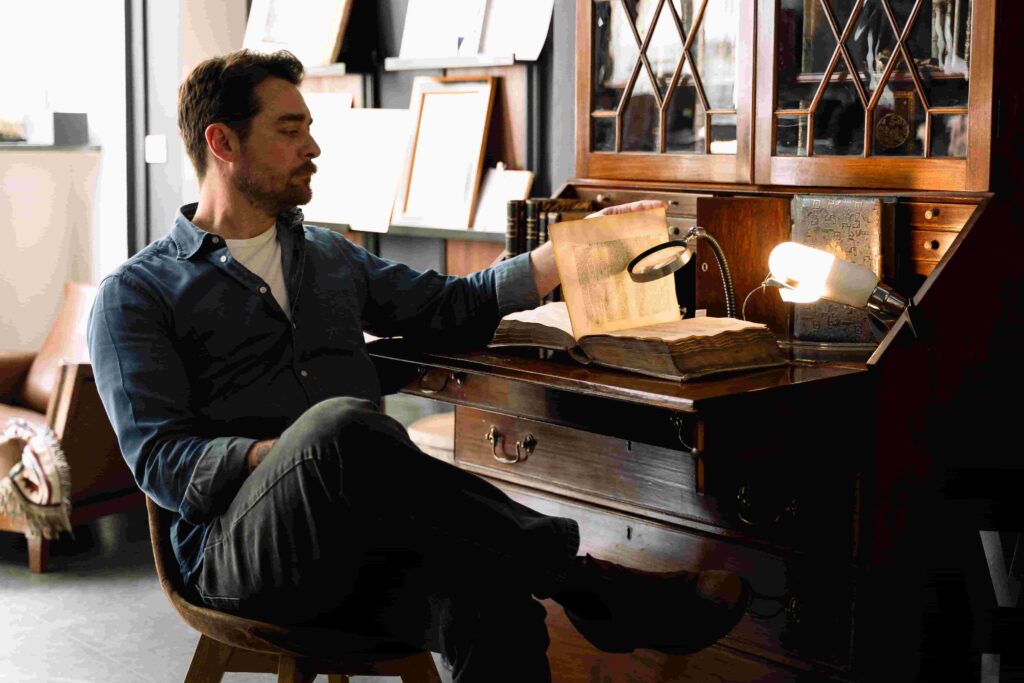
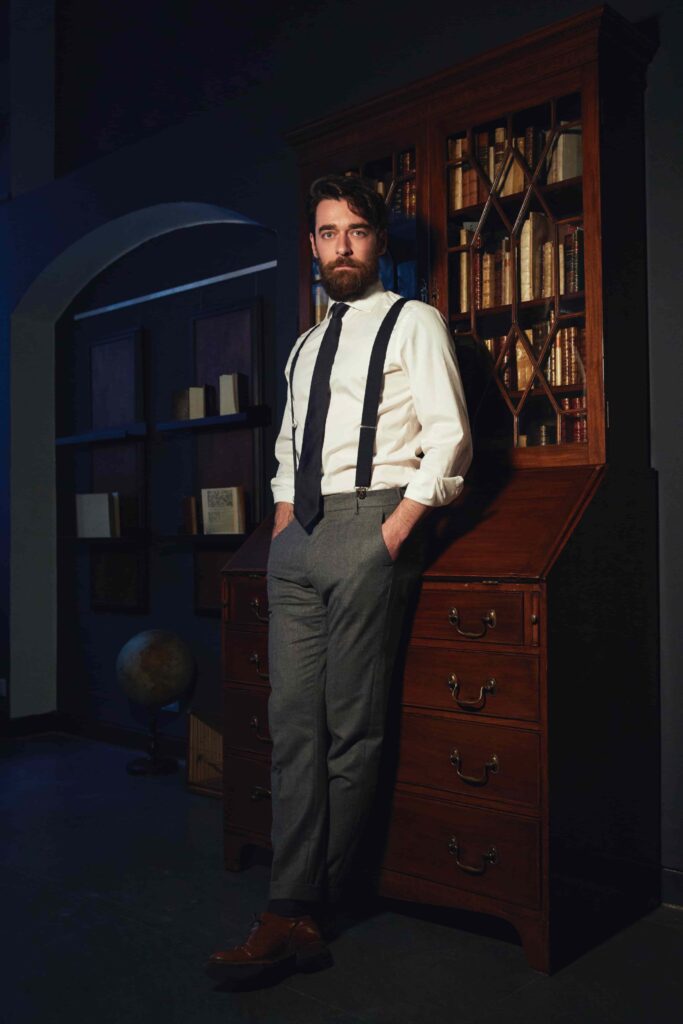
Luca Cena, born in 1985, grew up surrounded by rare books and objects carrying stories that have travelled through time and space. His parents were antiquarian booksellers before him, passing on a passion that eventually became his profession.

The place through which he made his way at leisure was one of those receptacles for old and curious things which seem to crouch in odd corners of this town and to hide their musty treasures from the public eye in jealousy and distrust. There were suits of mail standing like ghosts in armour here and there, fantastic carvings brought from monkish cloisters, rusty weapons of various kinds, distorted figures in china and wood and iron and ivory: tapestry and strange furniture that might have been designed in dreams. The haggard aspect of the little old man was wonderfully suited to the place; he might have groped among old churches and tombs and deserted houses and gathered all the spoils with his own hands. There was nothing in the whole collection but was in keeping with himself; nothing that looked older or more worn than he.

Antonella Dellepiane Pescetto: If you were to describe White Lands, your art gallery and antiquarian bookshop, would it have anything in common with Dickens’ The Old Curiosity Shop? What awaits visitors once they cross its threshold?

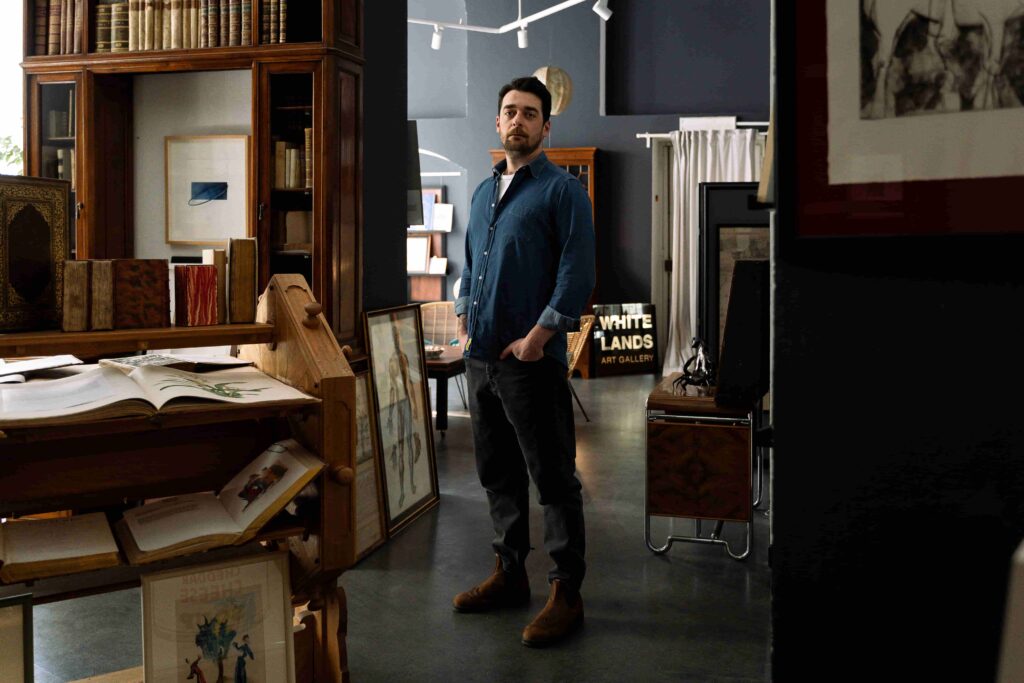
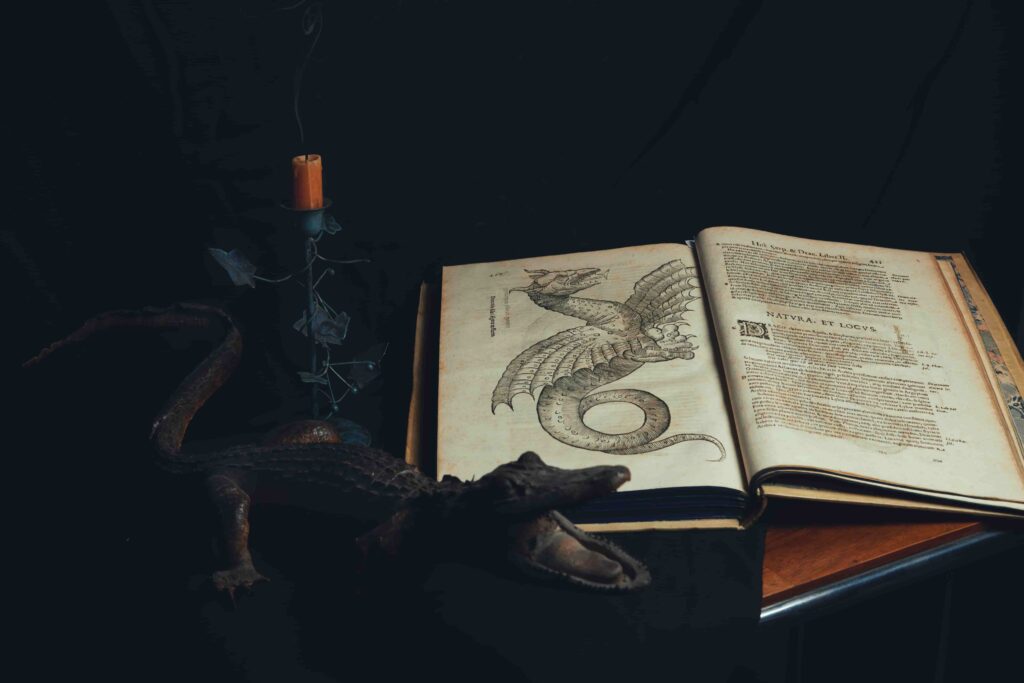
Luca Cena: Less mould, but yes. Stepping into my bookshop is like stepping into my home, surrounded by the objects that make me feel most at ease. Everything here is meant to spark wonder, imagination, and a sense of enchantment—from antique globes to scientific dioramas. It’s a Wunderkammer, certainly, but one that feels welcoming and lived in, inviting anyone who visits to feel at home.

ADP: Which sensory aspect of books fascinates you the most? Their smell, their weight, the traces left by time, the texture of the pages?

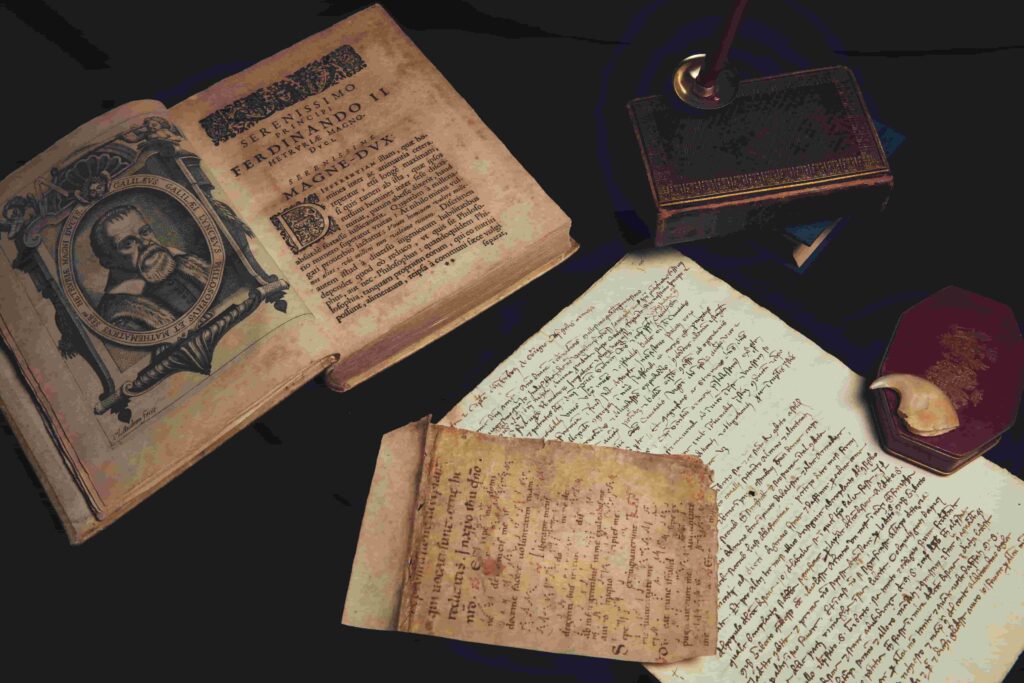
LC: Everything that bears the mark of human presence. Handwritten notes, underlining, old bookplates, even wax stains on bindings. What interests me most about antiquarian books is the journey they’ve made across the centuries, carried by hundreds of hands before reaching ours.

ADP: Which books have changed the way you see the world?

LC: Certainly Cesare Pavese’s The Devil in the Hills, which taught me that crying out in the darkness should never make us feel different. And Spoon River Anthology by Edgar Lee Masters, a book that, with irony and extraordinary humanity, conveyed to me the true value of spirituality in its secular sense.

ADP: From bookseller to author: you’ve published two books about books. The first, Il Biblionauta, is both an accessible essay and a practical guide for seekers of lost books and explorers of the literary universe. The second, Un destino già scritto (A Destiny Already Written), blends essay and fiction to tell the stories of books that defied oblivion.

Could you tell us about your journey from bookseller to writer? How has your way of telling stories evolved, from the more informative approach of your first book to the stronger narrative element of the second?

LC: Working with books, whether ancient or contemporary, requires a certain sensitivity towards passing knowledge on. What began as a professional necessity gradually became a human need. Writing is my attempt to leave behind something of what I’ve been fortunate enough to encounter, whether in the form of a story or an essay on bibliography. If something has mattered deeply to me, I feel it’s only right to make it available to others. That’s what writing is for.

ADP: Why the name White Lands?

LC: I was in Scotland, trying to choose a name for the bookshop. On the Isle of Skye, I met an elderly man who told me that at a certain time of year, the colour of the sky blends into the mist until everything turns white. That’s where the idea of “White Lands” came from—lands of white, but also blank pages on which I could write my own future.

Letizia Toscano
Letizia Toscano

ADP: What from your law studies has proved useful in your profession?

LC: Studying law taught me the importance of thoroughness—never leaving anything unexplored. When I study a book, an author, or a publisher, every piece of information helps reconstruct a story that might otherwise be forgotten. Method is everything, and in that respect, studying law was invaluable.

ADP: Yours is a fascinating profession, yet one that few people know much about. Thanks to your ability to communicate through social media, you’ve introduced your work to an audience that might never have discovered your bookshop or your world. When did you realise social media could become a tool for sharing your profession? Has your way of telling these stories changed over time?

LC: Not really. I still talk about books exactly as I would around a dinner table with friends: in an accessible way, but without diminishing the intrinsic value of what I’m sharing. From the very beginning, social media proved to be the most effective tool for communicating both my passion and my profession. Right now, there’s nothing more powerful for that purpose.

ADP: What’s the greatest lesson books have taught you?

LC: Reading demands patience and perseverance. Applied to life, those same qualities can take you remarkably far.

ADP: If you had to choose one book to give someone at three pivotal moments in life, which would you choose—and why?

a) For a wedding

LC: Invisible Cities by Italo Calvino. It’s not directly about love, but about the possibility of building worlds together.

b) After the loss of a loved one

LC: The Year of Magical Thinking by Joan Didion. One of the most honest books ever written about grief.

c) At the birth of a child

LC: Letter to a Child Never Born by Oriana Fallaci. I realise this may seem like an unusual—even controversial—choice, since it isn’t a celebration of happy motherhood. But it’s a profound reflection on what it means to bring someone into the world, on responsibility, fear, and hope—the emotions that accompany every birth.

ADP: Many successful projects—from literary pharmacies to books like The Novel Cure (An A–Z of Literary Remedies) see books as a remedy for the ailments of modern life. In your opinion, what are the greatest gifts books offer us?

LC: Reading is, at its core, a profoundly solitary act. Yet, by entering the worlds of countless stories and characters, solitude becomes a continuous encounter with others. And that encounter is, in its own way, deeply restorative.

ADP: Tell us what it was like growing up in a family of antiquarian booksellers. What memories come to mind when you think back to your childhood? Was there ever a period when you rejected books?

LC: I remember my parents working incredibly hard, often bringing my sisters and me to the bookshop with them. The image that has stayed with me most vividly is my youngest sister’s red pram leaning against one of the wooden bookshelves. Growing up with antiquarian booksellers allowed me to absorb, almost unconsciously, a deep sensitivity towards books. I fell in love with them naturally, without ever forcing it.

ADP: Every antiquarian bookshop is a meeting place between different eras. Do you think places like White Lands will still be needed in the future? What would we lose in our relationship with culture and memory if they disappeared?

LC: Physical presence is, and always will be, essential. Whenever it’s missing, we begin to long for it again, and we inevitably return to places where we can truly be with other people. As long as that need exists—and I don’t believe it will disappear—places capable of answering it won’t disappear either.

ADP: Is there one book you’ve been dreaming of finding, one that’s proved especially elusive?

LC: I change my mind quite often. It takes very little to spark my curiosity, so the books I’m searching for are dozens, if not hundreds. Lately, though, I’ve been struggling to find a fine first edition of Canti Orfici by Dino Campana. Usually, the moment I stop looking for a book, it somehow finds me. Perhaps I should stop searching for this one.

ADP: Is there a book you’ve ever regretted selling instead of keeping for yourself?

LC: Fortunately, no. Whenever I come across a book that truly interests me, I have no difficulty diverting it straight into my personal collection.

ADP: What fascinates you most about contemporary publishing?

LC: Studying contemporary publishing allows us to glimpse a reflection of the society we live in. What we choose to read says a great deal about who we are—much like the food we eat.

Further Reading

Are you a sensitive and curious traveler, constantly searching for beauty, art and cultural inspiration? Sign up to receive the latest contemporary news!