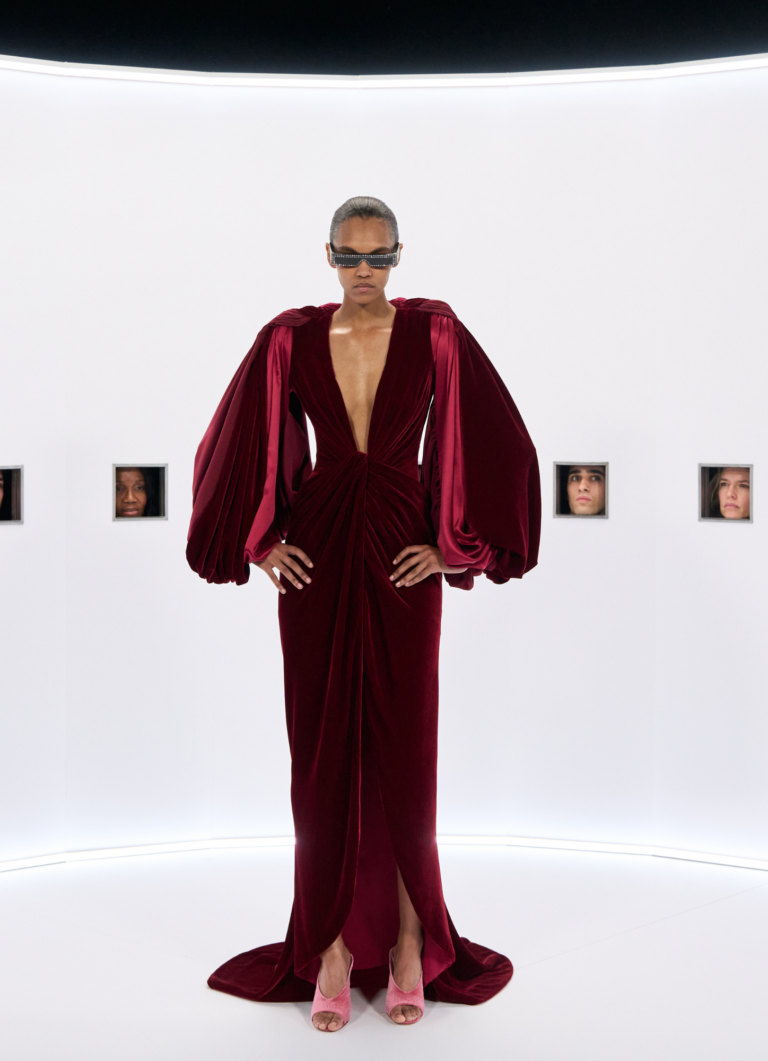
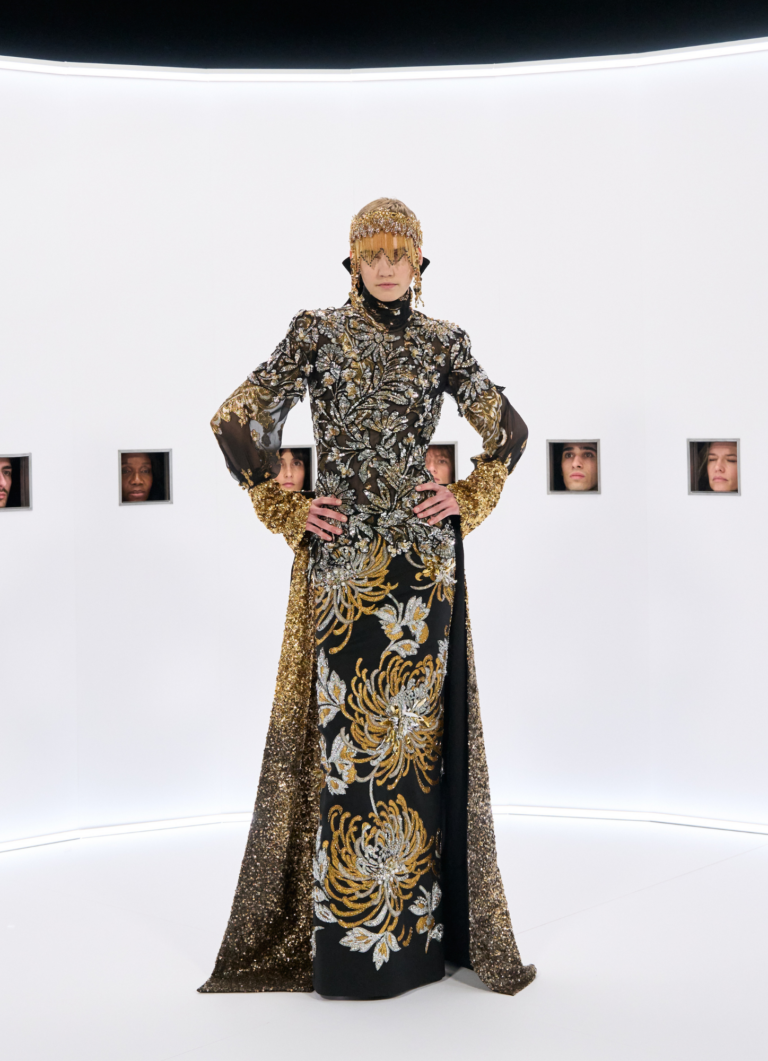
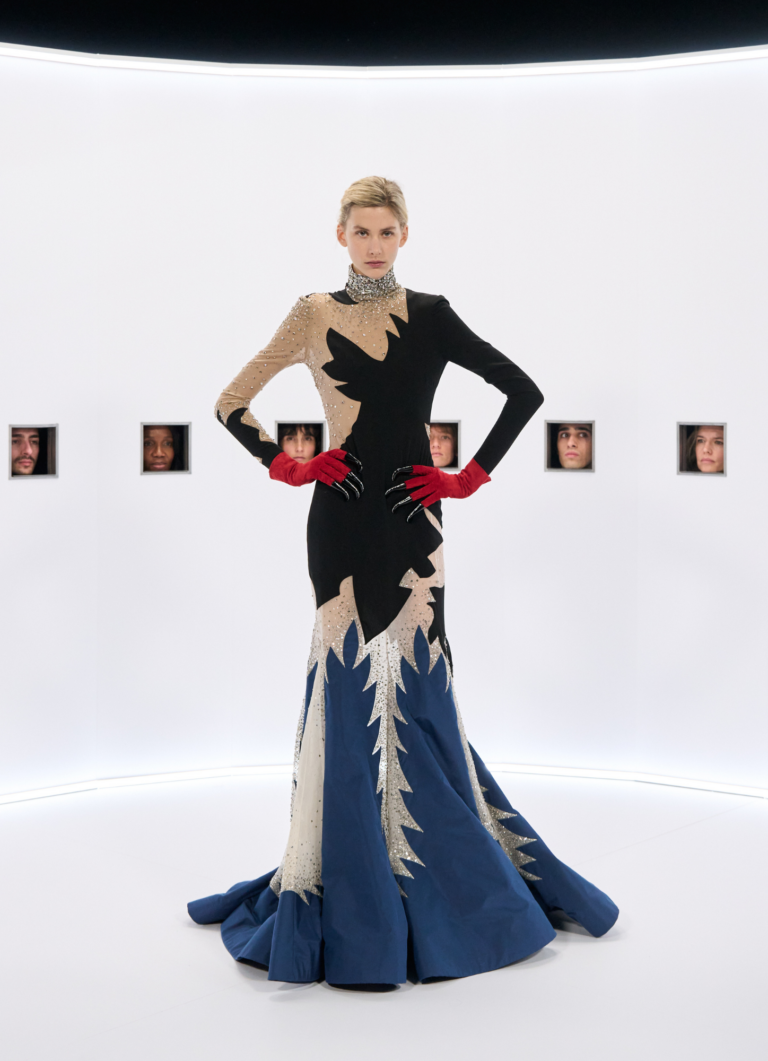
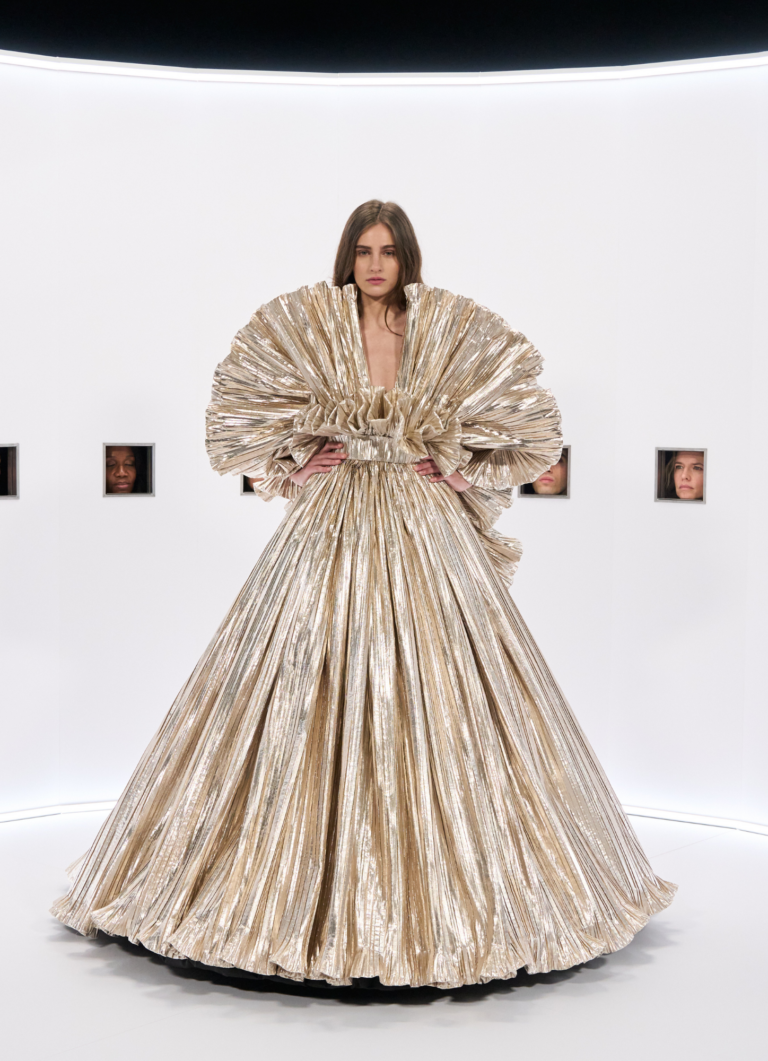
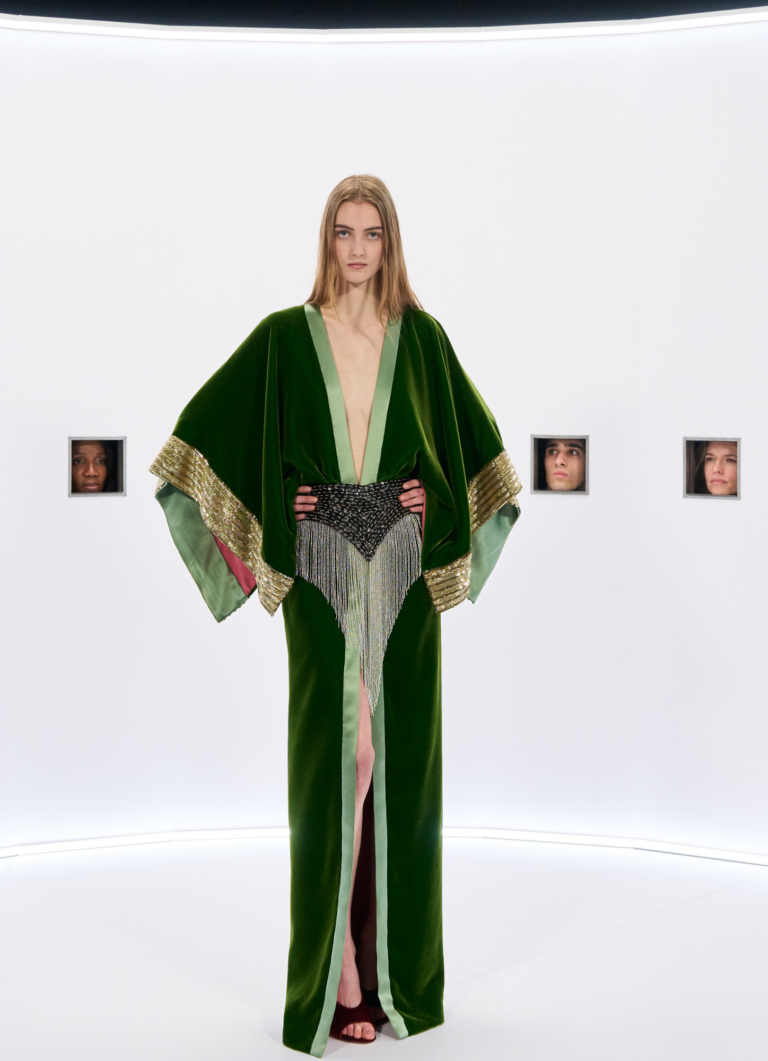
Orlando’s take on Valentino Haute Couture Spring/Summer 2026 collection.
Words by Anna Maria Giano
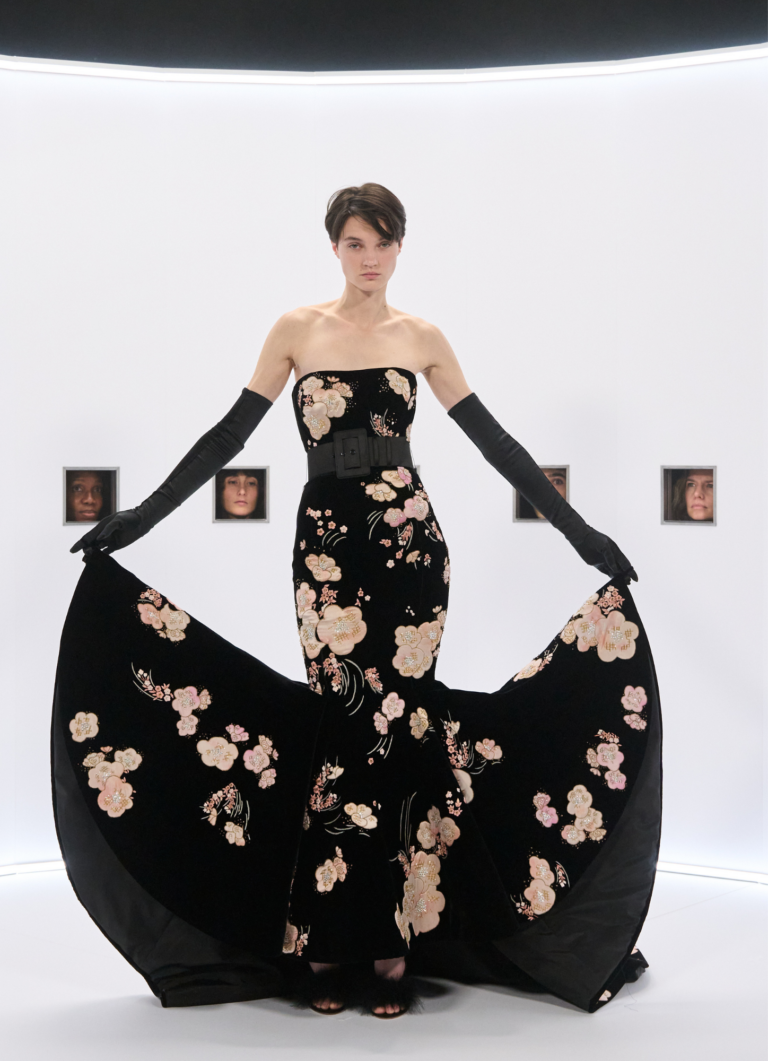
It is Paris’s most jealously guarded secret. The lights flare upon audacious longings, upon husbands and lovers at the Moulin, in a revel that, however unbridled, never slips into vulgarity. Have they ever wondered what women truly want? They want to be beautiful — the Master does not merely know this; he understands it. When the masculine disperses into idle diversion, the feminine grows sacred, ceases to give and begins to receive. In a place whose whereabouts remain unknown, he has constructed his own Kaiserpanorama: here, the lights are extinguished for guests whose elegance lies precisely in their discretion. They have not yet resigned themselves to the modernity of the motor car; its novelty draws inquisitive gazes, though it will one day inherit the docile routes of carriages. And, besides, it leaves more room for trunks.
Courtesy of Valentino
Courtesy of Valentino
Courtesy of Valentino
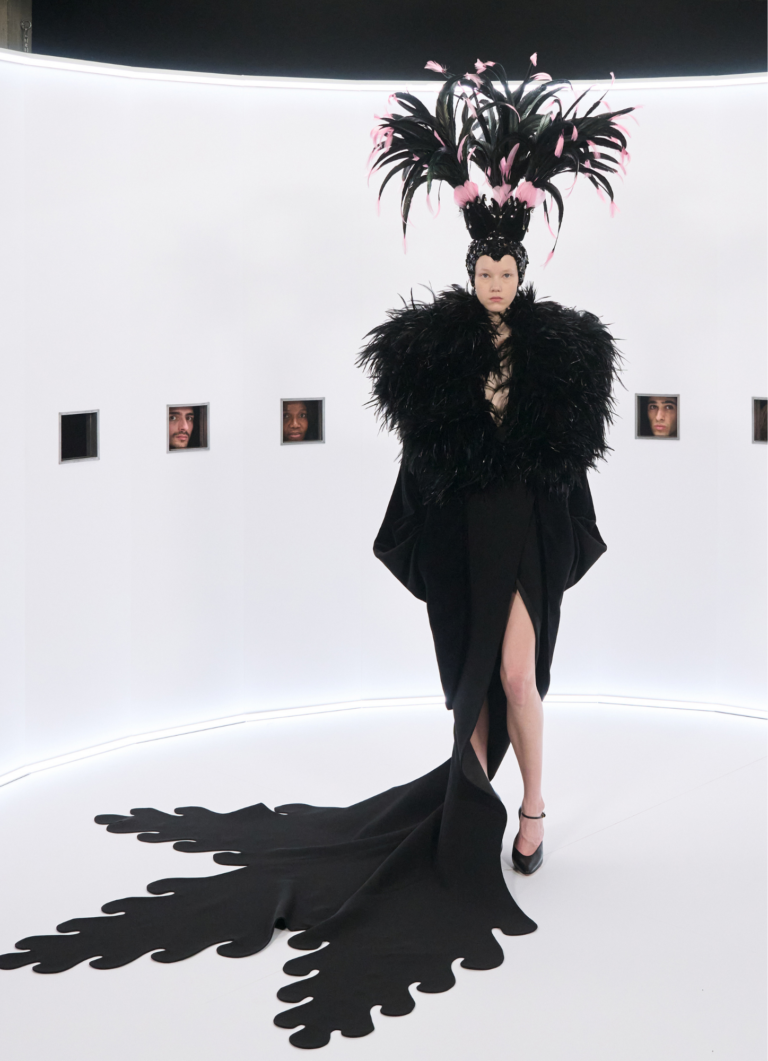
The very notion of personality proves limiting amid the variegations of dress: wherever the aura of a grande dame seems to prevail, there lurks the odalisque of the Folies Bergère, if only in a fondness for monumental headpieces. The Master conceives his atelier in the likeness of that cherished childhood toy through which sight itself is first educated: an optical tunnel inundated with gems, which, at the mere rotation of his wrist upon the needle, arrange themselves into mosaics that deceive the eye into believing them different, though they are composed of one and the same substance. The Master alone knows each invitee in person: among themselves they are never truly seen, only divined, by a rivulet of shadow cast upon a coiffure, by the fleeting intimation of a perfume, and yet, at dinners, in salons and formal gatherings, they tacitly agree not to know one another. They resemble small windows, like the portholes of an ocean liner. He did not desire windows from which to spy upon the ebb and flow of the street, but rather a view onto a voyage to the very edges of the world.
Marrakech is the place that unfailingly inspires the looks of his most devoted client: slips worn like caftans, in the authentic gradations of prickly pear forgotten by the sunset; ostrich-feather fans to temper excessive heat; sharpened gloves to split the pomegranate and drink its juice. The newest arrival, by contrast, adores America — the cinematograph, Hollywood, the stratosphere. It is certain she will carry gold away with her: a prospector’s hunger throbs at her throat as she enters that cloak adorned with metallic feathers, or those sequins that are nothing less than the scales of a studio-bred mermaid. Then there is the irreducible devotee of the Grand Tour, always, irrepressibly European. Perhaps it is for her that he still designs ruffs, imagining her on holiday in the ancestral castle to which, nonetheless, she has never invited him.
Courtesy of Valentino
Courtesy of Valentino
Courtesy of Valentino
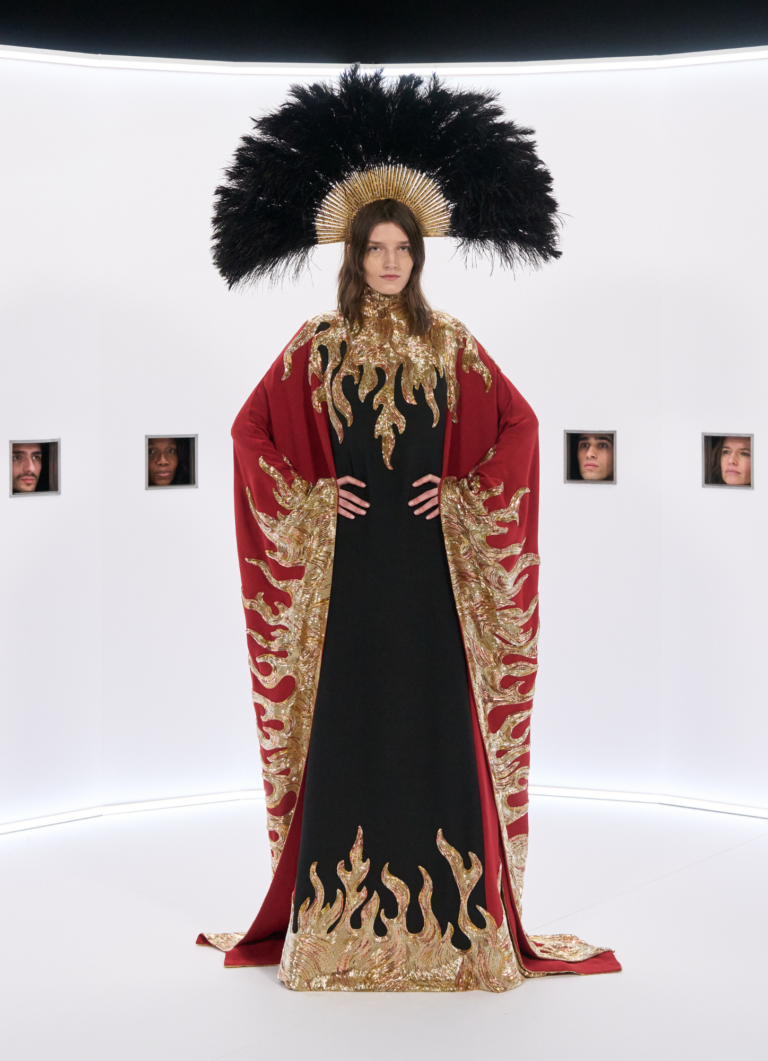
His favourite, though he will never confess it, is the operatic melomaniac, with her Turandot cloaks, which she acquires periodically in colours harmonised with her parures, even if, in the end, a single red garment descends like the fall of a curtain upon a style so exquisitely dramatic. And then there is she — the collector, the one who recognises craftsmanship and therefore wears spectacles. She dons them only on occasion; in darkness she may dare, here she wears them often, in this curious liaison she maintains with pink (she noticed the shoes. She truly knows her craft).
Now the challenge lies in persuading the mannequins. They do not wish to change, the same tale as ever; after so much time upon the runway, they have grown attached. The Master smiles, and forgives them. For the sin of beauty is always forgiven. He is neither indolent nor irascible; it possesses a sense of measure, for without it there is only vanity. He is the most generous of all, sparing himself nothing and knowing nothing of restraint. And above all, he is the one in whom the Creator recognises Himself within the Creation.
Our founder sat down with Elisa Seitzinger for an exclusive conversation about tarot, creative and personal time, the Major Arcana, black cats, birth charts, and much more.
In Victorian England, strawberry parties transformed a fleeting fruit into a refined ritual of summer, where the season revealed itself through quiet enchantment and entered literature, painting and social memory.
A Victorian chamber of vision, where painting and poetry meet at the threshold of the invisible, and beauty becomes a language of longing. The visible world begins to glow like a spell whispered between art and the soul.
An insightful and entertaining conversation with the talented Private Chef from the worlds of art and luxury.
By Antonella Dellepiane Pescetto
Are you a sensitive and curious traveler, constantly searching for beauty, art and cultural inspiration? Sign up to receive the latest contemporary news!