MEDITERANEAN CERAMICS

Arianna De Luca

Words by Antigone Morgan

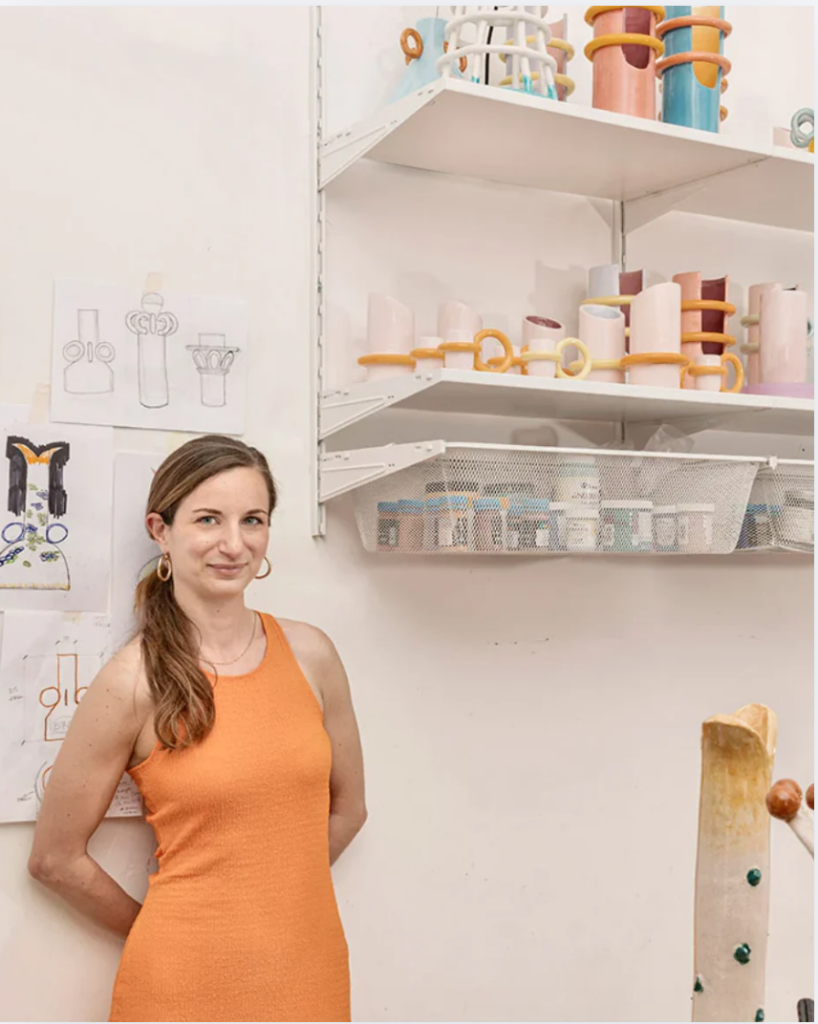
Arianna De Luca is an Italian ceramic artist and designer based in Rome. Inspired by Mediterranean culture and Italian craftsmanship, she creates colorful, sculptural ceramic pieces that blend traditional techniques with contemporary design. After studying design in Italy and London (at Central Saint Martins) and working internationally in interior design, she founded her ceramic studio in 2020 and has since collaborated with brands including Bulgari and The Conran Shop.

Antigone Morgan: How do you draw on Mediterranean tradition and combine it with your instinct and desire to communicate something contemporary?

Arianna De Luca: For me, Mediterranean tradition is a starting point, not something to preserve in a static way. I’m interested in taking those codes — the colours, the rituals, certain everyday gestures — and rewriting them.
I don’t reference tradition in a nostalgic or purely decorative way; I use it as a living foundation, filtered through my contemporary perspective. I’m interested in creating objects with recognisable roots that move within a more contemporary, freer, almost narrative imaginary.

AM: What brought you back to Italy from London?

ADL: In London I learned an incredible amount, especially in terms of vision. But at a certain point I felt the need to return to a more Mediterranean dimension. In Italy, I rediscovered a direct relationship with materials, craftsmanship, and also a certain kind of slowness that is fundamental to my work.

AM: What did you miss while working as an interior designer? And what did you appreciate about that world?

ADL: I missed direct contact with objects and with production itself. Working only on a conceptual and design level eventually stopped being enough for me.
What I still carry from interior design, however, is the idea that every element contributes to building an atmosphere. My objects work in the same way: they activate a mood, an atmosphere.

AM: Cultural references: from Pasolini to Fellini… what kind of Italy do you want to portray to the world?

ADL: An Italy that isn’t polished or idealised, but made of contrasts, irony, and everyday poetry. An Italy where lightness and depth, sacred and profane, elegance and something more grotesque and popular coexist.
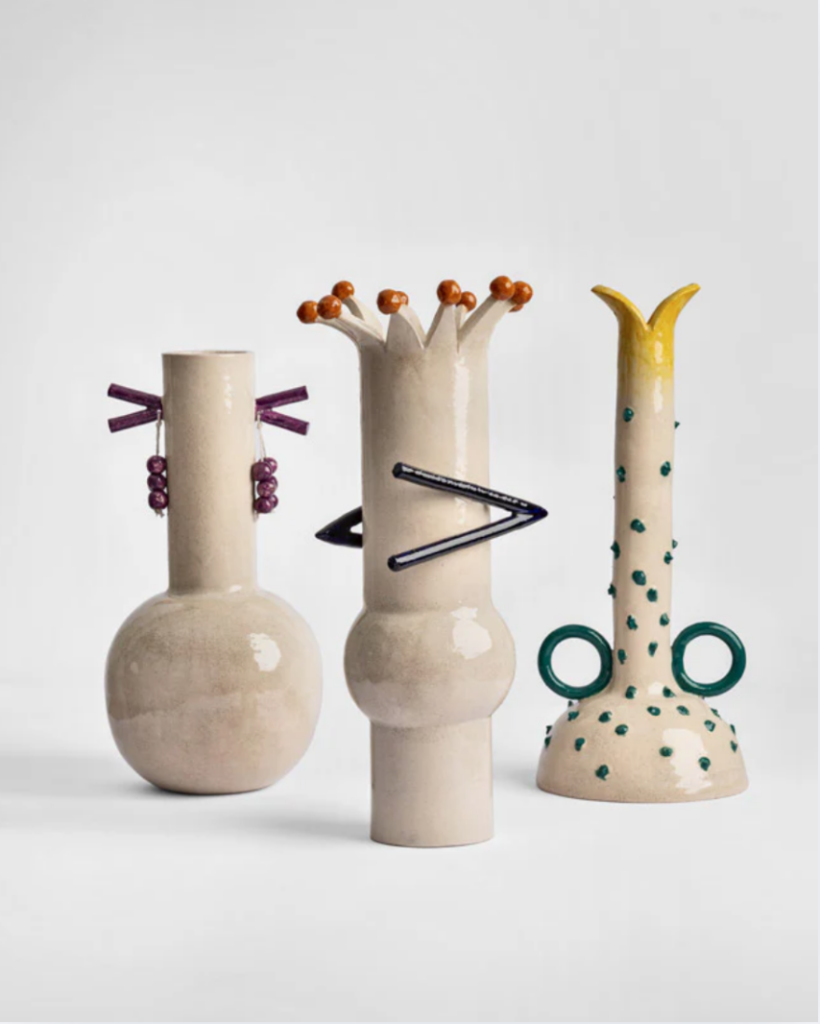
In reality, I never begin from a direct reference. For example,
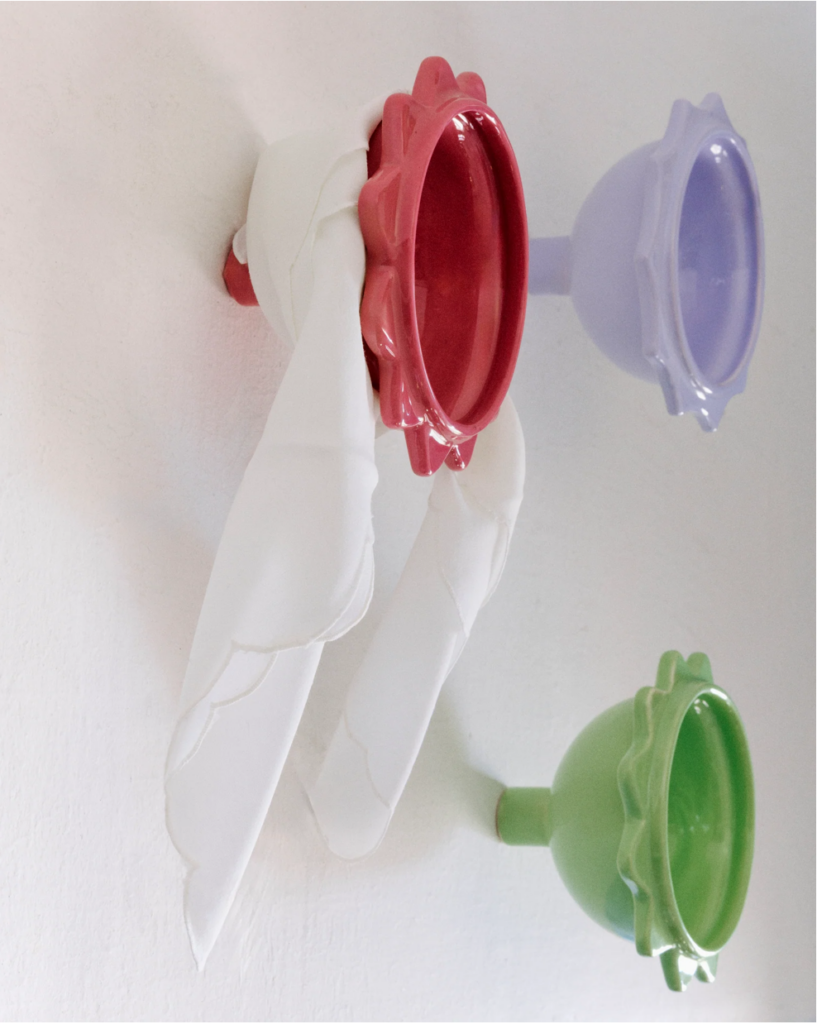
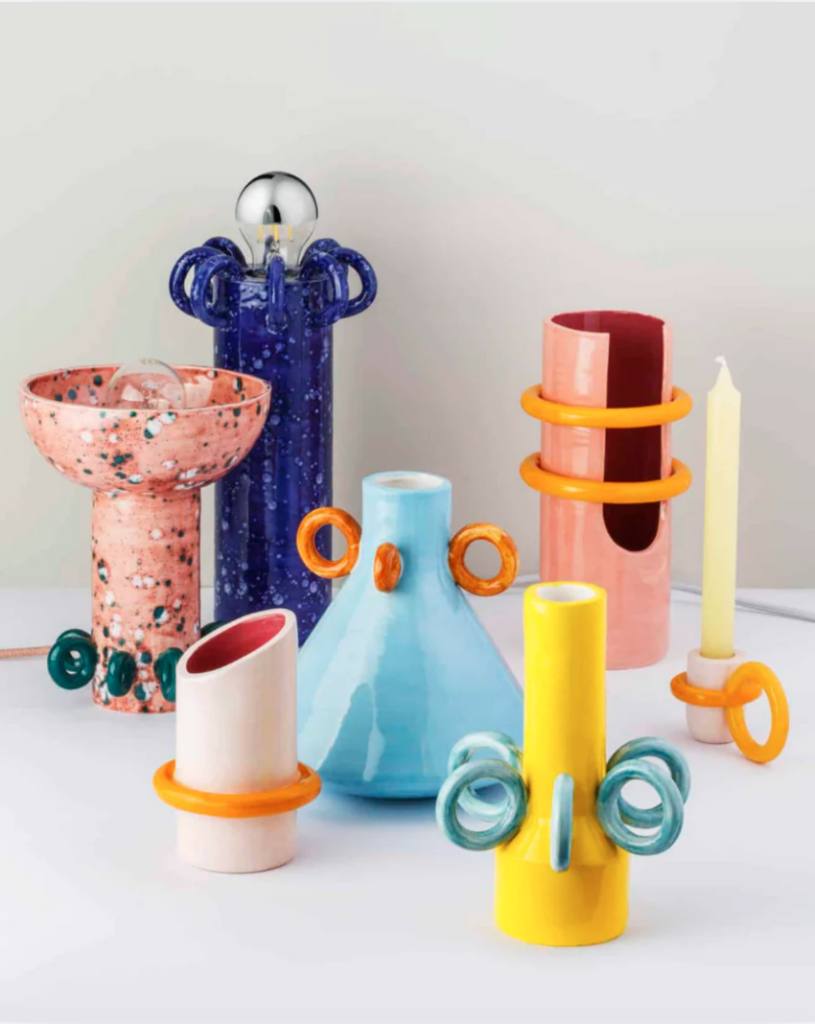
 Uccellacci was not born as an explicit homage to Pasolini: the name first came from the idea of slightly harsh birds. But unconsciously there is probably a connection to the rough and surreal aesthetic of Uccellacci e uccellini.
With
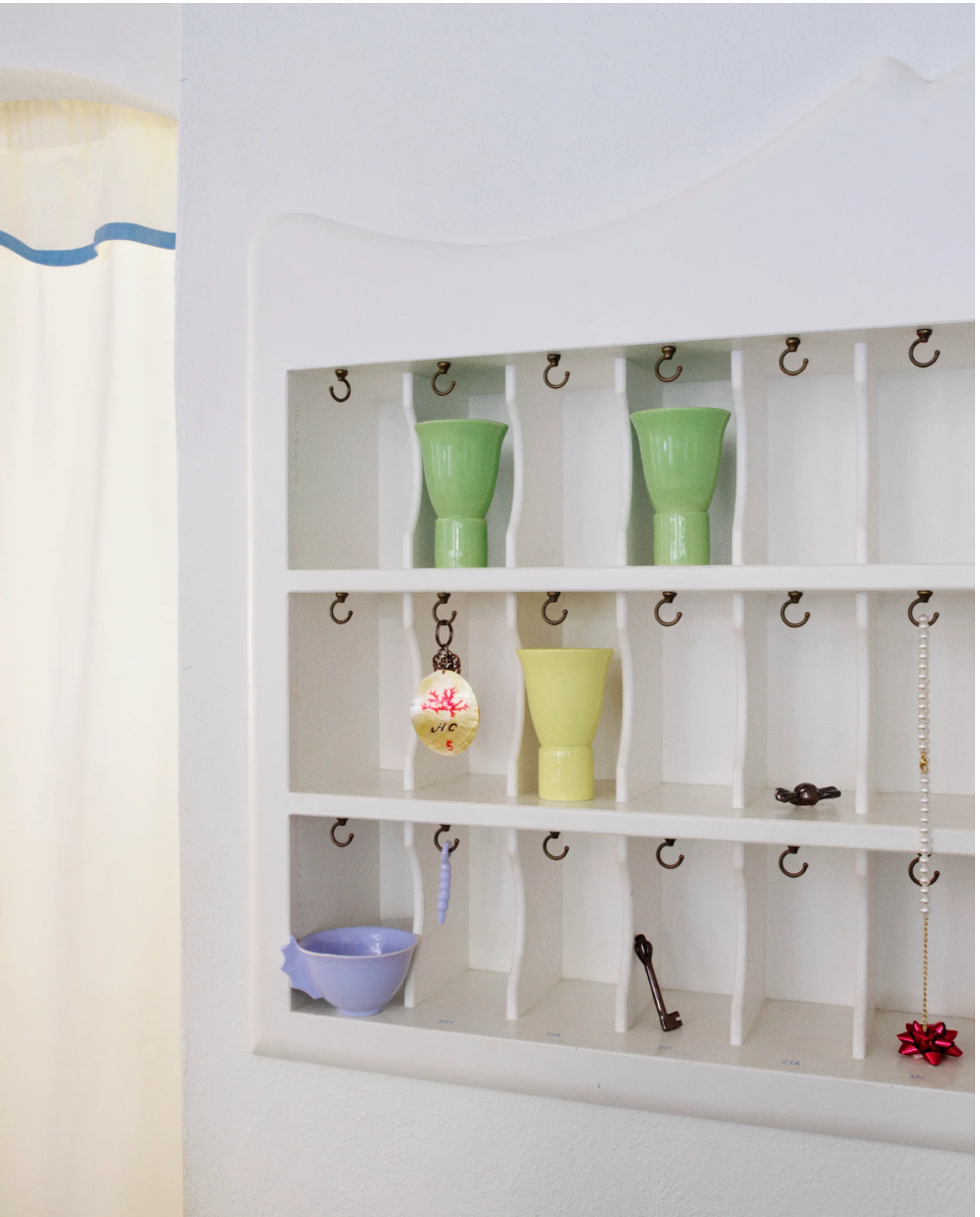
 La Graziosa, on the other hand, I wanted to recreate a suspended, almost dreamlike atmosphere inspired by certain Fellinian images linked to the Riviera and the Rimini hotel world. I imagined the collection as a series of characters: slightly caricatural pieces, exaggerated in their forms and identities. And in some ways this is close to Fellini’s approach, where characters often become theatrical figures, almost caricatures.

AM: Nostalgia: what role does it play for you and in your art?

ADL: Nostalgia is a driving force, but never an end point. It’s something that activates the imagination, creating a bridge between past and present.
My objects often reference collective memories, but always reinterpreted in a playful, light way, never melancholic. In a sense, it’s an active nostalgia. I’m not interested in looking backwards, but in using certain images or sensations to create something new.
More than precise memories, I’m interested in evoking a familiar feeling that has been reworked and transformed.

AM: How do you relate to colour?

ADL: For me, colour is never just decoration; it’s an essential narrative tool. Behind every palette there is a great deal of study, experimentation, and research into combinations, because colour often defines the feeling and message an object conveys.

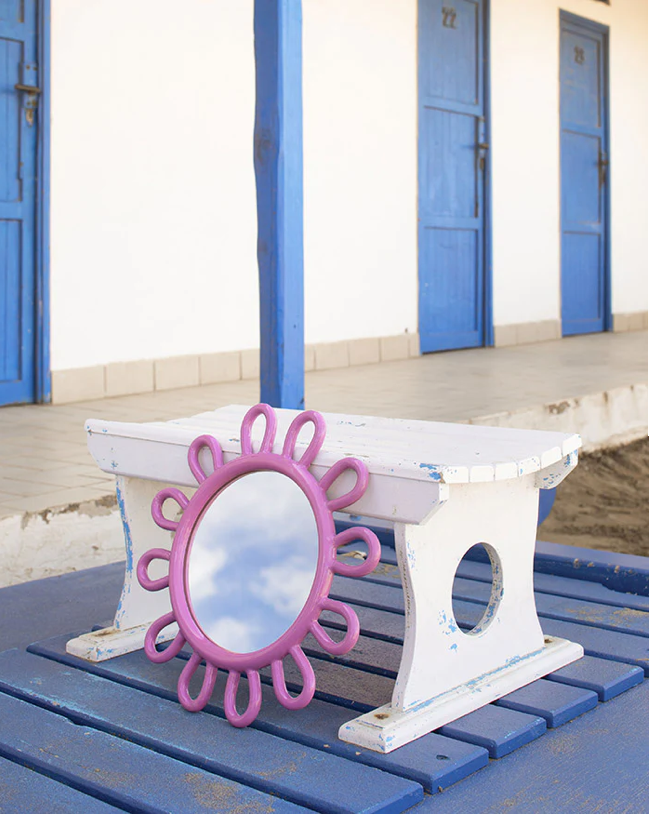
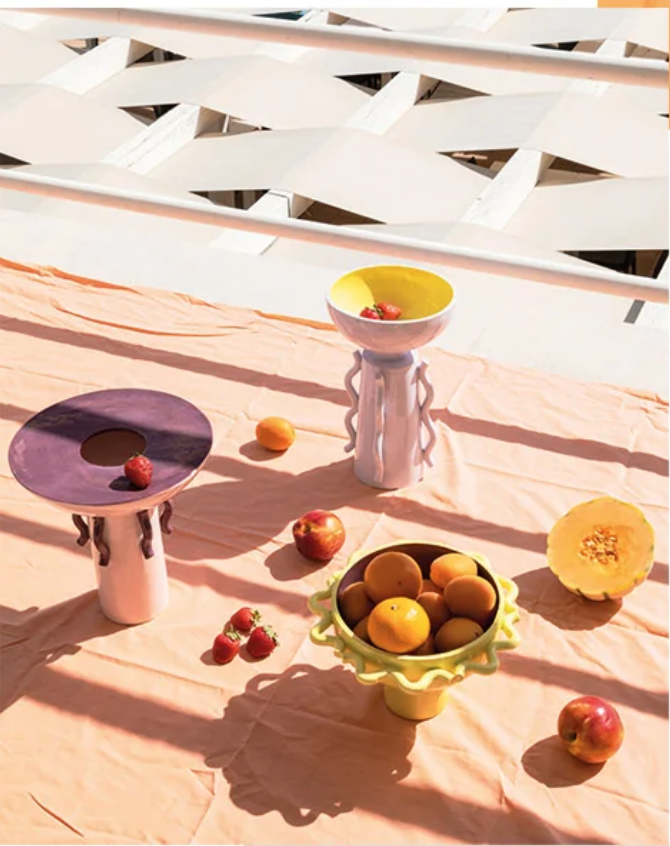
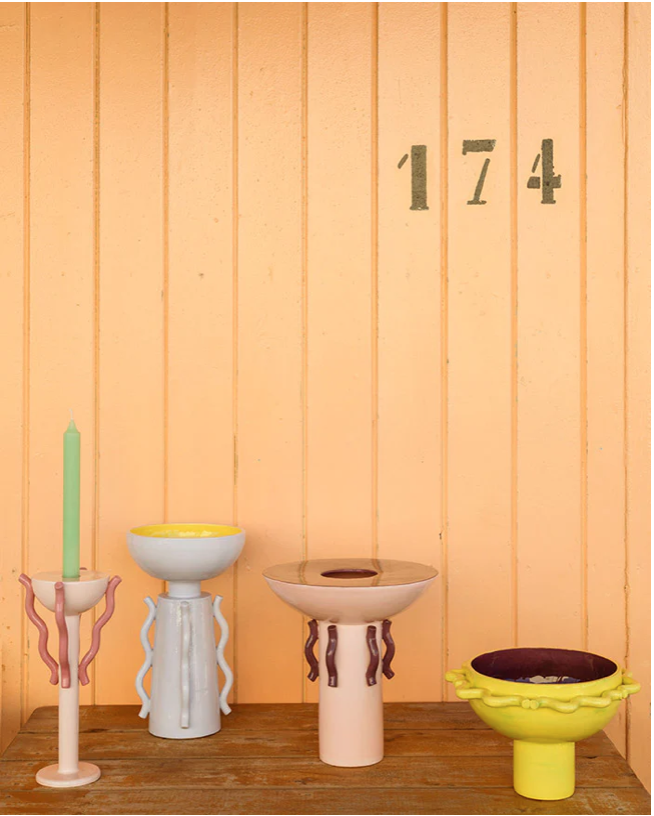
In Riviera, for example, I wanted to evoke something artificial and sugary, tied to a highly constructed summer imaginary. That’s why I combined pastel tones with sharper, more acidic colours.

In La Graziosa, instead, the colours become dustier, almost faded, evoking a more refined nostalgia — a feeling suspended between elegance and memory.

AM: What did you want to become as a child?

ADL: I don’t remember ever having a precise idea of what I wanted to become, but I drew constantly. It was probably my most natural way of expressing myself and already building imaginary worlds.

AM: You’ve spoken in the past about wanting to bring other disciplines into your work. Which ones, for example?

ADL: It could be interesting to experiment with other materials and understand how they can interact with ceramics.
But I’m also fascinated by set design, because of its ability to construct temporary worlds and create immersive atmospheres. It’s an approach that feels very close to the way I think about objects: not as isolated elements, but as part of a broader narrative.

AM: How did you first approach the creative world?

ADL: As long as I can remember, I was first curious about the creative world, then fascinated by it, then drawn toward it, and eventually completely absorbed by it.


AM: How do you think artisanal craftsmanship should be preserved and passed on to younger generations?

ADL: First of all by making it contemporary and accessible, instead of presenting it as something distant or outdated, which often happens.

Many young people feel discouraged because they struggle to see these paths as real and sustainable careers, and in part that’s understandable. Today’s context does not make life easier for those who choose artisanal professions — if anything, it often makes them more fragile.

And yet I believe craftsmanship still holds enormous cultural and economic value, and it should receive much stronger institutional support. In countries where the artisanal sector remains alive and fertile, there is concrete support that helps not only businesses, but also the collective perception of these professions.

When a country invests in craftsmanship, it implicitly communicates that this knowledge matters and deserves to be passed on.

AM: What is art to you?

ADL: Something capable of slightly shifting one’s perspective. Something that opens up different interpretations and offers new ways of seeing what we thought we already knew.

AM: What would you like to be remembered for, in terms of an artistic manifesto?

ADL: For having built a coherent and recognisable imaginary capable of bringing together playfulness, memory, and materiality.

A body of work that does not take itself too seriously, yet still manages to convey depth with lightness.

AM: You were born near Castelli, in Abruzzo, a region famous for ceramics. How much does place influence its inhabitants, and which other places inspire you?

ADL: Castelli is a place I’ve always frequented and that influenced me deeply because of the strong ceramic tradition rooted there. As an adult, I chose to return there to truly learn this craft: I knew I couldn’t have done it in the same way elsewhere. After my years in London, it also became an almost cathartic way to reconnect with my roots.

Among the other places that inspire me, Vietri is certainly one of them, especially because of its freer and more chromatic relationship with ceramics, where colour becomes both language and identity.

AM: What are the aspects of Rome that enrich you the most?

ADL: What interests me most about Rome is the coexistence of simplicity and grandeur. It’s a city capable of placing ordinary everyday life and an immense historical stratification on the same level, without one excluding the other.
This constant contrast between monumentality and daily life is something I find deeply fascinating.

AM: Which architectures and figures do you feel most connected to?

ADL: I feel deeply connected to Italian seaside architecture from the 1960s and 1980s, especially along the Adriatic Riviera: beach clubs, holiday hotels, signage, certain simple and slightly brutal geometries, and slightly faded colours.

These are images strongly connected to my childhood, and I believe they profoundly shaped my visual imagination.

AM: What unrealised project would you still like to bring to life?

ADL: I would love to work on a project where objects become part of a broader experience, interacting with a space, an atmosphere, and a more immersive narrative.

Further Reading

Are you a sensitive and curious traveler, constantly searching for beauty, art and cultural inspiration? Sign up to receive the latest contemporary news!