


Perfume as Language and Transcendence
We conclude our column on the world of fragrance with the perfect finishing touch: an interview with Diletta Tonatto, sociologist and nose of the Tonatto perfume house.
Antonella Dellepiane Pescetto: Are there olfactory memories you jealously guard, ones that still influence your work today?
Diletta Tonatto: Yes, absolutely. That is, in a way, the very nature of smell: when an olfactory memory is that powerful, it means it is deeply tied to an emotion, a lived experience, a relationship. For me though, I believe this is true for many, these memories are rarely isolated; they are always connected to someone. Even when they go back to childhood, they are almost never solitary. They are the smells of people, of relationships: friendship, care, adventure, sport. I guard them jealously not just for the scent itself, but for the meaning that scent carries with it. It is an embodied meaning, lived, emotional. Invisible traces that remain and continue, silently, to guide us.
ADP: What kind of experience was it to pursue your studies abroad, away from Italy? How did those cultures – particularly Australia and Ireland – enrich your personal and olfactory sensibility?
DT: My experience away from Italy was particularly significant. I moved to Australia when I was 16, and lived through a very intense and formative period of my youth there. It was an experience deeply shaped by contact with a powerful, dominant nature, but also by encountering a very different culture. I had the opportunity to learn about the country’s history, including its Aboriginal heritage, colonialism, and its lasting impacts — themes I had never confronted before.
All of this helped shape in me a deeply multicultural sensibility. I came from a rather sheltered environment in Turin, and suddenly found myself in a large international school, almost American in style, where cultural diversity was both wide and visible. There were students of Asian heritage, members of Aboriginal communities, and people from very different backgrounds, each carrying their own story.
That context allowed me to discover not only difference, but also the value of integration: respect, coexistence, and dialogue between religions and cultures. Even in everyday things – food, habits – a sense of unity would emerge in shared spaces, always immersed in a very present natural environment.
As for Ireland, that was a more recent and somewhat fragmented experience. During that time, I was already working at Tonatto Profumi and had growing professional responsibilities. Shortly after, I became pregnant with my son, which made my time there less continuous — I would come and go, never settling for long periods.
ADP: If you had to translate Australia and Ireland — as you experienced them — into olfactory notes and accords, which would you use?
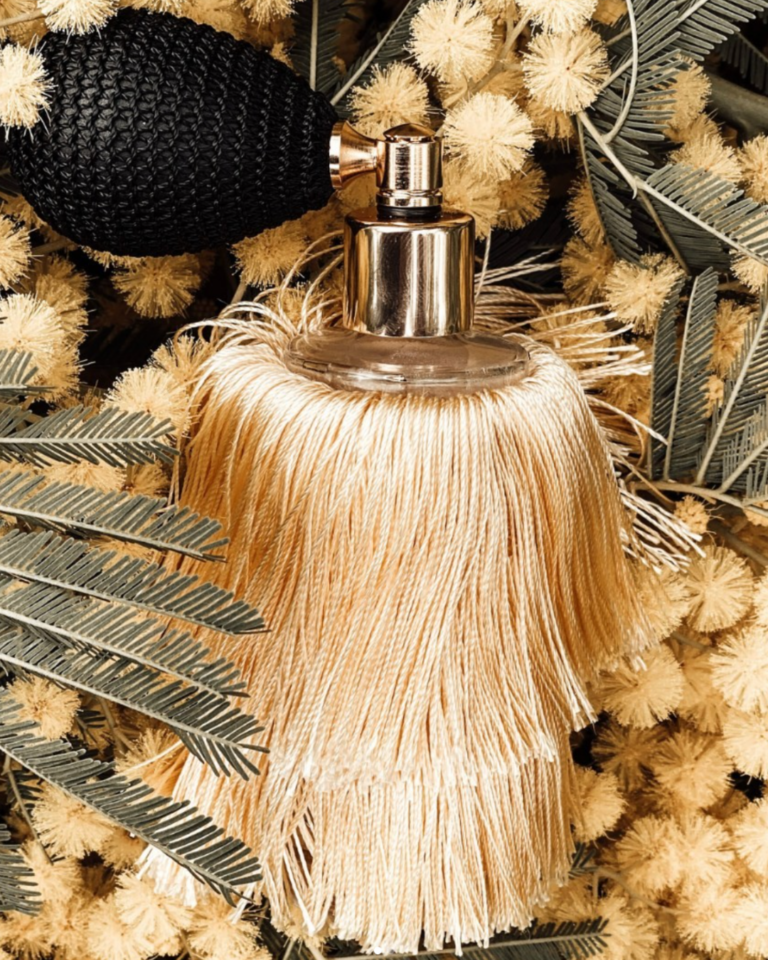
DT: For Australia, I actually did, to some extent: it became Baci from Faraway. That fragrance contains notes of mimosa, tomato leaf, and a honeyed nuance. It was conceived as a bridge between Australia and Italy, born at a time when the distance between the two felt especially strong, so it carries elements of both places.
When I think of Australia, though, the olfactory landscape is even broader: jacaranda, acacia, jasmine, dry woods, the red earth of the desert. It is a country that intoxicated me through native plants I had never encountered before. But it is not only about smell — it is a multisensory experience. Today, when I think of Australia, I also think of sound, silence, the ocean. And somehow, all of these elements become olfactory too.
Ireland, by contrast, was a different experience. Perhaps because of where I was in my life, or how I lived it — in constant comings and goings — it has remained more liminal for me. I associate it with a damp, earthy, intensely green landscape. I experienced it mostly in winter and autumn, so it is tied to a more inward, more suspended dimension. It had a less intense emotional and inspirational impact on me than Australia. And in the end, that is also reflected in its olfactory translation.
ADP: Between artisanal excellence, iconic places, and prestigious institutions, what direction do you envision for the maison in the coming years? What would you like to scent next – a place, a home, an installation, or an as-yet unexplored project?
DT: Over the years, the maison has scented — and continues to scent — iconic places: spaces connected to art, cultural exchange, power, and institutions. This is certainly fascinating. But what has become increasingly central to me in this creative journey is the encounter. I have come to realise that, while dialogue with nature remains fundamental, dialogue with people is even more so. It is not so much a question of what I would like to scent, but of who — with whom I would like to create, with whom I wish to engage in an exchange, to meet within an olfactory dimension. In this sense, I feel very fortunate, because I often do not know who will arrive, nor what they will ask of me. I am surprised every day by remarkable people who sit before me to create their own fragrance – sometimes with the most unexpected requests. And that is precisely what fascinates me.
I could not say whether I would want to work with actors or philosophers. I have been deeply moved by people with seemingly more ordinary lives, yet with extraordinary imagination, sensitivity, and a capacity for reflection. In the end, what truly unites us is this deep feeling. And that is where everything begins.
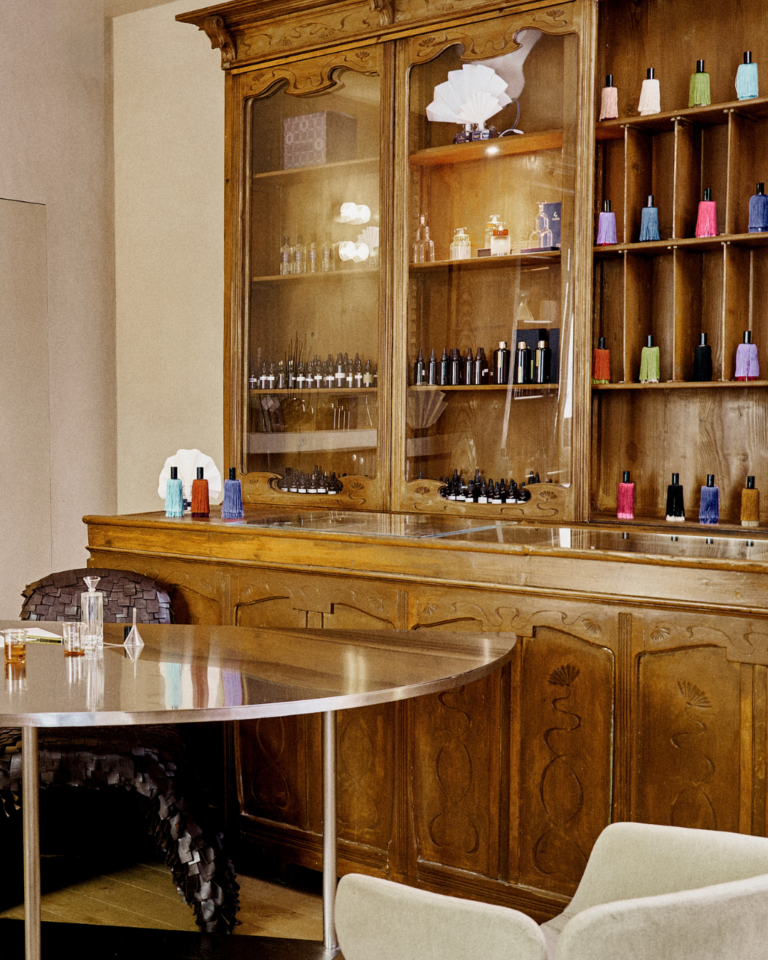
ADP: You often speak of perfume as a form of transcendence, almost as a kind of modern sensism – a philosophy rooted in the primacy of the senses. Could you tell us more about this idea, which is so dear to you?
DT: Yes, exactly: a new sensism, a new ratio — a new balance between instinct, the senses, and the mind, between our most immediate, bodily dimension and the more rational, controlled one. For a long time, our culture has led us to repress sensations, emotions, and instincts, as they were considered closer to the animal than to the human. The human being, instead, was meant to embody control, rationality, and distance.
Today, however, we are beginning to understand something different: that these dimensions speak of us beyond consciousness, beyond what we are able to name or explain. And for this very reason, they are fundamental. From this perspective, perfume, through the olfactory sense, becomes an instrument of knowledge. In a way, it always has been: it allows us to orient ourselves in the world, to perceive danger, to understand where we are. But it can also become a means of knowing ourselves. Not only external dangers — like a fire, something we cannot see but can perceive — but internal ones as well. Those subtle sensations: a discomfort, a knot in the stomach, an immediate reaction we so often tend to ignore. Just as a smell can unsettle or disturb us, these inner perceptions also carry a deeper meaning. They need to be listened to, acknowledged, and processed.
And this is where the idea of transcendence comes in: it does not mean denying instinct, nor overcoming it by eliminating it, but passing through it. Recognising it, learning from it, and then, if necessary, moving beyond it. It is a process of integration — a way of recomposing ourselves, of not feeling fragmented, but of embracing all our parts, even the most instinctive ones, within a broader experience of awareness.
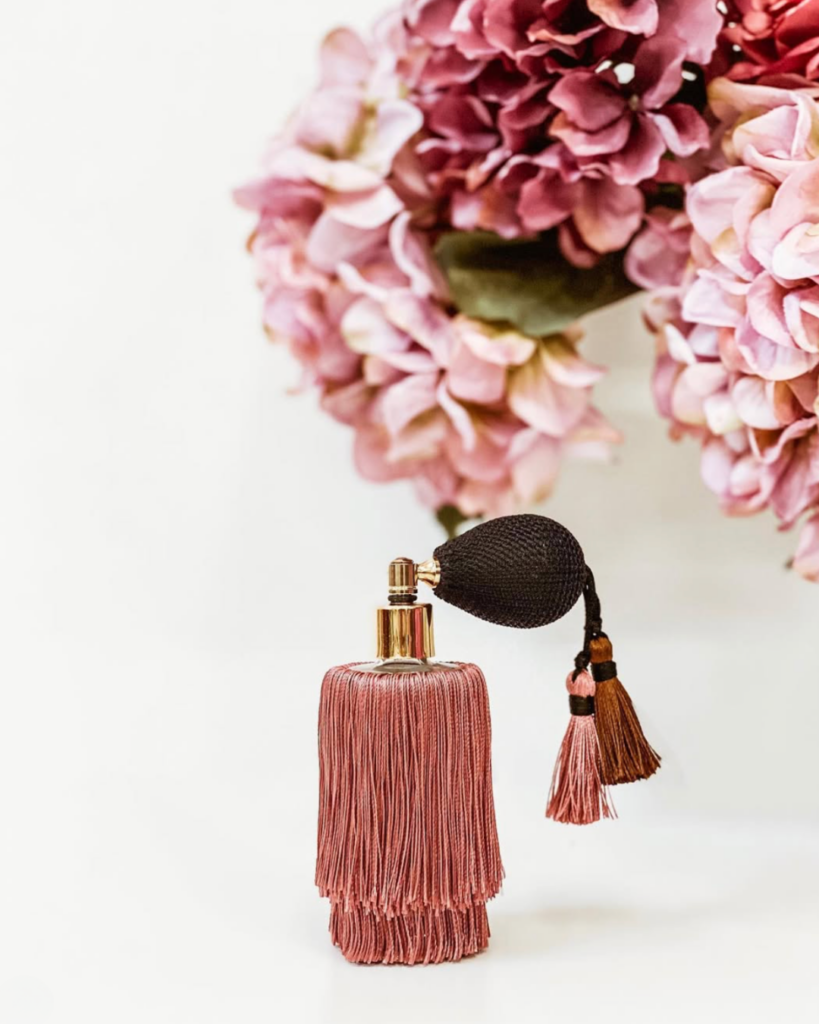
ADP: You are currently pursuing a PhD: how do you propose the sense of smell as a tool of knowledge and social relation, particularly in relation to social hierarchies and forms of distinction?
DT: I began a doctoral programme in the sociology of smell, though I have not yet completed it, so I still consider myself a student. That said, my thesis is already mapped out, and I can tell you what it is founded on. My approach is rooted in experiential phenomenology: it begins, first and foremost, with recognising smell as a potential for experience. And to speak of experience means recognising its structure. Experience is not something random; it has a form, a dynamic, and, above all, a transformative potential.
It is precisely here that the concept of the liminal comes in. Smell, more than other senses, introduces us to a liminal dimension — an in-between space, a threshold — in which transformation can occur. And it is in this passage that the link to transcendence emerges: the possibility of passing through an experience that transforms us, that leaves a trace, that produces a shift.
From this standpoint, it is essential to observe how certain experiences are deeply marked by smell, and how we relate to them. Some are so impactful that they transform us, redefining the way we feel and perceive ourselves and the world.
This reflection is interwoven with the theory of the liminal and the structure of rites of passage. In rites, in fact, experience is clearly articulated into three moments: a “before” (ex), an intermediate phase (per) — liminal and transformative — and an “after” (ire), which represents the return or transition to a new condition.it is precisely for this reason that they are so deeply connected to processes of individual and social transformation.
It is interesting to note how, in many cultures, the senses — and smell in particular — are strongly involved in these rites. They serve to mark thresholds and signal the passage from one state to another. In this sense, sensory elements become genuine ritual instruments: they accompany a form of symbolic “detachment” from an initial condition and a subsequent “grounding” into a new one. They become almost props, officiants of change.
And it is precisely for this reason that they are so deeply connected to processes of individual and social transformation.
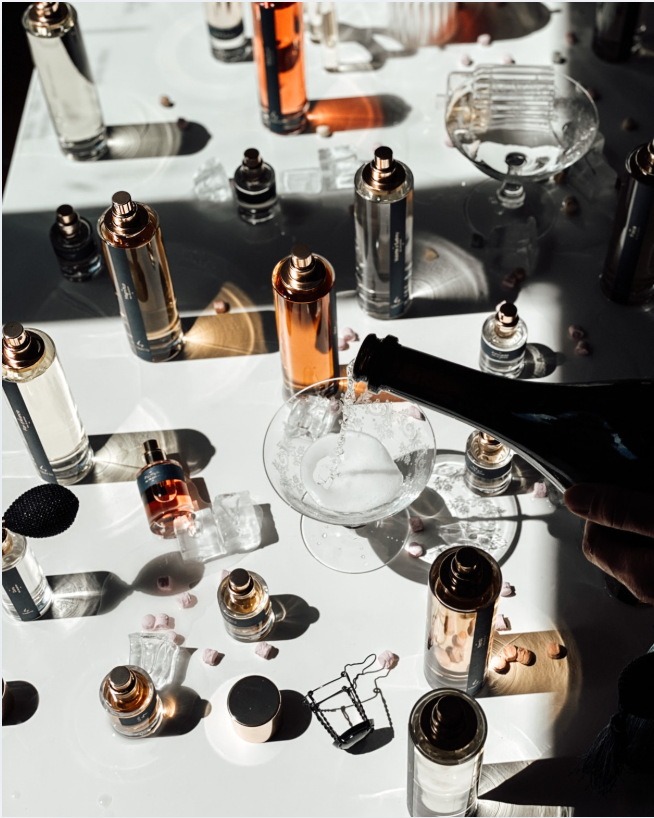
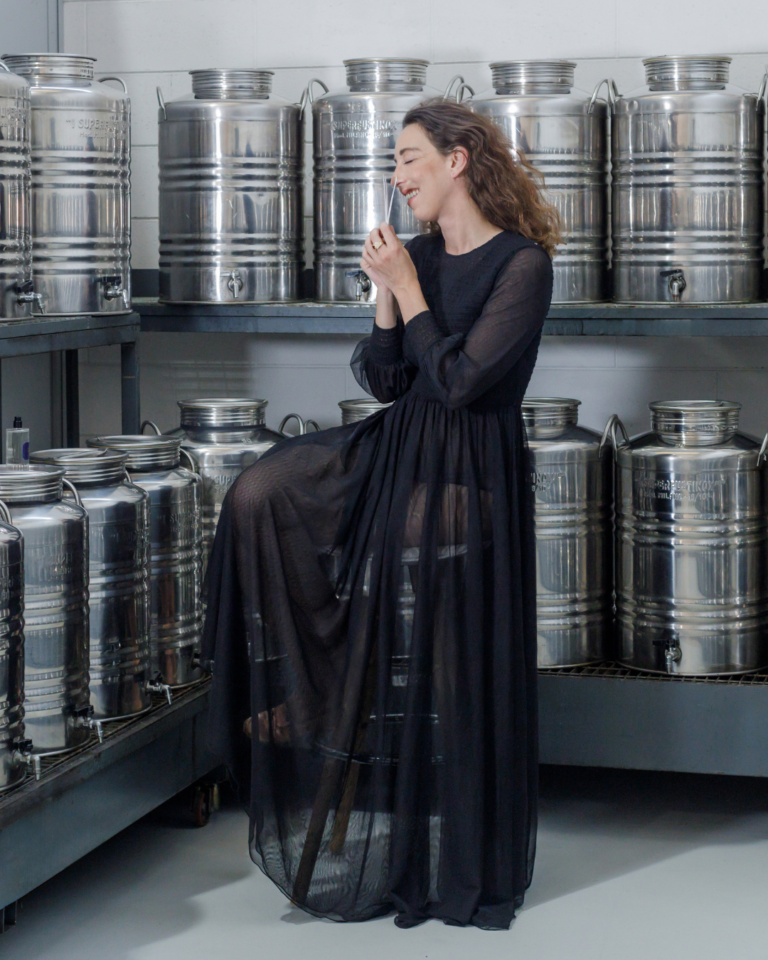
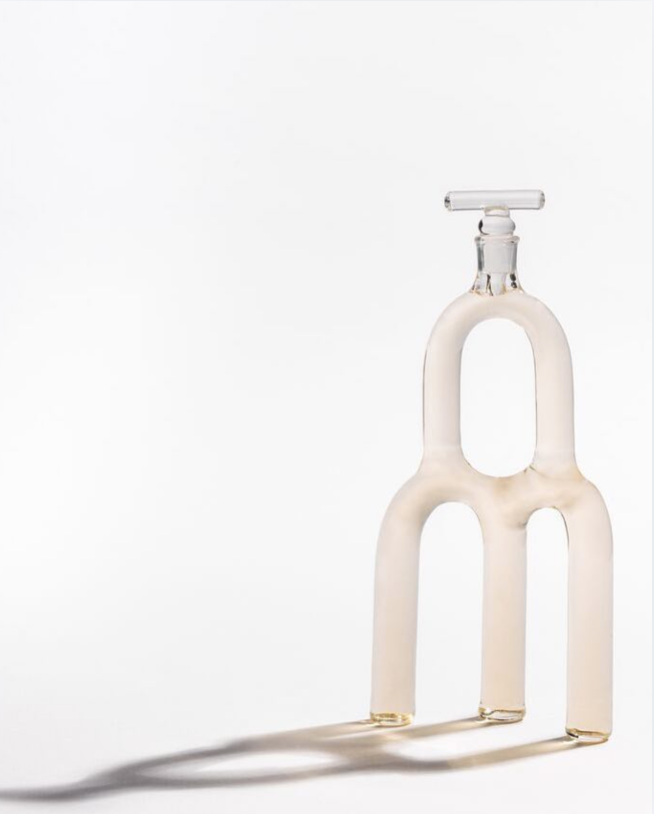
ADP: Perfume is a true language: it can be revelatory and subversive. What can it express that words cannot?
DT: I believe perfume resides, first of all, in the act of choosing. It is not only the object itself, but the relationship that forms with whoever chooses it, with whoever wears it. That is where intention is born. That is where emotion is deposited.
Paradoxically, however much philosophy has associated perfume with the idea of a mask, it nonetheless lives in the body — and the body does not lie. This is why perfume is revelatory, and why it can also be subversive. If there is a subversive tension within an individual, perfume amplifies it, making it perceptible. It does not construct a fiction; rather, it brings something authentic to the surface. This is the great paradox: what has been considered a covering, a mask, becomes instead an instrument of truth.
Perfume says what words cannot, because it does not pass through rationalisation. It acts first, and more deeply. It reveals a truth that is not explained, but felt.
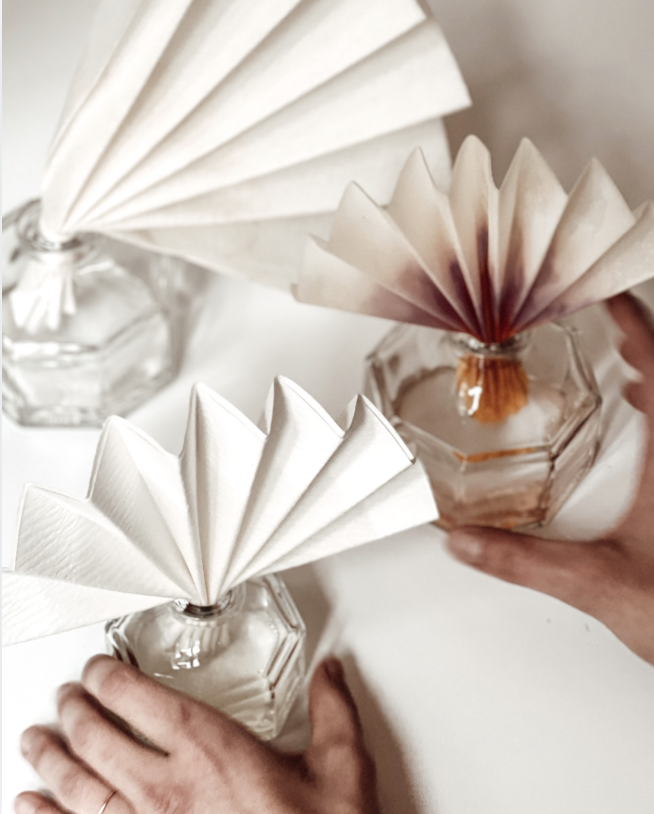
ADP: What does slow perfumery mean today? Is it an ethical choice, a manifesto of intent?
DT: Today, slow perfumery has taken on broader connotations and has become a concept shared by many different realities. It certainly carries an ethical dimension, but I believe it is, above all, the recognition of a condition within the industry.
We live in an increasingly crowded, saturated context, where the risk is of drifting towards dynamics similar to those of fashion: continuous launches, imposed rhythms, accelerated production logics.
Slow perfumery, then, becomes a stance — a way of affirming that creative perfumers do not wish to be entirely shaped by these dynamics. It means wanting to remain connected to nature, not only as a raw material, but as a rhythm: to the timings of creation, to the humanity of the creative process.
At its core, it is an attempt to preserve a space of authenticity within a system that tends towards speed and standardisation.
ADP: Floressentia is a very particular project: how did it come about and how has it evolved over time?
DT: Floressentia is born, first of all, in the laboratory, from the perfume production process. In particular, it originates from one of the final stages before bottling: filtration. In 2016, this element was reinterpreted through the lens of design by designer Astrid Lulio, who conceived it as an olfactory lamp.
The filter thus becomes something more than a technical instrument: Astrid Lulio draws on the idea of the nasal philtrum, transforming it into both a vessel and a diffuser — a place where molecules settle and become perception.
Over time, the project has evolved. From an installation — a true canvas for olfactory narratives — it has progressively become a product. Today, Floressentia is a perfume on canvas. But the journey towards this form has been a long one: it was born as an artistic gesture, as a space for experimentation and storytelling, long before it became an object. And it is precisely this origin that continues to make it a hybrid project, suspended between art, design, and perfumery.
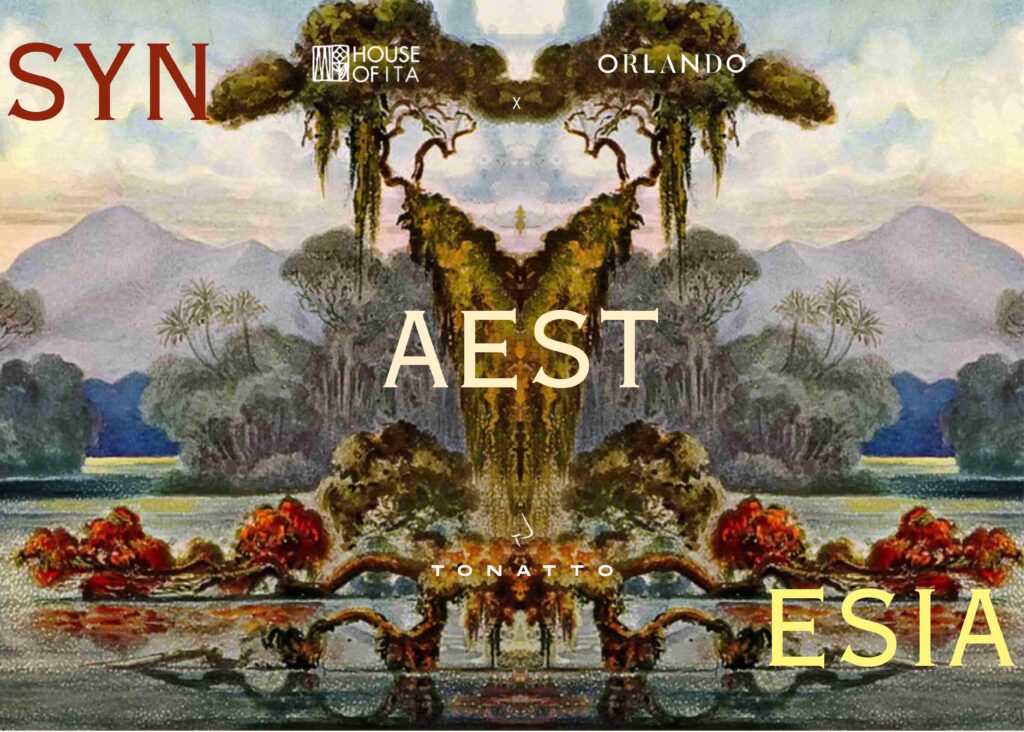
ADP: In the Synaestesia project, orchestrated with Orlando, how did you work on the relationship between words, emotions and fragrances?
DT: In the work on Synaesthesia, I tried to focus on the emotional intentionality of words. I remained anchored to the emotion and sensation each word clearly evokes. It was therefore a process of translation: carrying the intentionality, the emotion of the word, into relation with the emotion that an olfactory formula could evoke.
Among the images that emerged, the one that has stayed closest to me — the most evocative, also in relation to my own journey — is, without doubt, the walk in the forest, Waldeinsamkeit. In particular, I felt it strongly connected to Ancora Tu.
I believe a very interesting pairing emerges there, because Ancora Tu speaks precisely of a rediscovery along the path — or rather, within the path. It is a traversal: something that is discovered as it unfolds. The walk in the forest thus becomes a metaphor for this inner movement: a surprise, a discovery, a form of knowledge and of compassion towards oneself. It is a rediscovery that is not static, but processual. And that is exactly the message of Ancora Tu: not a point of arrival, but a moment that situates itself within the journey.
ADP: What do you think people need to find in a perfume today?
DT: Themselves.
That is what I see above all when I create bespoke fragrances: people are not searching for isolated fragments of their identity, but tend to recompose themselves. There is a deeply joyful dimension to this process, a profound sense of wellbeing. It is as though, at last, they feel permitted to include all parts of themselves, to bring them back together.
It is no longer about choosing a single facet — the sparkling one, the sensual one, the determined one — but about welcoming them all. In a bespoke fragrance, this becomes possible: you can feel, explore, and choose what truly represents you, without having to reduce complexity.
In the end, what emerges is the self in its authenticity. And the body recognises it immediately.
ADP: If you had to choose olfactory notes to compose the scent of the Orlando Imaginary Hotel, what would they be?
DT: Here I would say: imaginary notes.
I would work with fantastic pairings, somewhat in the manner of Gianni Rodari. I would not go into too much detail — also because I would genuinely like to develop this further, so I will not give too much away. But the approach would be precisely this: building unexpected combinations capable of generating new images and sensations.
There would certainly be a strong grounding in the concrete — in art, in matter, in presence — something I feel closely aligned with the identity of Orlando. And at the same time, an equally strong dimension of imagination, of creative openness, almost a drifting towards elsewhere.
It is this dualism that interests me: between what is tangible and what is imagined, between reality and fantasy. And within this tension, a form of transcendence also finds its place – not as an escape, but as an expansion.
It would be a perfume that does not define a space, but opens it.
Our founder sat down with Elisa Seitzinger for an exclusive conversation about tarot, creative and personal time, the Major Arcana, black cats, birth charts, and much more.

In Victorian England, strawberry parties transformed a fleeting fruit into a refined ritual of summer, where the season revealed itself through quiet enchantment and entered literature, painting and social memory.
A Victorian chamber of vision, where painting and poetry meet at the threshold of the invisible, and beauty becomes a language of longing. The visible world begins to glow like a spell whispered between art and the soul.
Reading leaves us with something: a sharpened awareness, an intuition, a lesson learned without direct cost.
Bringing together playfulness, memory, and materiality through Ceramics.
An insightful and entertaining conversation with the talented Private Chef from the worlds of art and luxury.
Are you a sensitive and curious traveler, constantly searching for beauty, art and cultural inspiration? Sign up to receive the latest contemporary news!