There is a particular moment — almost imperceptible — that occurs when entering an open digital archive. It is not the moment of targeted research — that still belongs to the logic of efficiency — but the moment when you get lost. You arrive looking for something specific, perhaps a botanical illustration or a historical photograph, and a few minutes later you find yourself elsewhere: among eighteenth-century star maps, forgotten covers, meticulous herbariums, typographic catalogues, scientific notes spanning centuries. It is a contemporary form of serendipity: the art of losing one’s way in order to find oneself again.


Browsing these archives revives an ancient experience online. If the Parisian flâneur wandered the city streets without destination, allowing the world to surprise him, today the browser becomes a similar space: a mental promenade through images and knowledge that do not compete for attention but accompany it. In a web dominated by immediacy and algorithms designed to anticipate our desires, these archives ask for something radically different: slowness. They do not shout, send notifications, or optimize engagement. They respect time instead.
They are counterintuitive environments within today’s digital ecosystem. They offer no prescribed paths, no popularity rankings. Instead, they provide non-linear entry points into knowledge: you might enter following a star, an illustrated carrot, an anonymous photograph, or a yellowed newspaper article — and remain while crossing unexpected disciplines and languages. Conceived this way, the digital realm ceases to be mere noise and becomes a space of care. Not consumption, but exploration. Not performance, but discovery.


“Digitization does not replace the in-person experience,” says Carolina Fàbregas, Director of Marketing and Strategic Business Development at the Museo Thyssen-Bornemisza in Madrid, “but it radically expands the framework of our relationship with artworks. We have observed that when barriers are removed, people engage from very different perspectives: academic research, artistic creation, teaching, personal curiosity, or family memory. The relationship becomes more autonomous and, in many cases, more intimate. The user is no longer simply a visitor, but also a reader, a researcher, or even a co-creator.”
In this sense, open online archives represent far more than digitized collections. They are places where individual experience meets collective memory. Every downloaded image, every examined document, every magnified detail reactivates a silent dialogue between the person who created the object and the one encountering it today.
Fàbregas also reflects on a frequently overlooked aspect: the freedom of association that the digital environment enables: “In a physical setting, the visitor’s path is shaped by space, by the exhibition narrative, or by the time available. In a digital environment, by contrast, associations can unfold more freely: one search leads to another, a keyword opens up an unexpected constellation of images, and a magnified detail can become the focal point of interest.
This form of discovery does not replace the traditional visit, but offers a different kind of experience—more exploratory, more fragmentary, and at times more personal. It can generate unexpected connections between periods, artists, or contexts that might not coexist within the same gallery. This freedom of navigation encourages an approach to art that is less intimidating and more experimental.”


Making beauty accessible becomes an act of trust: accepting that a work may be studied, reinterpreted, transformed. Relinquishing a measure of control in order to place faith in people’s intelligence and curiosity.
Coen Wilders of the Rijksmuseum in Amsterdam echoes this view, emphasizing the importance of creating a system that makes information understandable, reusable, and sustainable over time: “We have learned that openness alone is not enough. If cultural heritage information and data is to have a meaningful and lasting impact, it needs structure, context, and care. That is why we increasingly work according to the FAIR data principles — making information not only open, but also findable, accessible, interoperable, and reusable. That said, what may appear to be a technical infrastructure is ultimately driven by a societal ambition: contributing to an open and reliable knowledge ecosystem in which cultural heritage can be studied, reused, and reinterpreted across borders and disciplines.
Trust is an essential part of this process, but not in a naïve sense. Making images downloadable inevitably means giving up a degree of control, and in today’s digital landscape — especially in the age of AI — that raises new questions about how cultural data circulates and who benefits from it. This requires reflection and finding ways to uphold public values while making our data available.
At the same time, as a public institution we believe that cultural heritage ultimately belongs to everyone. Our role is therefore not to close it off, but to share it responsibly: with transparency, good documentation, and attention to public values. Openness works best when it is accompanied by accountability, collaboration, and a shared commitment to keeping cultural knowledge accessible.”
Infrastructure, then, is not neutral: it is a cultural act. It is precisely within this tension between freedom and responsibility that the deeper meaning of open archives takes shape.
What emerges is a clear and deliberate stance: beauty not as a luxury for the few, but as a fundamental human need. These projects are grounded in an idea that is both simple and radical—that when faced with freely accessible beauty, individuals will not behave as passive consumers but as curious citizens. That open access does not diminish the value of artworks but amplifies it, multiplying encounters and interpretations.
For younger generations, perhaps less accustomed to leafing through dusty volumes or navigating library stacks and archival boxes, these platforms may become an unexpected gateway to slow research. They do not replace the physical experience of study; rather, they translate its spirit: the pleasure of investigation, deviation, and accidental discovery. One enters out of curiosity and leaves with a larger question — about how we arrived here, what connects distant eras and cultures, and which invisible thread binds knowledge and imagination.
In a present defined by productivity and performance, these spaces reactivate a different sense of time. A time for lingering. For browsing without purpose. For allowing wonder, rather than urgency, to guide attention. Archives thus become mental rooms before they are databases: reservoirs of attention, lungs for thought, decompression zones for the present.
Their public openness therefore takes on the character of a gentle form of resistance. To offer instead of sell. To welcome instead of profile. To ask not for credentials, but for curiosity. In new forms — perhaps quieter and less heroic — beauty continues to circulate precisely because it remains accessible, shared, and traversable.


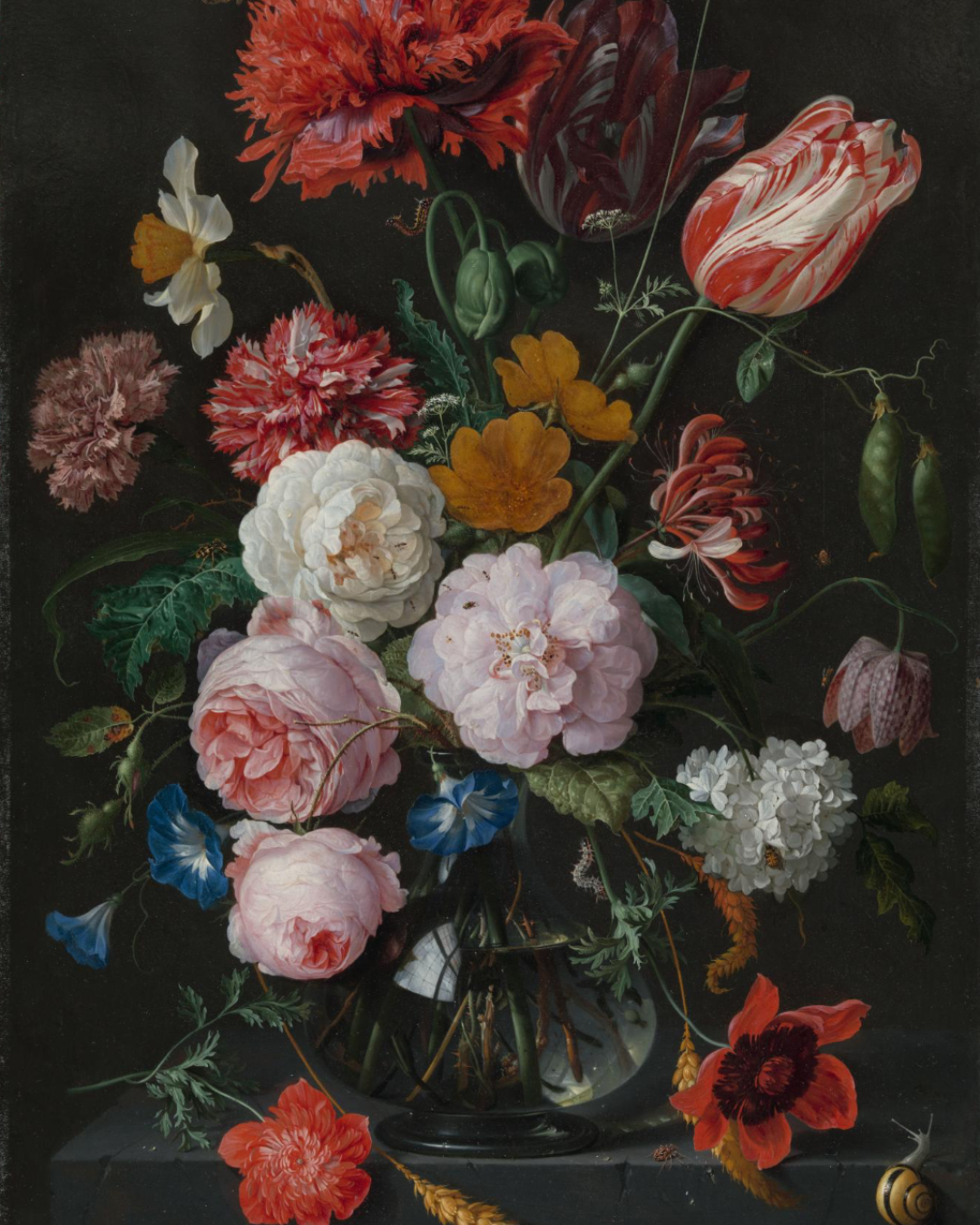
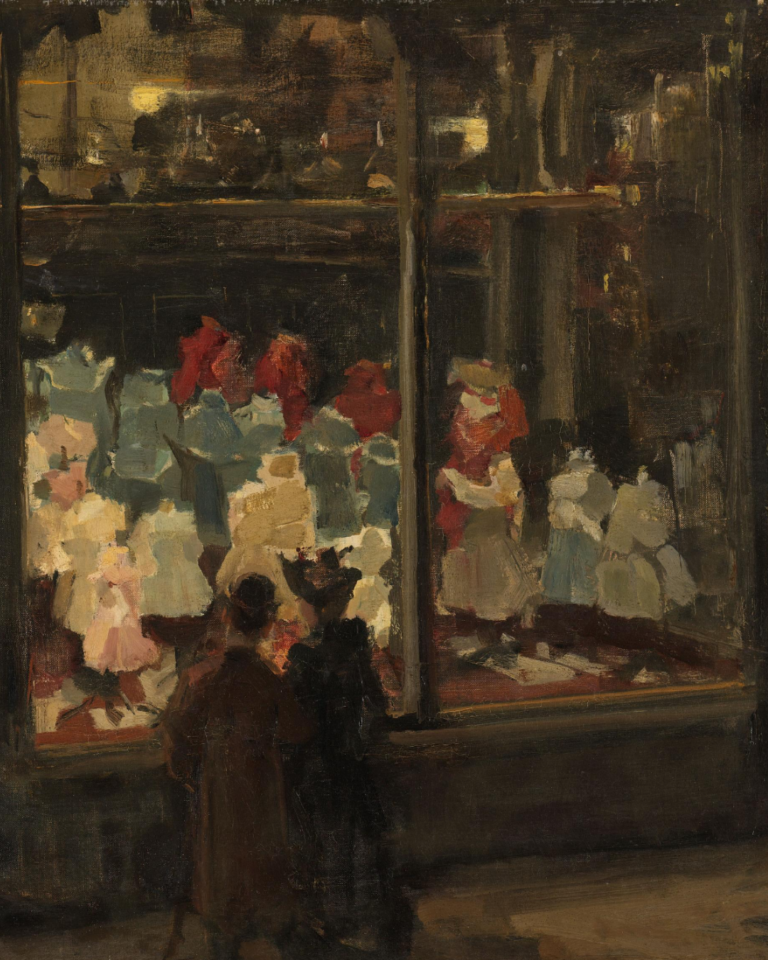
And as we scroll through images created centuries before us, something happens: the digital stops separating and begins connecting again. Not only information, but meaning. Not only data, but wonder. Not only access, but belonging to a human community that stretches across time, united by the same need to look, understand, and imagine.
Perhaps this is where these archives reveal their deepest function: reminding us that beauty is not decoration but invisible infrastructure. It sustains imagination, nourishes thought, and orients the gaze. And in remaining open — stubbornly open — it continues to illuminate.
And perhaps, once again, to remind us who we are.
WHERE TO GET LOST (FOR FREE)
A selection of open digital archives demonstrating how culture, when shared, continues to generate imagination.
Major institutions and small independent projects alike are making a quiet yet radical choice: granting access to their collections without economic barriers. Not only celebrated masterpieces, but documents, experiments, minor images, and ephemeral materials — everything that contributes to the world’s cultural memory.
These archives ask for nothing but time and curiosity. And perhaps that is precisely their most contemporary value.
ART
Museo Nacional Thyssen-Bornemisza — Open Access Digital Collection
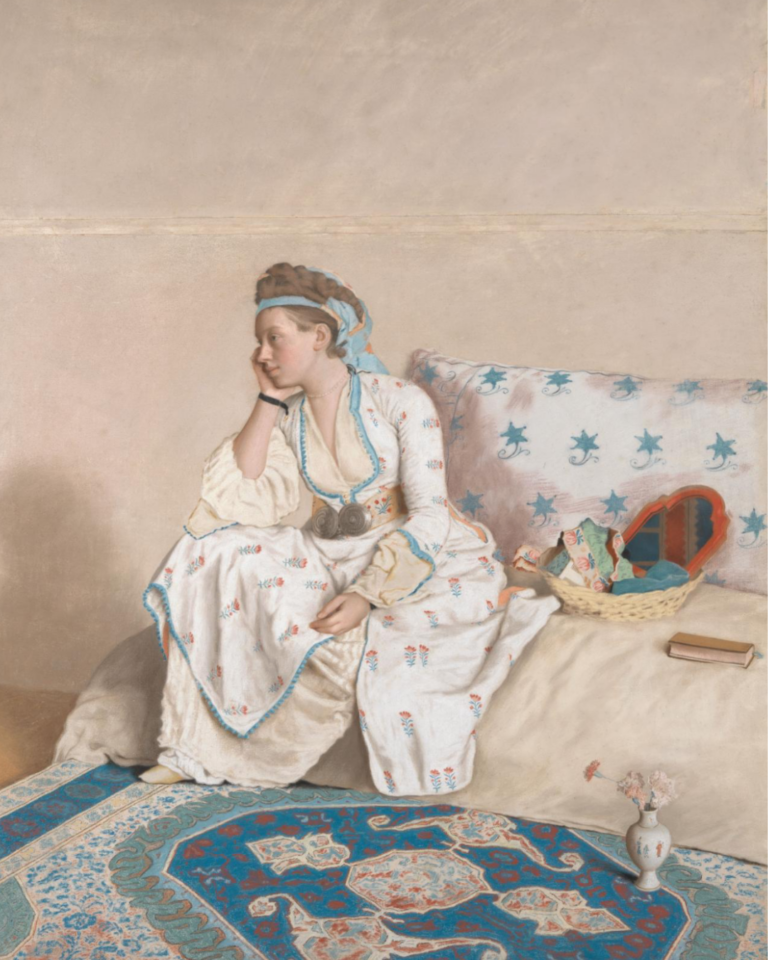
An extraordinary selection of masterpieces of European and American painting, available in ultra-high definition and freely downloadable. The digital visitor can explore each work down to the finest detail—often invisible even to the naked eye in the museum—and, thanks to the restoration viewer, as Carolina Fàbregas points out, it is also possible to follow all the technical stages of the restoration process for many artworks: macro photography, infrared reflectography, X-radiography… a true journey into the creative and conservation process behind every masterpiece.
https://www.museothyssen.org/en/collection
The Museum of Modern Art (MoMA) — Exhibition History Archive
An extraordinary archive reconstructing nearly a century of exhibitions: installation photographs, press releases, checklists, catalogues, and curatorial materials from 1929 to today. Not only artworks, but the history of how art has been presented to the public.
https://www.moma.org/research/archives/about-exhibition-history-project
(more than 3,500 exhibitions documented and freely accessible)
Rijksmuseum — Collectie Online
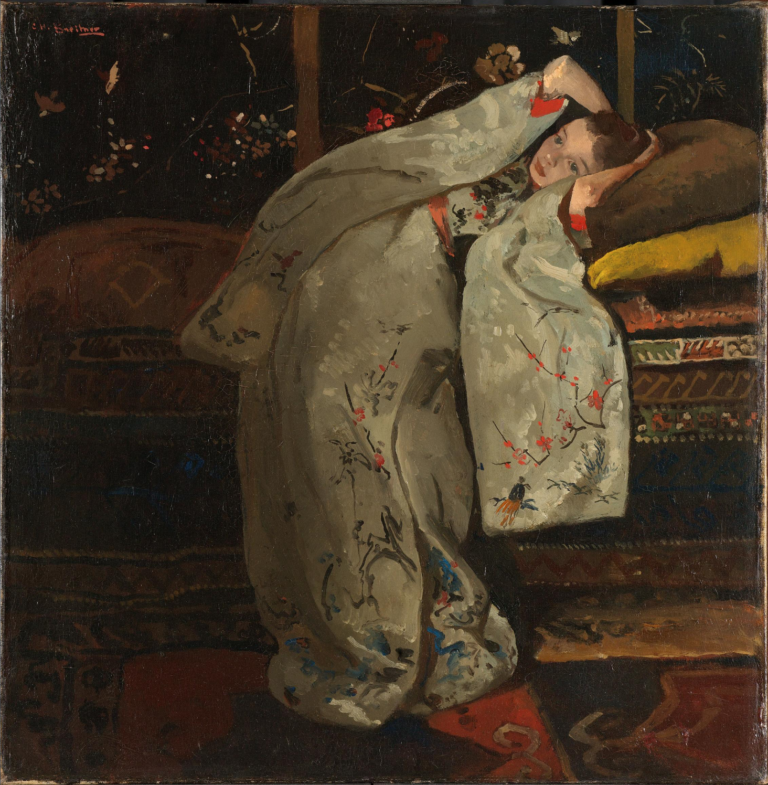
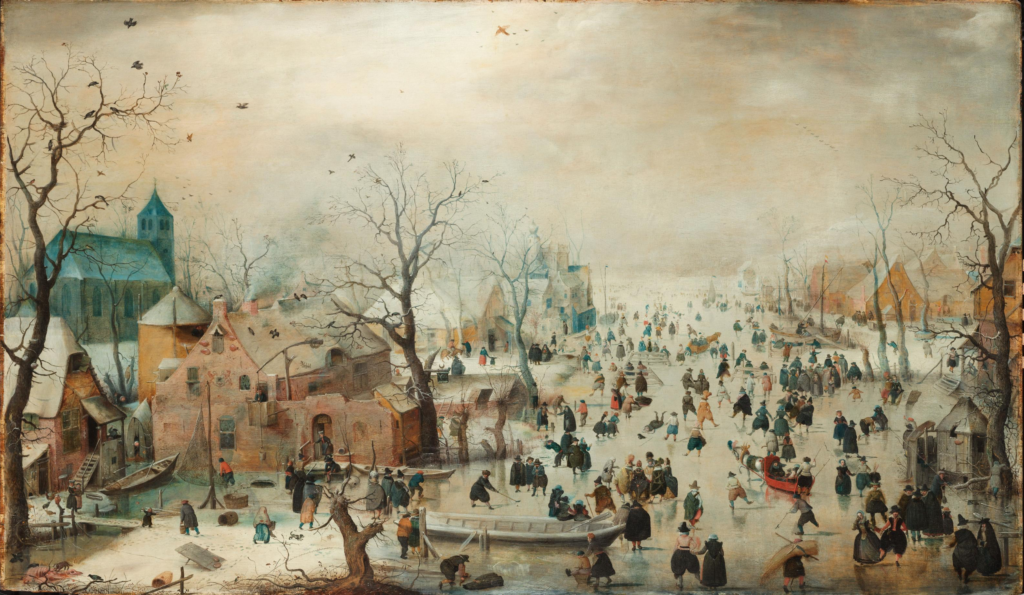
One of the most intuitive and creative online archives, allowing users to save, remix, and study artworks freely.
https://www.rijksmuseum.nl/en/collection
PRINT & PUBLISHING
Bibliothèque nationale de France — Gallica
One of the world’s richest digital libraries: millions of books, newspapers, journals, maps, prints, and sheet music freely accessible online.
(over 8 million documents available)
SCIENCE & IMAGINATION
NASA Jet Propulsion Laboratory — Visions of the Future
Space posters illustrated by contemporary artists transforming scientific research into shared imagination: exoplanets, interstellar travel, and future missions presented like posters for a new cosmic Grand Tour.
https://www.jpl.nasa.gov/galleries/visions-of-the-future/
Biodiversity Heritage Library
Digitized historical botanical and zoological illustrations — scientific plates that often resemble proto-surrealist artworks. A perfect example of beauty born from practical purposes and later recognized as art.
https://www.biodiversitylibrary.org
MOVING IMAGES
Prelinger Archives — Home Movies Collection
One of the most poetic archives online: educational films, advertisements, industrial documentaries, and especially twentieth-century American home movies — birthdays, road trips, neighborhood gatherings, seaside holidays.
Not official images, but fragments of everyday life rescued from oblivion, offering an unmediated view of the past with all the fragility and spontaneity of private memory.
https://archive.org/details/prelinger
SIDE ARCHIVES — THE CULTURAL BIODIVERSITY OF THE WEB
Alongside major museums exists a constellation of smaller, highly specialized archives — projects often sustained by small foundations, independent libraries, collectives, or individual researchers. Botanical, typographic, photographic, musical, vernacular collections.
Nineteenth-century seed catalogues illustrated like artworks, forgotten sheet-music covers, domestic films, technical manuals, nautical maps — hyper-specialized collections that tell history from unexpected perspectives.
These projects represent the cultural biodiversity of the digital ecosystem: places where knowledge is not optimized for algorithms but preserved for curiosity.
A continuously updated selection of these treasures can be found in the Tesori d’Archivio column by Frizzifrizzi:
https://www.frizzifrizzi.it/category/rubriche/tesori-darchivio/