Alice Malaret is a food designer specializing in the intersection of gastronomy, visual aesthetics, and design. She is the founder and creative director of Douceurs Capitales, a catering agency and food design studio. After starting her career in traditional backstage catering, Alice began experimenting with unconventional shapes, vibrant colours, and striking materials like jelly. Her interdisciplinary approach—treating culinary projects as if she were designing an object or a piece of art—quickly gained traction on social media, leading to collaborations with numerous fashion and luxury brands. Currently operating from her studio and production kitchen in the 20th arrondissement of Paris. Our founder, Antonella Dellepiane Pescetto, recently sat down with Alice for an interview.
What I love most is seeing people’s reaction when they discover it. Beauty creates emotion. For a few seconds, it brings back that sense of wonder we all had as children.
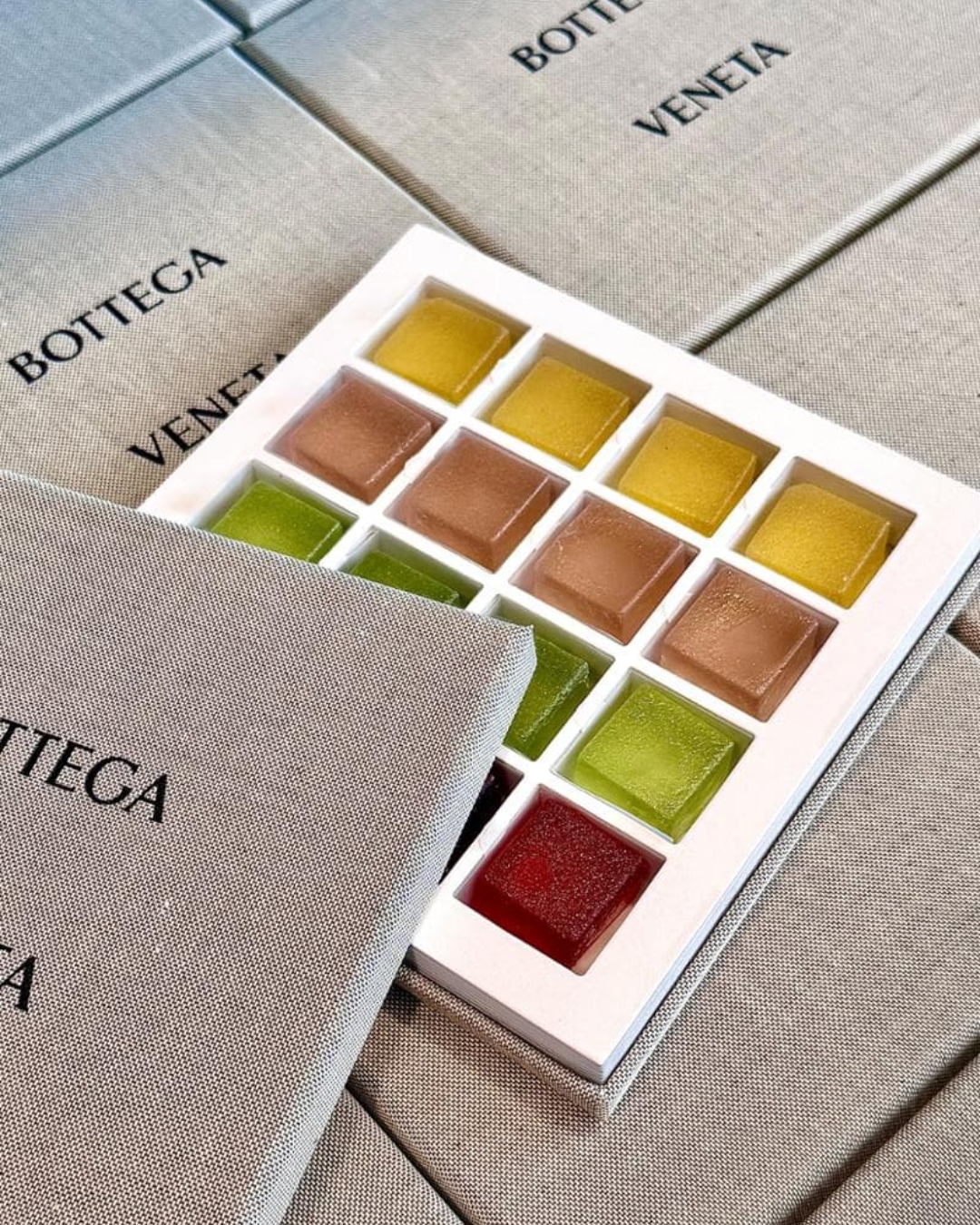
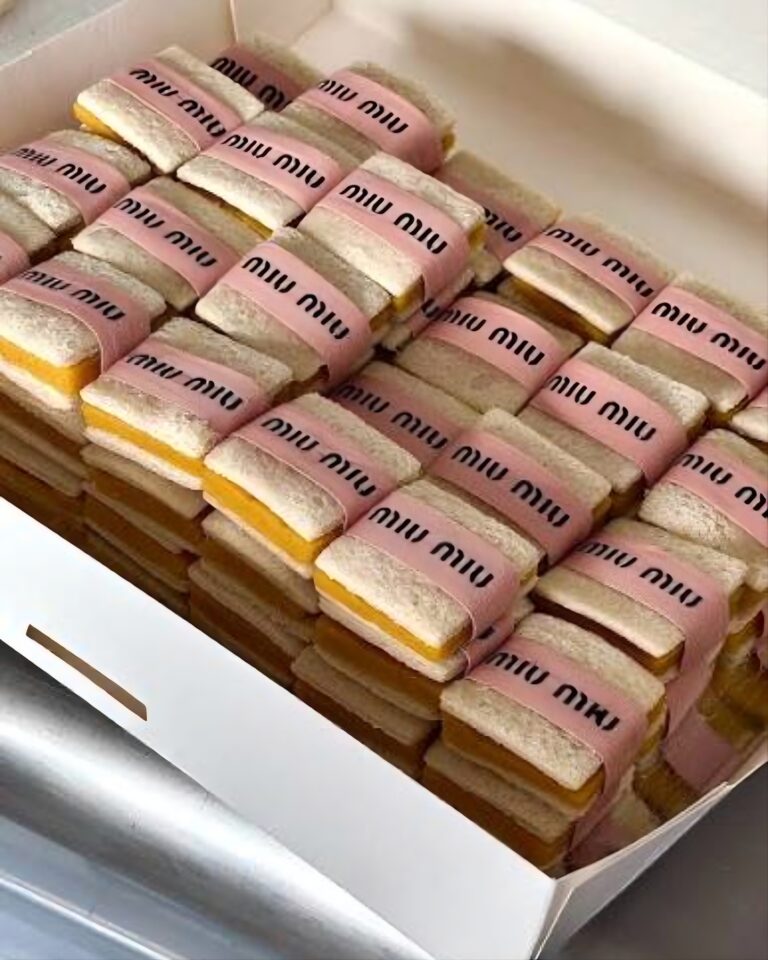
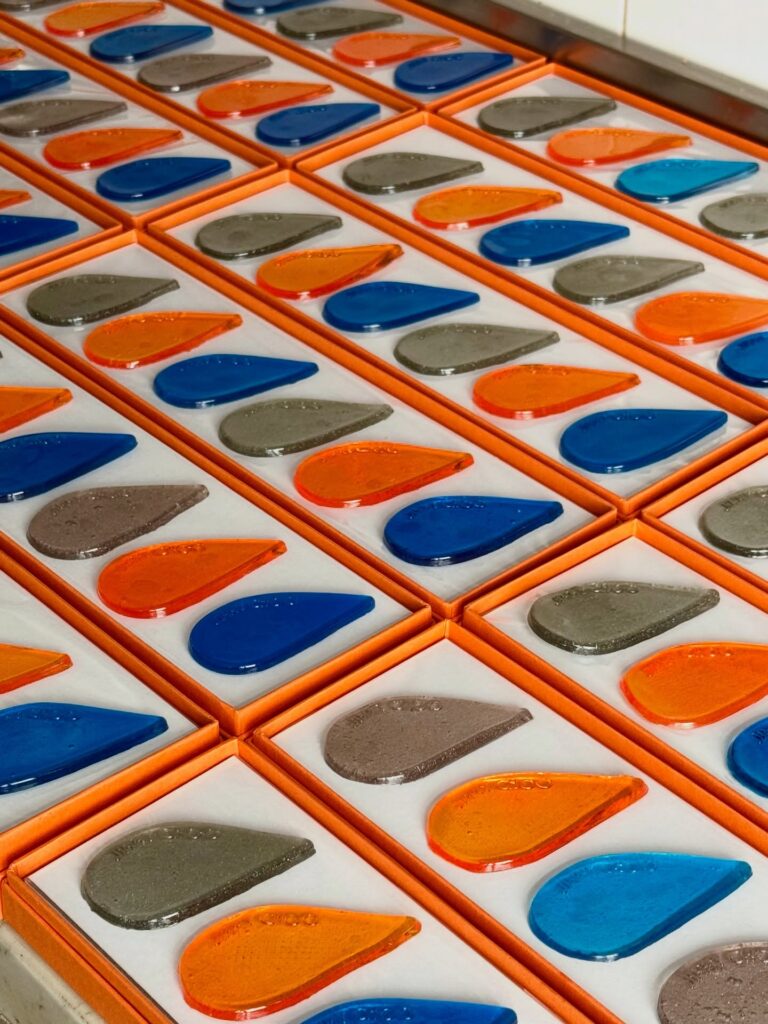
Douceurs Capitales- Miu Miu
ADP: How did you realise that food was your world, but not in the classic sense? Was there any artistic/visual element or experience that made you realise that this would become your path?
AM: Food has always been part of my life. I’ve always loved pastry, especially how precise and technical it is. Later, when I started working in catering, I really cared about creating beautiful plating and tables. I wanted to bring beauty and a bit of magic to those moments people share around food. One day, a client asked me to create colourful petits fours inspired by a fashion collection. I loved having to start from something purely visual and figure out how to turn it into food. That’s when I realised this was exactly what I wanted to do. It was the beginning of my food design journey.
ADP: How has your perception of food evolved: as a child, girl, woman? What fascinates you most and what don’t you love about it?
AM: I’ve always loved baking. As a child I was constantly making cakes, then later I became fascinated by the work of pastry chefs. Today, I think I appreciate even more the level of craftsmanship and attention to detail that goes into creating a beautiful dish or table. What I love most is seeing people’s reaction when they discover it. Beauty creates emotion. For a few seconds, it brings back that sense of wonder we all had as children.
Alice Malaret
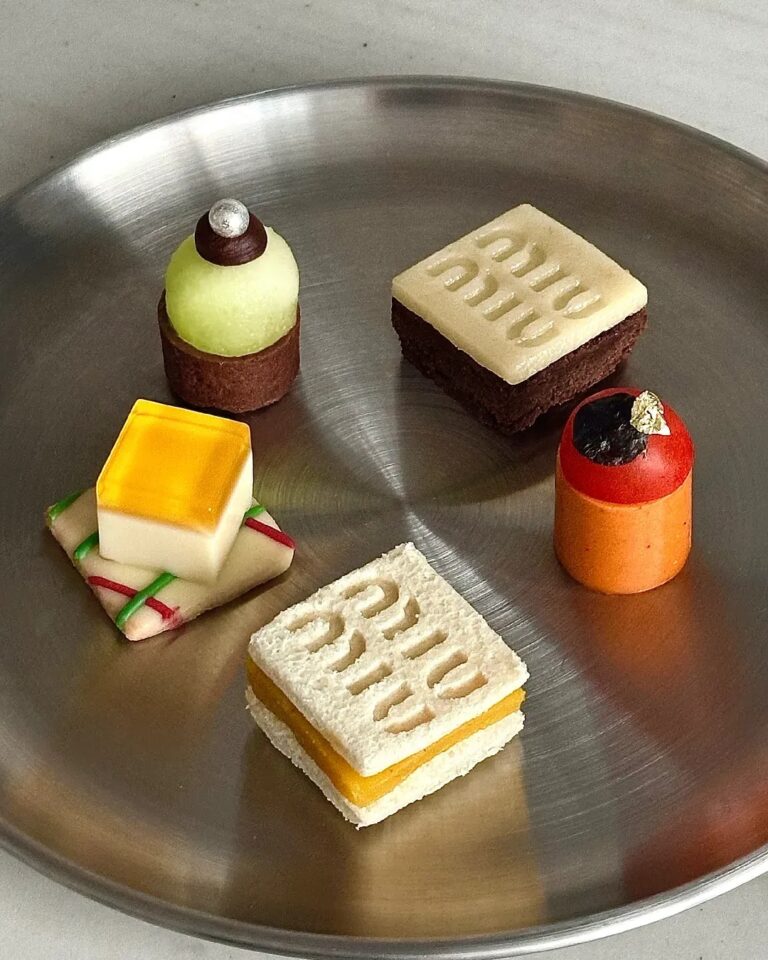
Douceurs Capitales- Miu Miu
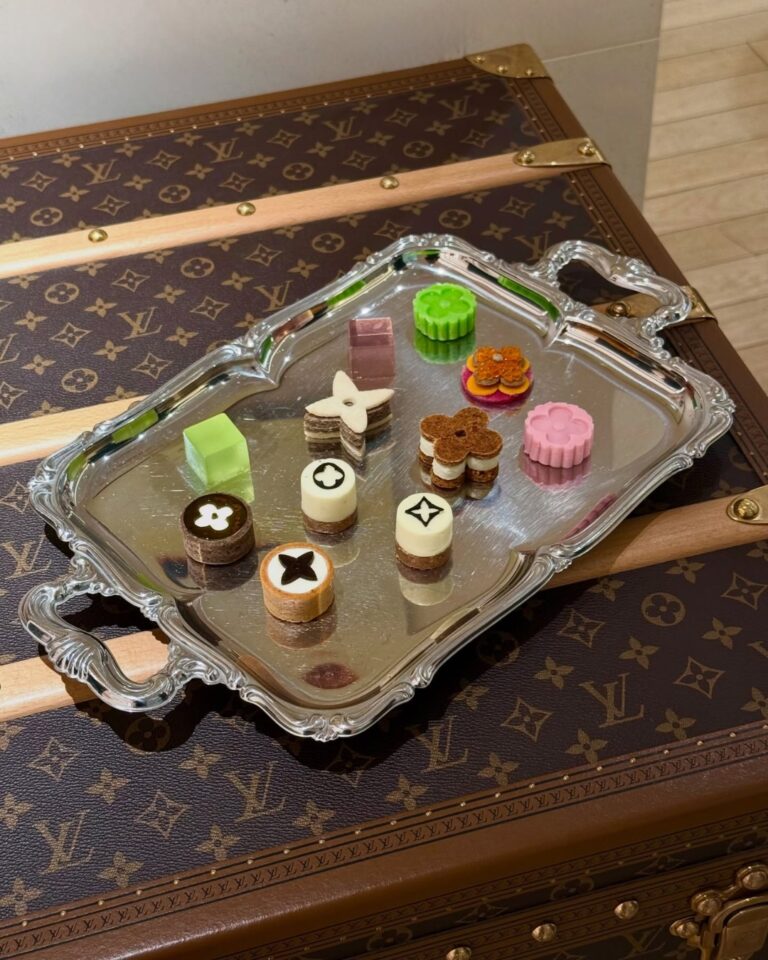
Douceurs Capitales- Louis Vuitton
ADP: Did you have someone in your family or school who passed on artistic influences to you or are they all innate?
AM: Not really. I didn’t grow up in a creative or artistic environment. Developing my creativity has been a very personal journey. It’s my way of expressing myself and how I’ve evolved over the years. It didn’t come from my family or my surroundings, it really came from within.
ADP: What elements does your visual culture consist of?
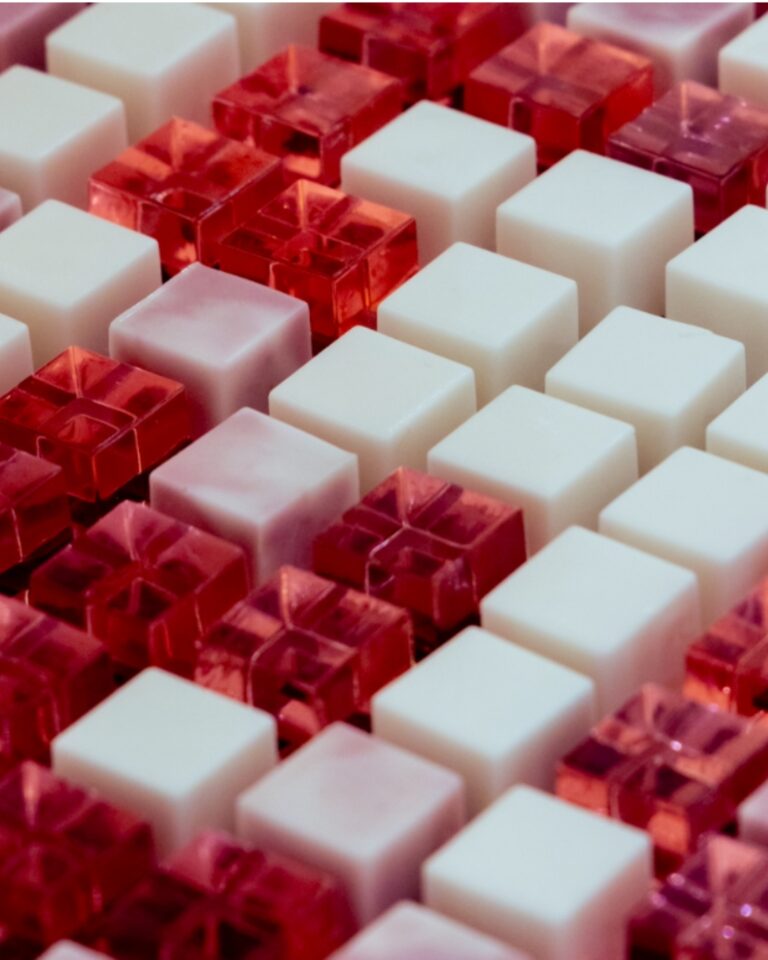
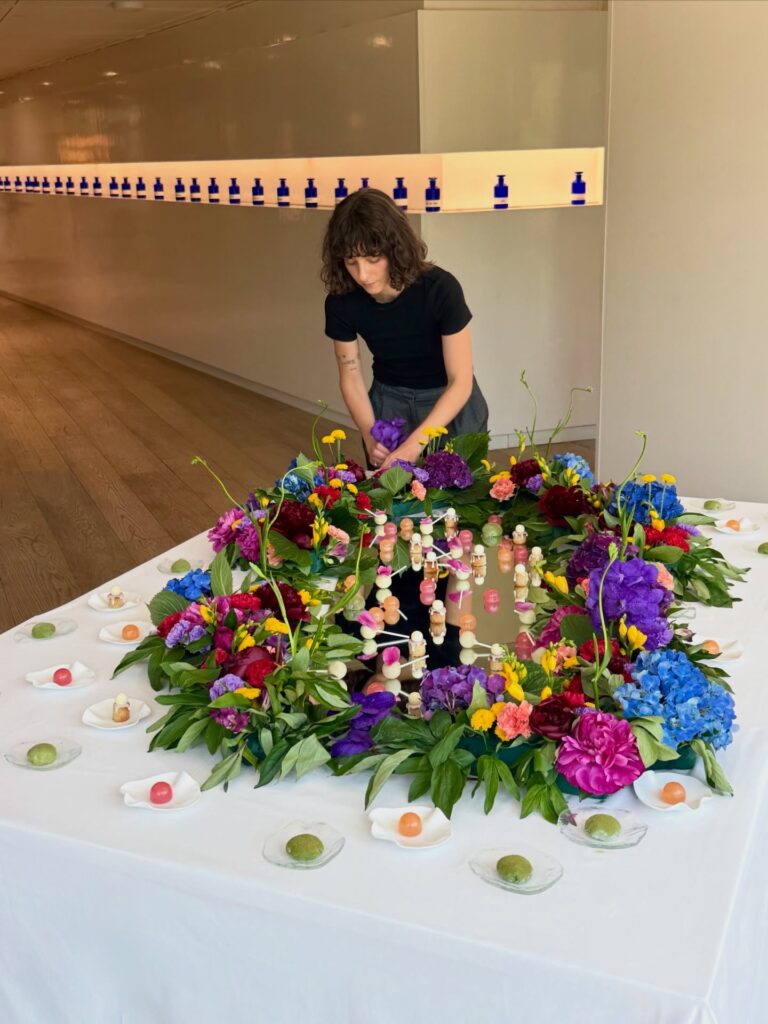
AM: I’m drawn to colour, geometric and architectural shapes, textures and strong contrasts. I’m especially fascinated by the relationship between transparency and opacity, and by the way light changes the look of different materials.
ADP: How did you start and how you got to become one of the most influent people in your field?
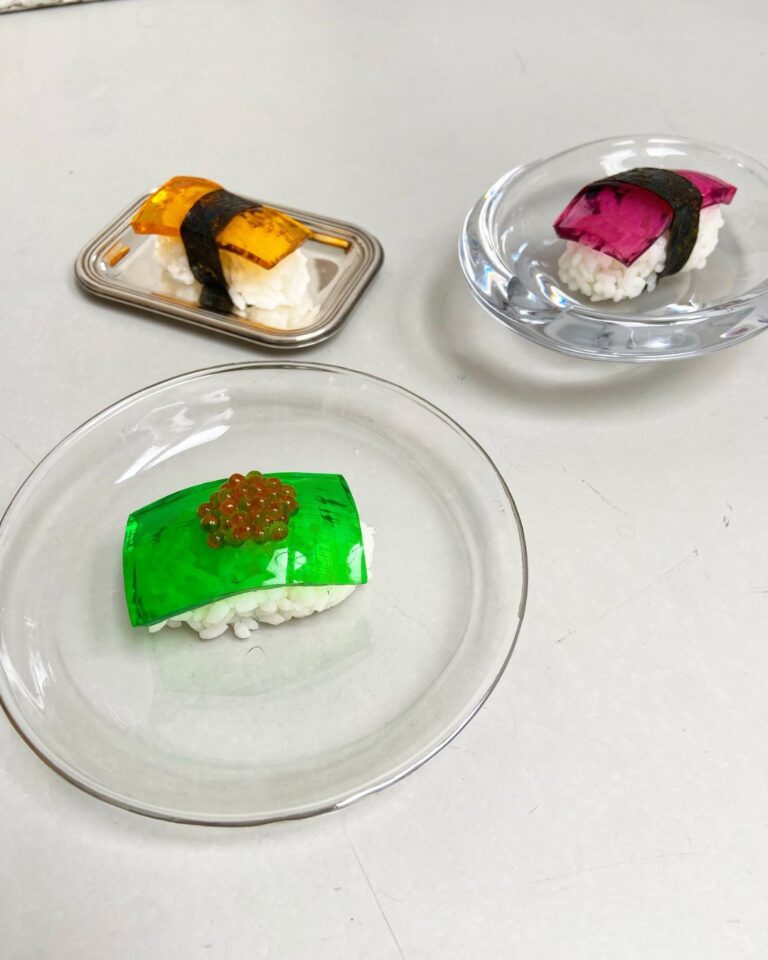
AM: I started with quite traditional backstage catering, then little by little I began experimenting with more creative cocktail bites, especially through colour and unusual shapes. Then I started working with jelly very quickly. I shared those projects on social media, and more and more brands started reaching out.
Douceurs Capitales- AVVNC
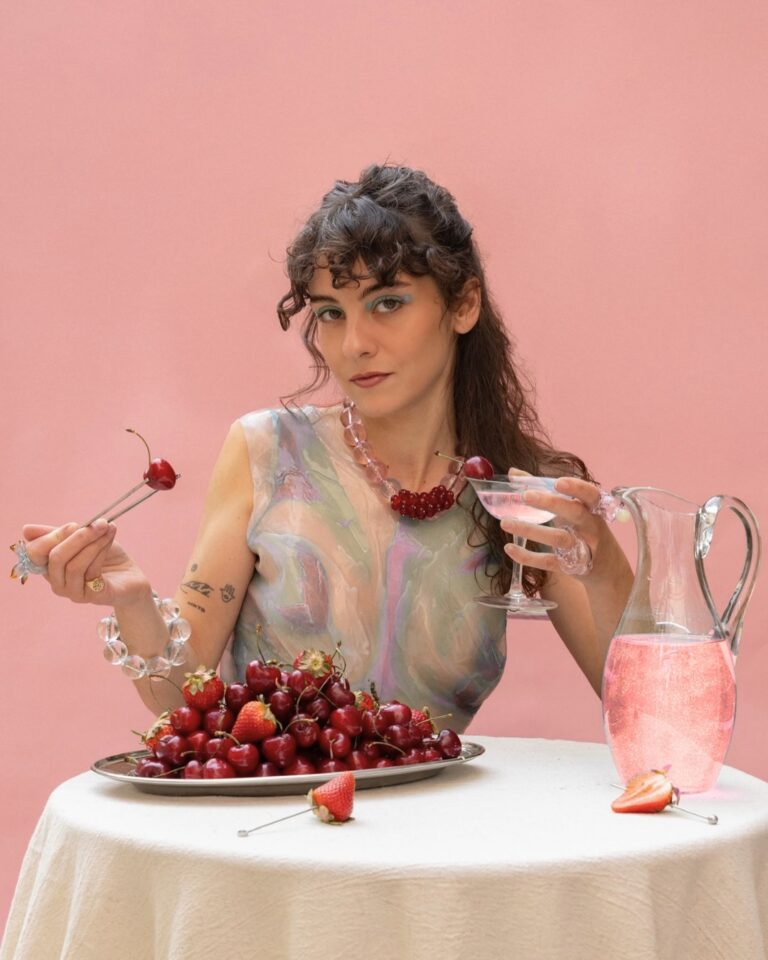
Alice Malaret
Alice Malaret- And other stories
ADP: What are your favourite restaurants at the moment? What do you look for in a restaurant?
AM: My favourite restaurant in Paris is Osteria Goto. It’s a Venetian restaurant where everything is delicious and completely different from the Italian food we can be used to. I love that it’s authentic and still under the radar. It’s the opposite of all the trendy places that end up looking the same.
ADP: Do you have any specific foods you prefer to deal with in your work?
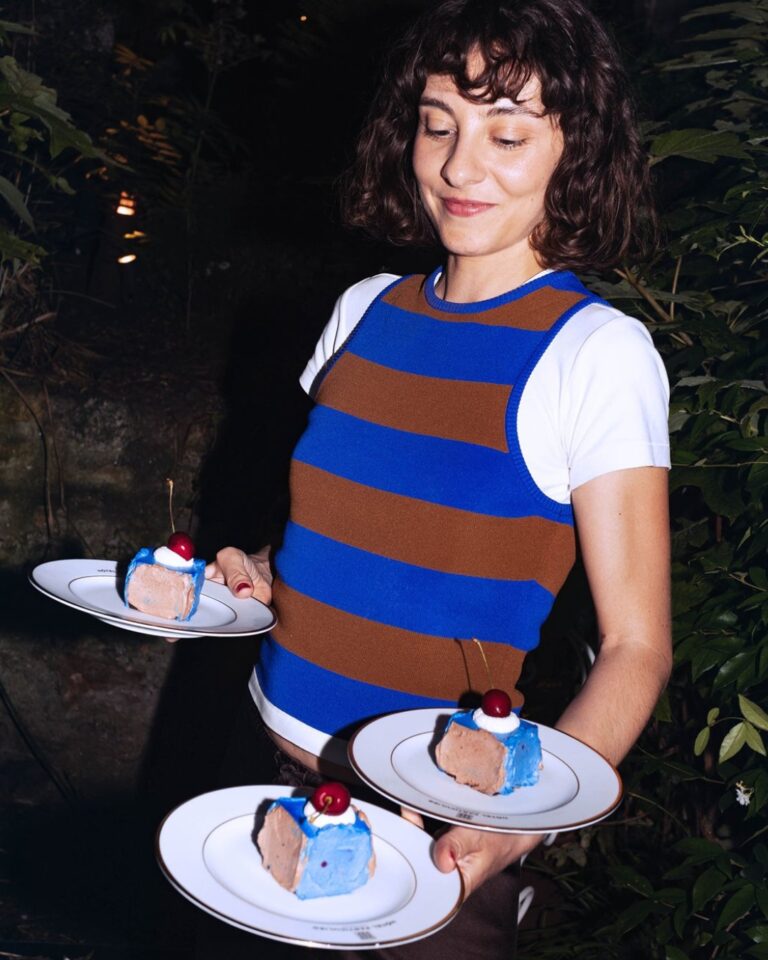
AM: I love ingredients that I can shape. I use a lot of moulds and cutters because I enjoy creating very specific forms. Anything that can be sculpted, cut or turned into jelly is always exciting to me.
ADP: You have collaborated with many fashion and luxury brands. What do you think about fashion as a means of expressing your personality?
AM: Fashion and luxury are industries where creativity is really celebrated. Brands have such strong visual identities through colours, materials, patterns or typography, and that’s incredibly inspiring for the way I approach my work.
ADP: What makes you feel comfortable as an everyday style?
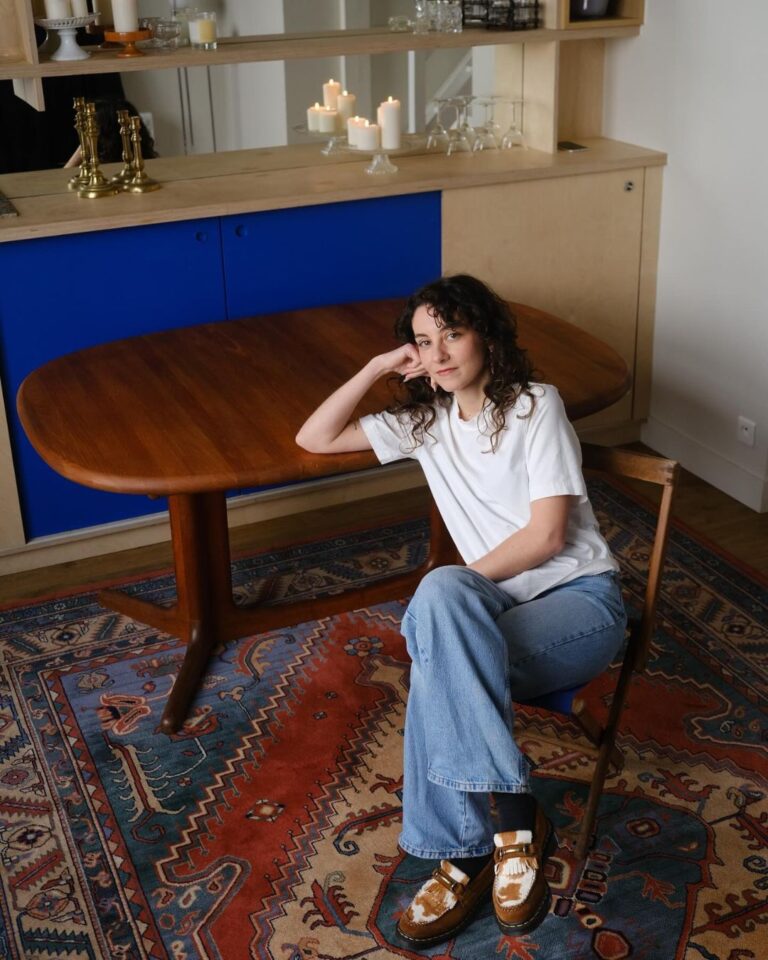
AM: Very simple. I’m almost always wearing jeans and a T-shirt. Then sometimes I’ll add a nice pair of heels to dress it up a little.
Douceurs Capitales- Jimmy Choo
ADP: Interdisciplinarity is a key concept for Orlando, and it seems to be central to your work as well. How did you begin combining different disciplines in your practice, and is there a discipline or field you would like to explore in the future?
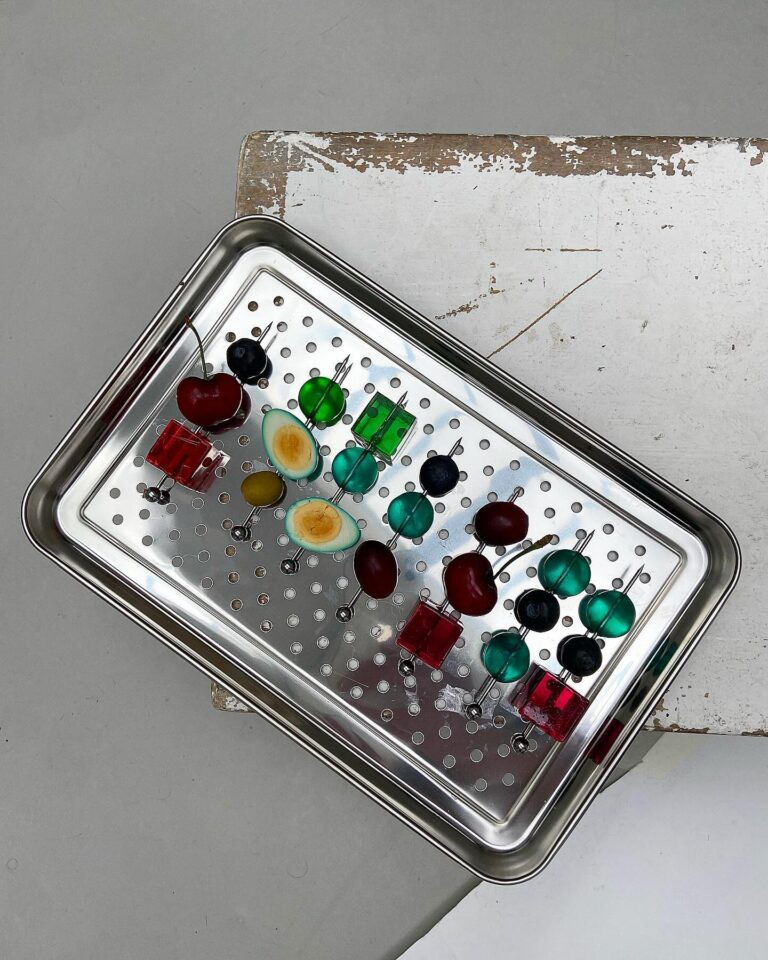
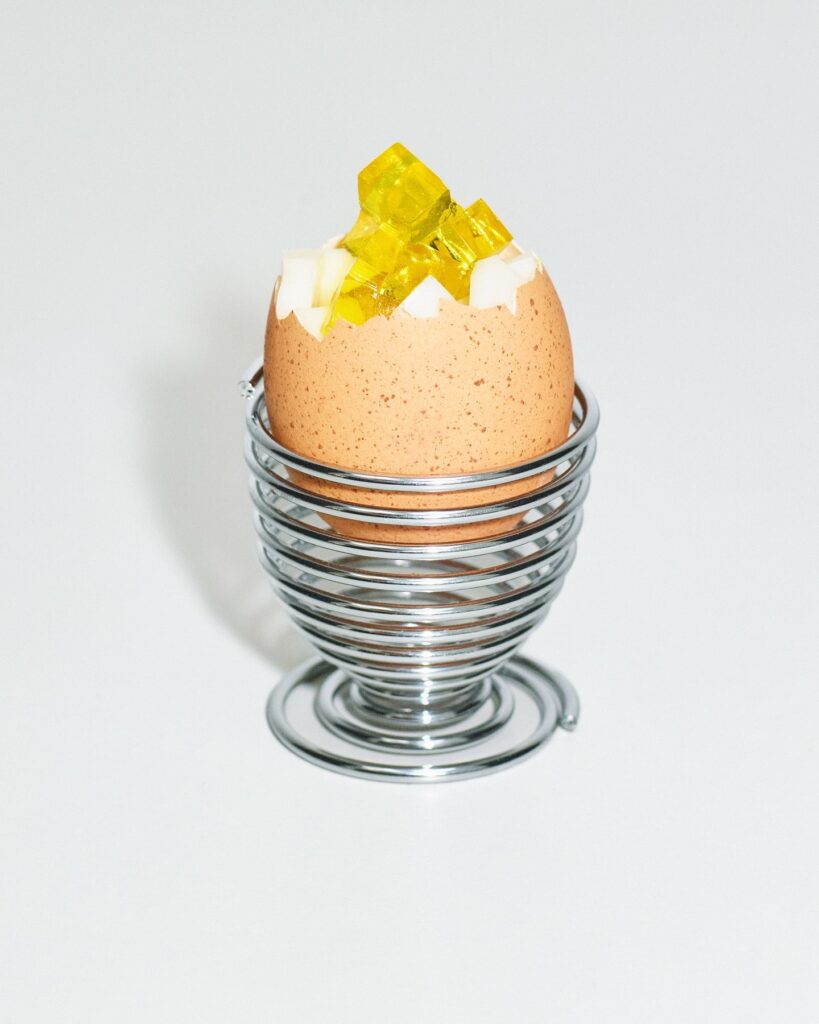
AM: I’ve always loved playing with the line between what’s edible and what isn’t. I like creating that little moment of confusion, making people stop for a second and wonder, “Wait… can you actually eat this?” That naturally leads me to explore techniques that go beyond traditional cooking, so my work often becomes quite interdisciplinary. I usually approach a project the same way I would design an object or create a piece of art, and that’s where the line between food and art starts to blur. I’d love to work on a project inspired by architecture or a specific building one day. Most of my work today is focused on products and brand identities, but I’d also love to explore broader topics within the world of design.
ADP: Tell us about Douceurs Capitales, your catering agency and food design studio.
AM: My food studio Douceurs Capitales is a team of four. I founded it 3 years ago and I’m the creative director. Alice manages production and logistics, Leila works with me on the creative side, and Suzanne is our head chef. We’re based in the 20th arrondissement of Paris, where we have both our offices and our production kitchen. It’s also where we welcome clients for tastings and presentations. The next three years I will extend our activities in NYC and I’m very excited about it!
Douceurs Capitales- Lancôme
ADP: When you begin a new project, what comes first: a flavour, a form, or a story?
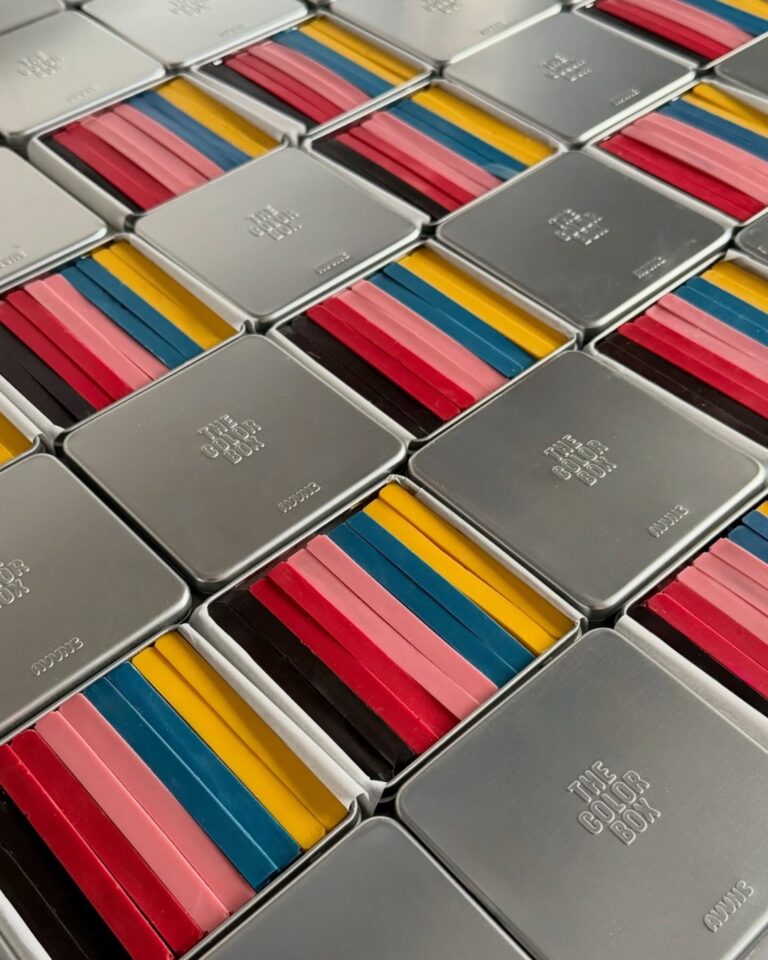
AM: My works always comes from the visual. Shapes, colours and patterns are usually where everything starts. Then I ask myself how I can recreate them with food. How can I make this colour edible? How can I translate this texture or this emotion into something people can taste?
ADP: Your creations often seem to draw inspiration from materials such as glass, stone, textiles, and even industrial surfaces. What is it about these materials that fascinates you?
AM: Materials tell stories. A shiny stainless-steel surface doesn’t create the same feeling as soft linen with a romantic drapé effect. Every material has its own atmosphere and emotion. They can create the whole tone. I love finding ways to translate that into food.
ADP: Is there a material you’ve always wanted to translate into food but haven’t yet found the right way to interpret?
AM: Not really. But still there’s a material I’ve never translated into food and that does not inspire me that much. I have to admit I’m not very inspired by wood. Visually, it doesn’t really speak to me. The brown and beige colours, the texture… I don’t know it’s just not something I’m really drawn to.
ADP: Is there an ingredient you think is aesthetically underrated—one that deserves more attention for its visual qualities?
AM: Ingredients can be transformed in so many different ways that it’s hard to choose just one. Possibilities are endless! But of course I will choose the one I know most and I’d say jelly. For a long time people underestimated it because its texture can be quite divisive. Today it’s definitely making a comeback, and I think people are rediscovering how visually beautiful it can be.
ADP: What inspires you?
AM: Honestly, inspiration can come from anywhere.I’m a very visual person, so I’m mostly inspired by colours, textures, materials, architecture, reflections…everything I see around me.
ADP: When do you feel completely fulfilled and satisfied?
AM: When something I’ve imagined in my head comes to life exactly the way I pictured it. That’s the best feeling. Sometimes it refers to a whole project, and sometimes to the smallest detail but it always feels the same.
Douceurs Capitales- Louis Vuitton
Douceurs Capitales- Pull Letter UK
Douceurs Capitales- Pull Letter UK
ADP: What is your relationship with colour?
AM: I think the world has become much more monochrome over the years. There are so many neutral colours everywhere because they appeal to everyone. Lots of nudes, greys, black and white. That’s why I think it’s important to keep celebrating colour, especially through food. Nature already gives us an incredible palette that we must celebrate!
ADP: Would you reveal us a dream project that you have not yet realised?
AM: I work a lot with brands, but I actually love collaborating with artists even more. I’ve admired Sabine Marcelis for a long time. Her colourful, minimal work with glass and acrylic feels very close to my own visual language. I’d love to create something for her one day.
ADP: If you were to create an installation for the Orlando imaginary Hotel, what would it be?
AM: I’d probably reinterpret the colourful windows of the hotel’s façade. I’d imagine lots of colourful rectangular cakes, all perfectly aligned to recreate the building itself.
ADP: What could you not live without?
AM: Dreaming! My dreams are what keep me moving forward. They’re where I find inspiration. They’re what allow me to imagine new worlds and they have also shaped the person I am today. Dreaming is what makes me feel alive.
From the grand Parisian fragrance houses to the rugged coast of Genoa: Filippo Fornasini reveals the deeply personal story behind MarMar, an intimate olfactory journey that redefines the art of Genoese perfume.
Hidden in the Khao Yai jungle, you arrive at Maison Mystique where the rules of contemporary luxury are rewritten to choose mystery instead of excess.
By Giulia Fantini
Are you a sensitive and curious traveler, constantly searching for beauty, art and cultural inspiration? Sign up to receive the latest contemporary news!