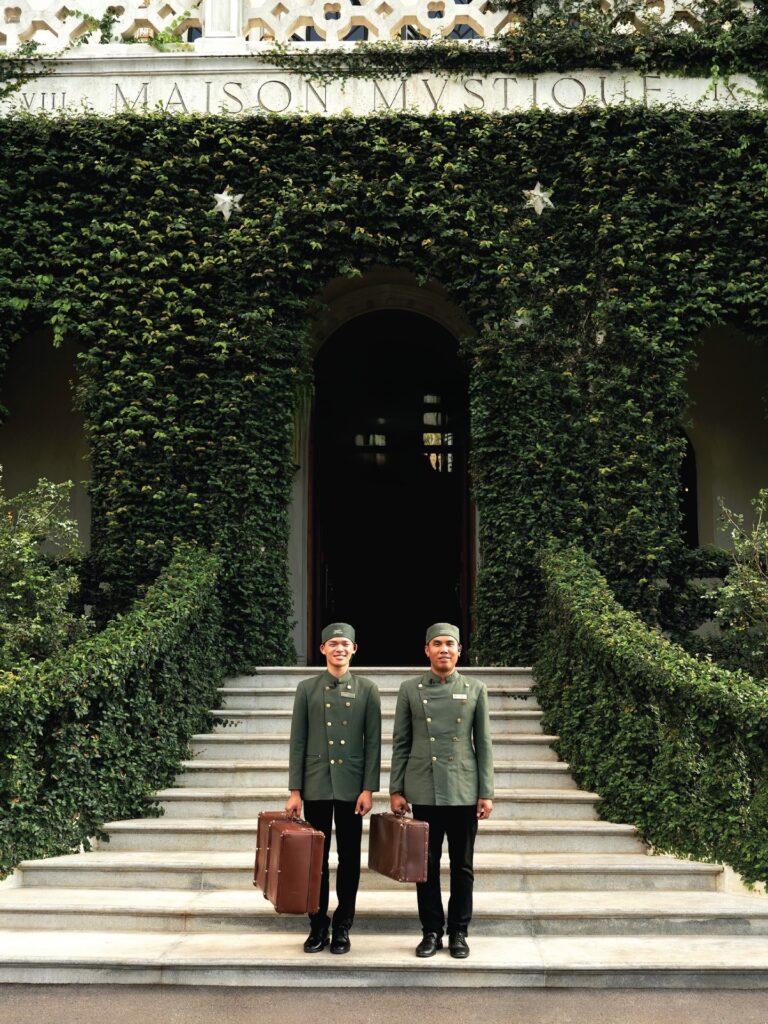
You arrive at Maison Mystique the way you arrive inside a dream you can’t quite remember the beginning of.
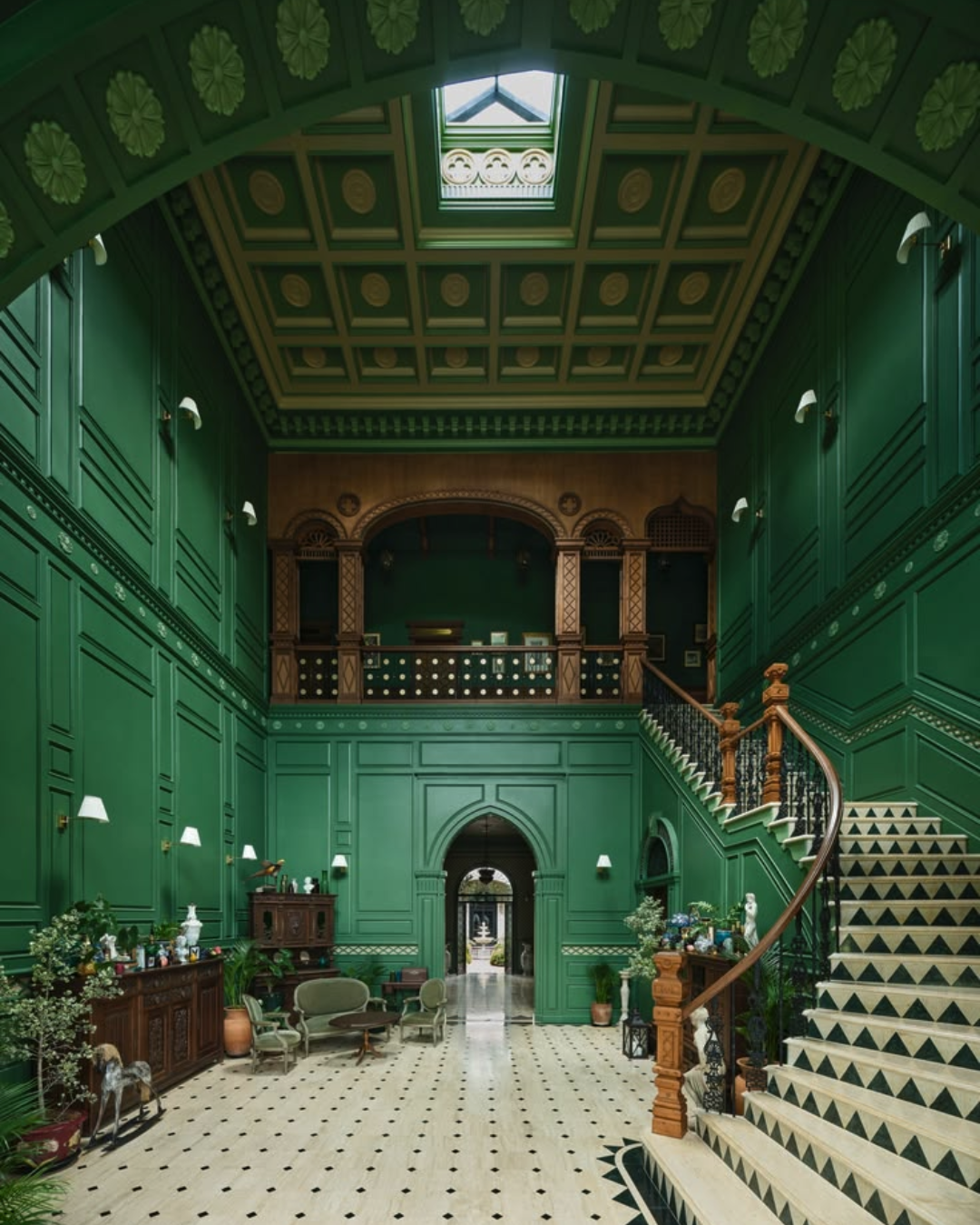
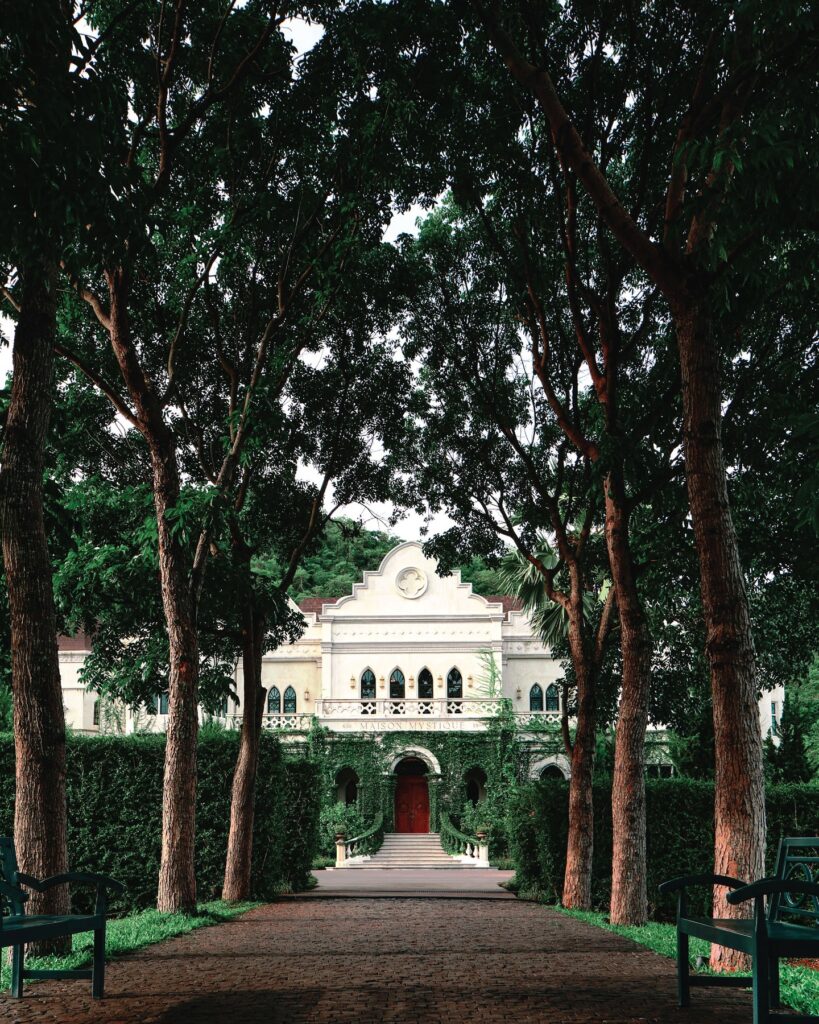
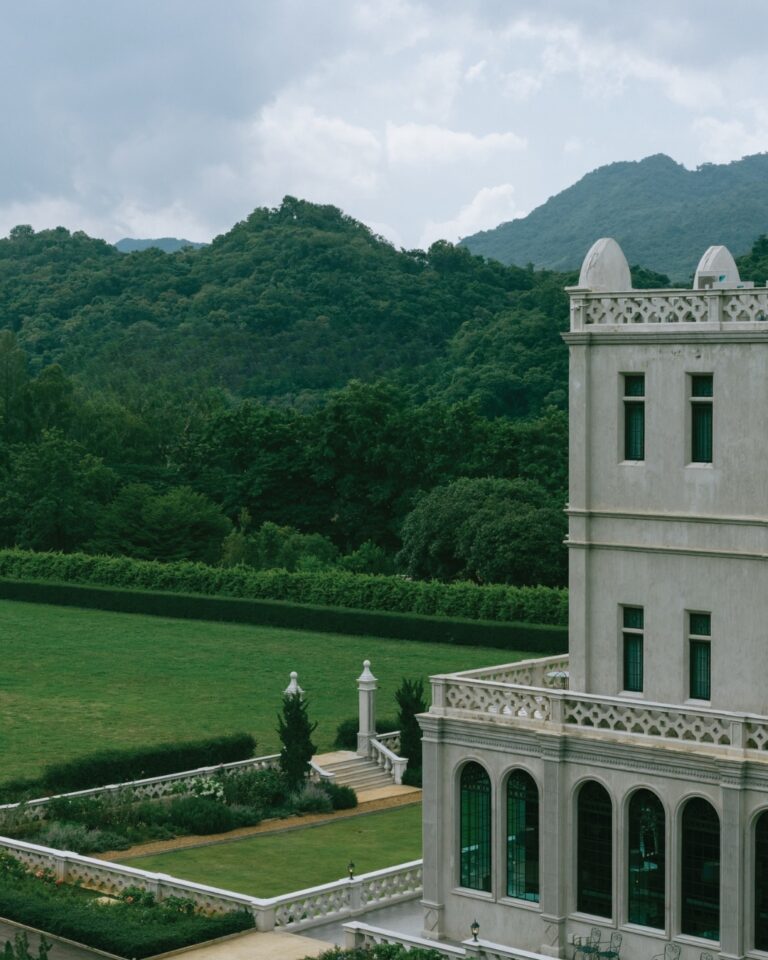
The jungle of Khao Yai closes behind you, the noise of the world drops by a few tones, and — without fanfare — a house appears that seems to belong more to memory than to geography.
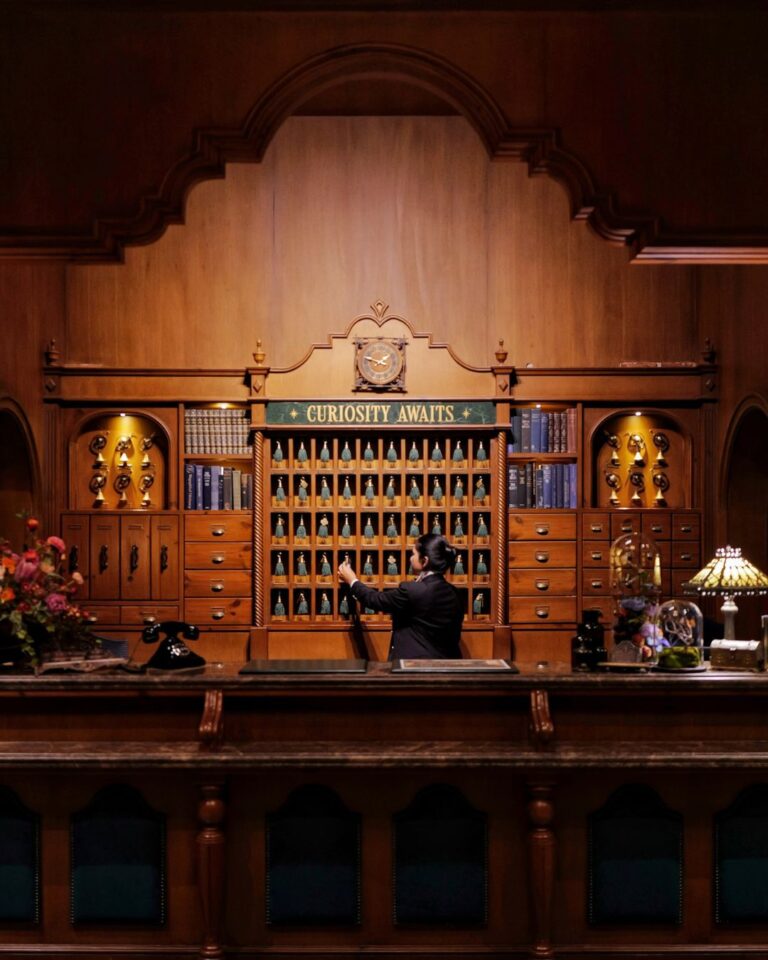
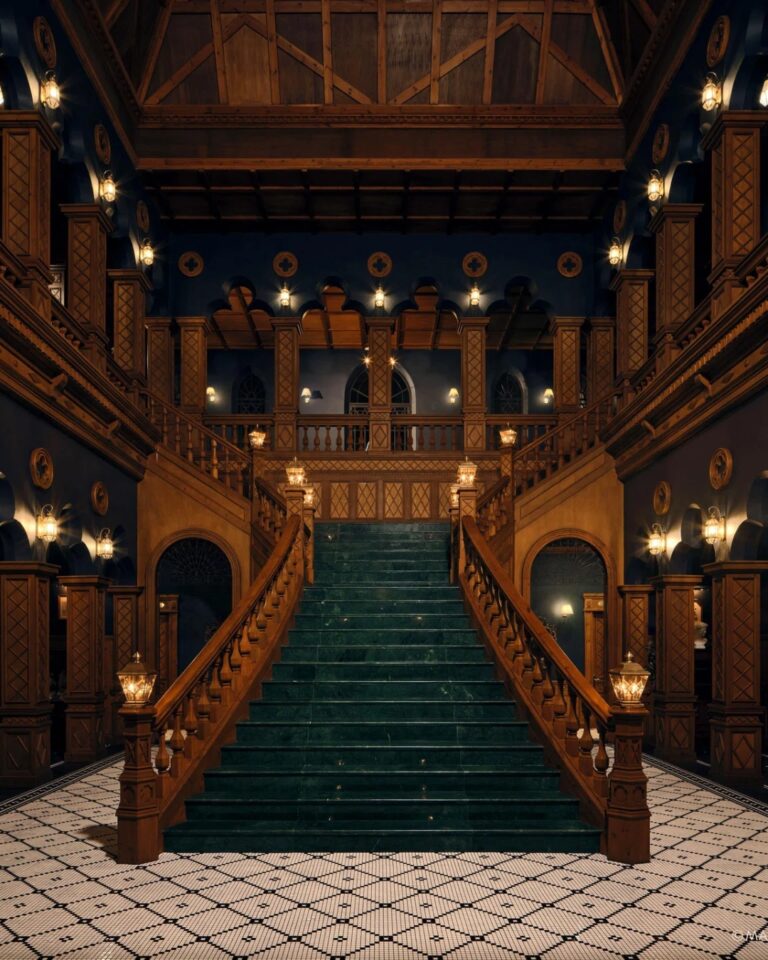
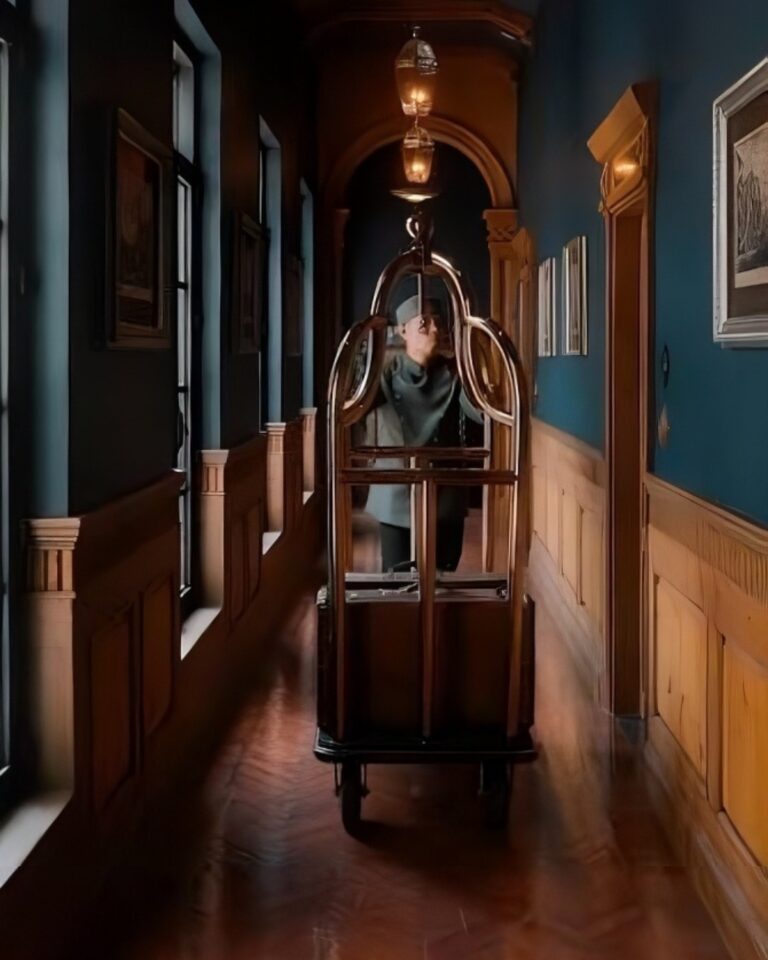
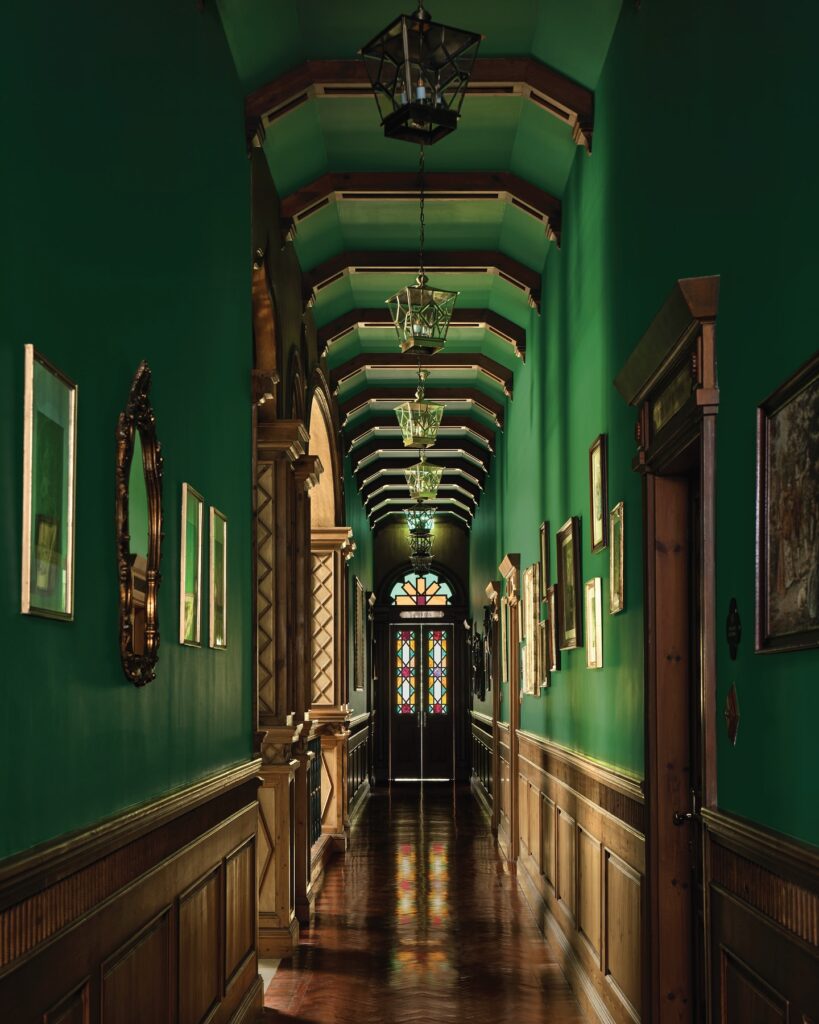
It could have stepped out of a gothic novel, a film Wes Anderson never made, or the yellowed pages of a Victorian diary forgotten on a library shelf. No lobby announcing its own luxury out loud. Just a threshold, and twenty-two rooms that read like twenty-two chapters of a novel that was never quite finished — lantern-lit passageways leading nowhere in particular, except deeper into the story.
It’s no accident that the dominant feeling, the moment you step through the door, is that of having wandered by mistake into someone else’s dream. That is precisely the effect its designer, Fearn Kate, says she was chasing from the very first sketch.
“I don’t think there was ever a moment when I realized it, because I never truly began with the idea of building a hotel,” Fearn says. For her, hospitality has always been a form of art — not something to observe, but something to step into, inhabit, and feel. Not a hotel in the conventional sense, but a timeless house with a soul, layered with memories, rituals, curiosities, and stories waiting to be discovered.
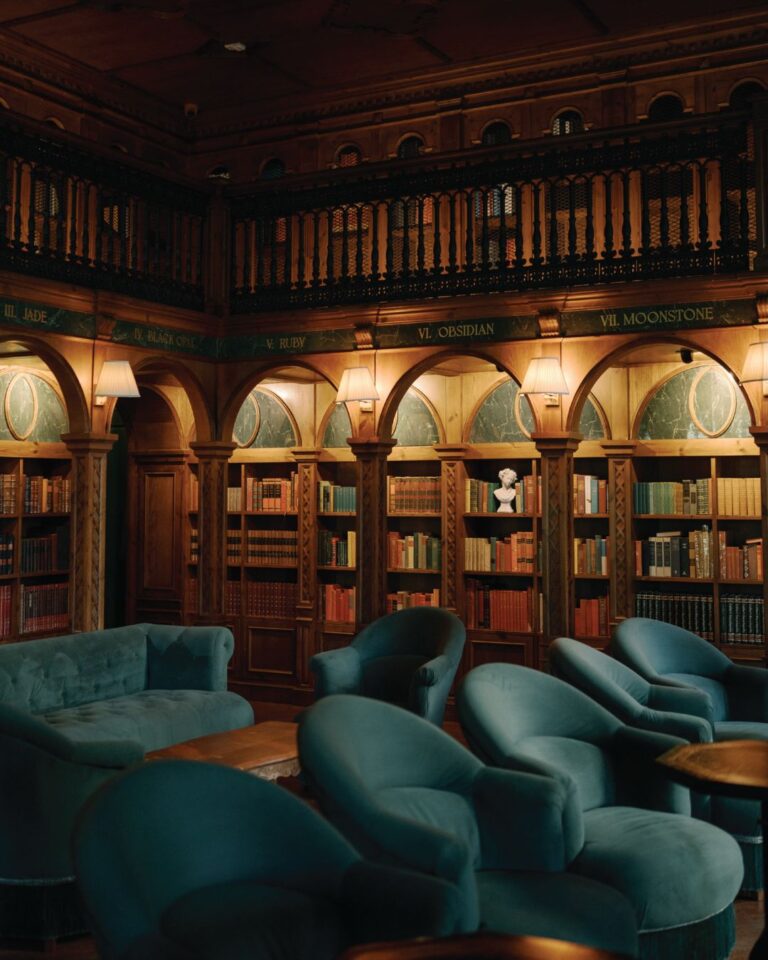
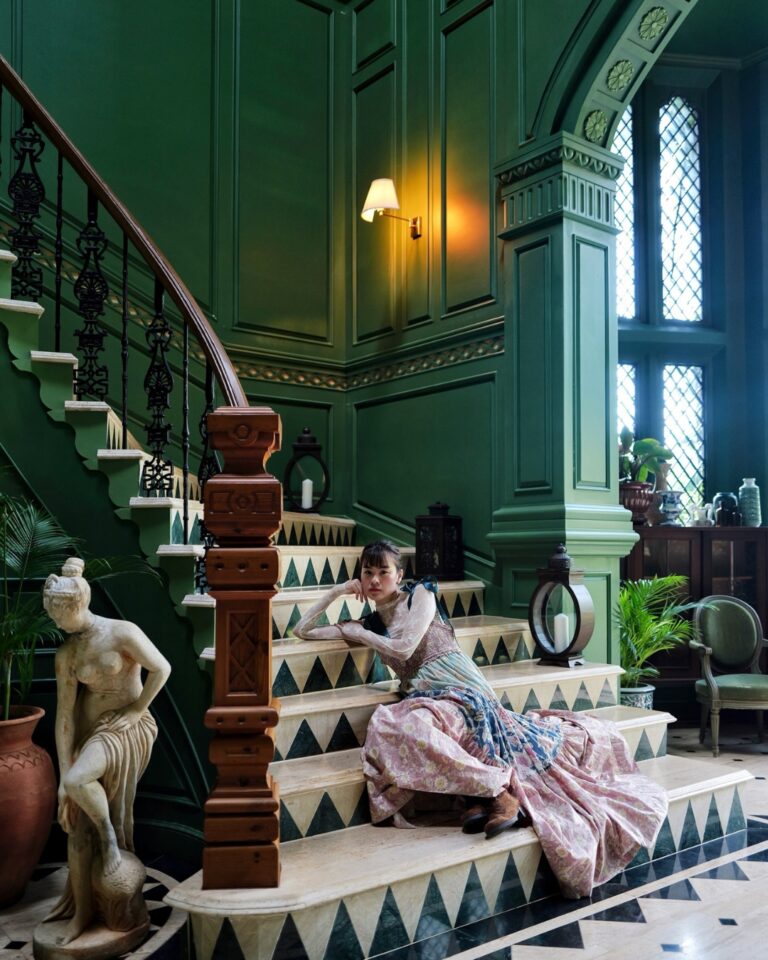
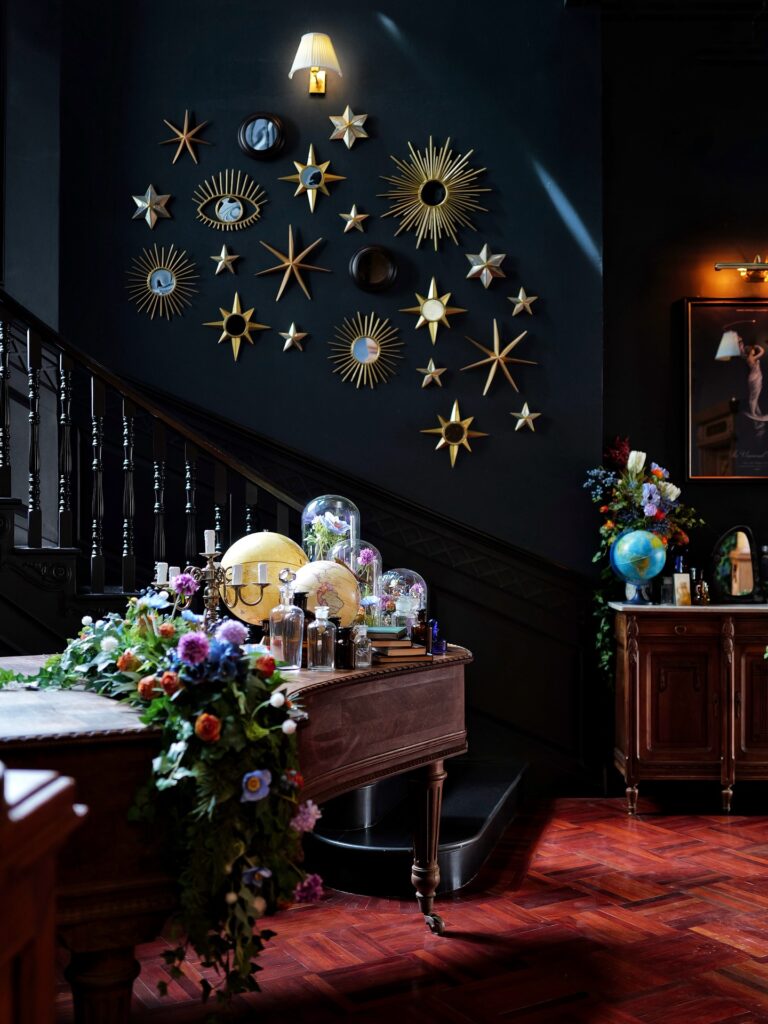
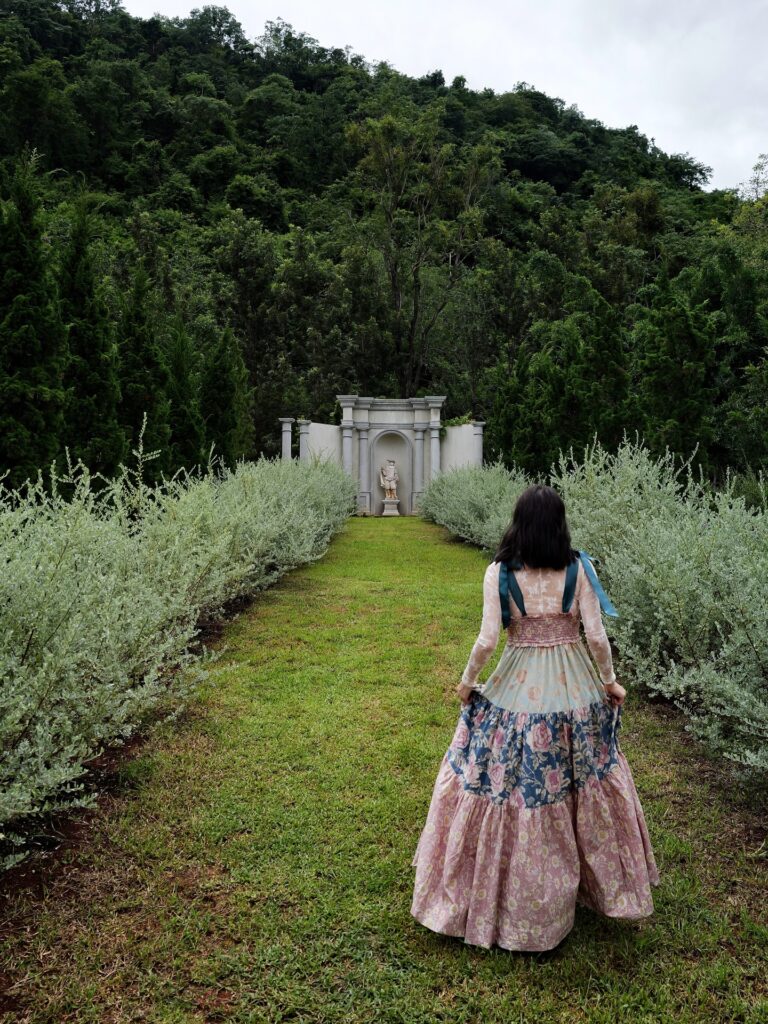
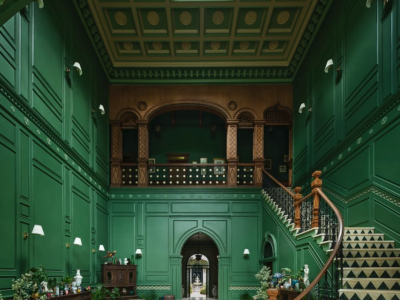
It’s an ambition that reshapes even the smallest detail. A staircase is never just a staircase: it has to invite curiosity. A library is never a mere lounge: it becomes a place to linger, reflect, lose track of time. Even the gardens were designed to encourage wandering, rather than simply being admired.
Looking back, Fearn says, she can see that Maison Mystique was never simply a hotel. It became her way of exploring how hospitality could be experienced as a living work of art — a world that guests could step into and interpret in their own way. Like a favorite novel, each person discovers something different, something that belongs to them alone, and every stay becomes its own story.
Ask her which room, which object, which detail holds the secret heart of Maison Mystique, and the answer quietly dismantles the question. The heart, she says, is the house itself — the invisible thread that runs through every room, every garden, every object, every encounter. It doesn’t reside in any single space. It exists in the way everything comes together.
Maison Mystique
Maison Mystique
Maison Mystique
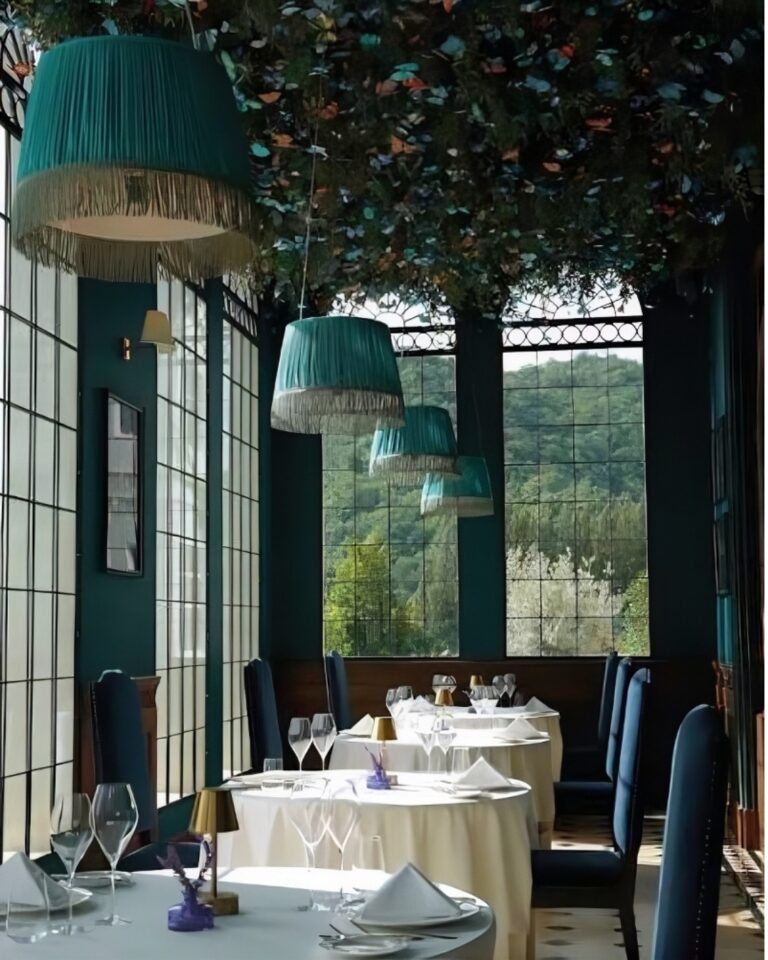
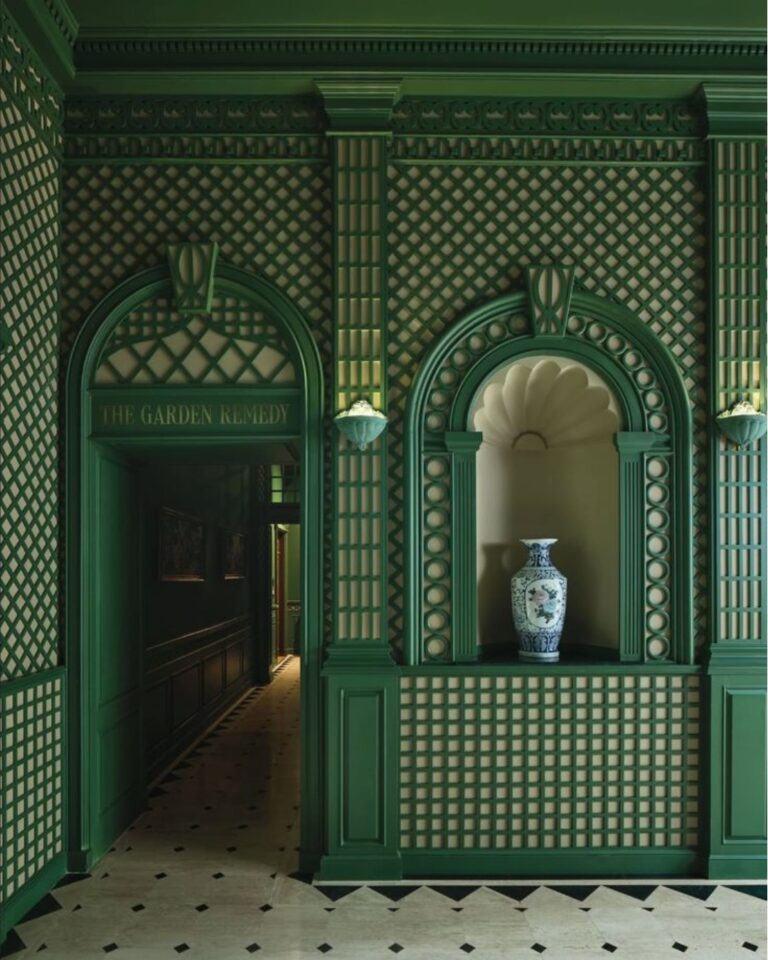
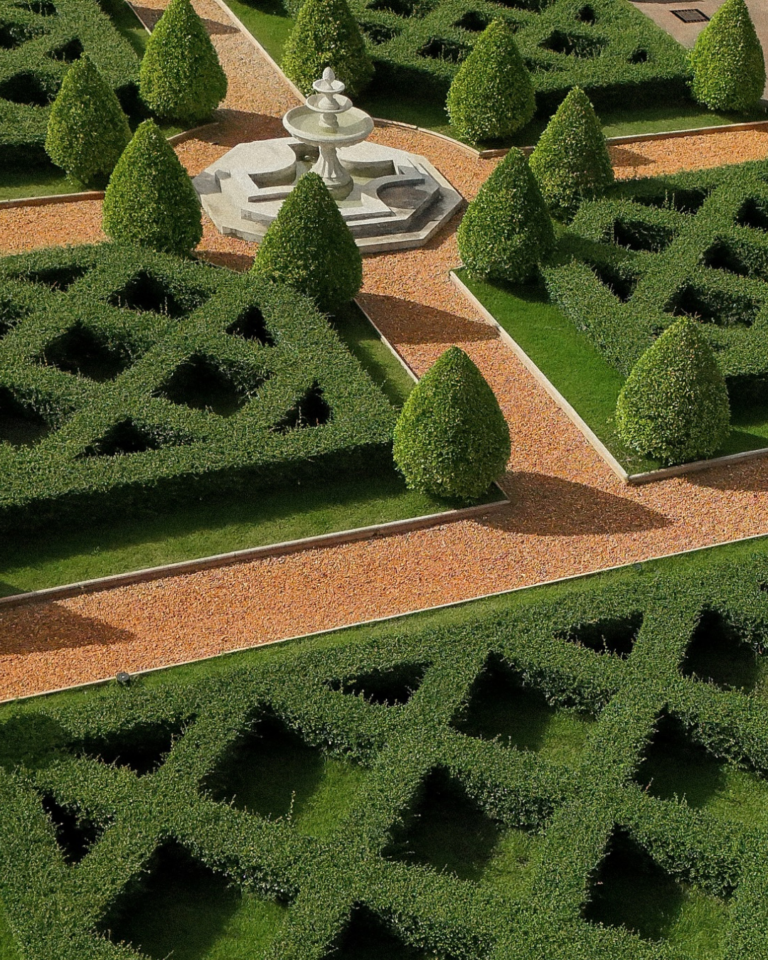
And it’s exactly there that you recognise the shape of her story, if you know where to look. At The Vivarium Dining Room, a vibrant conservatory built to ignite curiosity that lingers long after you’ve left the table. At Bar Mystère, where every cocktail — edible flowers, smoked herbs, unexpected garnishes — is built to tell a story, not simply to be drunk. At The Garden of Curiosity, where a Labyrinth invites you to lose yourself on purpose, and the Kitchen Garden, among fresh herbs and fragrant fruit, offers the domestic illusion that someone, somewhere in this house, still grows things with their own hands.
None of these places, Fearn insists, was ever meant to stand alone. A guest might begin in the library, wander into the gardens, discover a hidden corner, and end the evening beneath the stars. Together, these moments build the experience of the house.That, for her, is the secret heart: an invitation to wonder, the feeling that there is always something more waiting to be discovered — not only within the house, but within ourselves as well.
Fearn has always been drawn to stories in which houses become almost characters in their own right — secret gardens, curious rooms, forgotten corners, the promise of something unexpected waiting just beyond the next door.She isn’t trying to recreate any particular tale. She wanted Maison Mystique to capture that same feeling of possibility: every room designed to feel like the opening chapter of a book whose ending hasn’t yet been written.
Maison Mystique
Maison Mystique
Maison Mystique
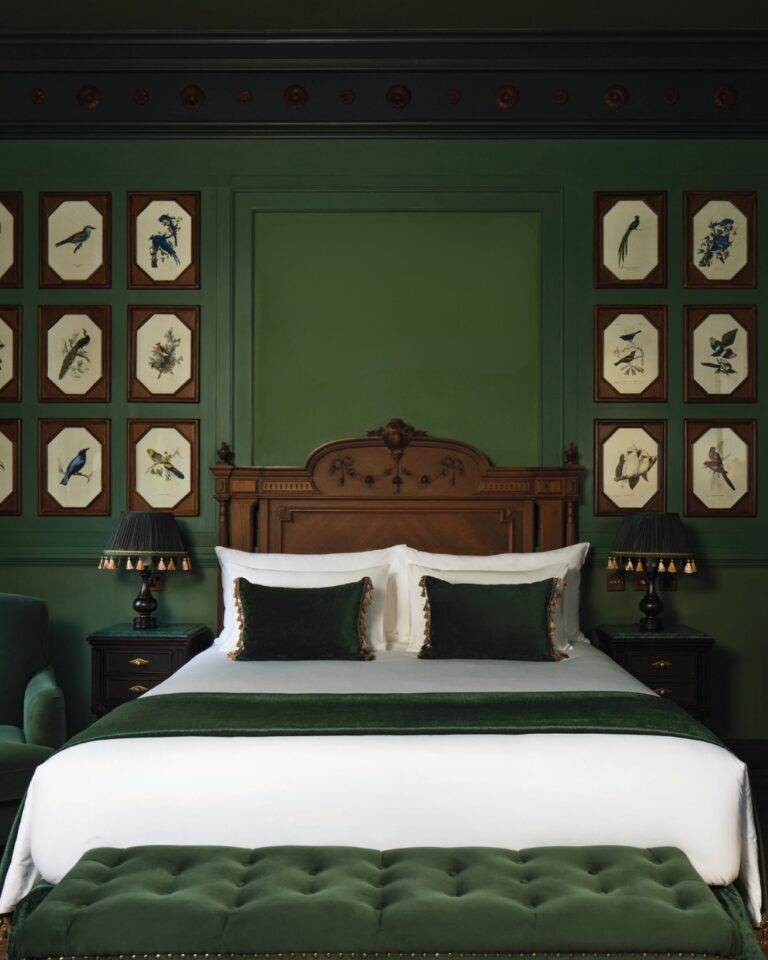
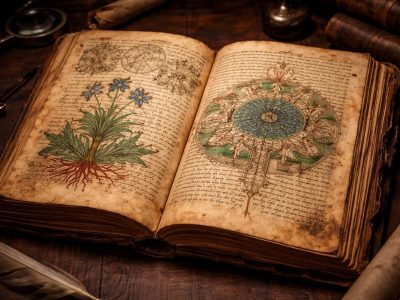
Which is why her four suites carry no numbers, only titles — Botanical Obscura, Nocturnal Curiosities, Celestial Lullaby, Siren Reverie — as if each door closed on a different story rather than a simple room. Fearn hopes guests will wonder who once lived there, why a certain object found its place on that shelf, what lies beyond the next garden path. The unanswered questions, she says, stay with us longer than the answers ever could — because they invite us to become part of the story ourselves.
Reading through her answers, I realised I wasn’t reading an interview. More than explaining a project, Fearn was describing a way of looking at the world. Maison Mystique, I thought, is simply the architectural form that gaze has taken.
And a feeling came back to me that I hadn’t had in a long time — the one you get when you finish a novel and, instead of reaching for another, you find yourself wishing you could meet the person who wrote it.
Contemporary luxury seems to oscillate between two promises. The first is to stop time: live longer, sleep better, slow down ageing, turn the body into a project of continuous optimisation. The second is to consume time more intensely: chase adrenaline, excess, the experience worth telling.
Maison Mystique
Maison Mystique
Maison Mystique
Maison Mystique
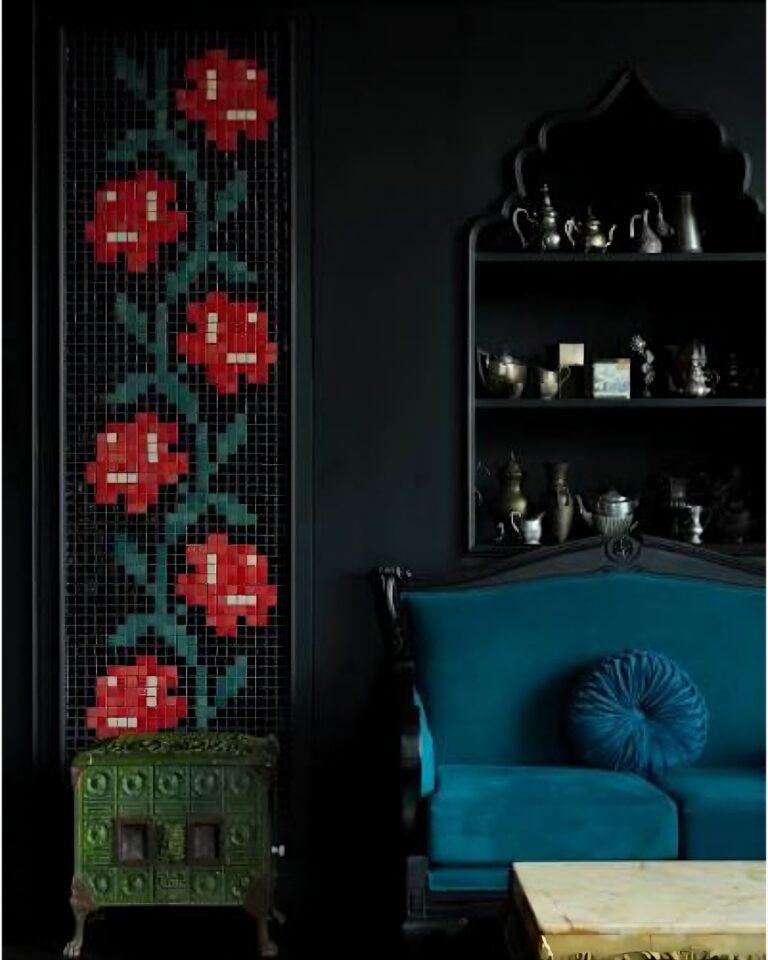
Maison Mystique belongs to neither. It doesn’t promise the body’s immortality, nor the thrill of excess. It chooses mystery instead. It promises something infinitely harder to deliver: a change in how you see. Its strangeness is no artifice — it’s genuine, almost domestic imperfection, the kind found in houses that seem to carry a memory of their own.
“Perfect spaces can sometimes feel intimidating, because they leave little room for imagination,” Fearn says. She wanted the house to feel collected over time, not composed at a desk — with the warmth, the character, the gentle imperfections that make a place feel truly lived in. The most beautiful houses, to her, are the ones that feel alive: it’s the little quirks, the unexpected corners, the collected details that give a house its soul, and that make you feel at home rather than simply impressed.
I ask her what slowing down, in a house built entirely for that purpose, is actually for. She answers with a single word: to notice.
From the moment guests arrive, Fearn hopes they feel as though they’ve stepped into another world — not tied to a particular era or place, but suspended outside the usual pace of everyday life. A place where time feels a little softer, where there’s no pressure to rush, achieve, or constantly move on.
Only when we slow down do we begin to notice. The changing light in the gardens. The sound of birds in the morning. The scent of old books and fresh flowers. A conversation that lasts longer than expected. The people we’re sharing the journey with.
Maison Mystique
Maison Mystique
We’re constantly encouraged to consume experiences as quickly as possible — to photograph them, tick them off, move on. Fearn hopes Maison Mystique encourages the opposite: to read a chapter without checking your phone, to wander without a destination, to linger over breakfast, to sit in silence without feeling the need to fill it.
When we make space for those moments, she says, we often rediscover something we’d quietly forgotten — our curiosity, our imagination, our capacity to simply be present.
Sometimes doing less allows us to experience far more.
And so, in a world shaped by algorithms and predictability, has mystery become a luxury? Fearn answers with a fine distinction — and I can almost hear her smiling between the lines: not mystery itself. It’s the opportunity to experience it that has become rare.
We’ve grown so used to having everything explained before we experience it, she says, that genuine discovery has become increasingly rare. In a world of efficiency, and predictability, the unknown is quietly disappearing. Mystery asks us to move differently through the world: it encourages us to wander, to follow instinct instead of a prescribed path, to notice the details we might otherwise overlook.It asks us to participate rather than simply observe, leaving room for interpretation — reminding us that not everything meaningful needs an immediate explanation.
When we encounter a place that still allows discovery, Fearn explains, we become explorers rather than consumers. We engage more deeply, form our own impressions, build memories that truly belong to us because they were never prescribed. At Maison Mystique, she wanted to preserve that sense of anticipation — not by hiding things, but by resisting the urge to explain them all.
Every guest notices something different, imagines something different, and leaves carrying memories that are entirely their own, and the feeling of having truly belonged to that place — welcomed not as a hotel guest, but as a friend arriving at a cherished home.
It doesn’t mean having more. It means having the freedom to wonder again. In a world where everything has already been explained, that may be one of the rarest gifts we can still be given.
Adriano Olivetti’s vision transformed Ivrea into a 20th-century industrial utopia, where rationalist architecture and social justice created a UNESCO-listed ideal city.
Discover the Parisian studio of Alice Malaret, the food designer who turns art into a tasting experience.
By Antonella Dellepiane Pescetto
Are you a sensitive and curious traveler, constantly searching for beauty, art and cultural inspiration? Sign up to receive the latest contemporary news!