The Voynich Manuscript, held at Yale’s Beinecke Library and known as MS 408, remains one of the most enigmatic books in the world. Its strange script, botanical visions, celestial diagrams and history of scholarly fascination have made it a modern relic of secrecy. Annamaria Giano explores the depths of this unsolved puzzle.
Yale University
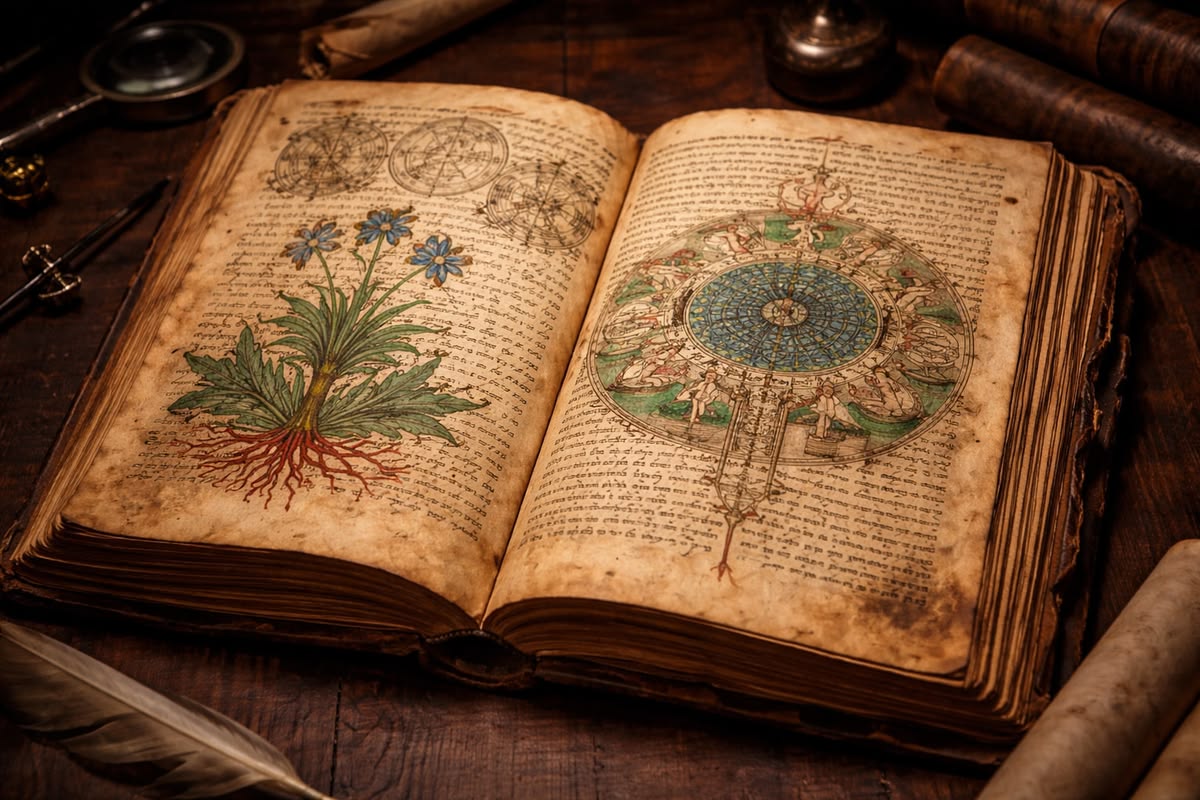
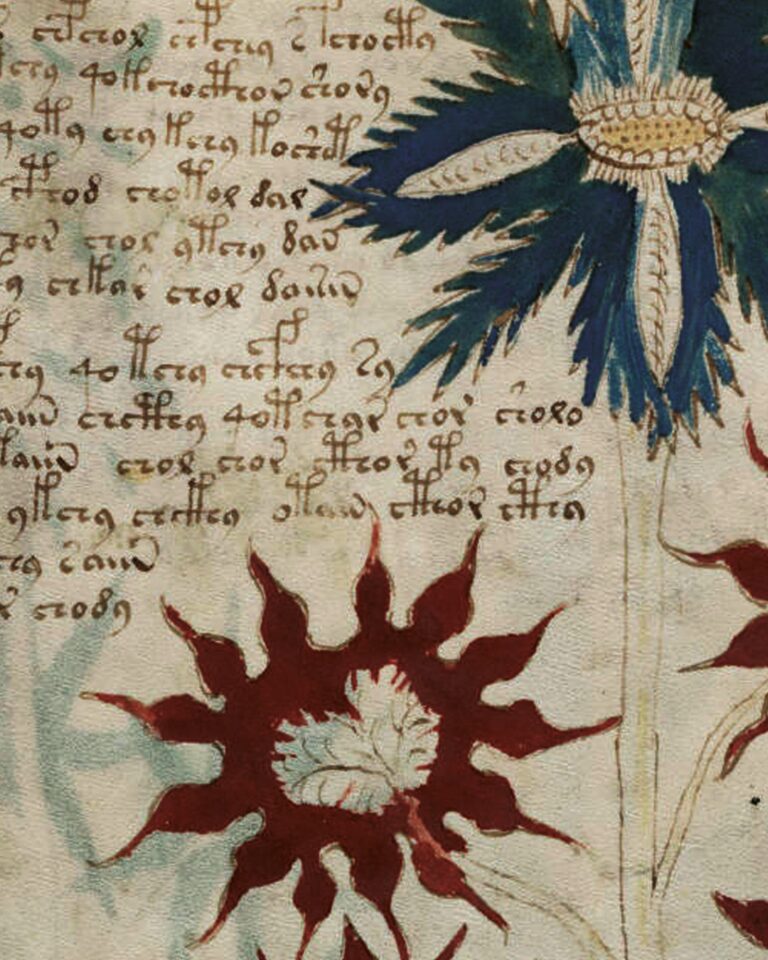
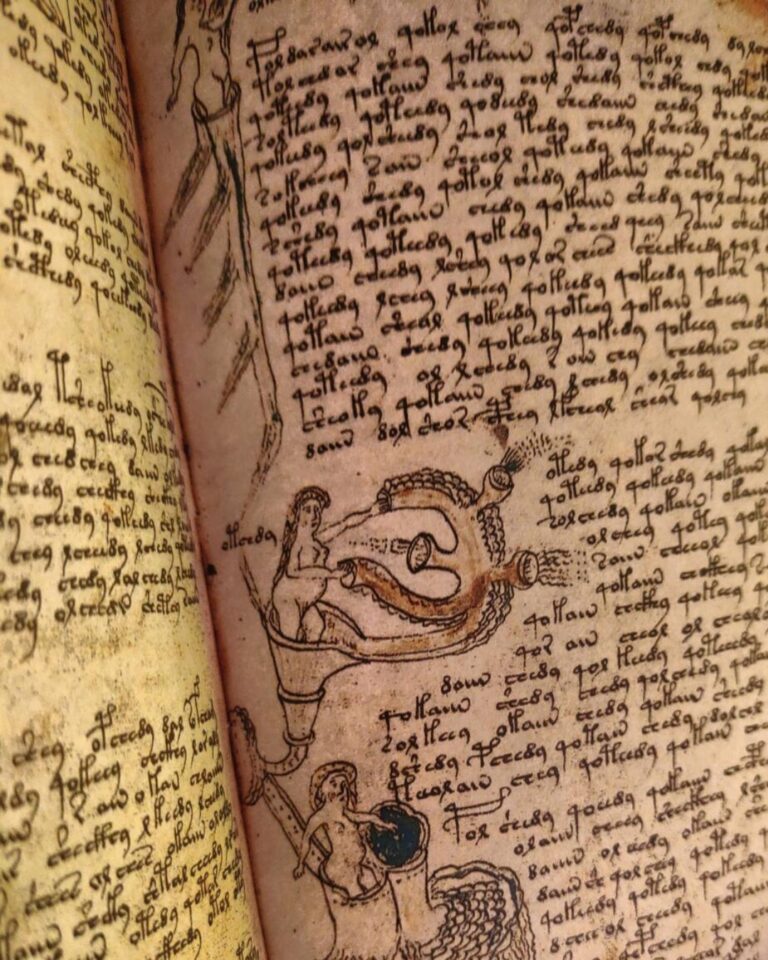
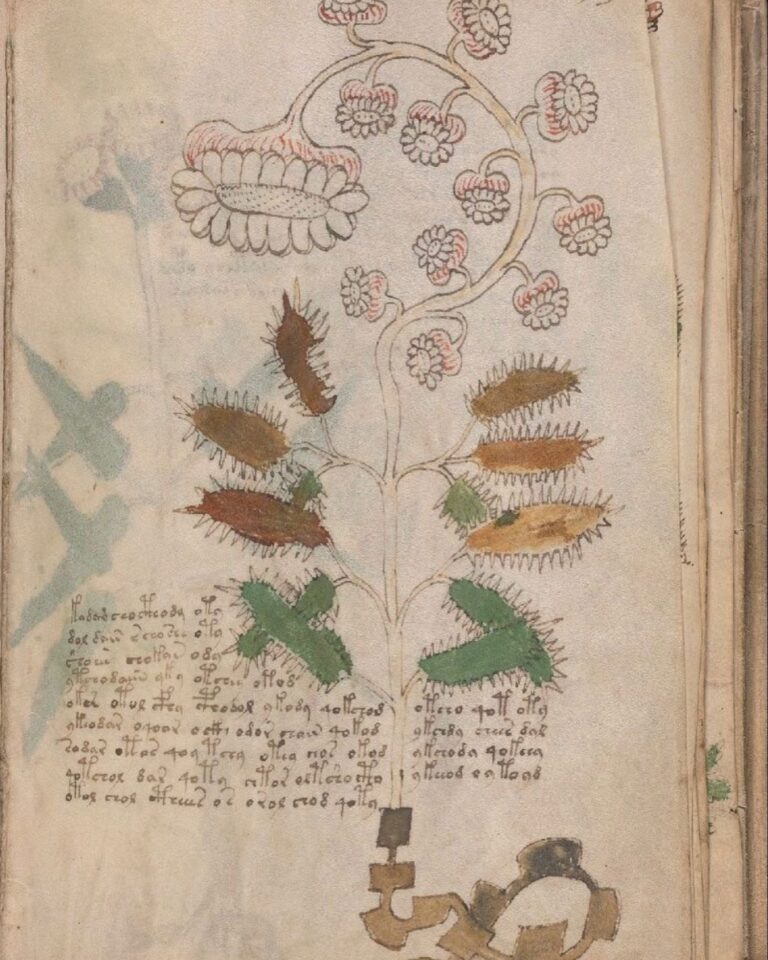
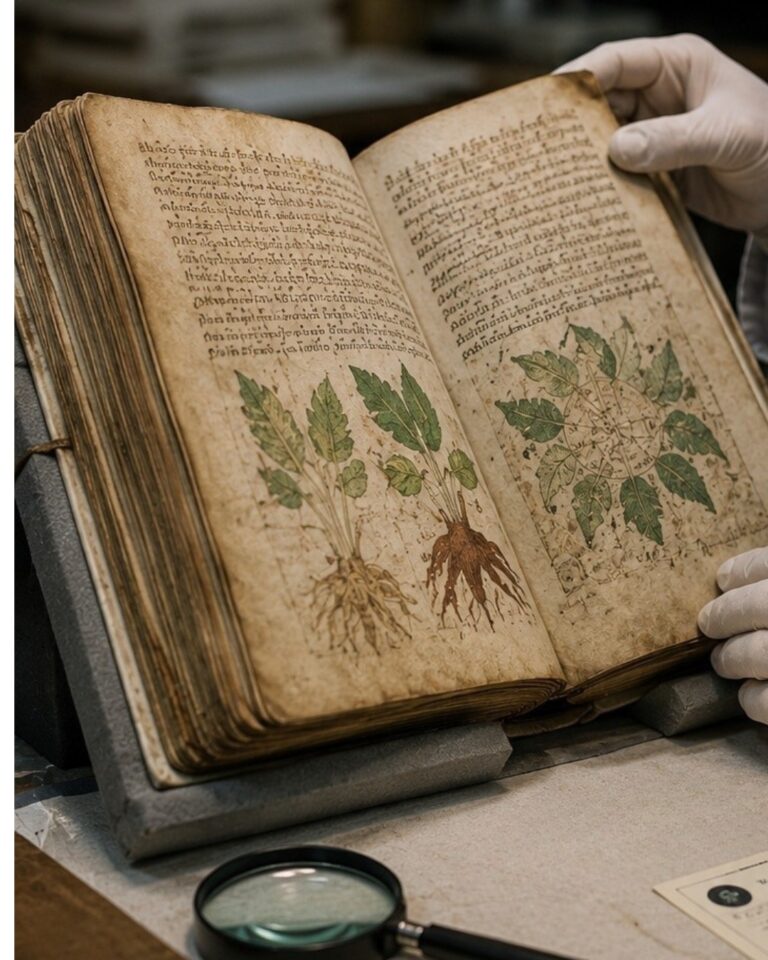
Some books ask for reading. The Voynich Manuscript asks for initiation. Its pages carry a script that moves with the confidence of meaning, yet meaning keeps itself veiled. The letters curve, repeat and bloom across the parchment like a language remembered by plants. Strange herbs rise from impossible roots. Stars gather in diagrams. Female figures stand in green pools connected by channels, vessels and tubes. The codex seems to promise medicine, cosmology, botany and revelation, yet every promise turns back into mystery. Yale’s Beinecke Rare Book and Manuscript Library preserves the volume as MS 408, named after Wilfrid M. Voynich, the Polish-American bookseller who acquired it in 1912. Its material history points towards late medieval Europe, while radiocarbon testing on the parchment has placed the material in the early fifteenth century. The distinction matters. Parchment can predate writing, and the book’s intellectual origin continues to provoke debate. Still, the object belongs to that charged zone of European history in which alchemy, medicine, astrology and natural philosophy shared the same candlelight. The manuscript’s earlier trail leads into the learned shadows of Prague, Rome and Jesuit libraries. A seventeenth-century letter by Johannes Marcus Marci linked the book to Emperor Rudolf II, whose court in Prague gathered astronomers, alchemists, artists and seekers of hidden correspondences. Rudolf’s world drew figures such as John Dee, Edward Kelley, Tycho Brahe and Johannes Kepler into its orbit of experiment and speculation.
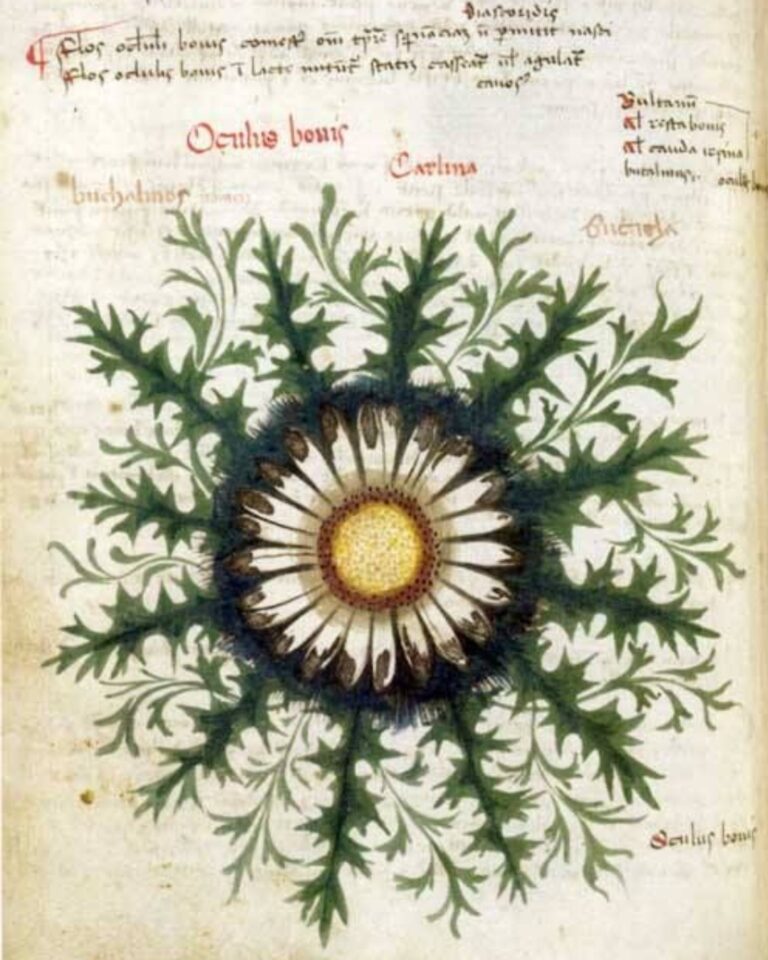
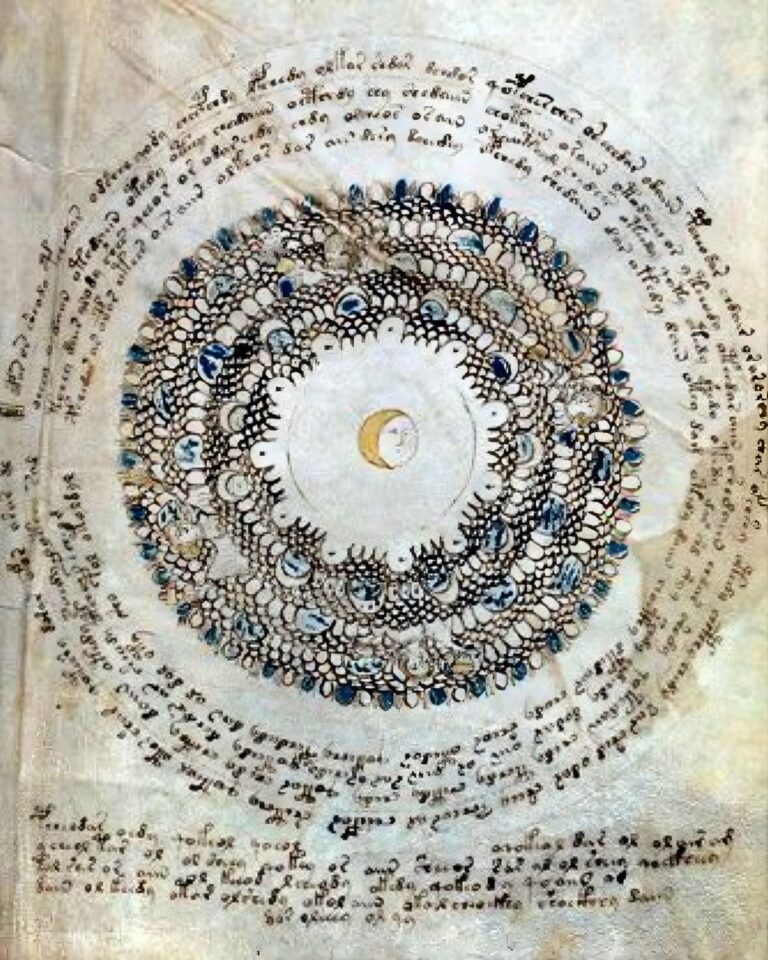
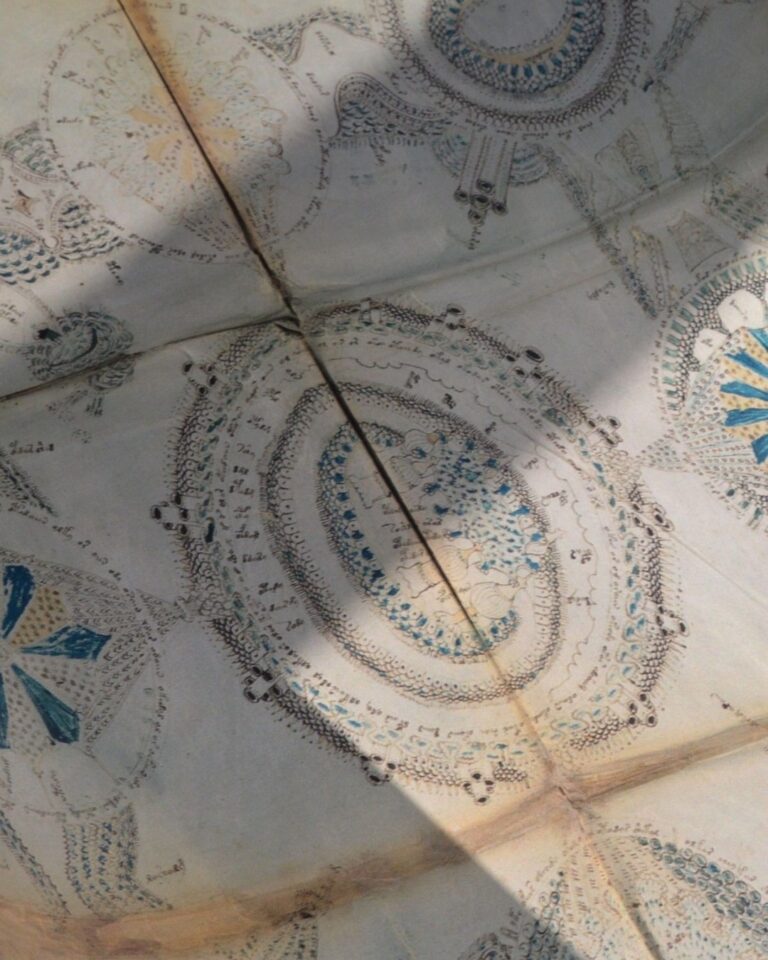
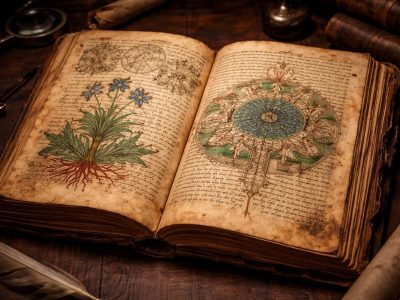
The Voynich Manuscript suits that atmosphere so completely that history and legend almost clasp hands. Marci sent the volume to Athanasius Kircher, the Jesuit polymath who sought to master Egyptian hieroglyphs and universal languages. Kircher represented a European dream of total decipherment. The Voynich Manuscript still resists that dream. Its sections appear to follow an order that scholars describe through images rather than through readable headings. The botanical pages present plants with roots like organs and leaves from another Eden. The astronomical pages place circular diagrams under signs of the heavens. The so-called balneological section shows small female bodies within baths, streams and vessels. Further pages suggest recipes, pharmacology or procedures. The book seems coherent because its hand moves steadily and its visual programme holds together. It also seems alien because every route into explanation opens into conjecture.
Yale University
Yale University
Yale University
The name “Voynichese” gives the script an almost theatrical identity. Cryptographers, linguists, historians and amateurs have tried to unlock it. William F. Friedman, one of the great American cryptologists of the twentieth century, studied it. Many later readers have proposed Latin, Hebrew, Romance languages, shorthand, cipher, hoax, artificial language and glossolalia. Each theory arrives with ardour, then meets the manuscript’s serene refusal. The book has become a mirror for the desires of its interpreters. A botanist sees a pharmacopoeia. A cryptologist sees a system. A medievalist sees learned culture. A novelist sees an oracle. Its beauty helps sustain the spell. The Voynich Manuscript does not resemble a dead code. It resembles a living book from a civilisation adjacent to our own. The plants possess the gravity of illustration, yet botany fails to claim them. The zodiac-like figures suggest astrology, yet the stars appear to follow their own grammar. The bathing women call to mind medieval medicine, fertility, humours and the body as a landscape of fluids. The book turns the medieval cosmos into a private theatre. Modern culture has embraced the manuscript because it answers a hunger that the digital age has sharpened. In a world that converts almost everything into data, the Voynich Manuscript remains materially present and intellectually elusive. It asks the eye to linger. It asks the mind to accept delay. It gives scholars parchment, ink, quire structure and provenance, while keeping its inner speech intact. Umberto Eco would have recognised its power as a labyrinth of signs.
Yale University
Yale University
Yale University
Yale University
Borges would have placed it in a library where every book contains a universe and every universe demands another key. The manuscript’s greatest achievement may lie in its refusal to become a single story. It belongs to the history of science, the history of art, the history of the book and the history of human projection. It carries the aura of Hildegard’s visionary botany, Kircher’s encyclopaedic ambition and the Renaissance appetite for correspondences between stars, plants and bodies. Yet it remains itself: a codex of measured hands, green pools, invented flora and eloquent silence. The Voynich Manuscript keeps its own counsel. It has survived emperors, Jesuits, dealers, cryptographers and the fever of the internet. It continues to look back at us from the page with an expression almost human. We approach it with instruments, theories and longing. It answers with ink.
Adriano Olivetti’s vision transformed Ivrea into a 20th-century industrial utopia, where rationalist architecture and social justice created a UNESCO-listed ideal city.
Discover the Parisian studio of Alice Malaret, the food designer who turns art into a tasting experience.
By Antonella Dellepiane Pescetto
Are you a sensitive and curious traveler, constantly searching for beauty, art and cultural inspiration? Sign up to receive the latest contemporary news!