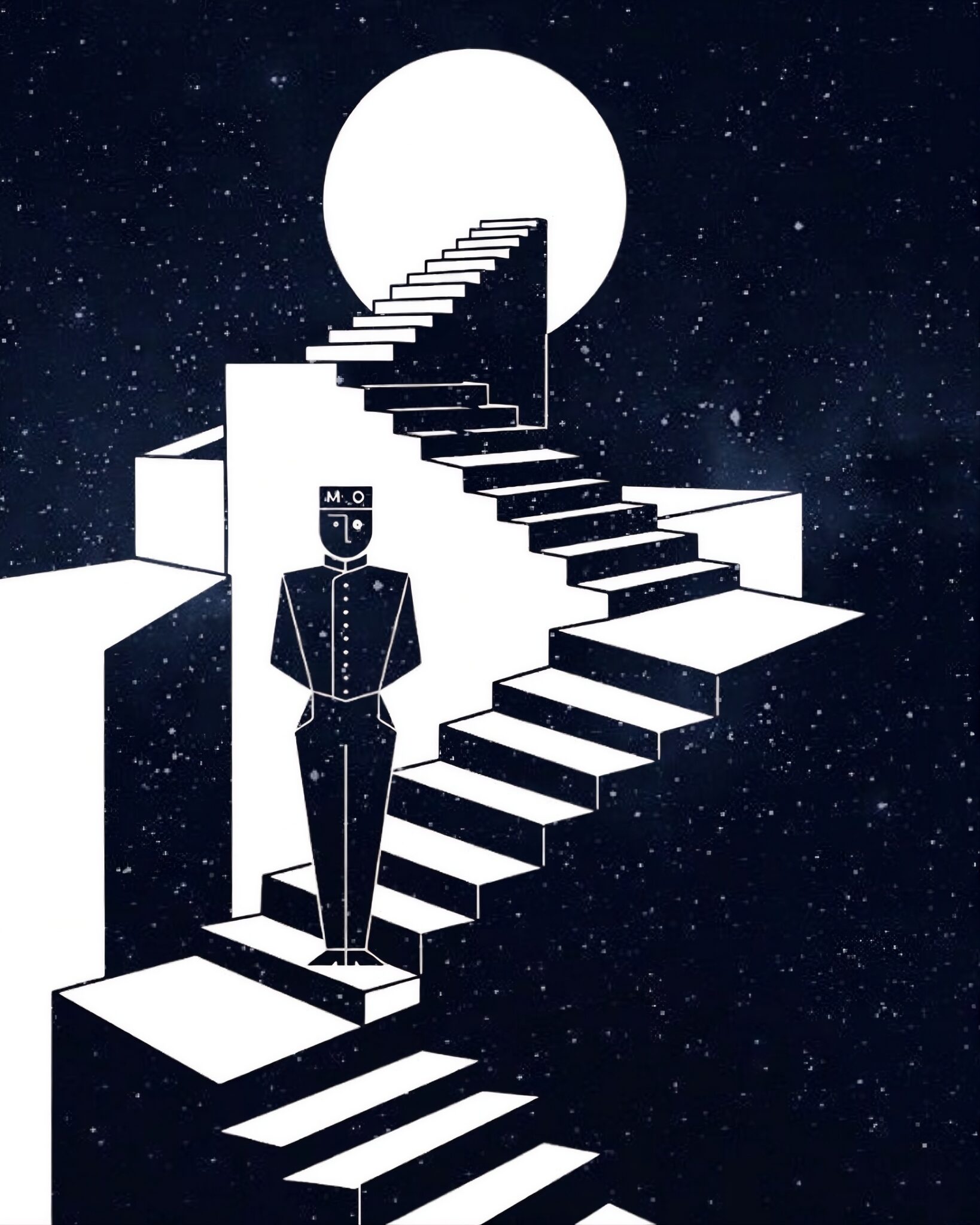
Whenever I return to the Orlando Hotel, I inevitably find myself lingering at the reception desk longer than necessary. Mr. O. is always there: as impeccably dressed as the concierge of a grand old-world hotel, yet with the unmistakable gaze of someone who seems to receive mail from the future.
On this particular stay, we found ourselves drifting into one of our customary conversations—this time about the destinations that, over the decades, have come to embody our very idea of wonder.
Egypt, for instance, was the great revelation of the twentieth century: an ancient, absolute elsewhere, both still and vertiginous. Then came the landscapes of Southeast Asia, magnified by the adventures of Emilio Salgari—the jungles and limestone bays that seemed suspended outside time. Later, the Taj Mahal, followed by the pyramids of Chichén Itzá: those sacred geometries that shaped, for generations, the catalogue of accessible marvels.
“And now?” I asked. “Where do we go if we still want to be amazed?”
Mr. O. didn’t answer immediately.With an almost absent-minded gesture, he slid an ivory folder across the counter.One word was printed on the cover. Moon.
My thoughts immediately turned to Visions of the Future, the remarkable series of vintage-inspired travel posters created years ago by NASA’s Jet Propulsion Laboratory. They looked like advertisements from the golden age of rail travel, except their destinations were Saturn, Europa, or distant exoplanets illuminated by twin suns. They promoted holidays that no one could yet take—and precisely for that reason, they felt strangely believable.
Perhaps their greatest achievement was not imagining the future, but preparing us for it. Images, after all, often arrive before reality. And that has always been the case.
Long before astronauts, Jules Verne had already imagined a voyage from the Earth to the Moon. Douglas Adams later transformed the cosmos into a playground for absent-minded hitchhikers, improbable restaurants, and indispensable towels. George Lucas, in turn, made the impossible seem almost mundane: planets, spaceports, hotels, taverns, roadside stops scattered across the stars.
Science fiction has rarely tried to predict the future. Instead, it has furnished the rooms of our imagination.Today, engineers are simply beginning to build the rest. At that moment, a sentence by Arthur C. Clarke came back to me: “Any sufficiently advanced technology is indistinguishable from magic.”
Mr. O. interrupted my thoughts with a smile. “You know,” he said, “reservations are already open.”
“Of course, this isn’t just another hotel,” he continued, anticipating my next question. “It’s a project where architecture, engineering and imagination meet. Like all hotels truly worth visiting.”
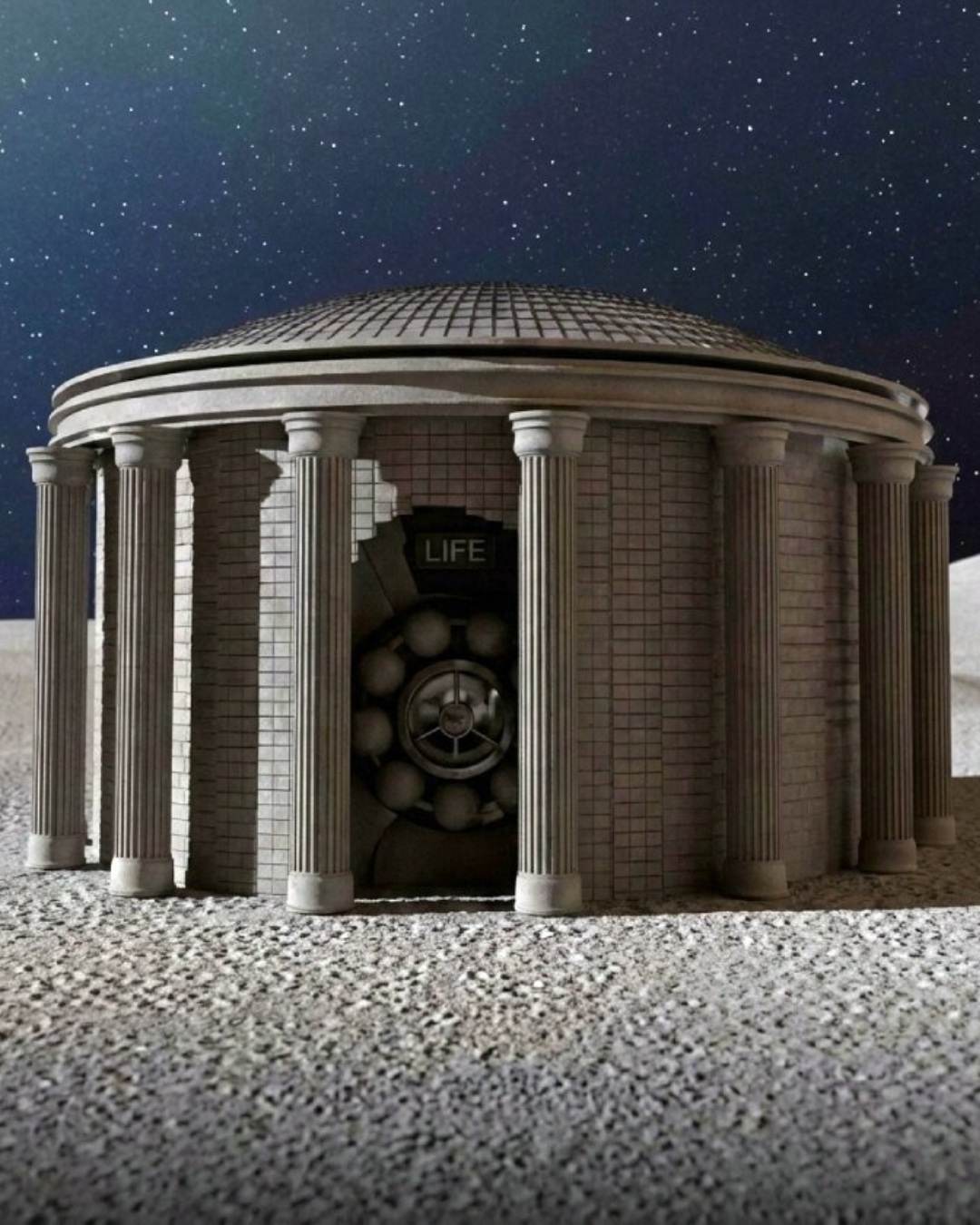
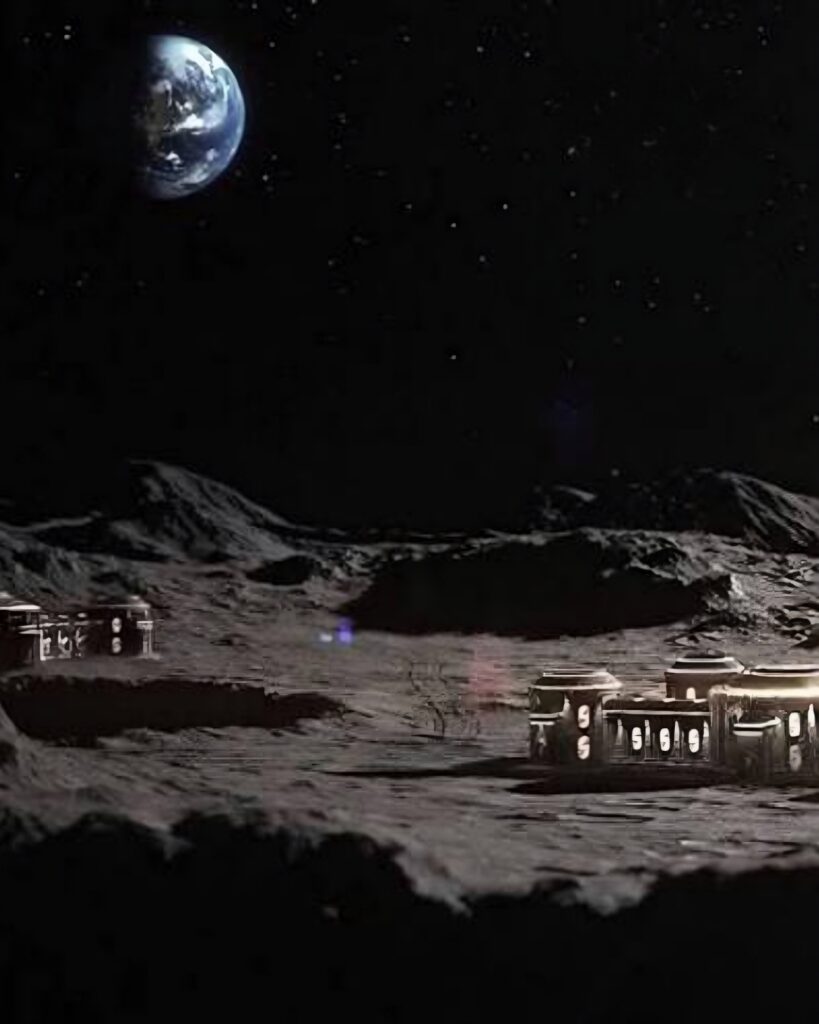
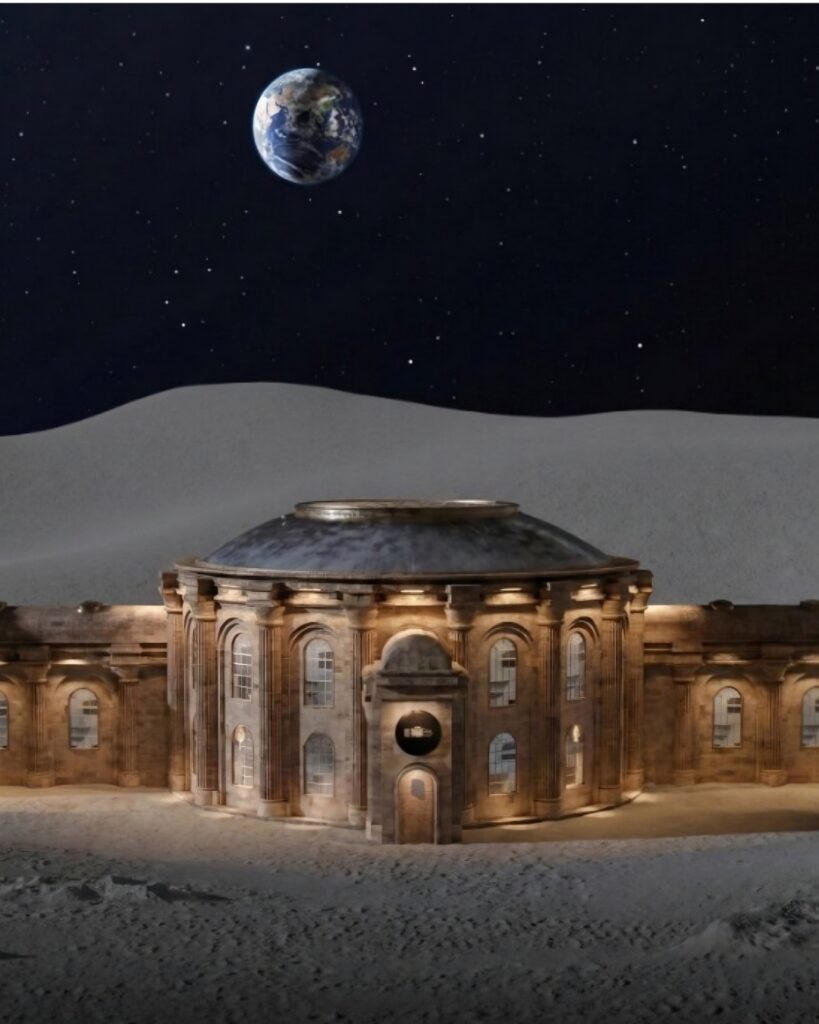
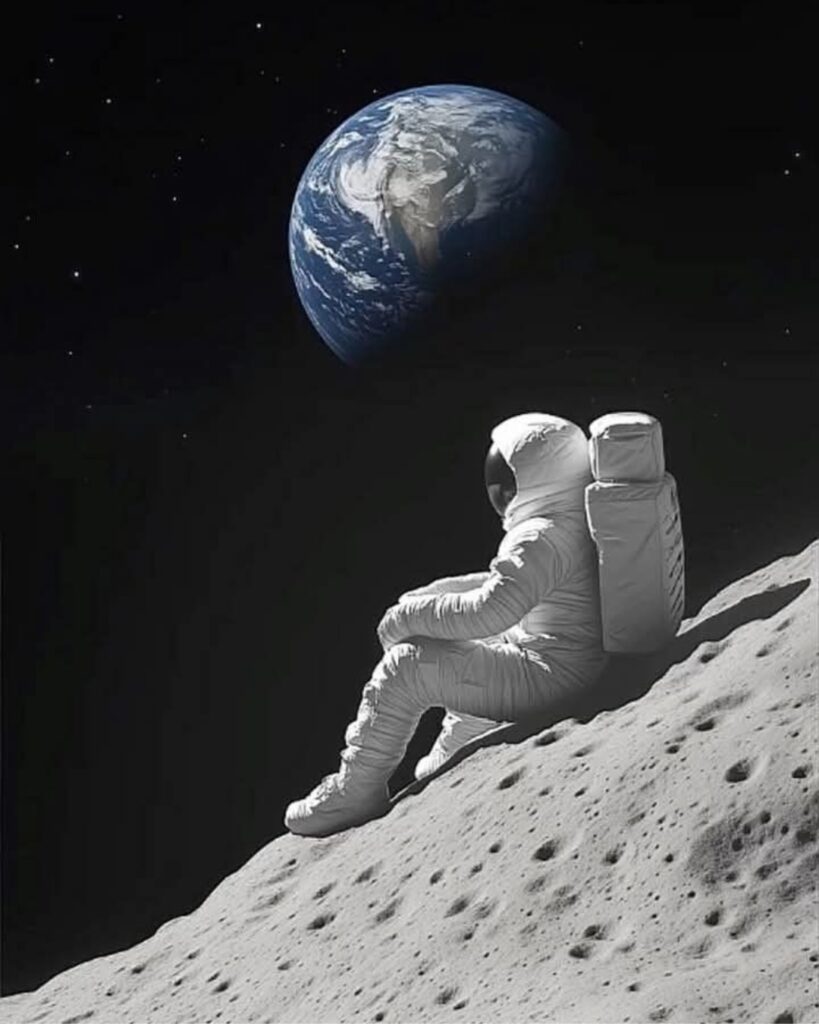
He then told me about GRU Space—Galactic Resource Utilization Space—the American startup aiming to open the world’s first hotel on the Moon by 2032.
Its roadmap is remarkably detailed. In 2029, a cargo mission is expected to test the necessary technologies. By 2031, the company plans to establish its first base inside a lunar lava tube, chosen for its natural protection against radiation and extreme temperature fluctuations. From there, construction of the hotel would begin: inflatable modules transported from Earth combined with permanent structures built on-site using lunar regolith transformed into construction material through In-Situ Resource Utilization technologies, an area NASA has been researching for decades.
“So it will be built half on Earth and half on the Moon,” I observed. “Like every truly great idea,” Mr. O. replied.
According to the project, the hotel will accommodate four guests at a time, each staying for five nights. It will be far from a passive holiday: moonwalks in spacesuits, rover expeditions across the lunar surface, even a round of golf in low gravity are all part of the experience. With a deposit of up to one million dollars, prospective guests can already secure priority access to what is expected to become a ten-million-dollar vacation.
“Quite an expensive room,” I remarked. “The best views have always come at a premium,” Mr. O. answered without the slightest hint of irony. “The difference,” he added after a brief pause, “is that writers once imagined hotels on the Moon. Today, companies are publishing their price lists.”
He was right.
There is something profoundly curious about the fact that the first real step toward lunar tourism is not a rocket launch. It’s a reservation. I looked up at the Moon. For the first time, it no longer felt distant. It simply felt… about to open. And yet I couldn’t help wondering whether that was entirely good news.
For centuries, the Moon has belonged more to imagination than to geography—a repository of dreams, follies, and forgotten desires. Dante crossed it as the first celestial sphere on his ascent through Paradise. Ariosto sent Astolfo there in search of Orlando’s lost reason, carefully preserved among all the things humanity misplaces on Earth. Cyrano de Bergerac reached it through wonderfully improbable inventions, while Edgar Allan Poe brushed against it aboard a visionary balloon.
Poets, writers, and filmmakers have carried us there in countless different ways, transforming it into the perfect elsewhere precisely because it remained beyond our reach.
Do we really need to turn the Moon into yet another destination?
“Every age,” Mr. O. finally said, “finds its own way of taming mystery. Ours has chosen the booking system.”
Very few people will ever be able to afford a room with an Earth view. The rest of us will continue to enjoy a window overlooking the Moon. And perhaps, once again, it will prove to be the better view.
Adriano Olivetti’s vision transformed Ivrea into a 20th-century industrial utopia, where rationalist architecture and social justice created a UNESCO-listed ideal city.
Discover the Parisian studio of Alice Malaret, the food designer who turns art into a tasting experience.
By Antonella Dellepiane Pescetto
Are you a sensitive and curious traveler, constantly searching for beauty, art and cultural inspiration? Sign up to receive the latest contemporary news!