For years, the art world has been searching for ways to bring audiences closer. Museums have transformed the way they present themselves, moving beyond the logic of simple display to create increasingly accessible and engaging experiences. Vernissages have become social occasions, finissages opportunities for dialogue; late-night openings, performances, immersive tours, and crossovers with theatre, music, and design have all redefined the way we encounter art.
The goal has always been the same: to shorten the distance between artworks and people. Today, however, that distance seems to be shrinking even further. Not by bringing people into museums, but by bringing them into people’s homes. Because that is where artworks begin their second life. A collector does not simply own an artwork. They live with it. They move it, glance at it every morning upon waking, pass by it dozens of times a day without even noticing. And by living alongside it, they inevitably rewrite its story.
Yet this everyday coexistence rarely finds its way into the narrative of art.
It is from this intuition that EDIBLE COLLECTION was born, a project conceived by Isabella Talone, founder of Miciporto, together with Art Diners—the collective formed by Marta Gaudino, Irene Machetti, and Alessia Simonetti. The project opens the private homes of collectors to the public, transforming a visit into an experience profoundly different from that of a museum.
“Stepping into collectors’ homes means changing perspective,” says Isabella Talone. “It is no longer simply about looking at artworks, but about understanding the relationship they have built with the people who live with them every day.”
It is a story no museum can truly tell, because it is born from the intimacy of everyday life. Museums teach us the history of the artist, the historical context, the artistic movements. A home reveals instead the biography of the artwork. The lives it has lived since leaving the artist’s studio. The meanings it has accumulated over time. The anecdotes no catalogue could ever preserve.
The meanings it has accumulated over time. The anecdotes no catalogue could ever preserve.
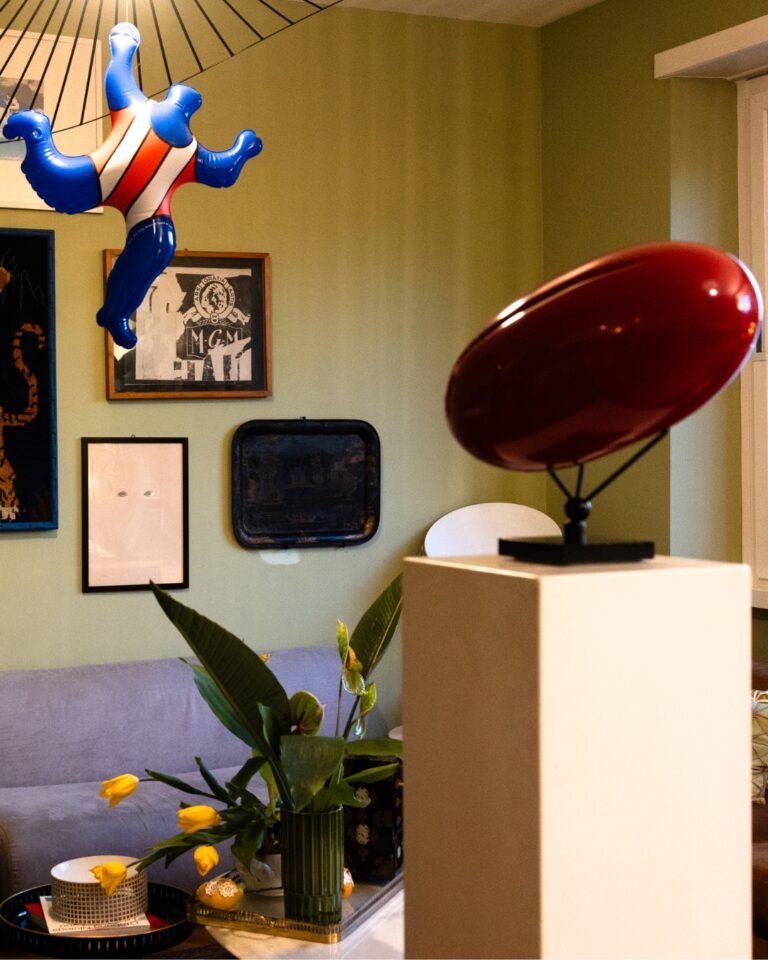
Like the Fontana sculpture that a friend of G. Casagrande’s family once mistook for an ordinary piggy bank, and which still holds a coin inside—a small misunderstanding that has become part of the work’s own history. Or those artworks that, over the years, cease to feel like “pieces in a collection” because they simply become part of the house. “I don’t even keep an inventory,” one collector laughs. “They’re just there, like wardrobes or mirrors.”
Some collections are built according to the logic of the market; others emerge from a deep relationship with artists and their work. It is in these latter collections that art gradually dissolves into everyday life. Artworks stop being objects to contemplate. They become objects to live with.
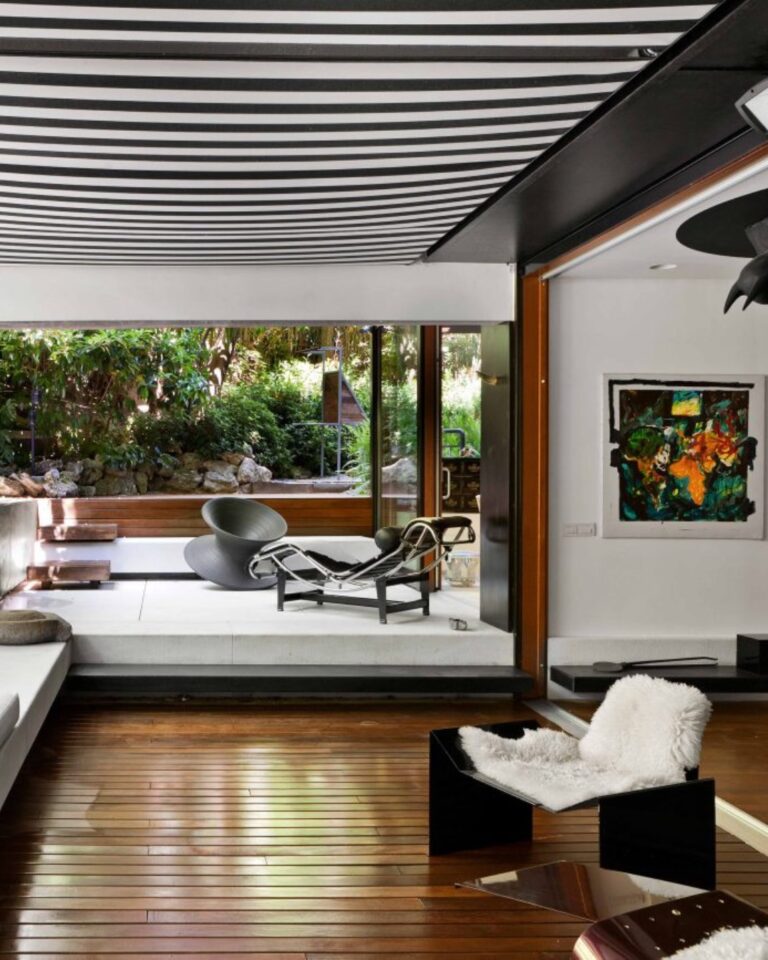
They can be walked across, as in architect Carlo Berarducci’s home, where one artwork naturally accompanies everyday movement through the house. Or viewed from perspectives no museum would ever suggest: from bed, first thing in the morning, because the collector decided the perfect place for a piece was on the ceiling, believing that this was the truest way to encounter it every day.
In a private collection, it is not the artwork that dictates how it should be experienced. It is the person who lives with it. The house itself becomes the narrative device.
There is no longer any separation between art and everyday life. Artworks coexist with furniture, design objects, family photographs, kitchens, and bookshelves. They still speak of the artist, but they also tell stories about those who chose them: why they were acquired, which friendships they fostered, which journeys they accompanied. It is a narrative that could hardly exist within an institutional space.
For G. Casagrande, who opened her home for EDIBLE COLLECTION’s first gathering, this is precisely the power of domestic space. “The home is a place of encounter, where domestic intimacy and personal collections enter into dialogue with other voices,” she says, giving rise to ever-evolving imaginaries.
The first homes to open their doors were those of G.Casagrande and Carlo Berarducci.
In Casagrande’s home, the collection unfolds as a family story. Works by Lucio Fontana, Alberto Burri, Giulio Paolini, Salvo, Haegue Yang and many others live alongside archaeological objects, iconic pieces of design, and memories of a collecting journey that began in the 1970s. Attention shifts away from the artworks’ market or historical value and toward the emotional ties that bind them to generations of family life.
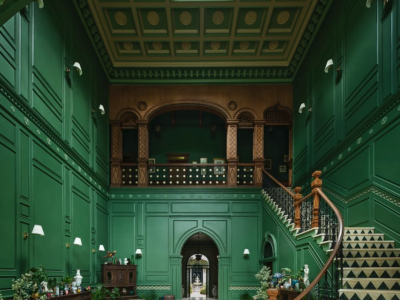
At Carlo Berarducci’s Brutalist house—designed by his father Francesco Berarducci—the architecture itself becomes part of the collection. The artworks inhabit ceilings, corridors and transitional spaces, blending almost imperceptibly into everyday life. Art does not interrupt the house. It completes it. “I reimagined the apartment as a white box: a space dedicated to art, design and architecture, open to dialogue and shared experiences,” Berarducci explains. In both encounters, artist Irene Machetti adds another layer to the experience.
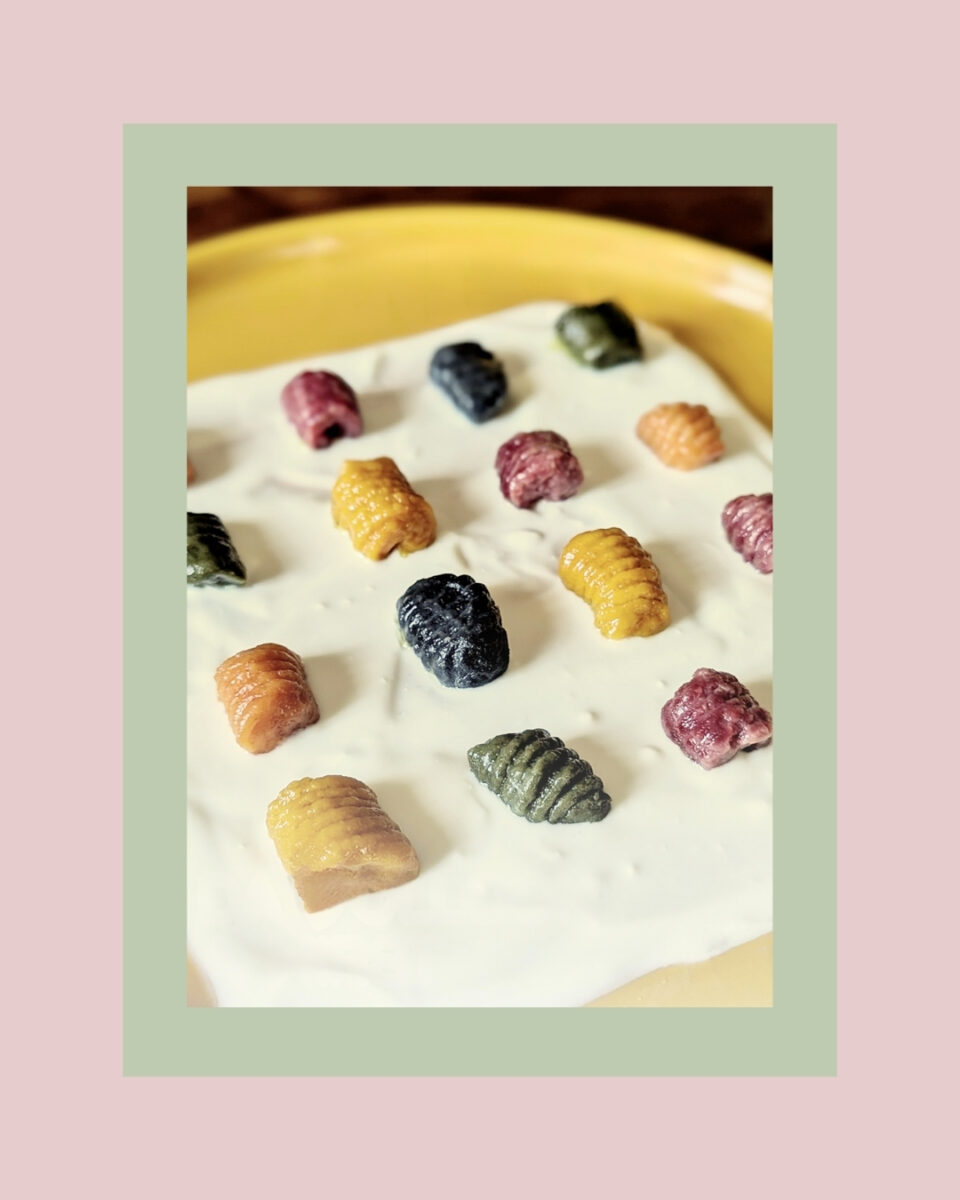
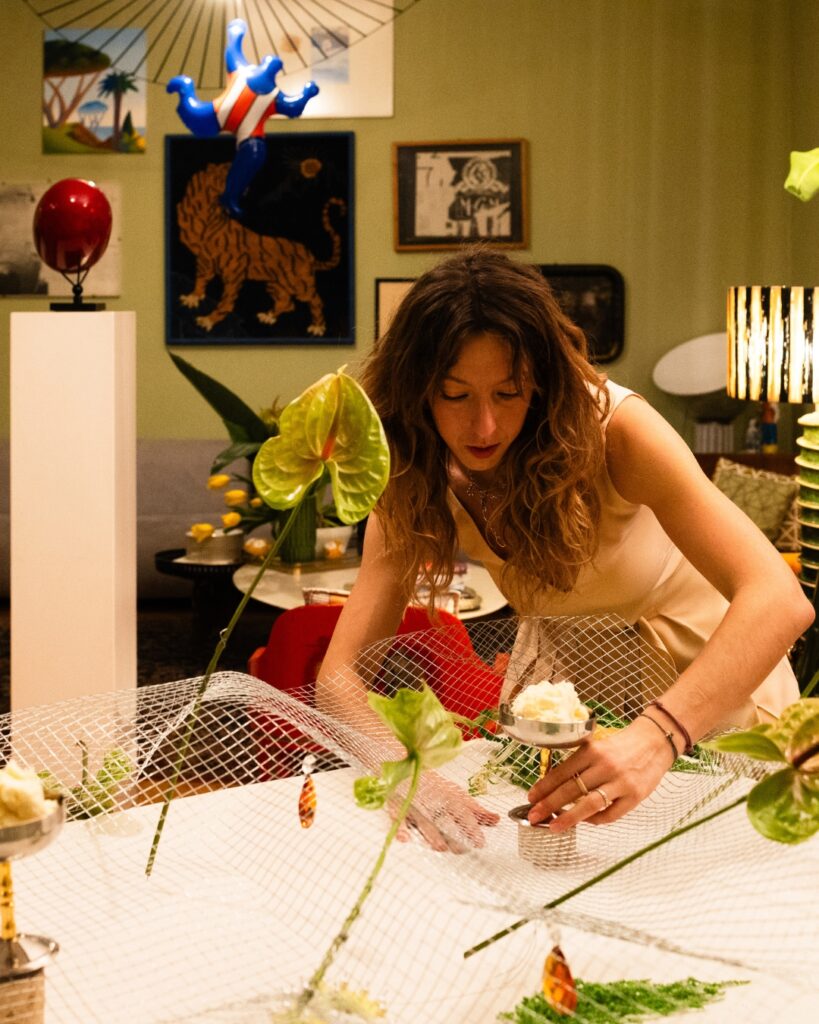
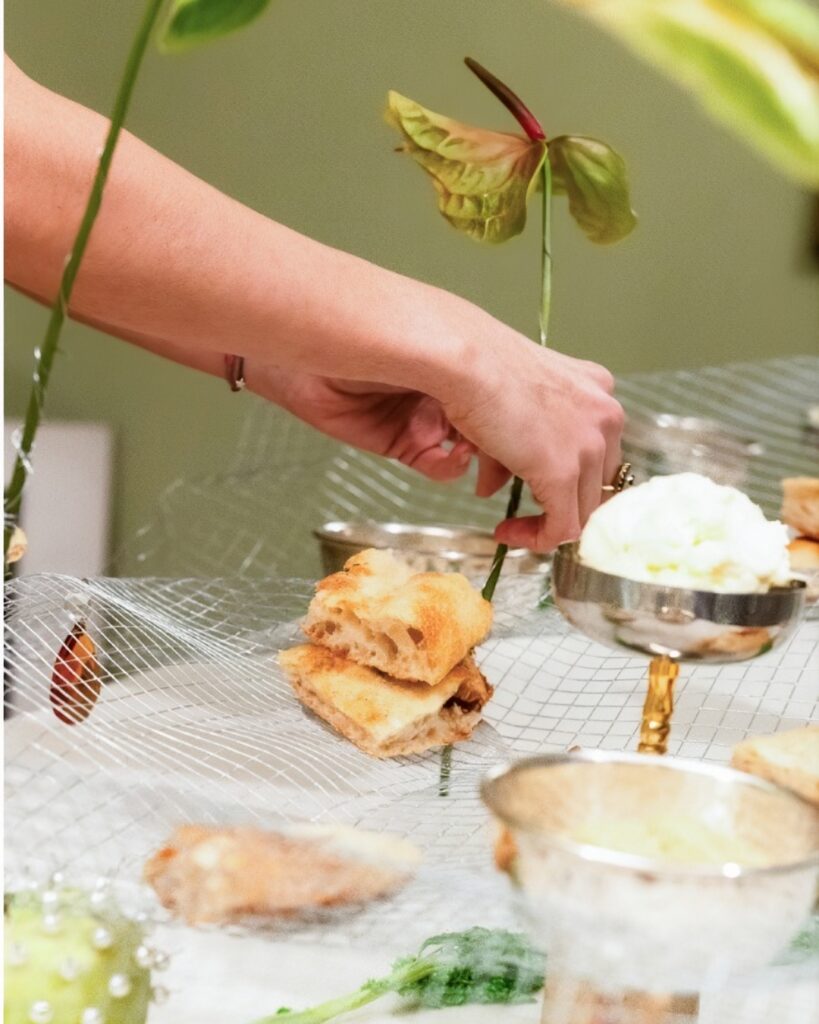
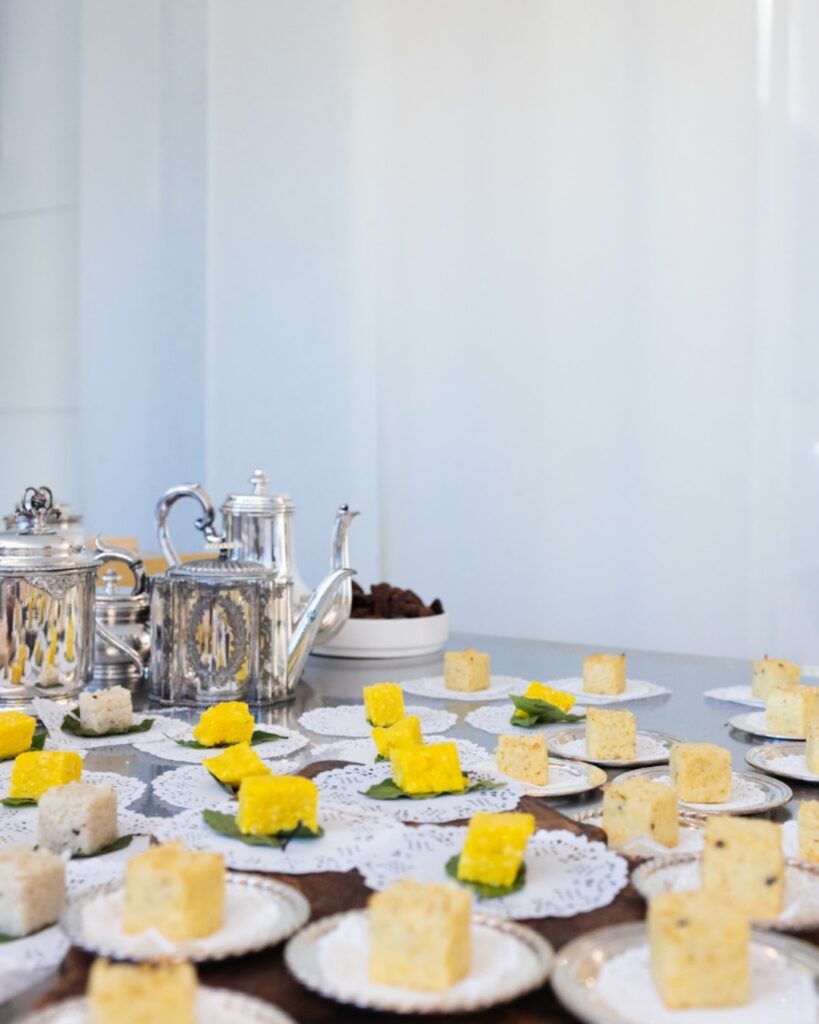
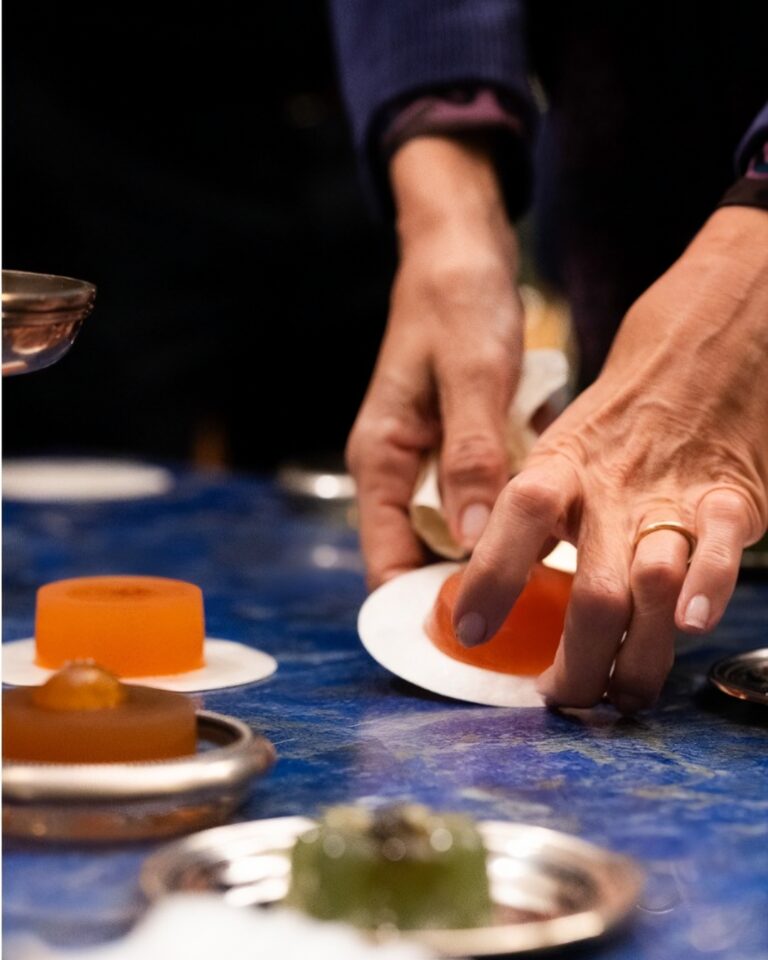
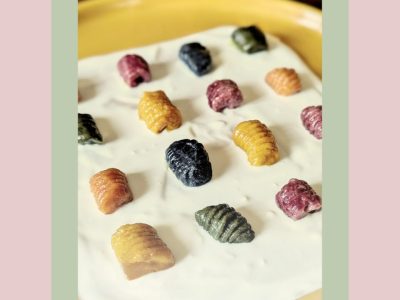
Her work is not about creating an aperitivo inspired by artworks. Food becomes an artistic language—another way of interpreting what is already there.
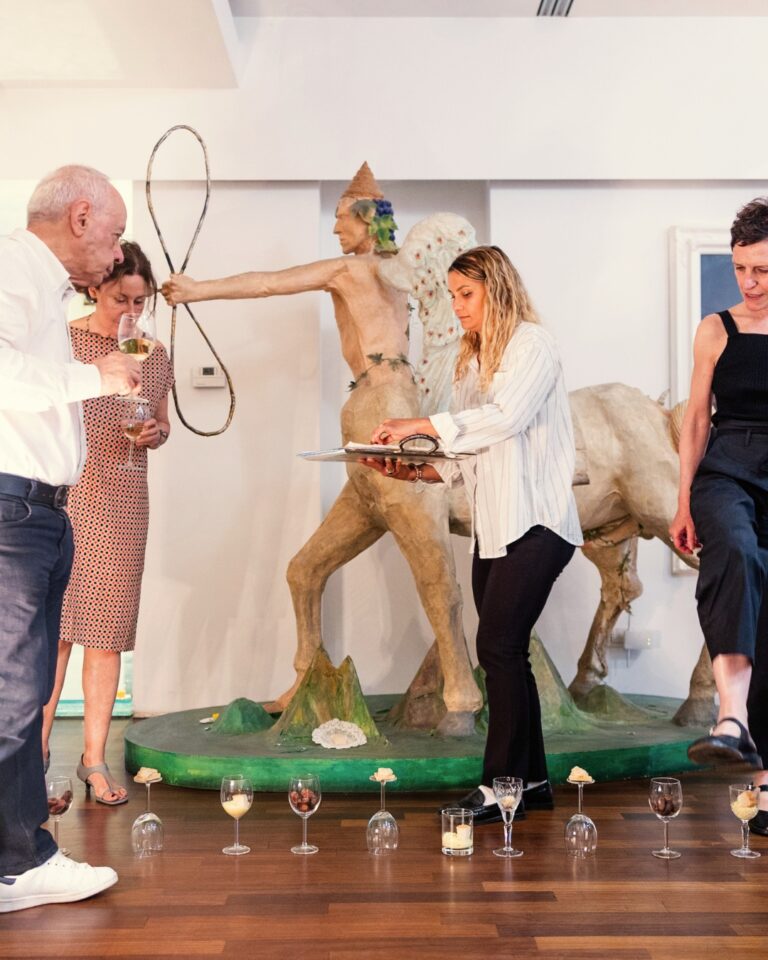
During the first gathering, she translated four works from the collection into four stages of life—birth, childhood, adolescence and adulthood—creating a symbolic journey in which taste, touch, smell and memory guided visitors through the collector’s emotional landscape.
For the second encounter, she explored Brutalism through ingredients, performative gestures and edible interventions, inviting participants to reflect on dwelling, on the promises of modernity, and on the relationship between construction, consumption and memory.
Every experience begins with the personality of the collector and the uniqueness of the collection.
No encounter can be replicated. Every home generates its own narrative. The result feels less like a guided tour than a conversation. You enter expecting to discover a collection. Instead, you come to know a person.
You look at the artworks; sometimes you touch them, sometimes you are even invited to wear them. But above all, you listen to the stories they have accumulated—the quiet episodes that continue to reshape their meaning.
Perhaps this is the next evolution in the way we experience art. Not making it more spectacular. But remembering that, before belonging to art history, an artwork can belong to someone’s life.
From the grand Parisian fragrance houses to the rugged coast of Genoa: Filippo Fornasini reveals the deeply personal story behind MarMar, an intimate olfactory journey that redefines the art of Genoese perfume.
Hidden in the Khao Yai jungle, you arrive at Maison Mystique where the rules of contemporary luxury are rewritten to choose mystery instead of excess.
By Giulia Fantini
Are you a sensitive and curious traveler, constantly searching for beauty, art and cultural inspiration? Sign up to receive the latest contemporary news!