

The scent of home
Amidst the narrow alleys and the untamable breath of the sea, in a Genoa defined by strong contrasts and whispered elegance, MarMar was born. It is not just a perfume house, but an olfactory diary where every fragrance has an intimate story to tell, seeking to move us and reconnect us to the present moment.
MarMar takes its name from the family perfumery where Filippo grew up. The project blends the discipline of cosmopolitan luxury with a visceral authenticity rooted in the Ligurian territory. It was born from the desire to introduce “the art of Genoese perfume” to the niche market, where rigorous craftsmanship dialogues with childhood memories and local botanicals. But let us hear from the founder himself about how this tribute came to be, and how he learned to “follow his sea”.
Antonella Dellepiane Pescetto: You studied Media, Culture, and Communication in New York and lived in Paris for many years. What did these cities offer you, and why did you return to Genoa?
Filippo Fornasini: In New York, I earned my bachelor’s degree in Media, Culture, and Communication, and I stayed there for four years. Then came Paris: a master’s degree in international business and, almost by chance, an internship in fragrance development at Givenchy. That’s where I realized that a fragrance isn’t limited to its scent alone. It’s a complete object, made up of a concept, an olfactory brief, a bottle, an archetype, and a film. And an entire ecosystem designed to capture the customer’s attention. I spent six years between Givenchy and Jean Paul Gaultier, working on fragrances like Gentleman, Le Male, Classique, and Scandal, and then eight years with my agency, Fondamentale, creating advertising for the biggest international fragrance houses.
New York gave me the drive, the eye for opportunities, and the desire to take risks and dream big. Paris, on the other hand, taught me the opposite: restraint, the unhurried pace of elegance, precision of language, attention to detail, and the culture of luxury. It also gave me French citizenship. That’s the discipline I seek today in every step of the MarMar experience, from the first click on the website to unboxing the package that arrives at your doorstep.
I returned to Genoa when my mother passed away. Perhaps I wanted to escape the big cities. But after twelve years away, you come back with the weight of the world on your shoulders, and for the first time, I saw my city through completely different eyes.

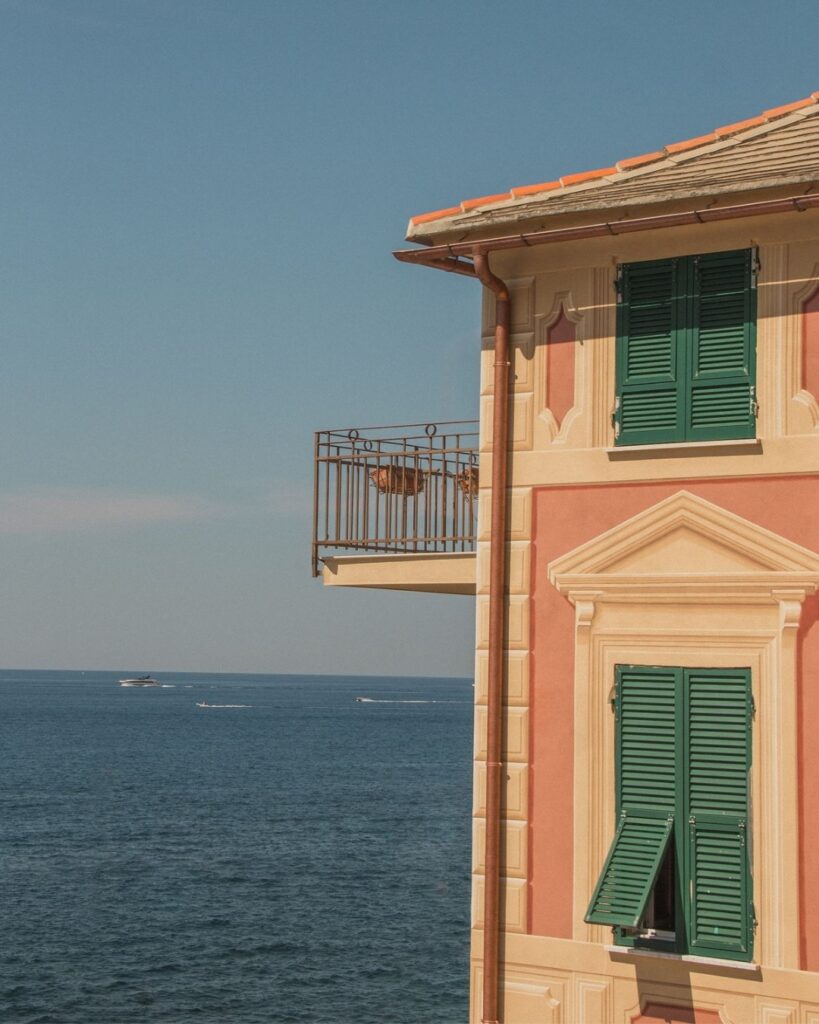
ADP: What aspect of Genoese identity do you think is worth sharing with the world through your perfumes?
FF: First and foremost, the instinct to explore, to be daring, to look to the horizon. We carry within us the entire history of the navigators of the Maritime Republic, and I believe that this need to go beyond borders is something we should always heed.
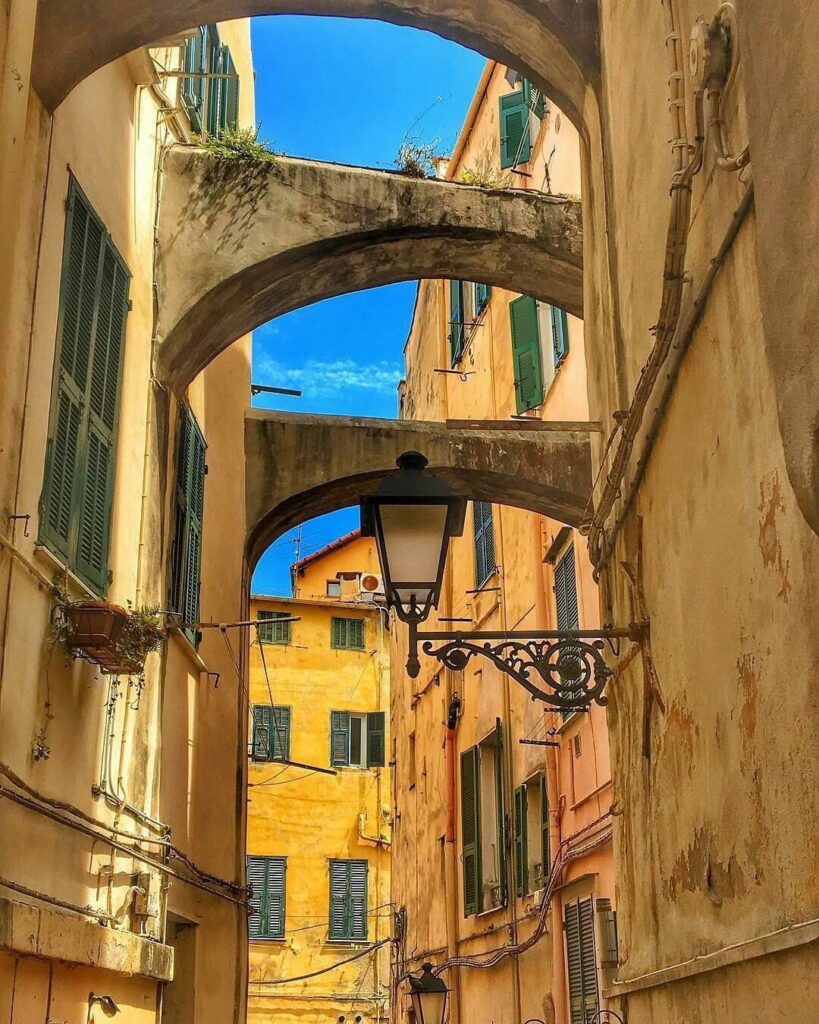
Then there’s a heritage that nobody expects. Genoa is less well-known than other Italian cities, yet on such a narrow strip of land, architecture, painting, literature, music and craftsmanship all coexist. It is that richness that I’d like to share with the world, through the language of perfumes.
And finally, our character. We’ve grown up nestled between the mountains and the sea, somewhat set apart from the rest of Italy, and this has given rise to a beautiful contradiction: ‘reserved’ people who have traded with half the world. This is the source of our idea of elegance, which is never about showing off. For me, perfume is the first step towards explaining what it means to be Genoese to those who’ve never been here.
ADP: Did you have any other career paths in mind, apart from perfumery? When did you realise that you would make perfumery your life’s work?
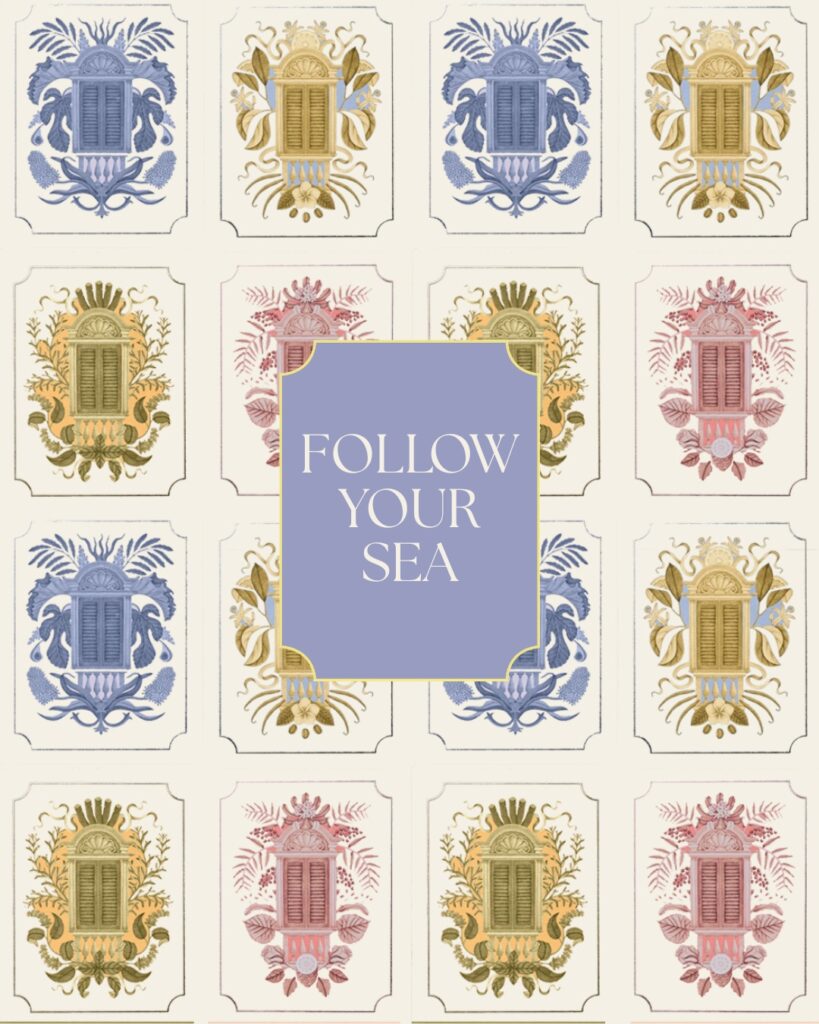
FF: Cinema, always. I studied it at university and then ended up in the industry indirectly, working in advertising and directing. Directing a feature film remains my most persistent dream, and MarMar is, at heart, the same craft but using different means: I think of perfumes as films, stories of everyday Genoese life, with locations, characters, sensations and music. Through MarMar, I’d like to continue funding short film projects here in Genoa, just as we did for our first film, *Follow Your Sea*, directed by Jacopo Luvisotti.
As for perfume, I didn’t choose it – I breathed it in as a child in my mum’s perfumery. But I only made the connection very late on, when the MarMar project had already begun, under a different name and with different ideas. It was his death that put things into perspective: twelve years spent in this industry were no coincidence; they were a loyalty I hadn’t realised I had. The name ‘MarMar’ imposed itself: it was the name of the perfumery where I’d grown up.
ADP: If I were to describe you through three olfactory memories – childhood, adolescence and adulthood – which ones would you choose?
FF: My childhood is a built-in wardrobe in the hall. Inside were my mum’s fur coats and my dad’s jackets, and I’d shut myself in there as if it were a cave. I could recognise the garments by their collars. She wore 24 Faubourg by Hermès, with a hint of cigarette smoke underneath. My dad smelled of aftershave and that strong, dry, aromatic Toscano tobacco. I was often home on my own, and even today those scents take me back to my parents – a memory that brings me comfort.
ADP: What can’t you stand about contemporary perfumes?
FF: Two things. The first is their lack of depth. Market tests, consumer panels – and the formula is refined until every rough edge disappears. What remains appeals to everyone but belongs to no one. This applies to mass-market brands and, by now, even to niche brands, which rely on the same three or four notes that sell, whether or not they make sense for that particular house. All perfumes are shouting a little louder to grab attention.
The second is the lack of authenticity. When faced with a perfume, the question I ask myself is simple: what are you telling me about yourself? What is your raison d’être? When there are marketing departments, investors and sales targets behind it, taking a risk becomes impossible, and a perfume that doesn’t take a risk is already finished before it’s even launched.
ADP: What is your vision for perfume through MarMar?
FF: I wanted a brand built on three genuine pillars: Genoa, my mum, and the sea. If any one of these three becomes a mere pretext, the whole thing comes crashing down. This gives rise to a Genoese approach to perfumery. Attention to origins and raw materials, to colour, design and detail. And a recognisable signature – always maritime – that evokes the natural world surrounding the city.
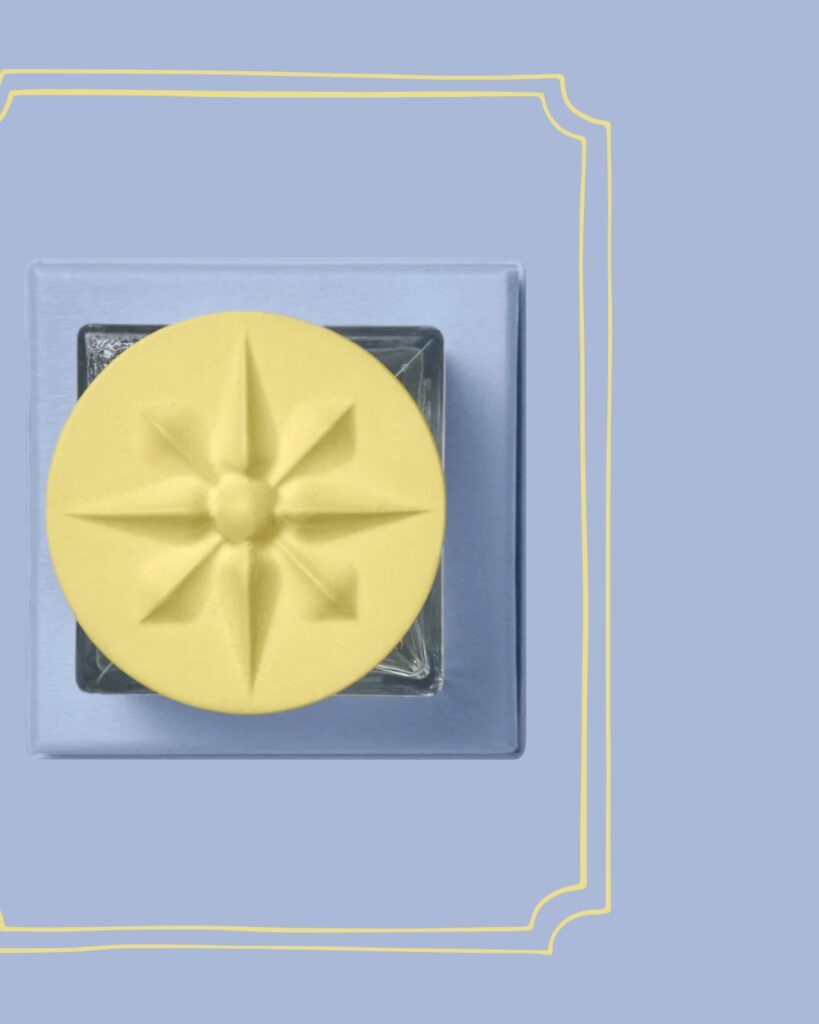
Then there’s the phrase I use most often: the art of Genoese perfumery. It’s not an aesthetic ambition; it’s a method. It means respecting the rhythm of craftsmanship and giving meaning to what is created. Taking the time needed, not launching products just to fill a calendar, and not putting anything on the market that doesn’t have something to say.
ADP: The design of your packaging is very refined – deeply Genoese yet with a contemporary twist. How did you develop it?
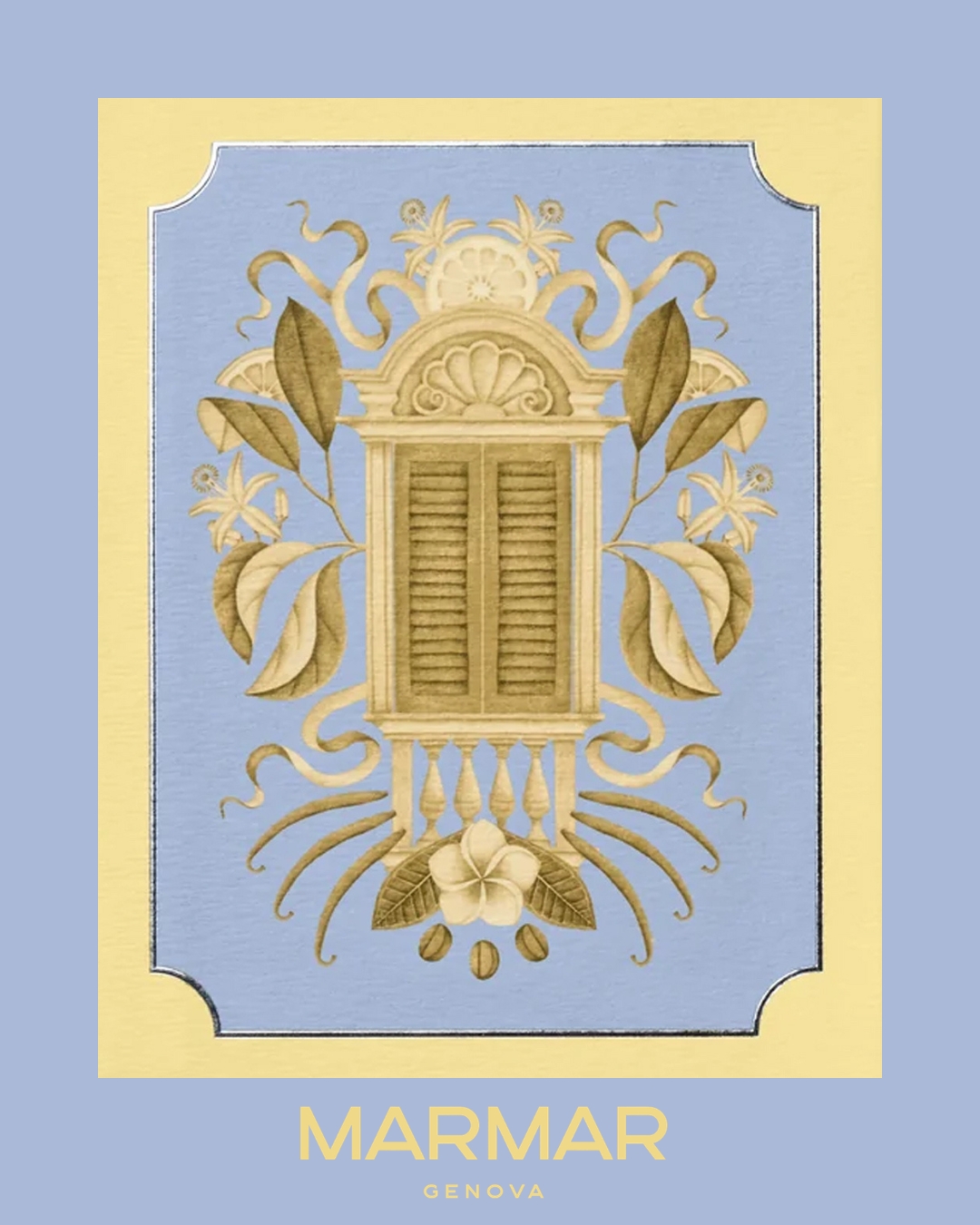
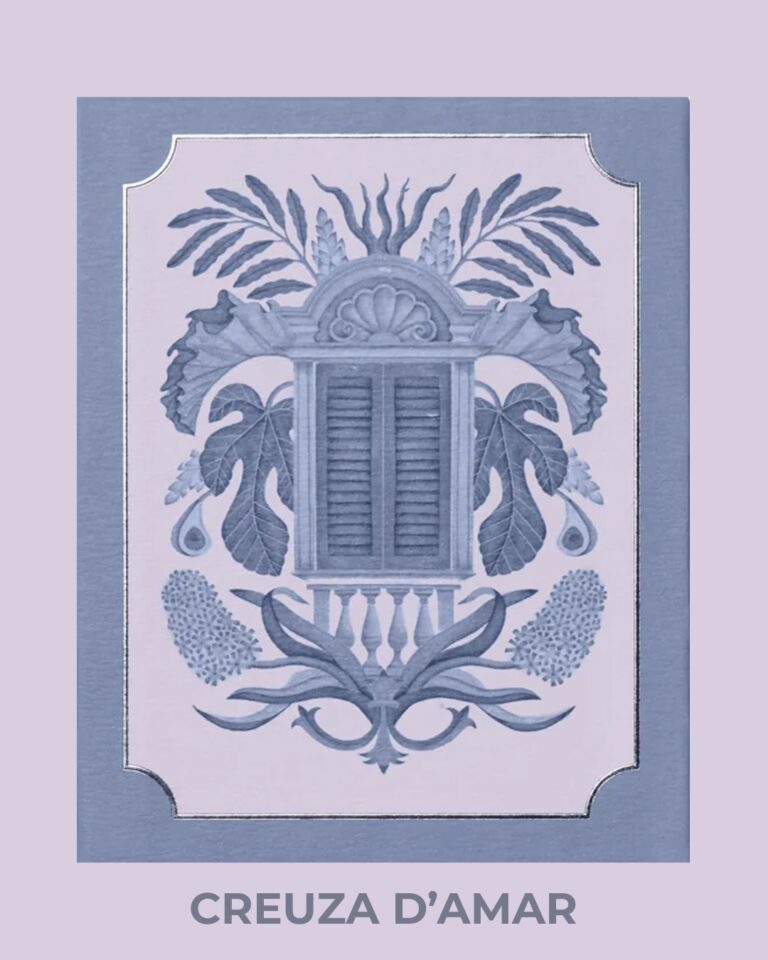
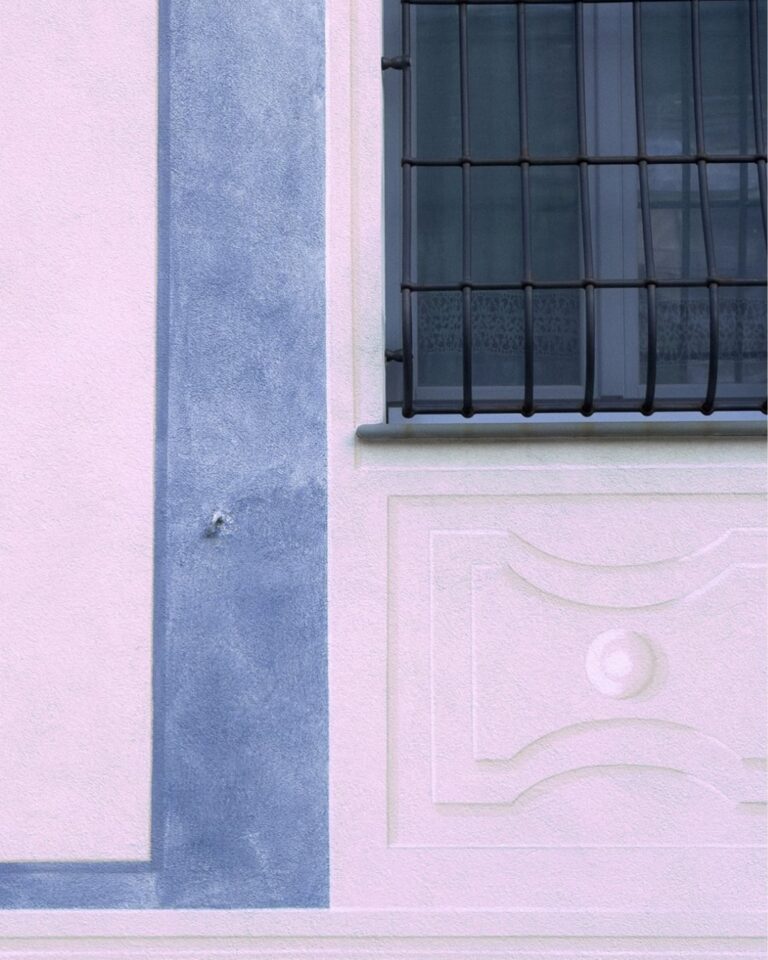
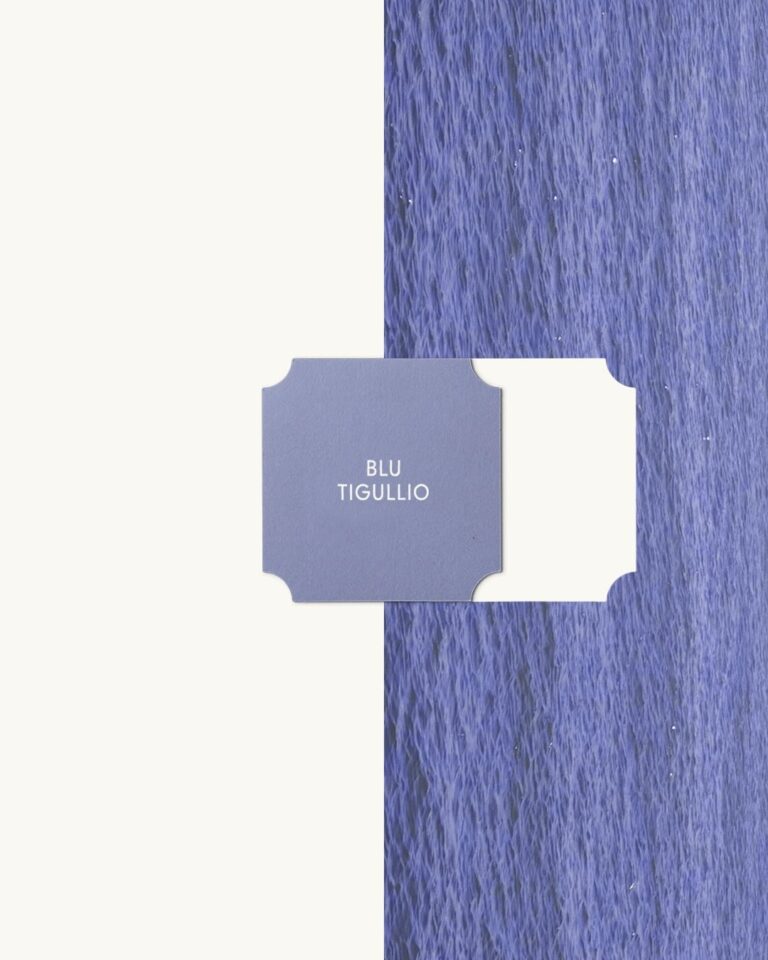
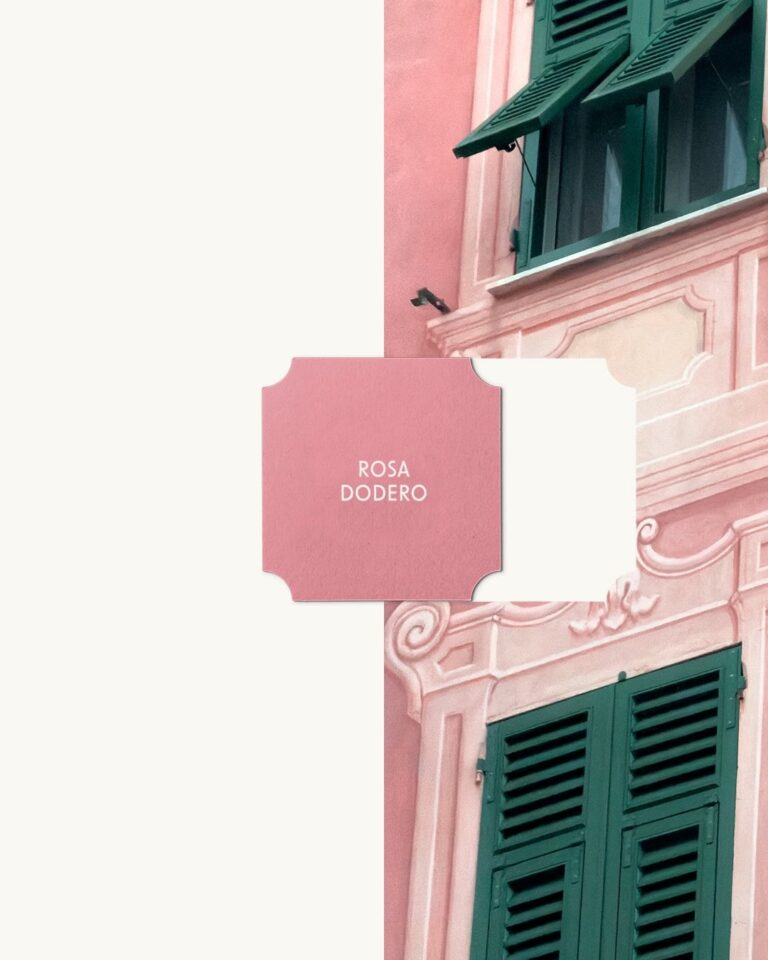
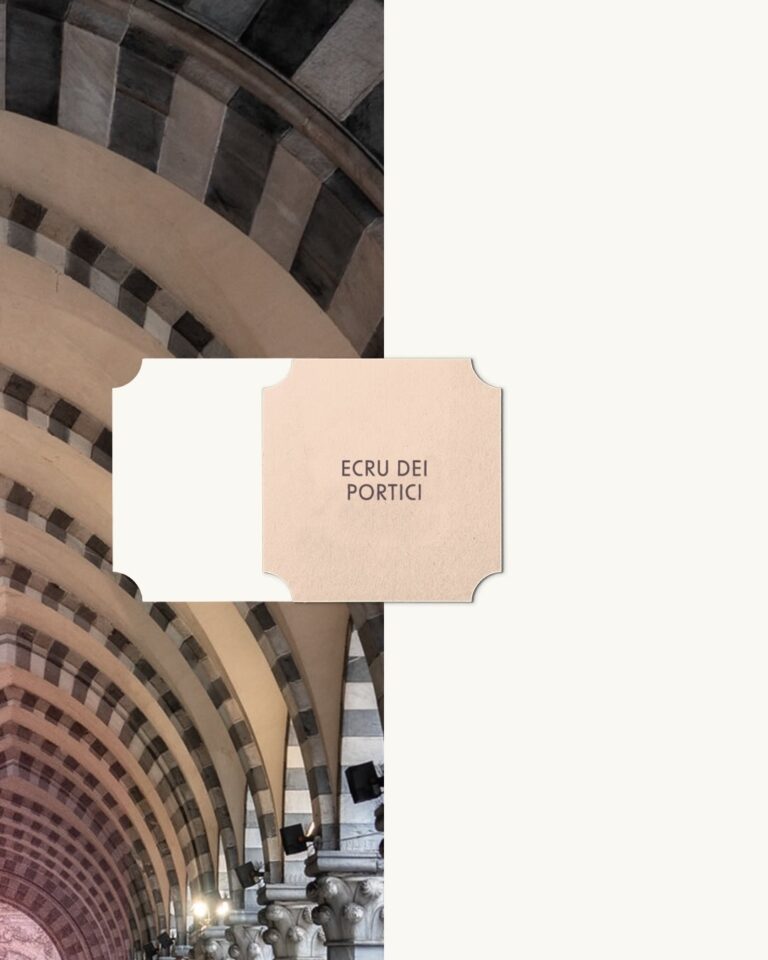
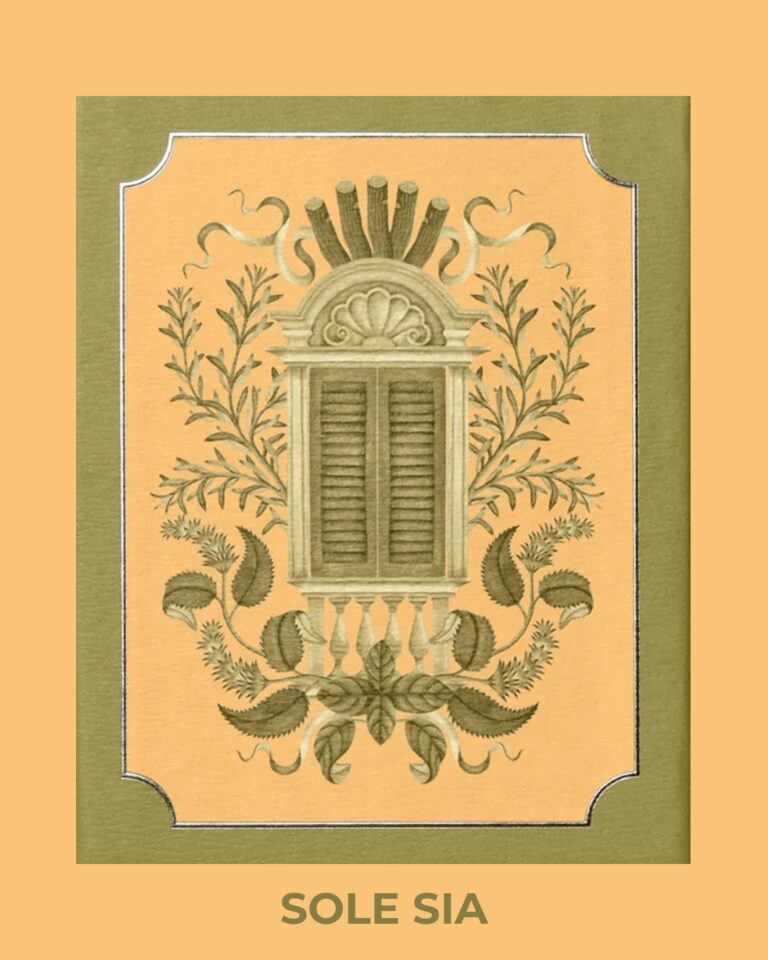
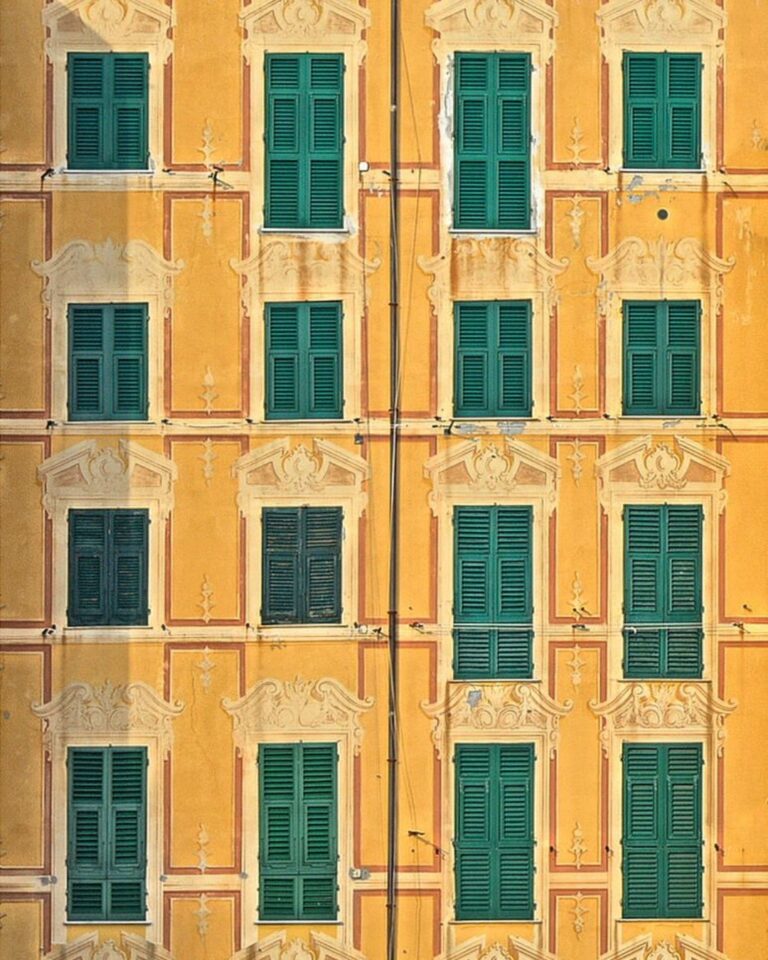
FF: It took three years, and the starting point wasn’t the fragrance: it was the colour. At first, the brand was called ‘Colori di Genova’. My mum was an artist and an aesthete; she loved colours, flowers, fabrics, prints and beautiful objects, and she passed that obsession on to me. The very first image on my mood board was Villa’s Quaresimali, with their pastel-coloured icing: the cakes she liked best. From the Quaresimali we moved on to the façades of buildings, and from the façades to trompe l’œil, which here is a language rather than merely an ornament. Then began a year and a half of subtraction: hundreds of trials in which we took things away, to understand how much could be removed before the building ceased to be recognisable. The cartouche, in the end, became a simple, thin line.
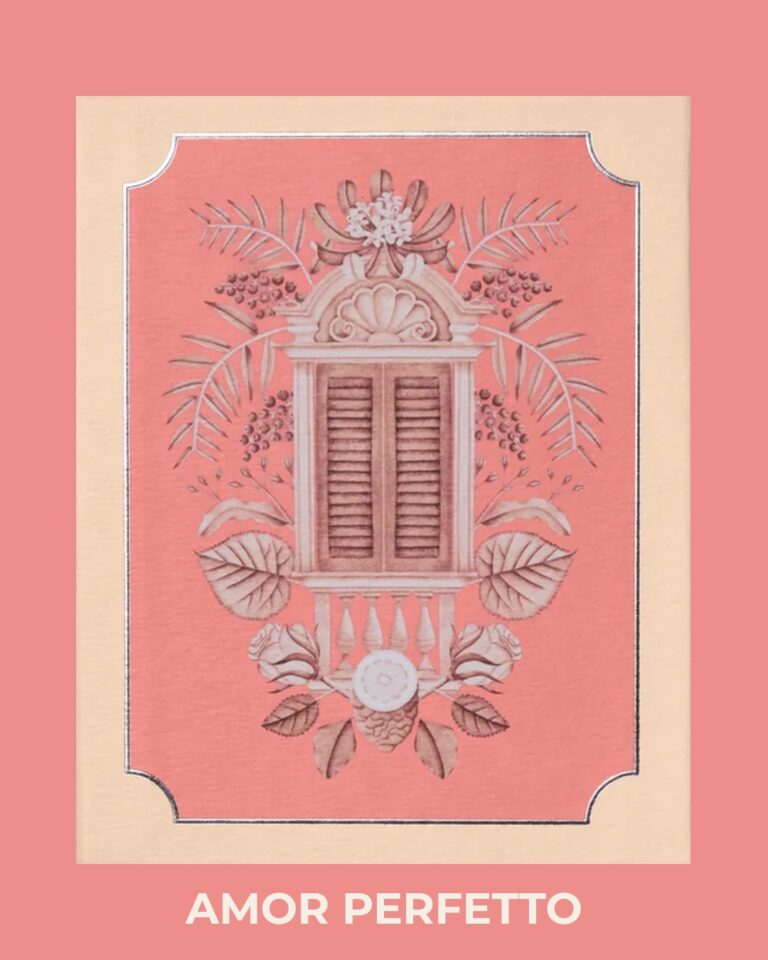
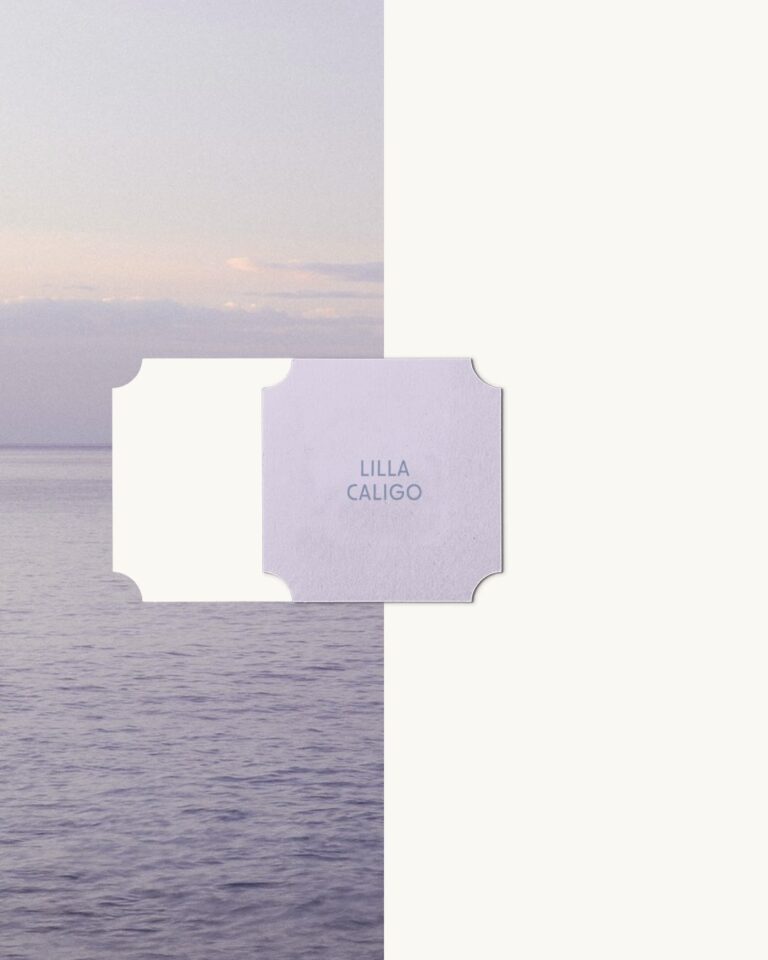
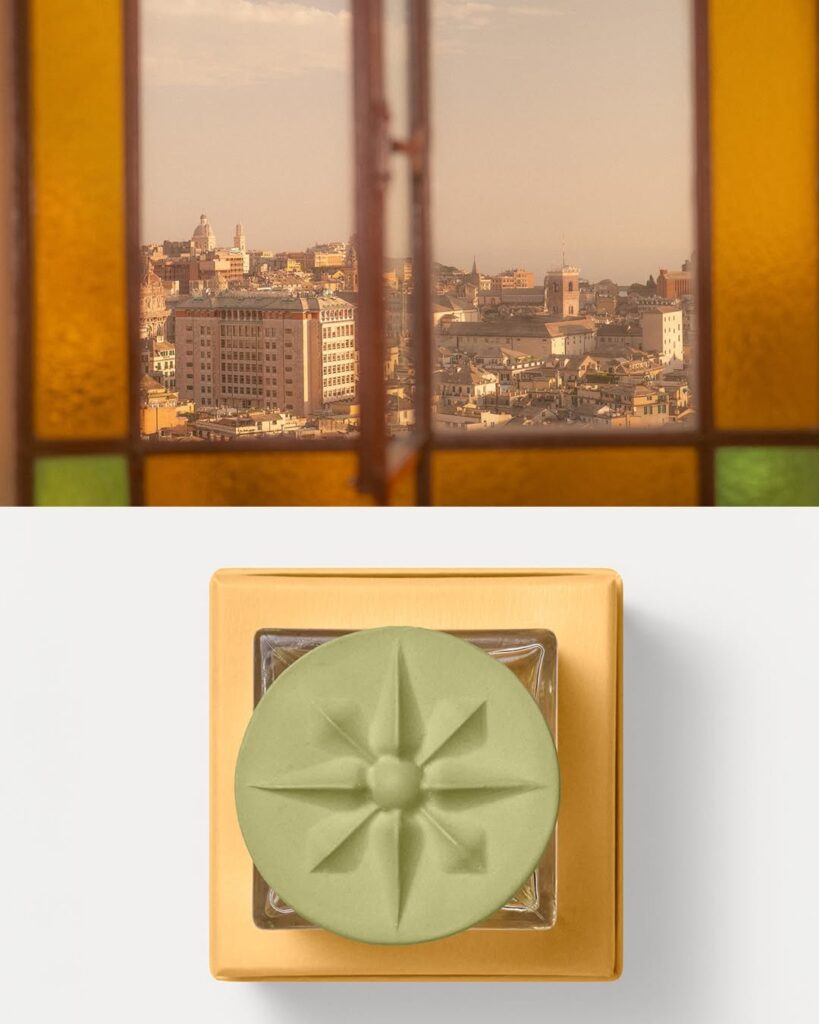
The monogram came about in the same way. A compass rose crossed with the rose window of San Lorenzo, reduced until only the essential remained. And every time I walked through the city centre, I’d spot a detail and try to incorporate it, redesigning it each time in an even more essential way. And then there are the colours, which always have a name and a story behind them. The ‘Amor Perfetto’ pink is the plaster of my first home, in Via Dodero. ‘Lilla Caligo’, which is my favourite, is the sky over Genoa at the end of the day – that lavender-grey hue that appears as the light fades.
ADP: The wind rose is the brand’s symbol, and on the website it almost becomes a compass guiding you towards the ideal fragrance. Where would you like to take MarMar?
FF: Far away. To Asia, the Middle East, America – not just to establish a presence in more markets, but to introduce Genoa to those who only know Portofino and the Cinque Terre and stop there. Fragrance is the most immersive way to do this. I’d like the name MarMar to one day be recognised before the city itself, and to carry the city’s spirit with it.
And then to grow MarMar. I’d like a concept store, a place where fragrance meets mixology and design. To tell the story of the fragrances through the five senses, and then bring them to life in a home filled with objects that embody the colours, elegance and savoir-vivre of Genoa.
ADP: It is said that Genoa is imbued with a rich array of scents. Which are your favourites, and how have you combined them with other essences in your perfumes?
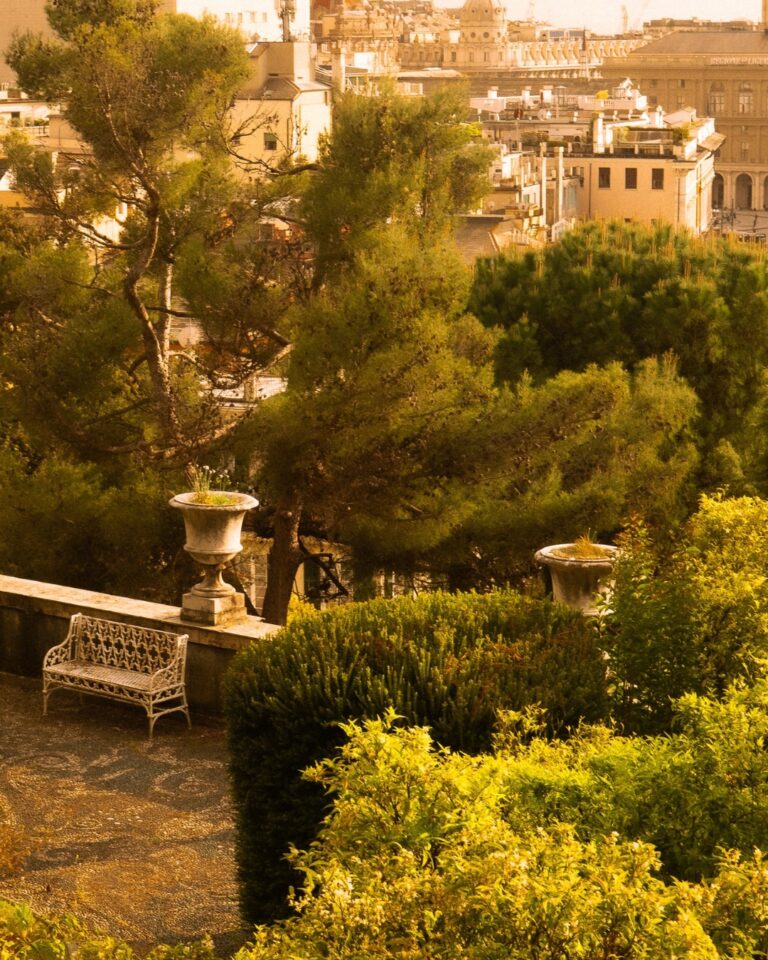
FF: We started with what I smell when I leave the house in the morning, because I live in Bogliasco: roses, lemons, mandarins, sage, helichrysum. I presented those to the panel, not a list of ingredients.
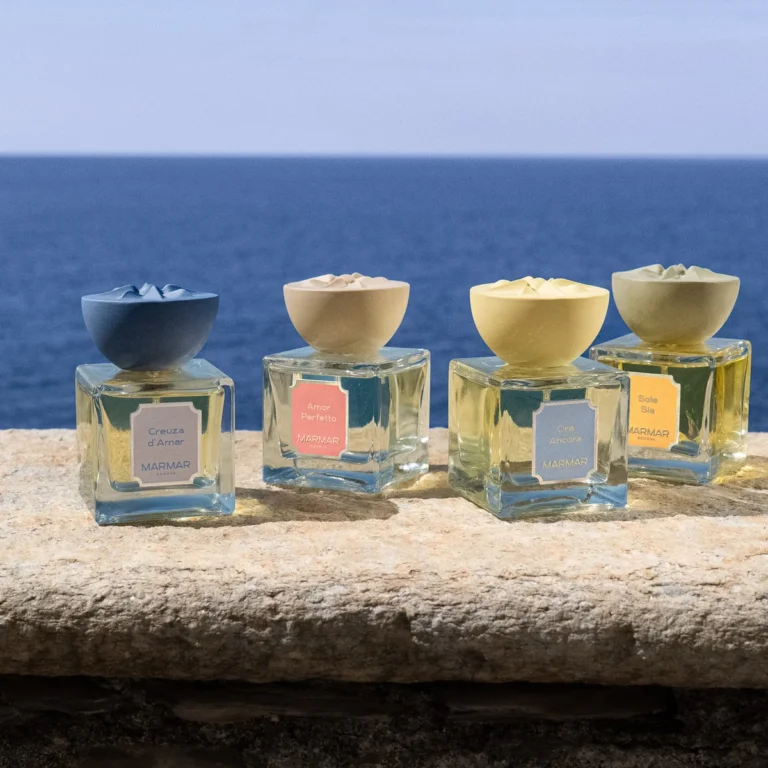
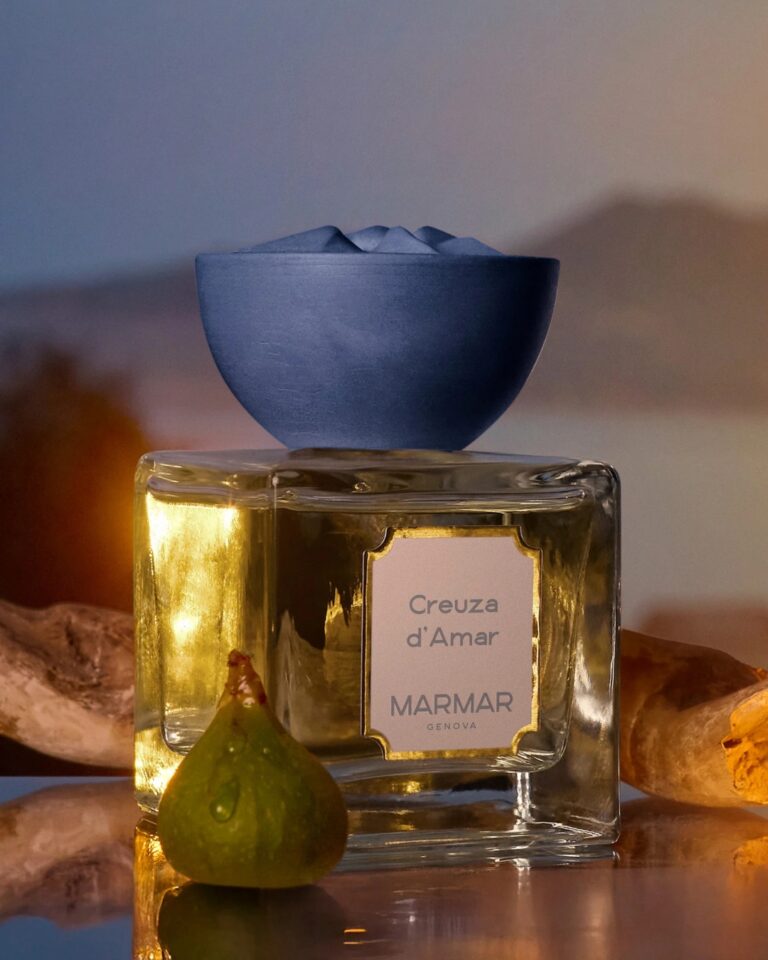
In “Creuza d’Amar”, I wanted a woody note that would echo the scent of olive wood – aromatic and dry – paired with the fig leaves I have right outside my house, that early-spring green. It’s also a tribute to Hermès’ Un Jardin en Méditerranée.
In “Ora Ancora”, there are the lemon and orange trees outside my house, which in spring yield both lemon blossom and orange blossom together. On top, I’ve added a memory that has nothing to do with perfumery: focaccia dipped in cappuccino. It is that sweet-and-savoury combination that underpins the whole fragrance.
In “Sole Sia”, helichrysum sits alongside liquorice – those reganisso sticks I used to nibble on as a child – along with basil and rosemary. My obsession was to create a dry, aromatic scent without falling into the trap of a banal pesto-scented fragrance.
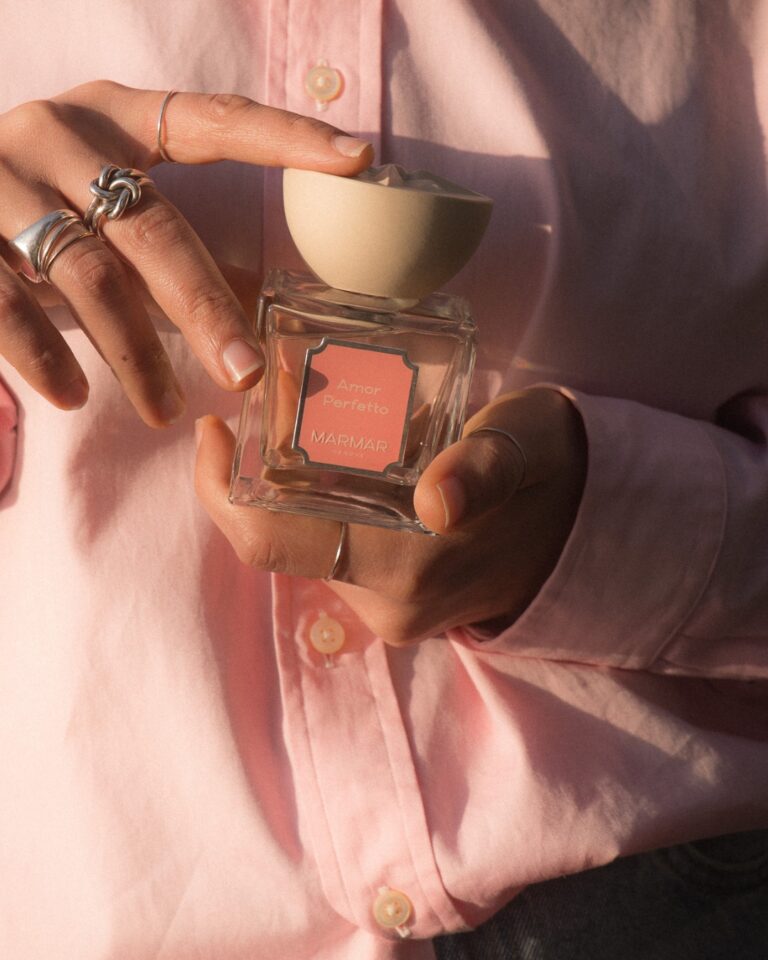
In “Amor Perfetto” there’s pittosporum, my favourite flower, the one from the walk between Nervi and Bogliasco. But the real starting point is the lime tree: one summer, having just returned, I was riding my moped when a honeyed scent brought me to a halt. I didn’t even know what sort of plant it was. I looked it up afterwards.
ADP: How do you create a fragrance range? Where do you start and how do you get to the finished product? Tell us about your short, traceable supply chain too.
FF: You can give a brief to a subcontractor and have the finished product delivered. But I’ve spent six years in product development and didn’t want to take any shortcuts. I wanted MarMar to have complete control over production, with the freedom to choose suppliers one by one. That meant learning the trade from scratch rather than leaving it to others.
The first hurdle was finding a manufacturer willing to work with a company that didn’t yet exist and with very small batch sizes. It’s a risk for a manufacturer, and several turned us down. The ‘yes’ came from GRC Parfum, in Settimo Milanese, a B Corp-certified company. This means ethical standards for raw materials and production, and the ability to trace every ingredient – whether natural or synthetic – back to its supplier and the standards that supplier, in turn, adheres to. Together with their ‘noses’, Samuele Faccio and Pasquale Cerrotti, I worked on the concept and the brief, and then it took two years of back-and-forth on the formulations.
Once the concentrate had been produced, the second challenge arose: actually making the product. We solved this with my friend and colleague Parissa Venturini, who joined us and enabled us to bring purchasing, production and assembly in-house, whilst relying on a factory. Today, 99 per cent of our suppliers are Italian, almost all based in the north, with just one exception: the caps, which are manufactured in a workshop in Galicia. The supply chain is short, traceable and entirely our own. For a young fashion house, this is rare, and it is what I am most proud of. Ultimately, the process goes like this: creative brief, fragrance, and, in parallel, design, packaging and brand identity. Then come the suppliers, the components coming together at the factory, assembly, the warehouse, and from there, dispatch to every single customer.
ADP: Is there a smell in Genoa that you love deeply but would never put in a perfume?
FF: No, and I’ve thought about it. I believe that any smell can become a perfume. The other day I was walking past a building site and there was a smell of wet concrete – perhaps because of the rain, perhaps because of the proximity to the sea. A strange, intriguing smell. I’ve made a note of it as inspiration.
As a child, I used to go to the shipyards with my dad, who was an engineer. That metallic smell of empty ships, the smoke from the cutting machines, the seaweed stagnating in the harbour. They’re unpleasant smells, yet I wouldn’t rule them out: the interesting note isn’t the pleasant one, it’s the one that creates friction. If we’ve managed to put a hint of salt in a cappuccino, we’ll find a way to use concrete too.
ADP: Genoa is a city of stark contrasts. Sea and mountains, aristocracy and poverty, funiculars and the untamed sea. What role does contrast play in your perfumery? What contrasts define you?
FF: In my perfumery, contrast is the way to achieve balance. I spent many years searching for myself, swinging from one extreme to the other, and as I grew up I realised that the answer almost always lies in the middle.
That’s why I never work with a single note: I work on how that note is contradicted. Salt intertwined with flowers, aquatic notes washing over earthy ones, sweetness broken by bitterness. That’s how a formula becomes recognisable, and that’s how a signature is born.
My contrasts, after all, are quite obvious. I’m a Genoese who grew up in an American school, who lived in America and then made a life for myself in France. The Filippo I am in New York is not the Filippo I am in Genoa. For a long time, I kept them in separate rooms. MarMar was born the moment I stopped doing that.
ADP: Is there anything you’ve chosen not to do with MarMar, precisely to avoid following the rules of the perfume market?
FF: Not following trends. That was the first thing I told the laboratory, and it’s a choice that can prove costly. A trend is put to you because there’s a commercial interest behind it: if you follow it, you’re more likely to go viral, to sell. But every MarMar fragrance must stem from one of my memories, and if that memory goes in the opposite direction to what’s in fashion, that’s perfectly fine. At the end of the day, we’re not selling packaging or a name: we’re selling a fragrance, and those who buy into the niche market are looking for precisely that. The originality of the jus, the uniqueness of the offering, the authenticity of the creator. In a market governed by algorithms, the only thing that remains rare is something deeply human.
The second factor is time. I spent twelve years in Paris working under the constant pressure to launch new products, and I understand that – it’s novelty that keeps the market going. But when my French partner, Sébastien Gouriou, and I began developing the project, I always emphasised to him that the product wouldn’t be released until we were ready, until we were absolutely certain. If a colour doesn’t turn out as I wanted, we redo it. If a design doesn’t convince me 100 per cent, we start from scratch. It is that very time that ultimately gives the object its full value.
ADP: When someone wears a MarMar fragrance, what would you like them to smell? And above all, what would you like them to remember?
FF: I don’t necessarily want them to smell Genoa, and I don’t want them to step into one of my memories. The place and the moment I describe are a gateway: they help you understand the fragrance, even technically, like a dictionary. We use the story to make the notes accessible to those who’ve never had a reason to learn them.
What I’d really like is for it to bring the person back to the present. In English, they call this ‘grounding’. Smell is the only sense that does this dual job: it takes you back to a moment and, at the same time, back into your own body.
And then I’d like the fragrance to cease being mine. Like a child you let go of at some point. The memories I’ve woven into it belong to me, but also to anyone who has walked through this city. Ultimately, MarMar isn’t just about Genoa: it speaks to anyone who has a sea inside them and occasionally needs to feel it.
ADP: If you had to choose some scent notes to perfume the Orlando Imaginary Hotel, what would they be and why?
FF: I’d choose notes that remind me of my stays in the beautiful lounges of grand hotels, those moments suspended in extraordinary places. Earl Grey, a hot, aromatic tea with a dash of milk and lemon zest. Then candied violets and the maître pâtissier’s petits fours – the sort you nibble on whilst reading a book, comfortably seated in a velvet armchair in the lobby.
A soft, comforting, clean scent that lingers in the air almost unnoticed. A successful room fragrance doesn’t announce itself: it makes you smile without you quite knowing why.
ADP: ‘Follow Your Sea’ is your motto. Can you tell us about it?
FF: It originated before MarMar, from a film I’ve been writing for years, “La mer entre nous” – “the sea between us”. It’s a story based on my final days with my mum. I started writing it when she was already ill and I felt a sea of distance between us. Whilst writing it in French, I came across the play on words: ‘mer’ and ‘mère’ – the sea and the mother.
When we started setting up MarMar, I realised, quite simply, that I was following in her footsteps. The name, the perfumery, everything. These things happened during the months when she was gone and I didn’t yet have the clarity to see them. There was a phrase missing that would tie them all together, and which would also be an invitation to those who choose us. Suivez votre mer. Follow Your Sea.
As teenagers, we drift away from our parents almost out of necessity, and then as we grow up we realise just how much they’ve influenced us, in our tastes and choices. But ‘Follow Your Sea’ isn’t an invitation to follow your mother, of course. It’s an invitation to follow the sea we carry within us: curiosity, stubbornness, the desire to go where no one is expecting you. It cost me a great deal to leave a career in Paris to come back here. Following your own sea almost always means swimming against the tide.

Museums teach us the history of the artist. A home reveals instead the biography of the artwork.
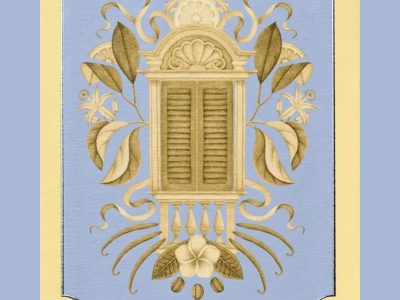
From the grand Parisian fragrance houses to the rugged coast of Genoa: Filippo Fornasini reveals the deeply personal story behind MarMar, an intimate olfactory journey that redefines the art of Genoese perfume.

Step inside Almanac in Pietrasanta: where history, design, and the soul of objects meet.
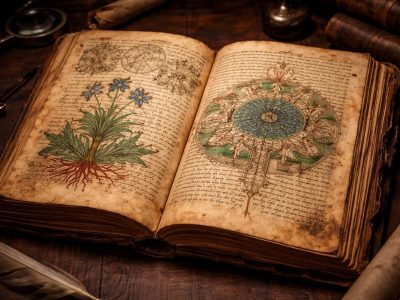
Dive into the mystery of the world’s most enigmatic manuscript which remains a puzzle waiting to be solved.

A journey into the future of space tourism, where engineering and imagination meet.
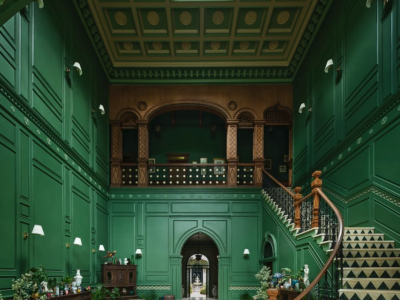
Hidden in the Khao Yai jungle, you arrive at Maison Mystique where the rules of contemporary luxury are rewritten to choose mystery instead of excess.
Are you a sensitive and curious traveler, constantly searching for beauty, art and cultural inspiration? Sign up to receive the latest contemporary news!